
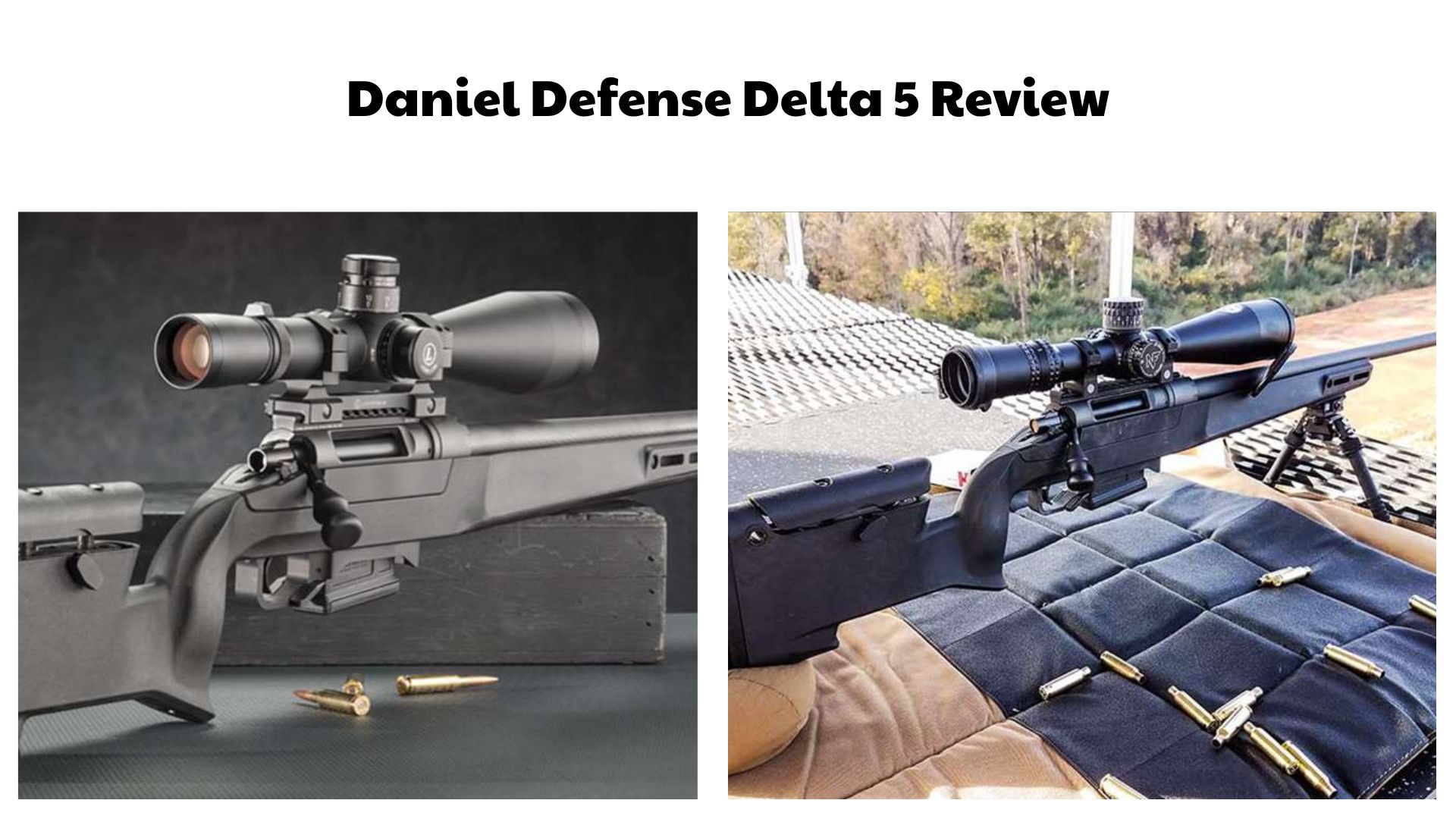

Daniel Defense Delta 5 Review focuses on one of the most refined bolt-action rifles from a company better known for its AR-platform excellence. The Delta 5 marks Daniel Defense’s serious entry into the precision bolt-action world, combining modern engineering, premium materials, and tactical design philosophy. Built for long-range shooters, hunters, and precision enthusiasts, this rifle aims to deliver consistent sub-MOA accuracy straight from the factory. In this review, we will break down its design, performance, ergonomics, and real-world usability in a clear and practical way, helping you understand where it stands in today’s competitive precision rifle market.
Introduction to the Daniel Defense Delta 5
The Daniel Defense Delta 5 represents a strategic expansion for Daniel Defense into the bolt-action precision rifle segment. Known globally for high-quality AR-15 and AR-10 platforms, the company applied the same engineering discipline and manufacturing standards to a completely different rifle category. The result is a bolt-action system designed not just for hunting, but also for precision shooting disciplines where consistency matters above all else.
The Delta 5 is built with the idea of bridging the gap between traditional factory rifles and semi-custom precision platforms. It is not a lightweight hunting rifle, nor is it a full competition chassis system. Instead, it sits in a balanced middle ground—offering accuracy, durability, and modular features without the complexity or cost of full custom builds.
At its core, the Delta 5 is designed for shooters who want a dependable long-range rifle straight out of the box. Whether used for target shooting, field hunting, or precision training, it maintains a strong reputation for consistency and mechanical simplicity.
Key Features of the Daniel Defense Delta 5
Action and Receiver Design
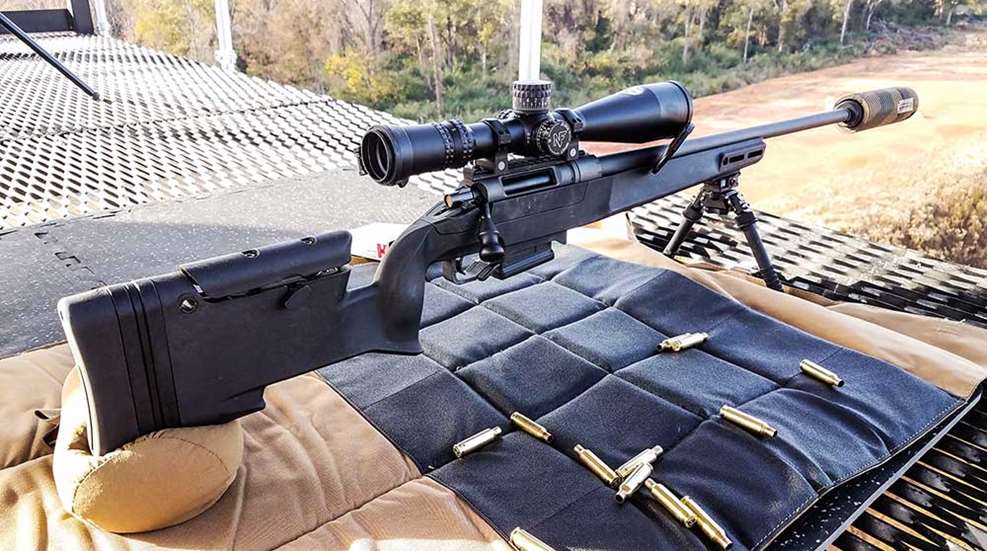
The Delta 5 is built around a stainless steel action that emphasizes strength and precision machining. One of its standout characteristics is the three-lug bolt design, which allows for a short 60-degree bolt throw. This design improves cycling speed and provides more clearance for optics, especially high-magnification scopes commonly used in long-range shooting.
The bolt features a floating bolt head, which helps it self-align with the cartridge during chambering. This improves consistency and reduces potential stress on the cartridge, contributing to more reliable accuracy. The rifle also uses a Sako-style extractor combined with a plunger ejector system, ensuring smooth and reliable spent casing removal.
While not a Remington 700 clone, the Delta 5 is influenced by the widely adopted 700 footprint ecosystem. This allows partial compatibility with aftermarket accessories, though it remains a proprietary system in key areas.
Barrel System and Construction
One of the most important aspects of the Delta 5 is its cold hammer-forged stainless steel barrel. Daniel Defense manufactures these barrels in-house, maintaining tight quality control throughout the process. Cold hammer forging improves barrel durability and extends service life while maintaining consistent internal geometry.
The barrel is free-floating, meaning it does not contact the stock along its length. This design minimizes external pressure points that could affect barrel harmonics. The result is improved shot consistency, especially during extended shooting sessions.
The Delta 5 uses a heavy Palma-style barrel profile. This provides a balance between rigidity and manageable weight. It is not ultra-light, but it is optimized for precision stability rather than mobility.
The muzzle is threaded (5/8×24), making it compatible with suppressors and muzzle brakes. This gives shooters flexibility depending on whether they prioritize recoil reduction or sound suppression.
Another advantage is the barrel nut system, which allows user-level barrel swaps. While not as modular as fully multi-caliber systems, it does provide long-term serviceability and upgrade potential.
Stock and Ergonomics
The Delta 5 features a carbon-fiber reinforced polymer stock designed to balance strength and weight. It is built with a focus on stability rather than ultra-light carry, making it better suited for bench shooting, prone positions, and controlled field environments.
The stock includes a fully adjustable cheek riser, allowing shooters to align their eye perfectly with mounted optics. This is especially important when using large objective scopes or tall mounting systems.
Length of pull is adjustable using a spacer system, enabling shooters of different body sizes to achieve a comfortable and consistent shooting position. While not as advanced as full chassis systems, it offers enough adjustability for most users.
The vertical-style pistol grip improves trigger control and stability. Combined with M-LOK and accessory mounting points, the stock is functional and adaptable for modern shooting setups.
Overall, the ergonomics prioritize shooting stability and repeatability rather than field portability.
Magazine System
The Delta 5 uses AICS-pattern detachable magazines, which are widely respected in precision shooting circles. This standardization ensures compatibility with reliable aftermarket magazines such as Magpul PMAG 7.62 AC models.
Most configurations use a 5-round capacity magazine, which is typical for precision rifles. This capacity balances compact design with sufficient firepower for controlled shooting environments.
The feeding system is smooth and consistent, which is critical for maintaining accuracy and reducing malfunctions during repeated firing cycles.
Trigger System
One of the most notable components of the Delta 5 is its Timney Elite Hunter trigger. This is a high-quality, adjustable trigger system designed for precision shooting applications.
The trigger offers a clean break with minimal creep, which helps shooters maintain consistent shot execution. Pull weight is adjustable, typically ranging from around 1.5 to 4 pounds depending on configuration.
This level of adjustability allows users to tune the rifle for either field safety or match-grade precision. The trigger system is also upgrade-friendly, though most users find the factory setup more than sufficient.
Accuracy and Long-Range Performance
The Daniel Defense Delta 5 is widely regarded as a sub-MOA capable rifle when paired with quality ammunition. In many real-world tests, it has demonstrated accuracy levels approaching 0.75 MOA or better under controlled conditions.
This level of performance places it firmly in the upper tier of factory bolt-action rifles. While not a full custom benchrest rifle, it consistently outperforms many standard production rifles in its category.
The combination of cold hammer-forged barrel, free-floating design, and rigid chassis-style stock contributes significantly to its precision performance. These elements work together to reduce variability and improve shot consistency.
The rifle performs particularly well in calibers like 6.5 Creedmoor, which are optimized for long-range shooting. At distances from 100 to 1,000 yards, it maintains stable grouping behavior with minimal point-of-impact shift.
For shooters entering the precision rifle world, the Delta 5 offers a strong foundation. It delivers predictable performance without requiring extensive tuning or modification.
Build Quality and Materials
When evaluating the Daniel Defense Delta 5 Review in detail, one of the first aspects that stands out is its construction quality. Daniel Defense has built its reputation on manufacturing durable, duty-grade firearms, and the Delta 5 continues that tradition in the bolt-action category. Every major component of the rifle is designed with long-term structural integrity in mind, ensuring it performs consistently even after extensive use in demanding environments.
The action is built from stainless steel, a material chosen for its strength, corrosion resistance, and long service life. To further enhance durability, Daniel Defense applies a Cerakote finish to key metal surfaces. This protective coating improves resistance against moisture, abrasion, and harsh weather conditions, making the rifle suitable for both field hunting and range environments where exposure to the elements is unavoidable.
The barrel is another highlight of the Delta 5’s construction. It is a cold hammer-forged barrel, produced in-house by Daniel Defense. This manufacturing method compresses and shapes steel under extreme pressure, resulting in a dense and uniform bore structure. The advantage of this process is not only increased barrel life but also consistent internal geometry, which directly supports accuracy over thousands of rounds.
The stock is constructed from reinforced polymer and integrates aluminum bedding inserts. This hybrid structure gives the rifle both rigidity and weight efficiency. Inside the stock, Daniel Defense uses a mini-chassis-style bedding system that stabilizes the action. This ensures that the rifle maintains consistent alignment between the barrel and receiver, which is critical for repeatable accuracy.
Durability is a central theme in the Delta 5’s design philosophy. It is not a fragile precision instrument meant for controlled environments only. Instead, it is built to withstand repeated use in real-world conditions such as temperature fluctuations, humidity, dust exposure, and rough handling during transport. The result is a rifle that maintains performance integrity even after extended service life.
In the broader context of the Daniel Defense Delta 5 Review, this level of material selection and engineering places the rifle firmly in the premium factory category. It does not rely on aftermarket upgrades to achieve reliability; instead, it is engineered from the ground up to deliver consistency as a complete system.
Recoil Management and Shooting Control
Recoil management is another area where the Daniel Defense Delta 5 demonstrates thoughtful engineering. While bolt-action rifles are generally known for manageable recoil compared to semi-automatic platforms, precision rifles still benefit significantly from design features that reduce movement and improve shooter control.
The Delta 5 uses a heavy barrel profile combined with a rigid chassis-style stock structure. This added mass plays a major role in reducing felt recoil. Instead of sharp rearward movement, recoil is distributed more evenly through the rifle, allowing shooters to maintain better control during firing sequences.
The rifle is also compatible with both muzzle brakes and suppressors, depending on shooter preference. A muzzle brake can significantly reduce recoil by redirecting gases, while a suppressor provides recoil reduction along with sound suppression. This flexibility allows the Delta 5 to adapt to different shooting environments and personal preferences.
One of the practical advantages of this recoil management system is improved follow-up shot capability. After firing, the rifle remains relatively stable, allowing the shooter to quickly re-acquire the target. This is especially valuable in precision shooting scenarios where spotting impact is essential for making adjustments.
In prone or benchrest positions, the Delta 5 performs particularly well. The combination of weight, stock design, and recoil reduction features creates a stable shooting platform. This stability helps minimize shooter-induced error, which is one of the most common factors affecting long-range accuracy.
For users evaluating the Daniel Defense Delta 5 Review, recoil control is one of the most noticeable benefits during live firing. It does not feel overly aggressive, even in more powerful calibers, and it maintains a predictable shooting rhythm that supports consistent performance over time.
Reliability and Field Performance
Reliability is a defining characteristic of any serious precision rifle, and the Delta 5 performs strongly in this category. Daniel Defense designed the rifle to function consistently under repeated use, making it suitable for both training environments and field applications.
The bolt system operates smoothly, with consistent extraction and ejection of spent cartridges. While the bolt feel may be slightly firm compared to some competition-focused rifles, this stiffness contributes to secure lockup and dependable cycling. Over time, many users report that the action smooths out with break-in while maintaining its structural integrity.
Feeding reliability is generally strong when using quality AICS-pattern magazines. The system is engineered to minimize misfeeds or alignment issues, which is important during high-volume shooting sessions. Proper magazine selection plays a key role in maintaining this reliability, but overall performance remains consistent across reputable magazine brands.
The Delta 5 is also designed for sustained shooting. It can handle extended range sessions without significant degradation in performance. This makes it suitable for training environments where shooters may fire hundreds of rounds in a single session while maintaining accuracy standards.
Durability has been proven through real-world use and extended round counts. Many rifles in this category begin to show wear or reduced consistency over time, but the Delta 5 maintains its structural and mechanical reliability when properly maintained. This reinforces its position as a long-term precision platform rather than a short-term competition tool.
In hunting and precision shooting environments, the rifle performs predictably and consistently. It is not overly sensitive to environmental conditions, which adds to its practical reliability in varied climates. Whether used in controlled range settings or outdoor field conditions, the Delta 5 maintains a dependable performance profile.
Pros and Cons of the Daniel Defense Delta 5
Advantages
The Delta 5 offers several clear advantages that make it a strong contender in the precision bolt-action market. One of the most significant benefits is its sub-MOA accuracy potential. When paired with quality ammunition, the rifle consistently delivers tight groupings that meet the expectations of precision shooters.
The cold hammer-forged barrel is another major advantage. This type of barrel construction improves durability and extends barrel life while maintaining consistent internal dimensions. For shooters who value long-term performance, this is a key strength.
The fully adjustable stock system also enhances usability. Features such as adjustable cheek riser and length of pull allow shooters to tailor the rifle to their body and shooting style. This improves comfort and consistency, especially during extended shooting sessions.
AICS magazine compatibility is another important advantage. It ensures access to a wide range of reliable magazines, improving feeding consistency and aftermarket flexibility. This standardization is widely appreciated in the precision shooting community.
Build quality is consistently high across the entire platform. From the stainless steel action to the reinforced stock system, every component is engineered for durability and precision alignment.
The user-swappable barrel system adds an additional layer of flexibility. While not a full multi-caliber platform, it does allow for future upgrades or barrel replacements without replacing the entire rifle.
Disadvantages
Despite its strengths, the Delta 5 does have some limitations. One of the most commonly noted drawbacks is its weight. Compared to traditional hunting rifles, it is significantly heavier, which can reduce mobility in field environments.
The rifle also sits at a premium price point. While justified by its materials and performance, it may be a barrier for entry-level precision shooters who are still building experience.
Some users report a slightly stiff bolt feel, especially when the rifle is new. While this improves with use, it may feel less smooth compared to competition-oriented bolt guns.
Another limitation is its relatively smaller aftermarket ecosystem compared to platforms like the Remington 700. While compatibility exists in some areas, customization options are not as extensive.
Finally, it is not ideal for ultralight backcountry hunting. Its weight and design focus make it better suited for stability rather than long-distance carry.
Ideal Use Cases
The Daniel Defense Delta 5 is designed for shooters who prioritize precision, consistency, and modern rifle ergonomics. It performs best in structured shooting environments where stability and accuracy are more important than mobility.
One of its primary use cases is long-range precision shooting. Whether at a public range or private facility, the rifle delivers consistent performance across extended distances, making it ideal for skill development and accuracy-focused training.
It is also well-suited for tactical and competition-style shooting. While not a full competition chassis system, it provides enough adjustability and stability to perform effectively in precision rifle events and training courses.
In hunting applications, the Delta 5 performs well for medium to large game such as deer and elk, especially in scenarios where shots are taken from stable positions. It is less suitable for fast-moving or highly mobile hunting environments.
The rifle also serves as an excellent benchrest or prone shooting platform. Its weight and stability reduce shooter error and improve consistency during repeated firing sessions.
Additionally, it is often used as a training rifle for precision fundamentals. Its predictable performance makes it a strong tool for learning long-range shooting principles.
However, it is not suitable for ultralight hiking or mountain hunting due to its weight and design focus. It is built for stability and precision, not portability.
In summary, the Delta 5 fits best in environments where accuracy and repeatability are the primary goals, making it a strong choice for dedicated precision shooters.
Daniel Defense Delta 5 vs Other Rifles (Context Overview)
In the modern precision rifle market, the Daniel Defense Delta 5 sits in a competitive space where it is often compared to several well-established platforms. Each of these rifles serves a similar purpose—long-range accuracy—but they approach the design problem in different ways. Understanding these comparisons helps clarify where the Delta 5 fits and what type of shooter it is best suited for.
When compared to the Remington 700, the Delta 5 is noticeably more modern in its design approach. The Remington 700 is a classic bolt-action platform that has dominated the aftermarket ecosystem for decades. However, it relies heavily on upgrades to reach modern precision standards. The Delta 5, on the other hand, comes factory-equipped with chassis-style features, improved ergonomics, and tighter manufacturing tolerances. This means it requires fewer modifications to perform at a high level straight out of the box.
Against the Bergara HMR, the Delta 5 leans more toward a tactical and refined engineering approach. Both rifles offer strong factory accuracy and similar price positioning, but the Delta 5 emphasizes cold hammer-forged barrel durability and a more rigid chassis-style stock system. The Bergara HMR is often seen as more of a hybrid hunting and precision rifle, while the Delta 5 shifts slightly more toward tactical precision use with a stronger focus on consistency and control.
When compared to the Tikka T3x, the differences become more about philosophy than performance alone. The Tikka T3x is well known for its smooth action and lightweight hunting design. It is easier to carry and more suited for field mobility. The Delta 5, however, is heavier and more stable, which directly benefits precision shooting at longer distances. This makes the Delta 5 more appropriate for shooters who prioritize accuracy and recoil control over portability.
Overall, the Delta 5 competes in the mid-to-premium precision rifle category. It is not an entry-level rifle, but it is also not a full custom-built competition system. Instead, it occupies a balanced space where factory consistency meets semi-custom performance characteristics.
Because of this positioning, it has earned a strong reputation as a “factory semi-custom” bolt-action rifle. It delivers many of the benefits typically associated with custom rifles—such as stability, accuracy, and adjustability—without requiring the complexity or cost of a fully custom build.
Final Verdict on Daniel Defense Delta 5
The Daniel Defense Delta 5 stands out as a strong factory precision rifle that successfully blends modern tactical features with proven bolt-action reliability. It reflects Daniel Defense’s commitment to quality manufacturing and consistent performance across all firearm platforms.
One of its most impressive strengths is its accuracy potential. The combination of a cold hammer-forged barrel, rigid stock system, and precise machining allows the rifle to deliver excellent groupings with match-grade ammunition. Over time, this consistency contributes to its reputation as a dependable long-range performer.
The rifle also demonstrates strong long-term durability. It is built to handle extended use without significant loss of performance, making it suitable for both training environments and field applications. This durability is a key factor for shooters who want a rifle that remains reliable over years of use.
The Delta 5 is best suited for shooters who prioritize stability, precision, and repeatability over lightweight mobility. Its heavier design is intentional, supporting better recoil control and improved shot consistency, especially in prone or benchrest positions.
In practical terms, it works exceptionally well for long-range enthusiasts and precision hunters who operate in controlled shooting environments. Whether used for target practice, precision hunting, or skill development, it delivers a consistent and predictable shooting experience.
Overall, the Daniel Defense Delta 5 represents a premium entry into the precision bolt-action market. It is not the lightest or the cheapest option, but it offers a well-balanced combination of performance, durability, and modern design that places it firmly among the most capable factory precision rifles available today.
FAQ – Daniel Defense Delta 5 (55 Questions)
1. What is the Daniel Defense Delta 5 designed for?
The Daniel Defense Delta 5 is designed as a precision bolt-action rifle intended for long-range shooting, hunting, and tactical-style marksmanship. It focuses on delivering consistent accuracy with minimal need for aftermarket upgrades.
2. Is the Delta 5 a hunting rifle or precision rifle?
It is primarily a precision rifle, but it can also be used for hunting medium to large game. Its heavier weight makes it more suitable for stationary hunting setups rather than mobile stalking.
3. What action does the Delta 5 use?
The Delta 5 uses a stainless steel bolt-action system with a three-lug design and short 60-degree bolt throw, designed for smooth cycling and fast operation.
4. Is the Delta 5 based on Remington 700?
It is influenced by the Remington 700 footprint but is not a direct clone. It uses its own proprietary action and design improvements.
5. How accurate is the Daniel Defense Delta 5?
The Delta 5 is capable of sub-MOA accuracy with quality ammunition, and many rifles perform around 0.75 MOA or better in real-world conditions.
6. Does the Delta 5 guarantee sub-MOA accuracy?
Yes, Daniel Defense typically guarantees sub-MOA performance under controlled conditions using match-grade ammunition.
7. What barrel does the Delta 5 use?
It uses a cold hammer-forged stainless steel barrel manufactured in-house by Daniel Defense for improved durability and consistency.
8. Is the barrel free-floating?
Yes, the barrel is free-floating to eliminate external pressure points and improve accuracy consistency.
9. What calibers are available?
Common calibers include 6.5 Creedmoor and .308 Winchester, both popular for long-range precision shooting.
10. What is special about cold hammer-forged barrels?
Cold hammer-forged barrels are made under extreme pressure, increasing barrel density and lifespan while maintaining consistent internal geometry for accuracy.
11. Does the Delta 5 support barrel swaps?
Yes, it uses a barrel nut system that allows user-level barrel replacement, though it is not a full multi-caliber platform.
12. Does it require a gunsmith for barrel changes?
No, barrel changes can typically be done by experienced users without a gunsmith, thanks to the barrel nut system.
13. What magazine system does it use?
The Delta 5 uses AICS-pattern detachable magazines, widely used in precision rifles for reliability and compatibility.
14. What is the magazine capacity?
Most configurations use 5-round magazines, which balance compact size with precision shooting needs.
15. Is it compatible with Magpul magazines?
Yes, it is compatible with Magpul PMAG 7.62 AC magazines, which are popular in the precision shooting community.
16. What trigger does the Delta 5 use?
It uses a Timney Elite Hunter adjustable trigger known for its crisp break and consistent performance.
17. Is the trigger adjustable?
Yes, the trigger pull weight is adjustable, typically ranging from approximately 1.5 to 4 pounds depending on configuration.
18. Can the trigger be upgraded?
Yes, the Delta 5 supports aftermarket trigger upgrades, although the factory trigger is already high quality.
19. What is the stock made of?
The stock is made of reinforced polymer with internal aluminum bedding inserts for strength and stability.
20. Does the stock have adjustable features?
Yes, it includes an adjustable cheek riser and length of pull spacers for shooter customization.
21. Is the Delta 5 heavy?
Yes, it is heavier than traditional hunting rifles due to its precision-focused barrel and chassis-style stock design.
22. What is the weight of the rifle?
Weight varies by configuration but generally falls into the heavier precision rifle category, prioritizing stability over portability.
23. Is it good for long-range shooting?
Yes, it is specifically designed for long-range shooting with strong consistency and stable performance at extended distances.
24. What is its effective range?
The effective range depends on caliber, but it performs well from 100 to 1,000 yards and beyond in skilled hands.
25. Is it good for PRS competitions?
It can be used in PRS-style shooting, although some competitors prefer lighter and more modular chassis systems.
26. How does recoil feel?
Recoil is manageable due to the rifle’s weight and stock design, especially when paired with a muzzle brake or suppressor.
27. Does it come with a muzzle brake?
Some configurations include a muzzle device, but all models are compatible with brakes or suppressors.
28. Does it support suppressors?
Yes, the threaded barrel (5/8×24) allows easy suppressor installation.
29. How reliable is the Delta 5?
It is highly reliable, with smooth cycling and consistent extraction under normal and demanding conditions.
30. Does it have feeding issues?
Feeding issues are rare when using quality AICS magazines and proper ammunition.
31. Is the bolt smooth?
The bolt is smooth but slightly stiff initially, improving after break-in while maintaining secure lockup.
32. Is it good for beginners?
It can be used by beginners, but it is better suited for shooters who already understand precision rifle fundamentals.
33. What is the biggest drawback?
The biggest drawback is its weight, which limits mobility for field hunting or long-distance carrying.
34. Is it worth the price?
Yes, for shooters seeking factory precision with premium materials, it offers strong value in its category.
35. How does it compare to Remington 700?
It is more modern out of the box, offering better ergonomics and precision features without needing upgrades.
36. How does it compare to Bergara HMR?
The Delta 5 is more tactical in design, while the Bergara HMR leans more toward a hunting-precision hybrid.
37. How does it compare to Tikka T3x?
The Tikka T3x is lighter and smoother for hunting, while the Delta 5 is more stable and precision-focused.
38. Is it better than custom rifles?
Custom rifles may outperform it in specialized setups, but the Delta 5 offers strong factory-level precision at a lower complexity level.
39. Is it good for elk hunting?
Yes, especially in stationary or long-range hunting setups where stability is more important than weight.
40. Is it good for deer hunting?
Yes, it performs well for deer hunting, particularly in open terrain or long-distance scenarios.
41. Can it be used for training?
Yes, it is an excellent training rifle for learning long-range shooting fundamentals and precision techniques.
42. Does it have aftermarket support?
It has some aftermarket support, but not as extensive as platforms like the Remington 700.
43. What optics work best?
High-magnification precision scopes with reliable turrets and ballistic reticles are ideal for maximizing performance.
44. Is it good in harsh weather?
Yes, its Cerakote finish and durable construction make it suitable for cold, wet, and dusty environments.
45. Does it rust easily?
No, the stainless steel and protective coatings provide strong corrosion resistance.
46. How long does the barrel last?
Cold hammer-forged barrels typically offer extended barrel life, especially when properly maintained.
47. Is it loud when fired?
Like most precision rifles, it is loud without a suppressor, but muzzle devices can reduce recoil and sound signature.
48. Is it good for competition use?
Yes, it performs well in precision and tactical-style competitions, though some competitors prefer lighter chassis systems.
49. What is the main advantage of the Delta 5?
The main advantage is its combination of factory precision, durability, and modern ergonomic design.
50. Who should buy this rifle?
It is best suited for precision shooters, long-range enthusiasts, and hunters who prioritize accuracy over weight savings.
51. Is it a good long-term investment?
Yes, due to its durability, consistent performance, and high build quality, it is considered a strong long-term rifle investment.
52. Can it handle high round counts?
Yes, it is designed for sustained use and can handle high round counts with proper maintenance.
53. Does it require frequent maintenance?
No, it requires standard bolt-action maintenance and performs reliably with routine cleaning and care.
54. Is it better than budget precision rifles?
Yes, it offers significantly better consistency, materials, and ergonomics than entry-level precision rifles.
55. What makes the Delta 5 unique?
Its combination of cold hammer-forged barrel technology, adjustable chassis-style stock, and factory sub-MOA performance makes it stand out in its class.
Read more: