
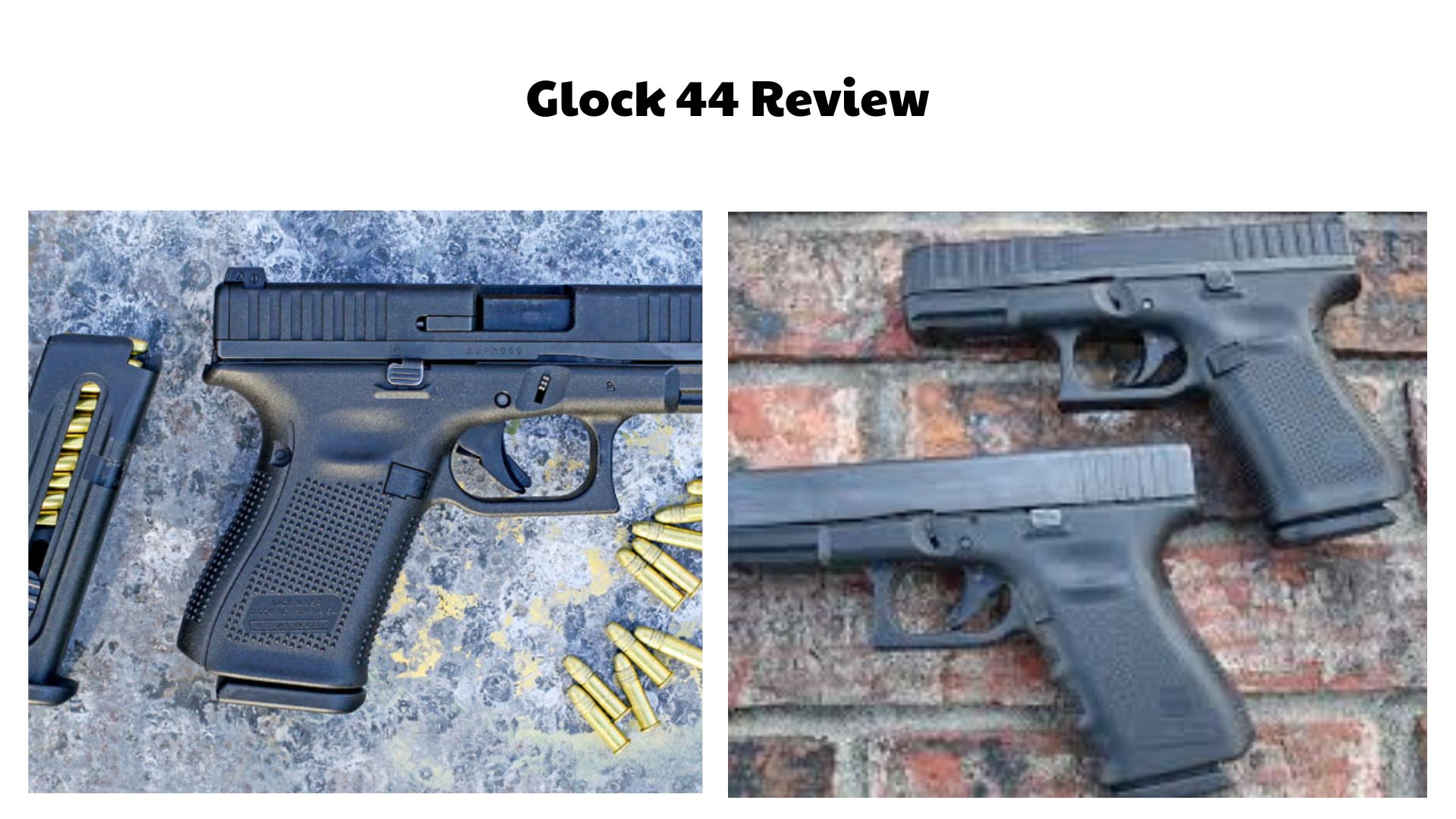

The Glock 44 is a .22 LR rimfire pistol designed and manufactured by Glock as a dedicated training and recreational shooting platform. It mirrors the size, controls, and handling characteristics of the Glock 19, allowing shooters to practice with a low-recoil and low-cost alternative while maintaining a familiar operating system.
It is Glock’s first mass-market .22 LR handgun, created to bridge the gap between affordable training and real-world defensive pistol handling.
Glock introduced the G44 to provide a cost-effective training solution for shooters already familiar with Glock pistols. The .22 LR cartridge significantly reduces ammunition cost and recoil, making it ideal for high-volume practice.
The goal was not to create a defensive firearm, but rather a realistic training analog to the Glock 19 that helps shooters build muscle memory, trigger discipline, and sight alignment skills at a much lower cost per round.
Background and Platform Overview
Development of the Glock 44 as a Rimfire Trainer
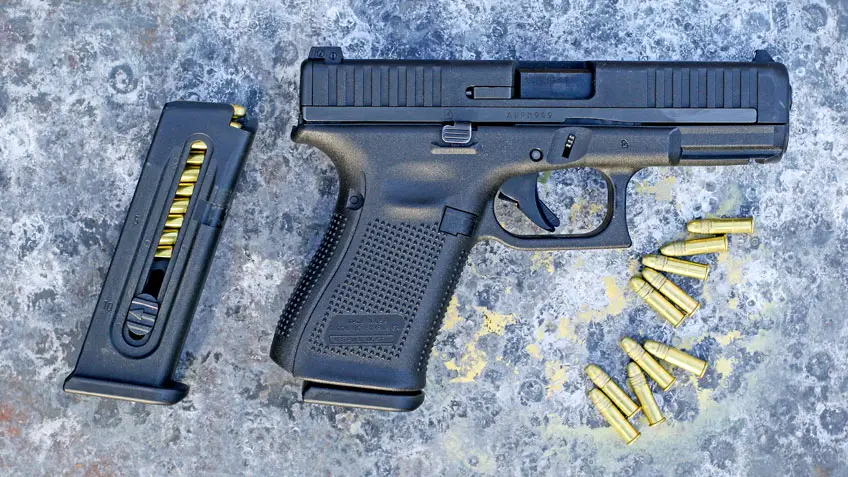
The Glock 44 was developed after increasing demand for a factory Glock-branded rimfire pistol that could replicate the feel of duty-sized Glock models. Previous aftermarket conversions existed, but Glock aimed to deliver a factory-built solution with improved reliability and consistency.
Extensive testing was conducted to ensure the pistol could handle a wide range of .22 LR ammunition while maintaining Glock’s reputation for simplicity and ease of use.
Design Goal: Glock 19-Like Training Experience
A key design objective of the Glock 44 is to closely replicate the Glock 19 in terms of size, grip angle, and control placement. This allows users to transition between the G44 and a centerfire Glock with minimal adjustment.
While internal mechanics differ due to the rimfire system, the external ergonomics are intentionally consistent with Glock’s compact 9mm platform.
Position in the Modern .22 LR Pistol Market
The Glock 44 competes in a strong .22 LR pistol market that includes models from Ruger, Smith & Wesson, and Taurus. Its main advantage is brand consistency and training realism for existing Glock users.
However, it faces competition from highly reliable rimfire pistols that may offer better ammo tolerance or higher capacity at similar price points.
Design and Build Quality
Polymer Frame and Hybrid Slide Construction
The Glock 44 features a standard Glock polymer frame paired with a unique hybrid steel-polymer slide. This design helps reduce weight while ensuring the slide can cycle reliably with the low-energy .22 LR cartridge.
The hybrid construction is a key engineering solution that allows the pistol to maintain Glock-like ergonomics without compromising function in rimfire operation.
Lightweight Design and Training-Focused Ergonomics
One of the standout characteristics of the Glock 44 is its lightweight feel, making it extremely comfortable for extended training sessions. The reduced recoil of .22 LR further enhances shootability for beginners and experienced users alike.
This combination makes it an excellent platform for learning fundamentals such as trigger control, sight alignment, and follow-through.
Glock 19-Style Size and Control Layout
The Glock 44 closely mirrors the Glock 19 in dimensions and control layout. The grip angle, magazine release, slide stop, and takedown procedure are nearly identical, allowing seamless transition training.
This consistency is one of its biggest advantages, especially for shooters already invested in the Glock ecosystem.
Finish Quality and Durability Considerations
The Glock 44 maintains Glock’s reputation for durable finishes and solid construction. While it is not designed for harsh duty use like centerfire models, it still provides good resistance to wear under normal training conditions.
As with most .22 LR firearms, maintenance and cleaning play an important role in ensuring long-term performance, especially due to the nature of rimfire ammunition.
Key Specifications of the Glock 44
Caliber, Capacity, and Barrel Length (.22 LR, 10-Round Mag, ~4.02” Barrel)
The Glock 44 is chambered in .22 LR, one of the most affordable and low-recoil handgun cartridges available. It is designed primarily for training and recreational shooting rather than defensive use.
Standard magazine capacity is 10 rounds, which aligns with rimfire magazine design constraints and training-focused use. The barrel length is approximately 4.02 inches, closely matching the Glock 19 platform to preserve training realism.
Blowback Operation System Overview
Unlike Glock’s centerfire pistols that use a locked-breech system, the Glock 44 operates on a simple blowback mechanism. This system relies on the energy generated by the fired cartridge to cycle the slide.
Because .22 LR is a low-pressure round, blowback operation is ideal, though it can also make the pistol more sensitive to ammunition quality and consistency compared to centerfire Glocks.
Safe Action Striker-Fired Mechanism
The Glock 44 retains Glock’s Safe Action striker-fired system, which includes three passive safeties: trigger safety, firing pin safety, and drop safety. This ensures consistent operation without the need for manual external safeties.
Even though the operating system differs internally from centerfire models, the trigger experience remains familiar to Glock users, supporting effective training transfer.
Weight, Balance, and Carry Characteristics
The Glock 44 is noticeably lighter than the Glock 19 due to its hybrid slide and rimfire design. This reduced weight makes it very comfortable for extended shooting sessions and beginner training.
Its balance closely mimics the Glock 19, allowing shooters to build muscle memory with realistic handling characteristics while enjoying reduced recoil and fatigue.
Trigger Performance
Trigger Pull Weight and Break Characteristics
The Glock 44 features a trigger system similar in weight and feel to other Glock pistols, typically around 5–6 pounds of pull. The break is consistent but not highly refined, emphasizing reliability and training consistency over precision competition feel.
This allows shooters to develop predictable trigger control habits that transfer to other Glock platforms.
Reset Speed and Training Consistency
The trigger reset is short and tactile, which supports fast follow-up shots during training drills. This reset feel is consistent with Glock’s design philosophy, reinforcing muscle memory across platforms.
For new shooters, this helps develop controlled, repeatable trigger cadence during live fire practice.
Comparison to Other Glock Triggers
Compared to centerfire Glock models, the G44 trigger feels very similar but slightly lighter in perceived recoil feedback due to the .22 LR cartridge. Mechanically, the trigger system remains consistent with Glock’s Safe Action design.
However, some shooters note that the rimfire system results in a slightly different overall shooting feel compared to 9mm or .40 S&W models.
Real-World Shooter Feedback on Trigger Feel
Most users describe the Glock 44 trigger as reliable and predictable, making it suitable for training. While it is not considered a “match-grade” trigger, its consistency is highly valued for skill development.
Shooters transitioning from other Glock models generally find the trigger familiar, which reinforces training continuity.
Accuracy and Shooting Performance
Practical Accuracy at Training Distances (15–25 Yards)
At typical training distances, the Glock 44 delivers solid accuracy, with most shooters achieving consistent groupings when using quality ammunition. Its Glock Marksman Barrel contributes to improved shot consistency.
While not designed for precision competition, it performs very well for skill-building and recreational shooting.
Recoil Characteristics and Follow-Up Shot Speed
Recoil is extremely mild due to the .22 LR cartridge, allowing for very fast follow-up shots and minimal muzzle movement. This makes it an excellent platform for learning sight tracking and trigger control.
Beginners benefit significantly from the reduced recoil, which allows them to focus on fundamentals rather than managing recoil impulse.
Role of the Glock Marksman Barrel in Precision
The Glock 44 includes a Glock Marksman Barrel (GMB), which enhances mechanical accuracy through improved rifling and tighter manufacturing tolerances.
This barrel design helps the pistol achieve more consistent shot placement, especially during controlled slow-fire training.
Effectiveness for Skill Development and Dry Recoil Training
The Glock 44 is highly effective as a training tool due to its low recoil and realistic ergonomics. It allows shooters to practice trigger control, grip consistency, and sight alignment without the cost or recoil of centerfire ammunition.
This makes it especially valuable for high-volume training sessions and beginner development programs.
Reliability and Ammunition Sensitivity
Break-In Period and Early Use Behavior
The Glock 44 typically shows a noticeable break-in period during its first few hundred rounds. During this stage, some shooters may experience minor cycling inconsistencies as internal components settle and smooth out through use.
This behavior is relatively common among .22 LR pistols, especially those designed to replicate centerfire ergonomics. After the break-in phase, reliability generally improves when paired with appropriate ammunition and proper maintenance.
Ammunition Dependence (High-Velocity vs Bulk .22 LR)
One of the most important factors affecting Glock 44 reliability is ammunition selection. The pistol tends to perform best with high-velocity .22 LR rounds, which generate enough energy to ensure consistent cycling.
Bulk-pack or low-powered .22 LR ammunition may cause occasional feeding or ejection issues due to insufficient energy in the blowback system. For best results, shooters often test multiple brands to find the most reliable option for their specific pistol.
Common Malfunctions (Stovepipes, FTF, FTE)
Like many rimfire firearms, the Glock 44 can experience occasional malfunctions such as stovepipes, failure to feed (FTF), or failure to eject (FTE). These issues are typically linked to ammunition variability, magazine condition, or insufficient lubrication.
While not uncommon in .22 LR pistols, these malfunctions can be minimized through proper cleaning, using quality ammunition, and maintaining magazines in good condition.
Cleaning Frequency and Maintenance Requirements
The Glock 44 requires more frequent cleaning than centerfire Glock models due to the dirty nature of .22 LR ammunition. Carbon buildup and debris can accumulate quickly, affecting cycling reliability if not addressed.
Regular cleaning after each range session is recommended, especially for users engaging in high-volume training. Proper lubrication of key contact points also helps maintain smooth operation.
Pros and Cons of the Glock 44
Key Advantages (Low Recoil, Training Value, Familiar Controls, Low Cost)
The Glock 44 offers several major advantages, starting with its extremely low recoil, which makes it ideal for beginners and extended training sessions. The .22 LR cartridge also provides significant cost savings, allowing shooters to practice more frequently.
Its most valuable feature is its training realism—because it closely replicates the Glock 19 in size and controls, it enables effective skill transfer between rimfire practice and centerfire defensive pistols.
Additionally, its familiar Glock Safe Action system ensures consistency for users already trained on other Glock models.
Main Drawbacks (Ammo Sensitivity, Capacity, Training Limitations)
Despite its strengths, the Glock 44 has some limitations. The most notable is its sensitivity to ammunition quality, as it performs best with high-velocity .22 LR rounds and may struggle with weaker bulk ammunition.
Magazine capacity is also limited to 10 rounds due to rimfire constraints, which may feel restrictive compared to centerfire training pistols.
Finally, while it is an excellent training tool, it is not intended for defensive use, meaning its role is limited strictly to practice, skill development, and recreational shooting.
Glock 44 vs Competitors
Comparison with Ruger Mark IV
The Ruger Mark IV is one of the most respected .22 LR pistols on the market, but it serves a different purpose than the Glock 44. The Mark IV is a precision-oriented target pistol with a heavy steel frame and excellent inherent accuracy, making it popular for bullseye shooting and competition use.
In contrast, the Glock 44 is designed as a training tool that mimics the Glock 19 platform. While the Ruger excels in accuracy and mechanical precision, the Glock 44 offers superior “duty gun realism” for shooters training for centerfire defensive pistols.
Comparison with Smith & Wesson M&P22
The Smith & Wesson M&P22 Compact is another Glock 44 competitor focused on defensive-style training. It shares a similar polymer frame and striker-fired design, but is generally known for being more ammo-sensitive depending on ammunition type.
The Glock 44 stands out due to its closer replication of Glock 19 ergonomics, making it a better transition trainer for existing Glock users. However, the M&P22 often offers higher magazine capacity options and slightly different ergonomic feel depending on shooter preference.
Comparison with Taurus TX22
The Taurus TX22 is one of the strongest competitors in the .22 LR pistol category, often praised for its reliability, 16-round magazine capacity, and value pricing. Many shooters consider it one of the best “fun range pistols” in its class.
Compared to the Glock 44, the TX22 is generally more forgiving with ammunition and offers higher capacity. However, the Glock 44 wins in training realism because its size, grip angle, and controls closely match the Glock 19 platform.
In short, the TX22 prioritizes performance and capacity, while the Glock 44 prioritizes training consistency with Glock muscle memory.
Position in the .22 LR Training Pistol Market
The Glock 44 occupies a unique niche in the .22 LR market: it is not the most accurate, highest-capacity, or most feature-rich rimfire pistol, but it is one of the best training replicas of a duty handgun platform.
Market comparisons show that while competitors like the TX22 and Ruger Mark IV may outperform it in raw shooting enjoyment or precision, the Glock 44 is often chosen specifically for skill transfer to Glock centerfire pistols.
Final Verdict
Is the Glock 44 Worth It for Training?
Yes, the Glock 44 is worth it if your primary goal is structured training. Its biggest advantage is not performance in isolation, but how effectively it replicates the Glock 19 shooting experience at a fraction of the cost per round.
While it may require more attention to ammunition selection and cleaning than some competitors, it delivers excellent value as a dedicated training platform for building fundamentals like trigger control, grip consistency, and sight alignment.
Who Should Buy the Glock 44?
The Glock 44 is best suited for shooters who already own or plan to own a Glock 19 or similar Glock pistol and want to train more affordably. It is also a strong choice for new shooters who want low recoil and a familiar defensive-style platform.
However, if the goal is maximum reliability with minimal maintenance or pure accuracy-focused rimfire shooting, alternatives like the Ruger Mark IV or Taurus TX22 may be better options. The Glock 44 is ultimately a training tool first, not a general-purpose .22 LR pistol.
Frequently Asked Questions (FAQ) – Glock 44
1. What is the Glock 44 used for?
The Glock 44 is primarily a training and recreational shooting pistol. It is designed to replicate the size and handling of the Glock 19 while using inexpensive .22 LR ammunition. This makes it ideal for practicing fundamentals such as grip, trigger control, and sight alignment without the cost and recoil of centerfire pistols.
2. Is the Glock 44 a defensive pistol?
No, the Glock 44 is not intended for self-defense use. It is chambered in .22 LR, which lacks the energy and reliability standards typically required for defensive firearms. Its main purpose is training and range practice.
3. What caliber is the Glock 44?
The Glock 44 is chambered in .22 Long Rifle (LR), one of the most affordable and low-recoil handgun cartridges available. It is widely used for training, plinking, and small-game shooting.
4. How many rounds does the Glock 44 hold?
The Glock 44 uses 10-round magazines due to .22 LR design limitations and regulatory considerations in some regions. This lower capacity is typical for rimfire pistols.
5. Why does the Glock 44 only hold 10 rounds?
The .22 LR cartridge is small and uses rimfire ignition, which requires specific magazine geometry. Glock also designed the 10-round capacity to ensure reliable feeding and consistent performance during training.
6. Is the Glock 44 good for beginners?
Yes, the Glock 44 is excellent for beginners because it has very low recoil, simple controls, and a familiar Glock-style layout. It allows new shooters to focus on fundamentals without being intimidated by recoil.
7. Does the Glock 44 feel like a Glock 19?
Yes, one of the main design goals of the Glock 44 is to replicate the size, grip angle, and control layout of the Glock 19. This allows users to transfer training skills between the two platforms effectively.
8. Is the Glock 44 reliable?
The Glock 44 is generally reliable when using high-quality, high-velocity .22 LR ammunition. However, like most rimfire pistols, it can be more sensitive to ammo selection and may require more maintenance than centerfire Glocks.
9. Does the Glock 44 jam a lot?
It does not “jam a lot” when properly maintained and fed with quality ammunition, but rimfire pistols are naturally more prone to malfunctions such as stovepipes or failures to eject compared to centerfire handguns.
10. What type of ammo works best in Glock 44?
High-velocity .22 LR ammunition tends to perform best in the Glock 44. Many users find that bulk or low-powered ammo may cause cycling issues, while premium brands provide more consistent reliability.
11. Does the Glock 44 require a break-in period?
Yes, many users report a short break-in period during the first few hundred rounds. During this time, the pistol may experience minor malfunctions that typically decrease as the firearm settles in.
12. How accurate is the Glock 44?
The Glock 44 is quite accurate for a .22 LR pistol, especially at typical training distances of 10–25 yards. Its Glock Marksman Barrel helps improve consistency and shot placement.
13. What is the barrel length of the Glock 44?
The Glock 44 has a barrel length of approximately 4.02 inches, closely matching the Glock 19 for realistic training comparison.
14. Is the Glock 44 easy to shoot?
Yes, it is very easy to shoot due to its minimal recoil. This makes it especially useful for new shooters or those practicing high-volume training sessions.
15. Does the Glock 44 have recoil?
It has extremely light recoil because of the .22 LR cartridge. Most shooters describe it as very soft and easy to control.
16. Is the Glock 44 good for concealed carry?
No, the Glock 44 is not designed for concealed carry. It is a training pistol and lacks the defensive reliability and power needed for personal protection.
17. How heavy is the Glock 44?
The Glock 44 is lightweight compared to centerfire Glock pistols due to its hybrid slide and rimfire design. This makes it comfortable for long training sessions.
18. What makes the Glock 44 different from other Glock pistols?
The main difference is that it is chambered in .22 LR and uses a hybrid steel-polymer slide with a blowback system instead of Glock’s standard locked-breech design.
19. Is the Glock 44 good for training?
Yes, it is specifically designed for training. It allows shooters to practice Glock fundamentals at a much lower cost per round.
20. Is the Glock 44 better than the Glock 19?
Not directly. The Glock 19 is a defensive 9mm pistol, while the Glock 44 is a rimfire training tool. They are designed for different purposes.
21. Can Glock 44 magazines be modified for higher capacity?
While aftermarket extensions may exist, they are not widely recommended because they can reduce reliability. The factory 10-round magazines are optimized for performance.
22. Is the Glock 44 good for dry fire training?
Yes, but it is especially effective when combined with live-fire training due to its realistic Glock 19 ergonomics.
23. How often should the Glock 44 be cleaned?
It should be cleaned more frequently than centerfire pistols, ideally after every range session, due to the dirty nature of .22 LR ammunition.
24. Does the Glock 44 rust easily?
No, it has a durable finish that resists corrosion, but regular maintenance is still important to ensure longevity.
25. Is the Glock 44 good for kids or youth training?
Yes, under proper supervision, it is often used for youth training because of its low recoil and safe handling characteristics.
26. Can the Glock 44 shoot suppressed?
Yes, it can be used with a suppressor if properly threaded barrels and legal requirements are met, though reliability may vary depending on ammunition.
27. Is the Glock 44 reliable with cheap ammo?
It can run cheap ammo, but reliability may decrease. High-velocity ammunition is generally recommended for best performance.
28. What is the trigger like on Glock 44?
The trigger is similar to other Glock pistols, with a consistent pull and short reset, though not considered highly refined.
29. Does the Glock 44 have a safety?
It uses Glock’s Safe Action system with internal safeties rather than a manual external safety.
30. Is the Glock 44 good for teaching firearm safety?
Yes, it is widely used in training environments to teach safe handling due to its low recoil and familiar controls.
31. How does the Glock 44 compare to Ruger Mark IV?
The Ruger Mark IV is more accurate and target-focused, while the Glock 44 is better for defensive pistol training realism.
32. How does it compare to Taurus TX22?
The TX22 offers higher capacity and better ammo tolerance, while the Glock 44 provides more realistic Glock 19 training compatibility.
33. Is Glock 44 worth buying?
Yes, if your goal is affordable training with Glock-style ergonomics. It is less ideal if you want a purely reliable .22 LR range pistol.
34. Is Glock 44 good for competition?
No, it is not designed for competition shooting. It is strictly a training and practice pistol.
35. Does Glock 44 use standard Glock sights?
Yes, it uses Glock-compatible sights, allowing for easy upgrades to night sights or fiber optic sights.
36. Can Glock 44 help improve shooting skills?
Yes, it is highly effective for improving fundamentals due to its low recoil and realistic ergonomics.
37. Is Glock 44 durable?
Yes, it is durable for a rimfire pistol, but it is not designed for heavy-duty service use like centerfire Glock models.
38. What are common issues with Glock 44?
Common issues include ammo sensitivity, occasional failures to eject, and magazine-related feeding problems with low-quality ammunition.
39. Does Glock 44 require special magazines?
Yes, it uses dedicated .22 LR Glock 44 magazines that are not interchangeable with centerfire Glock magazines.
40. Is Glock 44 good for plinking?
Yes, it is excellent for recreational shooting and plinking due to its low cost per round and easy handling.
41. Can Glock 44 be upgraded?
Yes, it supports sight upgrades and some accessories, though aftermarket options are more limited than Glock centerfire models.
42. Is Glock 44 loud?
It is less loud than centerfire pistols, but still produces standard firearm noise typical of .22 LR firearms.
43. Does Glock 44 have slide lock issues?
Some users report occasional slide lock inconsistencies, often related to ammunition or grip technique.
44. Is Glock 44 good for concealed practice training?
Yes, it is useful for practicing draw and fire drills in a low-cost training environment.
45. Can Glock 44 be used in professional training courses?
Yes, many instructors use it as a training aid for fundamentals, especially for beginners.
46. What is the main purpose of Glock 44?
Its main purpose is affordable, realistic training for Glock pistol users using .22 LR ammunition.
47. Is Glock 44 better than airsoft for training?
Yes, because it provides real recoil impulse, live-fire experience, and realistic ballistic feedback.
48. Is Glock 44 suitable for left-handed shooters?
Yes, it is generally ambidextrous-friendly due to Glock’s simple control layout.
49. What is the biggest weakness of Glock 44?
Its biggest weakness is ammunition sensitivity, which can affect reliability compared to centerfire pistols.
50. Final question: Is Glock 44 worth it overall?
Yes, the Glock 44 is worth it for shooters who prioritize training efficiency, low recoil, and Glock platform familiarity, but it is not a replacement for a defensive handgun.
Read more: