
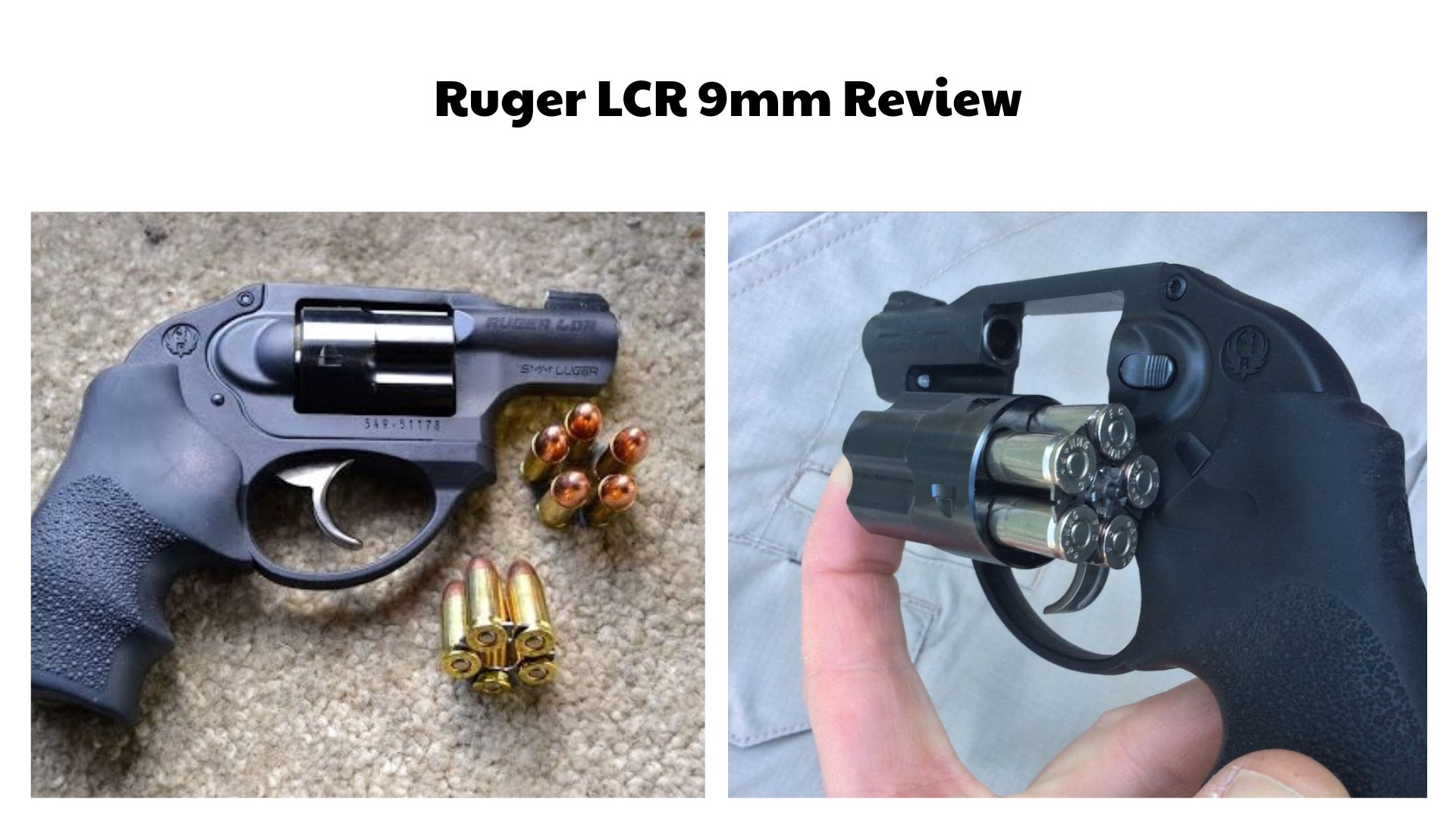

The Ruger LCR 9mm is a lightweight snub-nose revolver designed specifically for concealed carry, backup defense, and simple everyday personal protection. It belongs to Ruger’s modern LCR (Lightweight Compact Revolver) family, which focuses on reducing weight while maintaining defensive reliability.
What makes this model particularly notable is its chambering in 9mm Luger, a cartridge more commonly associated with semi-automatic pistols. This gives users the advantage of widely available defensive ammunition combined with the mechanical simplicity and reliability of a revolver platform.
The LCR 9mm is positioned as a compact alternative to small semi-auto pistols, appealing to shooters who prioritize simplicity, reliability, and minimal maintenance over high capacity and advanced features.
History and Development of the Ruger LCR Series
The Ruger LCR series was introduced in 2009 as a modern redesign of the traditional lightweight carry revolver concept. Ruger aimed to replace older J-frame-style revolvers with a more advanced, lightweight, and ergonomically improved platform.
One of the key innovations of the LCR design is its hybrid construction, which combines a polymer fire control housing with a stainless steel upper frame and cylinder. This significantly reduces weight while maintaining strength where it is needed most.
Over time, the LCR platform expanded into multiple calibers, including .38 Special, .357 Magnum, .22 LR, and eventually 9mm Luger. Each variant was developed to meet specific defensive needs while retaining the same lightweight philosophy.
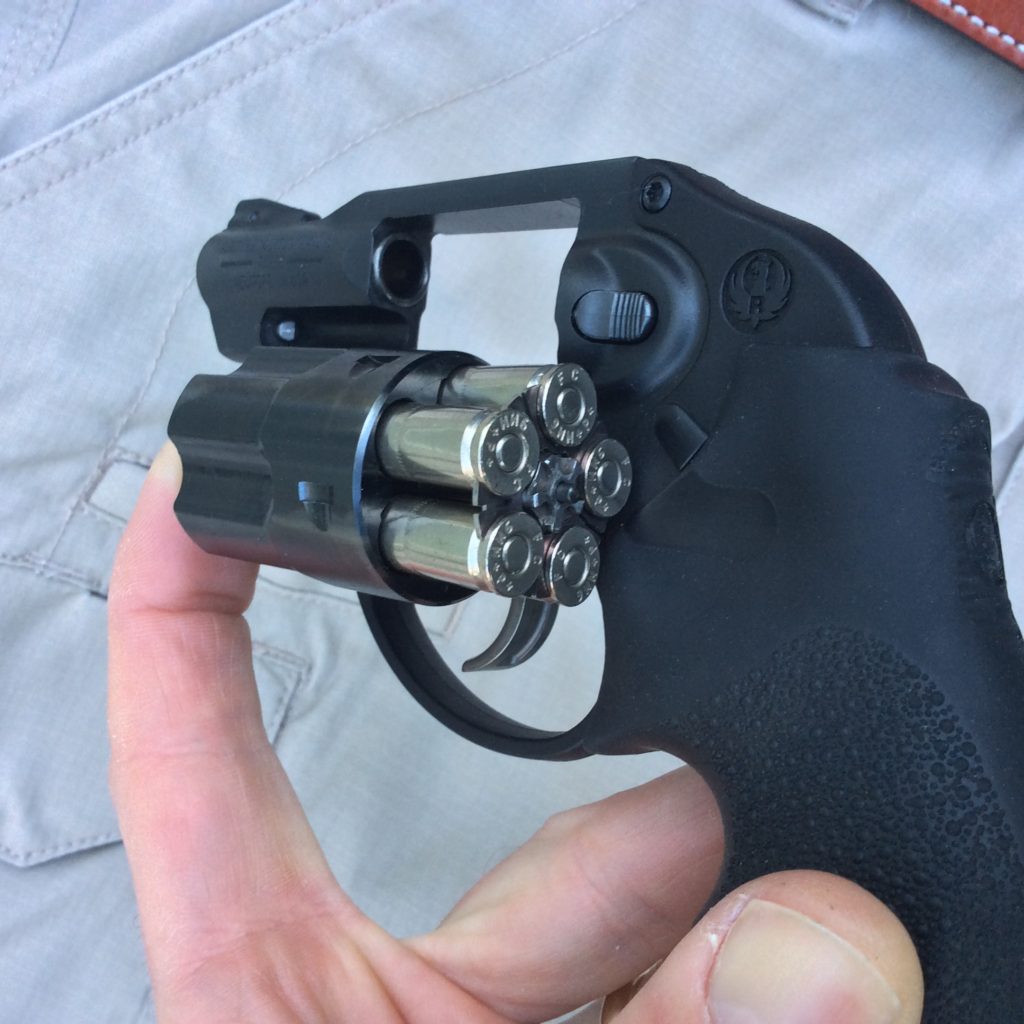
The 9mm version was specifically engineered to use rimless cartridges through the use of moon clips, allowing the revolver to function efficiently with modern defensive ammunition while preserving the revolver’s simplicity.
Key Specifications of Ruger LCR 9mm
- Caliber: 9mm Luger
- Barrel Length: 1.875 inches (snub-nose design)
- Capacity: 5 rounds
- Weight: Approximately 17 ounces
- Frame: Polymer lower with stainless steel upper frame
- Cylinder: Fluted stainless steel
- Action: Double-action only (DAO)
- Reload System: Requires moon clips for 9mm cartridges
These specifications highlight the LCR 9mm’s focus on deep concealment, lightweight carry, and practical defensive use rather than extended-range shooting or high-capacity engagements.
Design & Ergonomics
The Ruger LCR 9mm is engineered for extreme portability and ease of concealment. Its lightweight design makes it one of the easiest revolvers to carry for extended periods without discomfort.
The polymer fire control housing significantly reduces overall weight while maintaining structural integrity. Combined with a stainless steel upper frame and cylinder, the revolver achieves a balance between durability and portability.
Rubberized grips are used to help manage recoil and improve control during firing. Despite its small size, the grip design allows for a secure hold in defensive situations.
The compact cylinder profile makes it suitable for pocket carry or inside-the-waistband (IWB) holsters. Fixed sights provide a simple, low-profile aiming system designed for close-range defensive shooting.
Overall, the design philosophy prioritizes comfort, concealability, and simplicity over advanced features or competition-grade ergonomics.
Moon Clip System Explained
One of the defining features of the Ruger LCR 9mm is its use of moon clips, which are required to properly fire rimless 9mm cartridges in a revolver platform.
Moon clips hold all five rounds together in a circular or partial circular metal frame, allowing them to be loaded and extracted as a single unit. This system ensures proper alignment of cartridges within the cylinder.
In addition to enabling the use of 9mm ammunition, moon clips also significantly speed up reloading compared to traditional revolvers, where each cartridge must be loaded individually.
They also improve extraction reliability, as spent casings are pulled out together when the cylinder is opened.
However, moon clips can be somewhat delicate and require careful handling, as they may bend or deform if not stored or used properly. Despite this limitation, they are essential to the functionality of the 9mm revolver system.
Trigger System & Controls
The Ruger LCR 9mm features a smooth double-action-only (DAO) trigger system designed specifically for defensive use. Unlike traditional snub-nose revolvers that can feel heavy or inconsistent, the LCR benefits from a friction-reducing cam system that helps create a more consistent and manageable trigger pull.
One of the key advantages of this system is the absence of a noticeable “stacking” effect, where trigger pull weight increases sharply toward the end of the stroke. Instead, the LCR’s trigger pull remains relatively smooth and predictable throughout its travel.
The trigger stroke is intentionally long, which enhances safety by reducing the likelihood of negligent discharges under stress. This design prioritizes control and consistency over speed or competition-level precision.
Overall, the trigger system is optimized for defensive shooting scenarios where reliability, simplicity, and repeatable performance matter more than ultra-light or short trigger travel.
Performance Review
Accuracy
The Ruger LCR 9mm delivers effective defensive accuracy at close-range distances, typically within 7 to 10 yards. This aligns with its intended purpose as a concealed carry defensive revolver.
With proper trigger control, the revolver is capable of producing tight groupings suitable for real-world self-defense applications. The fixed sights provide a simple and consistent point-of-aim system that supports repeatable shooting performance.
As with most double-action revolvers, trigger discipline plays a major role in accuracy. Smooth and consistent trigger presses significantly improve shot placement.
Recoil Management
Recoil from the 9mm cartridge is noticeably snappy in the LCR’s lightweight frame. While not unmanageable, it is sharper compared to heavier steel-frame revolvers or semi-automatic pistols.
The rubberized grip helps absorb some of the recoil energy and improves overall control during firing. Additionally, the design of the cylinder and frame helps distribute recoil forces more evenly.
Experienced shooters generally find the recoil manageable, while beginners may require some adjustment due to the lightweight nature of the firearm.
Reliability
The Ruger LCR 9mm is known for its high mechanical reliability, benefiting from the inherent simplicity of a revolver design. With fewer moving parts compared to semi-automatic pistols, there are fewer potential points of failure.
Its reliability is largely dependent on proper use of moon clips, which are required for 9mm cartridge alignment and extraction. When used correctly, the system performs consistently under defensive conditions.
The revolver has a strong track record of functioning reliably with quality defensive ammunition, making it a dependable choice for personal protection.
Concealed Carry & Real-World Use
The Ruger LCR 9mm is an excellent option for concealed carry due to its extremely compact and lightweight design. It is particularly well-suited for users who prioritize deep concealment and ease of carry.
Its small size makes it ideal for pocket carry, ankle carry, or other deep concealment setups where larger firearms would be impractical or uncomfortable.
The simple double-action-only manual of arms is another advantage in high-stress defensive situations, where ease of operation is critical.
However, the revolver’s limited 5-round capacity is a clear trade-off compared to modern semi-automatic pistols, which offer significantly higher ammunition capacity.
As a result, the LCR 9mm is often chosen as a backup or secondary defensive firearm rather than a primary duty weapon. It is especially favored by users who prioritize mechanical simplicity, reliability, and minimal maintenance over firepower.
Ruger LCR 9mm vs Competitors
The Ruger LCR 9mm occupies a unique space in the concealed carry market, competing with both traditional revolvers and modern semi-automatic pistols. Its strengths and weaknesses become more apparent when compared directly with other defensive handgun platforms.
Comparison with Smith & Wesson J-Frame revolvers: The LCR 9mm is often compared to classic J-frame revolvers. While both offer similar concealability and reliability, the LCR stands out with a smoother trigger system and reduced weight thanks to its polymer hybrid construction. Traditional J-frames, however, appeal to shooters who prefer all-metal construction and a more conventional revolver feel.
Comparison with micro 9mm pistols: Compared to modern micro-compact semi-autos, the LCR 9mm trades capacity and faster reload capability for mechanical simplicity. Semi-autos offer higher magazine capacity and quicker reloads, while the revolver provides a simpler manual of arms and fewer failure points under stress.
Comparison with .38 Special revolvers: Against traditional .38 Special revolvers, the LCR 9mm benefits from using widely available 9mm ammunition, which often offers better ballistic performance and lower cost. However, .38 Special revolvers provide greater flexibility in ammunition selection and do not require moon clips.
Overall, the LCR 9mm is strongest in reliability, trigger design, and lightweight construction, while its main drawbacks include limited capacity, dependence on moon clips, and sharper recoil due to its lightweight frame.
Advantages of Ruger LCR 9mm
- Extremely lightweight: One of the easiest revolvers to carry for long periods, ideal for deep concealment.
- Smooth DAO trigger: Consistent double-action-only trigger system designed for defensive shooting.
- High reliability: Revolver design minimizes mechanical failure points.
- 9mm ammunition compatibility: Uses widely available and affordable defensive ammunition.
- Compact design: Excellent for pocket carry and discreet everyday concealment.
- Modern revolver engineering: Improved ergonomics and reduced weight compared to traditional designs.
Disadvantages of Ruger LCR 9mm
- Moon clip requirement: Essential for operation, adding an extra layer of complexity.
- Limited capacity: Only 5 rounds available before needing to reload.
- Snappy recoil: Lightweight frame increases felt recoil compared to heavier handguns.
- Slower reload speed: Revolver reloads are generally slower than semi-automatic magazines.
- Not ideal for training volume: Less suited for high-volume shooting practice or competition use.
- Limited versatility: Lacks modularity and features found in modern striker-fired pistols.
Best Use Cases
The Ruger LCR 9mm is designed around simplicity, concealability, and reliability, making it a specialized defensive tool rather than a general-purpose handgun. Its compact size and lightweight construction make it highly suitable for discreet carry roles.
- Deep concealment or pocket carry handgun: The ultra-compact frame allows it to be carried discreetly in a pocket or small holster without printing, making it ideal for everyday concealment.
- Backup firearm for law enforcement or civilians: Its reliability and simplicity make it a strong secondary weapon option in case a primary firearm becomes unavailable or impractical.
- Simple self-defense option for non-technical users: The double-action-only revolver system provides a straightforward manual of arms with minimal operational complexity.
- Short-range defensive situations: Optimized for close-quarters engagements where rapid deployment and simplicity matter more than capacity or long-range precision.
- Users who prefer revolver reliability: Ideal for shooters who trust mechanical simplicity over semi-automatic systems that require magazines and cycling reliability.
- Lightweight carry option: Its minimal weight makes it comfortable for all-day carry with reduced fatigue and minimal clothing printing.
Final Verdict
The Ruger LCR 9mm represents a modern evolution of the classic concealed carry revolver, blending traditional reliability with contemporary materials and chambering. It is a refined option for users who value simplicity, ease of use, and dependable function under stress.
It is best suited for individuals who prioritize reliability and straightforward operation over capacity, speed reloads, or modular features found in modern semi-automatic pistols.
However, it is not ideal for high-capacity defensive scenarios, rapid reload requirements, or intensive training and competition use. These limitations are the trade-offs of its minimalist revolver design.
Overall, the Ruger LCR 9mm stands as a strong niche option in the modern defensive handgun market and remains one of the most practical and carry-friendly 9mm revolvers available today.
50+ Frequently Asked Questions (FAQ) – Ruger LCR 9mm
1. What is the Ruger LCR 9mm?
The Ruger LCR 9mm is a lightweight, compact snub-nose revolver designed for concealed carry and personal defense. It is part of Ruger’s LCR (Lightweight Compact Revolver) series and is chambered in 9mm Luger, making it one of the few modern revolvers that use this common defensive cartridge.
2. Is the LCR 9mm good for concealed carry?
Yes, it is specifically designed for concealed carry. Its lightweight frame, compact cylinder, and short barrel make it easy to carry discreetly in pocket, ankle, or inside-the-waistband holsters.
3. Why choose a 9mm revolver instead of .38 Special?
The 9mm version offers widely available, often more affordable ammunition with strong defensive performance. However, it requires moon clips, while .38 Special revolvers do not.
4. What is the capacity of the Ruger LCR 9mm?
It holds 5 rounds in the cylinder, which is standard for most compact defensive revolvers.
5. Is 5 rounds enough for self-defense?
Many defensive experts argue that 5 rounds can be sufficient for close-range self-defense scenarios, especially when combined with training and situational awareness. However, it is significantly lower than semi-automatic pistols.
6. What makes the LCR 9mm different from other revolvers?
Its hybrid construction, extremely low weight, and use of moon clips for 9mm ammunition make it more modern compared to traditional steel-frame revolvers.
7. Does the LCR 9mm have a hammer?
No, it is a hammerless double-action-only revolver designed to prevent snagging during concealed carry and ensure smooth deployment.
8. How does the trigger feel?
The trigger is smooth and consistent due to Ruger’s friction-reducing cam system. It has a long pull typical of double-action revolvers but avoids harsh stacking.
9. Is the trigger heavy?
It is heavier than semi-automatic pistols but designed to be smooth and predictable rather than light and short.
10. What are moon clips?
Moon clips are thin metal discs that hold 9mm cartridges together so they can be loaded and extracted from a revolver cylinder efficiently.
11. Are moon clips required?
Yes, because 9mm is a rimless cartridge and cannot function properly in a revolver without them.
12. Are moon clips reliable?
Yes, when properly used, they are very reliable, but they can bend if mishandled, which may affect performance.
13. Is the LCR 9mm reliable?
Yes, revolvers are generally considered extremely reliable due to their simple mechanical design with fewer failure points than semi-autos.
14. What type of ammunition works best?
High-quality 9mm defensive or practice ammunition generally performs best, especially from reputable manufacturers like CCI, Federal, or Speer.
15. Is it ammo-sensitive?
It is less ammo-sensitive than semi-automatic pistols, but consistency improves with quality ammunition and proper maintenance.
16. How accurate is the LCR 9mm?
It is designed for short-range defensive accuracy, typically effective within 7–10 yards, where most self-defense encounters occur.
17. Can it shoot accurately at longer distances?
While possible, accuracy decreases significantly beyond defensive distances due to the short barrel and snub-nose design.
18. Is recoil strong?
Yes, recoil is snappy due to the lightweight frame, though rubber grips help mitigate some of the impact.
19. Is it beginner-friendly?
It can be suitable for beginners due to its simplicity, but recoil and double-action trigger may require practice.
20. Is it good for women or smaller shooters?
Yes, its small size and light weight make it suitable, but recoil management should be considered.
21. How does it compare to semi-automatic pistols?
It is simpler and more reliable mechanically but has lower capacity and slower reload speed compared to semi-autos.
22. Is it better than micro 9mm pistols?
It depends on preference—micro 9mm pistols offer higher capacity, while the LCR offers simplicity and reliability.
23. Does it jam?
Revolvers rarely jam mechanically, but issues can arise if moon clips are damaged or ammunition is faulty.
24. How do you reload it?
You open the cylinder, eject spent cartridges using moon clips, and insert a fresh loaded moon clip into the cylinder.
25. Is reloading fast?
It is slower than magazine-based pistols but faster than loading individual revolver rounds thanks to moon clips.
26. Is it good for home defense?
Yes, it can be used for home defense, especially by users who prefer simplicity and reliability.
27. Can it be used as a backup gun?
Yes, it is commonly used as a backup firearm by both civilians and law enforcement.
28. Is it good for pocket carry?
Yes, its compact size makes it one of the few revolvers suitable for pocket carry with proper holster.
29. Does it have a safety?
No manual safety is required because the long double-action trigger serves as a safety mechanism.
30. Is it drop-safe?
Yes, modern revolver designs like the LCR include internal safety systems to prevent accidental discharge.
31. How heavy is it?
It weighs approximately 17 ounces, making it one of the lightest revolvers in its category.
32. Is it comfortable to carry?
Yes, its low weight and compact size make it very comfortable for all-day concealed carry.
33. Does it print when carried?
It has minimal printing due to its small size, especially when carried in appropriate holsters.
34. What holsters work best?
Pocket holsters, IWB (inside waistband), and ankle holsters are commonly used with the LCR 9mm.
35. Is maintenance difficult?
No, it is relatively simple to maintain compared to semi-automatic pistols.
36. How often should it be cleaned?
Regular cleaning after range sessions is recommended to maintain reliability.
37. Is it durable?
Yes, it is built with a stainless steel upper frame and reinforced polymer housing for durability.
38. Can it handle +P ammunition?
Yes, but recoil becomes more noticeable and wear may increase over time with frequent use.
39. Is it loud to shoot?
Yes, like most short-barrel handguns, it produces a sharp report when fired.
40. Is it good for training?
Yes, but it is more suited for defensive training than high-volume range practice.
41. Is it good for competition shooting?
No, it is not designed for competition due to low capacity and slower reload speed.
42. What is its main purpose?
Its main purpose is concealed carry and personal defense in close-range situations.
43. Does it rust easily?
With proper maintenance, rust is not a major issue due to its stainless steel components.
44. Is it expensive?
It is moderately priced, typically in the mid-range for concealed carry revolvers.
45. Is it worth buying?
Yes, if you value simplicity, reliability, and deep concealment over capacity and speed.
46. What are its biggest drawbacks?
Low capacity, reliance on moon clips, and snappy recoil are the primary drawbacks.
47. Who should not buy it?
Shooters who prioritize high capacity, fast reloads, or competitive shooting may prefer semi-automatic pistols.
48. What makes it unique?
It combines modern lightweight materials with a 9mm revolver design, which is relatively rare.
49. Is it still relevant today?
Yes, it remains relevant for users who prefer revolver simplicity in modern concealed carry roles.
50. What is the final takeaway?
The Ruger LCR 9mm is a highly practical concealed carry revolver that emphasizes simplicity, reliability, and ease of carry over capacity and advanced features.
Read more: