
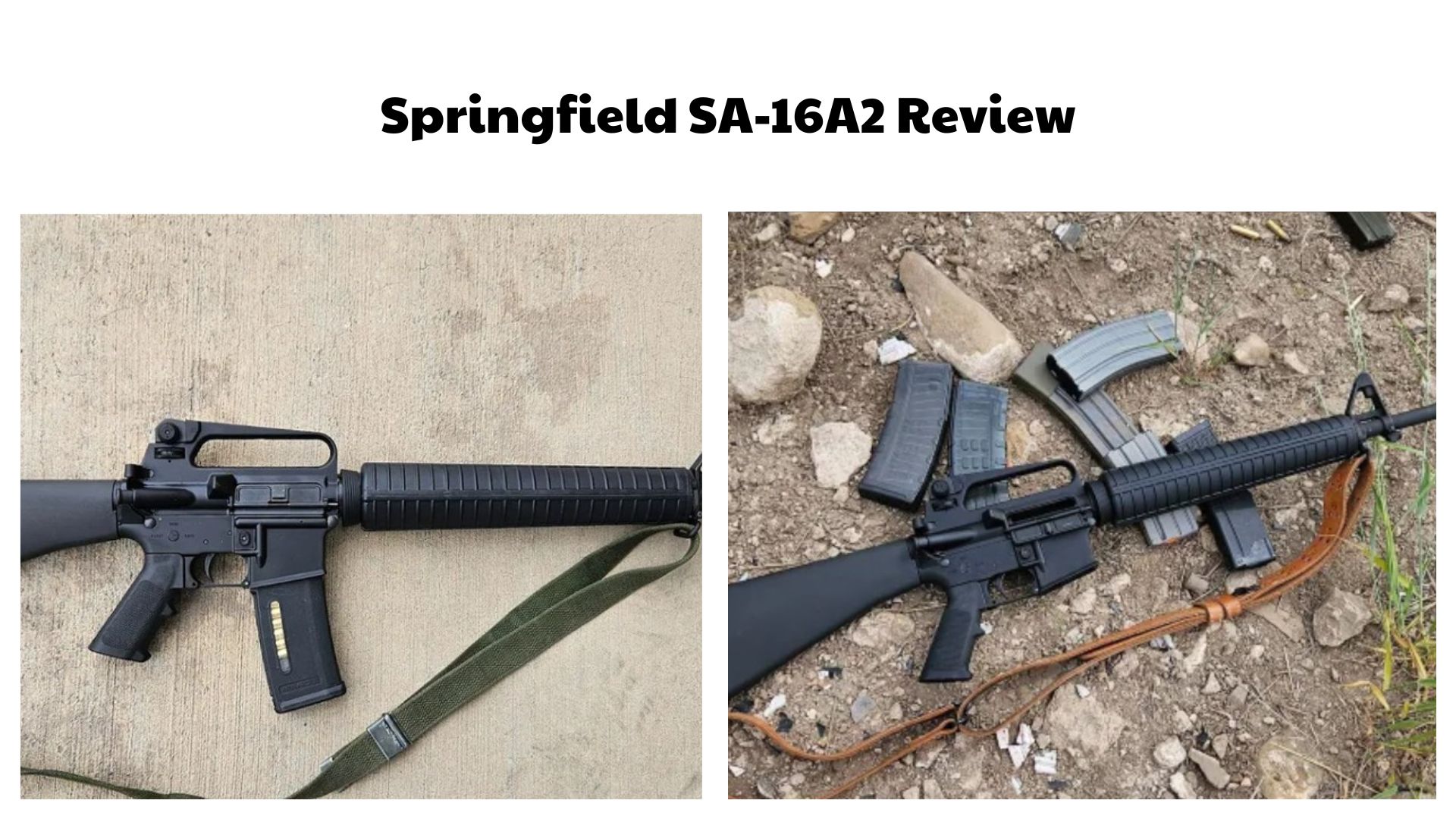

The Springfield SA-16A2 is a modern semi-automatic tribute to the classic M16A2 rifle. It combines the familiar 20-inch barrel, fixed A2 stock, carry-handle upper, A2 sights, rifle-length gas system, and black polymer furniture with updated Springfield Armory manufacturing. In this Springfield SA-16A2 Review, we will cover its specifications, design, ergonomics, controls, recoil, accuracy, reliability, maintenance, accessories, best use cases, comparisons, buyer fit, and final verdict. The SA-16A2 is not a lightweight modern tactical carbine. It is a retro-inspired rifle for shooters who appreciate the M16A2 profile, simple iron sights, smooth rifle-length recoil, and old-school AR handling.
Quick Verdict
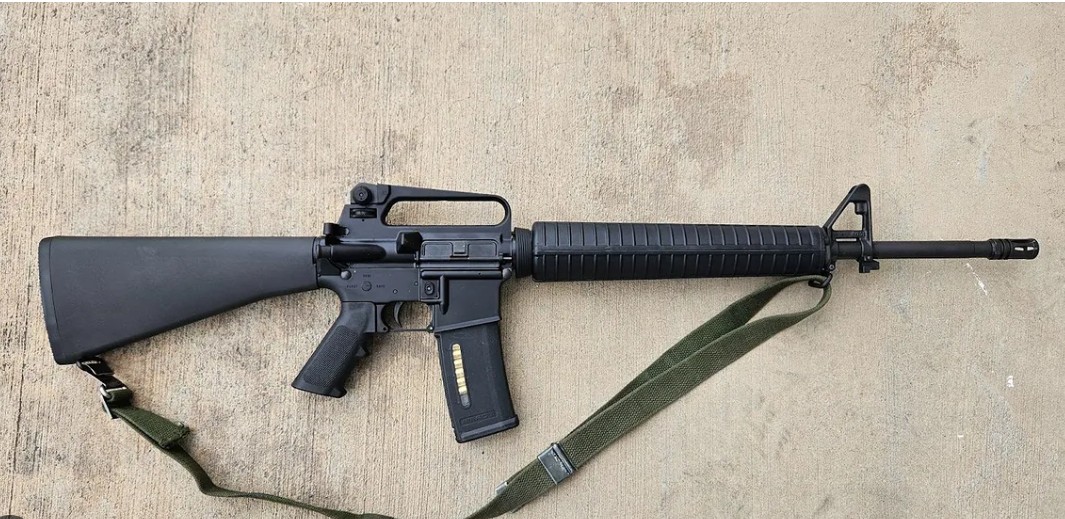
The Springfield SA-16A2 is best for shooters who want a faithful, shootable, semi-automatic A2-style rifle without hunting down surplus parts or building one from scratch. It is not the most modular AR-15. It is not the shortest, lightest, or most optic-friendly rifle in Springfield’s lineup. That is not the point.
The point is classic handling, historical feel, and practical reliability. Springfield’s version includes forged 7075-T6 receivers, a 20-inch chrome-lined barrel, rifle-length gas, A2 sights, fixed stock storage, and the company’s Accu-Tite tension system. The Armory Life notes that the SA-16A2 uses forged 7075-T6 aluminum receivers, a Type III hardcoat anodized finish, a 20-inch chrome-lined barrel, and a 1:7 twist.
Independent reviews are generally positive. On Target Magazine reported flawless reliability with both metal and synthetic magazines and described practical accuracy in the 2-4 MOA range with common 5.56 and .223 ammunition. GunMade and The Mag Shack both highlight the rifle’s authenticity, Accu-Tite receiver fit, reliability, included 30-round magazine, rifle case, and functional bayonet lug, while noting limited accessory options.
What Is the Springfield SA-16A2?
The Springfield SA-16A2 is a semi-automatic AR-pattern rifle inspired by the M16A2. It is chambered in 5.56x45mm NATO and can also use .223 Remington ammunition where appropriate. It uses standard STANAG-pattern magazines and a direct-impingement gas system.
The rifle is designed to recreate the look and feel of the M16A2 while being sold as a modern civilian semi-automatic rifle. The official Springfield SA-16 rifle page describes it as a faithful recreation of the M16A2, one of the most recognizable service rifles in modern history.
The SA-16A2 is not a flat-top optics-ready AR. It has the classic carry-handle upper with integrated A2 rear sight. This makes it very different from modern M-LOK carbines with free-float handguards and low-power variable optics. The SA-16A2 is for shooters who want the A2 experience: iron sights, full-length handguard, fixed stock, and rifle-length gas.
Key Specifications
| Feature | Springfield SA-16A2 Specification |
|---|---|
| Caliber | 5.56x45mm NATO / .223 Remington |
| Action | Semi-automatic direct impingement |
| Barrel Length | 20 inches |
| Barrel Material | 4150 CMV, chrome lined |
| Twist Rate | 1:7 inches |
| Gas System | Rifle length |
| Upper Receiver | Forged 7075-T6 aluminum, Type III hardcoat anodized |
| Lower Receiver | Forged 7075-T6 aluminum, Type III hardcoat anodized, Accu-Tite tension system |
| Sights | A2 front sight and carry-handle A2 rear sight |
| Stock | Fixed A2-pattern stock with storage compartment |
| Magazine | 30-round STANAG-pattern magazine where legal |
| Weight | Commonly listed around 7.5 pounds |
| Purpose | Retro rifle, range use, training, collection, survival/general-purpose rifle |
Springfield’s product listing confirms the 20-inch chrome-lined 4150 CMV barrel, 1:7 twist, A2 sights, forged 7075-T6 receivers, hardcoat anodized finish, M4 feed ramps, rifle-length gas system, and Accu-Tite tension system. Retailer data also commonly lists the rifle with 30-round capacity and about 7.5 pounds of weight.
Design and Build Quality
The SA-16A2 is built around a classic A2 configuration. That means a fixed carry handle, A2 rear sight, fixed A2 stock, round polymer handguards, front sight base, rifle-length gas system, and 20-inch barrel. This layout gives the rifle its unmistakable profile.
The upper and lower receivers are forged 7075-T6 aluminum with Type III hardcoat anodizing. That is standard serious AR receiver construction. The barrel is chrome lined, which helps with corrosion resistance, service life, and easier cleaning. The 1:7 twist is historically appropriate for stabilizing longer 5.56 projectiles and is still useful today.
The rifle also includes Springfield’s Accu-Tite tension system in the lower receiver. This system is designed to reduce receiver play between the upper and lower. GunMade and The Mag Shack both call out the Accu-Tite system as a positive feature because it gives the rifle a more secure receiver fit.
The build quality is best understood as modern production with retro intent. It is not a free-floated precision AR. It is also not a loose surplus-style clone. It is a clean, factory-built A2-style rifle with modern fit and finish.
Ergonomics and Handling
The SA-16A2 handles like a full-length rifle, not a modern compact carbine. The 20-inch barrel gives it a longer sight radius and smoother balance, but it also makes the rifle longer overall. The fixed stock gives a stable cheek weld, though the length of pull may feel long for smaller shooters or those wearing heavy gear.
The A2 grip is basic. It works, but it is not as comfortable as many modern aftermarket grips. The round handguards are traditional and simple. They are comfortable enough for range use, but they do not offer modern accessory mounting like M-LOK or Picatinny rails.
American Rifleman describes the SA-16A2 as using a basic A2 mil-spec pistol grip and fixed A2-pattern buttstock with a textured rear pad and trapdoor storage compartment. It also notes that the controls are mil-spec, including a single-side selector, magazine release, and bolt release.
The rifle points naturally from supported and standing positions. The longer barrel gives it a steady front end. It is not as quick in tight spaces as a 16-inch carbine, but it feels smooth and deliberate on the range.
Capacity and Loading System
The SA-16A2 uses standard AR-15/STANAG-pattern detachable box magazines. Springfield and retailer listings commonly show the rifle shipping with a 30-round magazine where legal.
The loading system is familiar to anyone who has used an AR-style rifle. Insert a loaded magazine, use the charging handle or bolt catch to chamber a round, and fire in semi-automatic mode. The magazine release and bolt catch are standard AR controls.
Because this rifle uses common AR magazines, support is excellent. Aluminum GI-style magazines, Magpul PMAGs, Lancer magazines, and other quality options are widely available. Buyers should test their preferred magazines for reliability, especially if the rifle will be used for training, competition, or emergency preparedness.
Magazine laws vary by state and locality. A 30-round magazine is not legal everywhere. Buyers must check current laws before purchasing, transporting, or using standard-capacity magazines.
Barrel, Sights, and Controls
The 20-inch barrel is central to the SA-16A2’s identity. It gives the rifle the classic A2 length and supports the rifle-length gas system. A 20-inch 5.56 barrel can also provide higher velocity than shorter carbine barrels, depending on ammunition.
The barrel is 4150 CMV and chrome lined with a 1:7 twist. That is a practical choice for a service-rifle-style build. Chrome lining is not always associated with maximum benchrest precision, but it is valued for durability and corrosion resistance.
The sights are A2 iron sights. The front sight is mounted in the front sight base. The rear sight is built into the fixed carry handle and provides elevation and windage adjustment. This is one of the main reasons to buy the rifle. The A2 sight system is durable, useful, and historically important.
The controls are standard AR-style controls. The safety selector is on the left side. The magazine release is on the right. The bolt catch is on the left side of the lower receiver. The charging handle is at the rear of the upper receiver. This is not an ambidextrous modern lower, and that is part of the A2-correct experience.
Recoil and Shooting Experience
The SA-16A2 is pleasant to shoot. A 20-inch 5.56 rifle with rifle-length gas usually has a smoother recoil impulse than many shorter carbine-gas ARs. Recoil is light, the sight picture settles quickly, and the rifle encourages deliberate iron-sight practice.
The fixed stock helps distribute recoil consistently. The longer barrel and full-length handguard give the rifle a balanced feel from supported positions. It is not featherlight, but that weight helps the gun stay stable.
Shoot-On praised the rifle’s shootability and stated that one could not ask for better accuracy from an AR-style rifle with a mil-spec trigger and non-free-floated handguard. It also described the mil-spec trigger as having a longer pull but being smooth and easy to stage.
The SA-16A2 is especially satisfying for shooters who enjoy traditional marksmanship. It rewards proper sight alignment, breathing, trigger control, and position work. It is not built around lasers, lights, or red dots. It is built around fundamentals.
Accuracy and Reliability
The SA-16A2 is not marketed as a precision rifle. It has a non-free-floated handguard, mil-spec-style trigger, chrome-lined barrel, and A2 sights. That combination is best understood as service-rifle practical accuracy rather than match-grade precision.
On Target Magazine reported 2-4 MOA accuracy with most common military-style 5.56 NATO and .223 ammunition, with one five-round group measuring about 2 inches at 100 yards using Federal XM193. The same review also reported a 3.5-inch 10-shot rapid group at 100 yards from prone on an IDPA target.
Reliability appears strong. On Target Magazine reported flawless reliability with both metal and several synthetic magazines. GunMade and The Mag Shack also list reliability with different ammunition and magazines as a major positive.
For a rifle like this, practical reliability matters more than tiny groups. The SA-16A2 is a range rifle, training rifle, retro collector rifle, and possible emergency-use rifle. In those roles, consistent function with common ammunition and magazines is exactly what buyers want.
Pros and Cons
Pros
- Faithful A2-style appearance and handling.
- 20-inch chrome-lined 4150 CMV barrel.
- Rifle-length gas system provides smooth shooting.
- Forged 7075-T6 aluminum receivers.
- Type III hardcoat anodized finish.
- Accu-Tite tension system improves receiver fit.
- A2 iron sights are durable and historically correct.
- Uses common AR-15/STANAG magazines.
- Fixed stock includes storage compartment.
- Strong reported reliability with different magazines and ammunition.
- Excellent choice for retro rifle fans and iron-sight training.
Cons
- Limited accessory mounting compared with modern M-LOK rifles.
- Carry-handle upper is less convenient for optics.
- Fixed stock may feel long for some shooters.
- Mil-spec trigger is usable but not match-grade.
- Non-free-floated handguard limits precision potential.
- Longer overall length than modern 16-inch carbines.
- Not ideal for home defense compared with shorter rifles or shotguns.
Best Use Cases
Retro Rifle Collection
The SA-16A2 is an easy recommendation for collectors who want an A2-style rifle without building from parts. It captures the general look and feel of the M16A2 while being a new-production semi-automatic rifle.
Iron-Sight Training
This rifle is excellent for learning iron sights. The A2 sight system is adjustable, durable, and capable. It forces the shooter to practice fundamentals instead of relying on optics.
Range Shooting
The rifle is fun at the range. It has low recoil, good reliability, and enough accuracy for normal 100- to 300-yard shooting with common ammunition. The long sight radius makes it satisfying for practical marksmanship.
Survival or Emergency Rifle
USCCA described the SA-16A2 as a strong emergency survival rifle because it is reliable, durable, easy to maintain, resistant to corrosion, not battery-dependent, and uses common parts and ammunition.
Historical Familiarity
For veterans, service-rifle fans, and shooters who grew up seeing A2 rifles, the SA-16A2 offers nostalgia with modern production quality. It has a “cool factor” that many flat-top carbines simply do not have.
Comparison With Similar Rifles
| Rifle | Main Strength | Best For |
|---|---|---|
| Springfield SA-16A2 | A2 authenticity, 20-inch barrel, iron sights | Retro collectors, iron-sight training, range use |
| Colt AR-15A4 | Classic 20-inch AR heritage | Buyers who want Colt branding and A4-style configuration |
| FN 15 Military Collector M16 | Military-style collector appeal | Collectors wanting FN military lineage |
| Springfield SAINT Victor 5.56 | Modern features and accessory support | Users wanting a practical modern AR carbine |
| Palmetto State Armory A2-style rifles | Budget retro builds | Cost-conscious A2-style buyers |
| Brownells Retro Rifles | Retro configurations and clone appeal | Builders and collectors focused on historical style |
Springfield SA-16A2 vs Modern AR-15 Carbine
A modern AR-15 carbine usually has a 16-inch barrel, collapsible stock, flat-top upper, M-LOK handguard, and easy optic mounting. It is more compact and more accessory-friendly than the SA-16A2.
The SA-16A2 wins on classic feel, sight radius, smooth rifle-length gas, and retro appeal. It is less flexible, but more distinctive. Choose a modern carbine if you want lights, optics, suppressor-ready setups, and compact handling. Choose the SA-16A2 if you want the A2 experience.
Springfield SA-16A2 vs Colt AR-15A4
The Colt AR-15A4 is another classic-style 20-inch AR option, but it is closer to an A4 with a detachable carry handle in many configurations. The Springfield SA-16A2 leans into the fixed-carry-handle A2 profile.
The Colt has brand heritage. The Springfield has strong factory features, modern availability, and the Accu-Tite tension system. The better choice depends on whether the buyer prioritizes Colt name recognition or Springfield’s specific A2-style package.
Springfield SA-16A2 vs FN 15 Military Collector M16
The FN 15 Military Collector M16 appeals to buyers who want military-style authenticity from a company with deep U.S. service-rifle manufacturing history. It is often priced higher and may appeal more to serious collectors.
The Springfield SA-16A2 is a practical alternative for shooters who want A2 handling and new-production reliability without necessarily paying for the FN collector angle. Both rifles appeal to similar nostalgia, but the Springfield may be easier to justify as a shooter.
Important Note: This Is Not a Shotgun Review
The requested outline included “comparison with similar shotguns” and “KelTec KS7 vs KelTec KSG.” Those sections do not match the Springfield SA-16A2 because the SA-16A2 is a 5.56 semi-automatic rifle, not a shotgun.
The KelTec KS7 and KSG are bullpup pump-action shotguns. They are not direct competitors to the SA-16A2. For SEO and reader clarity, this review focuses on comparable rifles such as retro AR-style rifles, 20-inch ARs, A2-style rifles, and modern AR carbines.
Maintenance and Cleaning
The SA-16A2 is maintained like a standard direct-impingement AR-style rifle. Always follow Springfield’s official manual. Before cleaning, remove the magazine, clear the chamber, visually and physically inspect the rifle, and keep ammunition away from the cleaning area.
Routine cleaning includes wiping the bolt carrier group, cleaning the chamber and bore, inspecting the gas rings, checking the extractor, cleaning the locking lugs, and lightly lubricating moving parts. Chrome lining helps make bore maintenance easier, but it does not eliminate the need for cleaning.
The fixed stock includes storage space, which can hold basic cleaning gear or small emergency items. American Rifleman notes the A2 stock’s trapdoor storage feature, and GunMade lists the stock storage as one of the rifle’s useful positives.
As with any AR, lubrication matters. A dry AR can become sluggish. A properly lubricated AR usually runs very well. Keep the bolt carrier group wet enough for reliable cycling, especially during extended range sessions.
Accessories and Upgrade Options
Magazines
Extra magazines are the most practical accessory. Use quality STANAG-pattern magazines and test them before relying on them. Aluminum GI-style magazines and quality polymer magazines are common choices.
Sling
A simple two-point sling fits the rifle’s traditional role. A sling is useful for carrying, stabilizing shooting positions, and general field use.
Cleaning Kit
The A2 stock storage compartment makes a compact cleaning kit a logical addition. A bore snake, chamber brush, lubricant, and small parts can fit into a range bag or stock compartment depending on size.
Carry-Handle Optic Mount
Optics can be mounted to a carry handle using the correct mount, but it is not as clean as mounting optics to a flat-top upper. A carry-handle mount usually places the optic higher than ideal. Many buyers should keep this rifle iron-sight focused.
Bayonet
The functional bayonet lug is part of the rifle’s A2 appeal. GunMade and The Mag Shack both list the functional bayonet lug as a notable feature. Buyers must follow all applicable laws regarding bayonets and related accessories.
Trigger Upgrade
A trigger upgrade can improve precision, but it also moves the rifle away from the A2-style experience. Many owners will prefer to keep the mil-spec trigger for authenticity. Shoot-On described the trigger as mil-spec with a longer pull but smooth enough to manage.
Who Should Buy the Springfield SA-16A2?
The SA-16A2 is ideal for shooters who want a factory-built A2-style rifle with modern manufacturing. It is especially good for retro AR collectors, service-rifle fans, iron-sight shooters, veterans who want familiar handling, and range users who enjoy classic rifle marksmanship.
It also makes sense for people who want a simple, durable, battery-free rifle. USCCA specifically highlighted the rifle’s value as an emergency survival rifle because it is reliable, durable, easy to maintain, corrosion-resistant, and uses common ammunition and parts.
Who Should Avoid It?
Buyers who want a modern tactical AR should probably avoid the SA-16A2. It does not have a free-float rail, collapsible stock, ambidextrous controls, or easy low-mounted optic setup.
Smaller shooters may find the fixed A2 stock long. Users who want a compact home-defense rifle may prefer a 16-inch carbine or shorter legally configured rifle. Shooters who want maximum precision may prefer a free-floated barrel, match trigger, and optic-ready receiver.
This rifle is best when judged by its own mission. It is a classic-style shooter, not a modern accessory platform.
Final Verdict
The Springfield SA-16A2 is a well-executed retro rifle with real shooting value. It captures the look and handling of the M16A2 while adding modern Springfield manufacturing, forged receivers, chrome-lined barrel, Accu-Tite receiver fit, and reliable function.
Its limitations are obvious. It is long, not very modular, not optics-friendly by modern standards, and not built for maximum precision. But those limitations are part of the A2 experience.
For buyers who want a modern tactical carbine, Springfield has other rifles that make more sense. For buyers who want a faithful A2-style 5.56 rifle that runs well, shoots well, and scratches the retro itch, the SA-16A2 is easy to recommend.
55 Springfield SA-16A2 FAQs
1. What is the Springfield SA-16A2?
The Springfield SA-16A2 is a semi-automatic 5.56x45mm NATO rifle inspired by the classic M16A2. It has a 20-inch barrel, fixed carry-handle upper, A2 sights, fixed A2 stock, rifle-length gas system, and standard AR-style controls. It is designed for shooters who want an A2-style rifle with modern production quality.
2. Is the Springfield SA-16A2 a shotgun?
No. The Springfield SA-16A2 is not a shotgun. It is a semi-automatic rifle chambered in 5.56x45mm NATO. Shotgun comparisons such as KelTec KS7 vs KelTec KSG do not apply directly to this firearm. Better comparisons include other 20-inch AR rifles and retro A2-style rifles.
3. What caliber is the SA-16A2?
The SA-16A2 is chambered in 5.56x45mm NATO and can also use appropriate .223 Remington ammunition. Buyers should always follow Springfield’s manual and ammunition guidance. The 5.56 chamber gives the rifle flexibility with common AR ammunition.
4. What barrel length does the SA-16A2 have?
The SA-16A2 has a 20-inch barrel. This length is central to the A2-style design. It gives the rifle a long sight radius, classic balance, and good velocity potential with 5.56 ammunition.
5. What is the barrel twist rate?
The SA-16A2 uses a 1:7 twist rate. This twist is useful for stabilizing longer and heavier 5.56 projectiles while still working with many common bullet weights. Springfield lists the barrel as 20-inch 4150 CMV, chrome lined, with a 1:7 twist.
6. Is the barrel chrome lined?
Yes. Springfield lists the SA-16A2 barrel as chrome lined. Chrome lining helps with durability, corrosion resistance, and cleaning. It is a classic service-rifle feature and fits the rifle’s A2-inspired role.
7. What gas system does the SA-16A2 use?
The SA-16A2 uses a rifle-length gas system. Rifle-length gas is one reason 20-inch AR rifles often feel smooth to shoot. It provides a different recoil impulse than many shorter carbine-gas rifles.
8. Does the SA-16A2 have a fixed carry handle?
Yes. The SA-16A2 uses a fixed carry-handle upper with A2 rear sight. This is one of the rifle’s defining features. It gives the rifle its classic look but makes modern optic mounting less convenient than on a flat-top upper.
9. What sights does the SA-16A2 have?
The rifle uses A2-style iron sights. The rear sight is integrated into the carry handle and provides windage and elevation adjustment. The front sight is mounted in the front sight base. This sight system is durable and historically correct.
10. Is the SA-16A2 optics-ready?
Not in the modern flat-top sense. Optics can be mounted with a carry-handle optic mount, but the optic will usually sit higher than ideal. The SA-16A2 is best appreciated as an iron-sight rifle.
11. What magazines does the SA-16A2 use?
The SA-16A2 uses standard AR-15/STANAG-pattern magazines. It commonly ships with a 30-round magazine where legal. Users can choose quality aluminum or polymer magazines, but they should test each magazine for reliability.
12. Is the SA-16A2 reliable?
Reviews report strong reliability. On Target Magazine reported flawless function with both metal and synthetic magazines. GunMade and The Mag Shack also highlight reliability with different ammunition and magazines as a major positive.
13. How accurate is the SA-16A2?
The SA-16A2 offers practical service-rifle accuracy rather than match-rifle precision. On Target Magazine reported 2-4 MOA with common military-style ammunition and a best five-round group around 2 inches at 100 yards with Federal XM193.
14. Is the SA-16A2 good for beginners?
It can be good for beginners who want to learn rifle fundamentals, especially iron sights. It has light recoil and a familiar AR operating system. However, its fixed stock and longer overall length may not fit every new shooter comfortably.
15. Is the SA-16A2 good for home defense?
It can function in a defensive role, but it is not ideal for most home-defense setups because of its 20-inch barrel and longer overall length. A shorter modern carbine with a light and optic is usually more practical indoors. The SA-16A2 is better as a range, training, or general-purpose rifle.
16. Is the SA-16A2 good for survival use?
Yes, it can be a strong survival or emergency rifle. USCCA praised it for being reliable, durable, easy to maintain, corrosion-resistant, not battery-dependent, and compatible with common parts and ammunition.
17. Is the SA-16A2 good for hunting?
It may be suitable for certain legal varmint or predator hunting roles, depending on local laws and ammunition choice. It is not ideal for every hunting situation because it has iron sights, a fixed A2 stock, and limited optics convenience. Always check local hunting regulations.
18. Is the SA-16A2 good for competition?
It can be used for informal competition or iron-sight rifle matches. It is not a modern 3-gun rifle, and it is not a dedicated service-rifle match build. Still, it is a fun option for shooters who enjoy classic AR marksmanship.
19. What is the Accu-Tite system?
The Accu-Tite system is Springfield’s receiver tensioning system. It is designed to reduce looseness between the upper and lower receiver. GunMade and The Mag Shack both identify it as a positive feature because it gives the rifle a secure feel.
20. Does the SA-16A2 have a bayonet lug?
Yes. Reviews note that the rifle includes a functional bayonet lug. This is part of its A2-style authenticity and collector appeal. Buyers should check local laws regarding bayonet ownership and use.
21. Does the fixed stock have storage?
Yes. The A2 stock includes a trapdoor storage compartment. This can be used for small cleaning tools or emergency items. American Rifleman notes this feature, and GunMade lists the stock storage as a positive.
22. Is the fixed A2 stock comfortable?
The fixed A2 stock is stable and historically correct, but it may feel long for some shooters. Taller shooters may like it. Smaller shooters or those wearing heavy clothing may prefer a collapsible stock, which would move the rifle away from its A2-correct configuration.
23. What trigger does the SA-16A2 have?
The rifle uses a mil-spec-style trigger. It is serviceable and authentic, but not match-grade. Shoot-On described the trigger as having a lengthy pull but being smooth and easy to stage before the break.
24. Can I upgrade the trigger?
Yes, AR triggers are widely upgradeable. However, many owners may keep the mil-spec trigger to preserve the A2 feel. If the rifle is used for accuracy-focused shooting, a better trigger can help, but it changes the character of the rifle.
25. Can I add a red dot?
Yes, but it requires a carry-handle mount or other specialized setup. The optic will usually sit higher than on a flat-top AR. For most owners, the SA-16A2 makes more sense as an iron-sight rifle.
26. Can I add a scope?
A scope can be mounted using a carry-handle mount, but this is not ideal for cheek weld or modern shooting ergonomics. A flat-top AR is a better option if scope use is a priority.
27. Can I add a weapon light?
It is possible with aftermarket mounts, but the standard A2 handguard does not make light mounting as easy as modern M-LOK rails. Buyers who need a defensive rifle with a light may prefer a modern AR carbine.
28. Can I add a sling?
Yes. A sling is one of the best accessories for the SA-16A2. A simple two-point sling fits the rifle’s traditional style and helps with carrying and supported shooting positions.
29. Is the SA-16A2 heavy?
It is commonly listed around 7.5 pounds. That is not extremely heavy, but it is heavier and longer than many modern lightweight carbines. The weight helps stability, but it is less handy in tight spaces.
30. Is the SA-16A2 legal everywhere?
No. Firearm laws vary by state and locality. The rifle’s features and magazine capacity may be restricted in some areas. Buyers should check current laws before purchasing or transporting the rifle.
31. What ammunition should I use?
Quality 5.56 NATO or .223 Remington ammunition from reputable manufacturers is the best choice. The 1:7 twist can handle many common bullet weights. For best accuracy, test several loads because rifles often show preferences.
32. Does the SA-16A2 work with steel-case ammunition?
Some AR rifles run steel-case ammunition acceptably, while others are less consistent. For best reliability and reduced wear concerns, quality brass-cased ammunition is usually preferred. Always test your chosen ammunition before relying on it.
33. How often should I clean the SA-16A2?
Clean it after normal range sessions or whenever it becomes dirty, wet, or exposed to dust. The direct-impingement system vents gas into the action, so the bolt carrier group should be kept reasonably clean and lubricated.
34. Is the SA-16A2 easy to maintain?
Yes. It maintains like a standard AR-style rifle. Parts, tools, cleaning supplies, and instructional resources are widely available. The chrome-lined barrel and common AR layout make routine care straightforward.
35. What are the main pros of the SA-16A2?
The main pros are A2 authenticity, smooth rifle-length gas, chrome-lined barrel, forged receivers, Accu-Tite receiver fit, useful iron sights, standard magazine compatibility, and strong reported reliability.
36. What are the main cons of the SA-16A2?
The main cons are limited accessory mounting, less convenient optics use, longer overall length, fixed stock fit limitations, a basic mil-spec trigger, and non-free-floated handguard. These are not flaws for an A2-style rifle, but they matter for buyers expecting modern AR features.
37. Is the SA-16A2 better than a modern AR carbine?
It is better for retro appeal, iron-sight training, and classic rifle handling. A modern AR carbine is better for optics, lights, compact handling, adjustable stocks, and accessories. The better choice depends on the buyer’s goal.
38. Is the SA-16A2 better than the Colt AR-15A4?
That depends on what the buyer values. Colt has strong brand heritage, while the SA-16A2 offers a factory A2-style package with Springfield’s features such as the Accu-Tite system. Both appeal to classic 20-inch AR fans.
39. Is the SA-16A2 good for iron-sight practice?
Yes. It is one of the rifle’s best uses. The A2 sight system is durable and adjustable, and the long sight radius helps with precise aiming. It is a great rifle for learning fundamentals.
40. Is the SA-16A2 a clone-correct M16A2?
It is a faithful A2-style semi-automatic rifle, but “clone-correct” depends on how strict the collector is. Some clone collectors focus on exact markings, parts, and production details. The SA-16A2 is best viewed as a modern commercial recreation rather than an exact military clone.
41. Does the SA-16A2 have M4 feed ramps?
Springfield’s official listing states that the upper receiver includes M4 feed ramps. This is a modern reliability-oriented feature and one example of how the rifle combines classic appearance with current production details.
42. What is the best use for the SA-16A2?
The best use is range shooting, retro collecting, iron-sight training, and general-purpose rifle ownership. It is also a reasonable emergency rifle for people who value simplicity, durability, and common ammunition.
43. Who should avoid the SA-16A2?
Buyers who want a compact defensive carbine, easy optic mounting, modern rails, adjustable stock, or match-grade precision should avoid it. Those users will likely be happier with a modern flat-top AR.
44. Does the rifle come with a case?
GunMade and The Mag Shack list an included soft rifle case as one of the package positives. Package contents can vary by dealer or time, so buyers should confirm what is included before purchase.
45. Is the handguard free-floated?
No. The SA-16A2 uses traditional round polymer handguards, not a free-float handguard. This is historically appropriate, but it limits precision potential compared with modern free-float ARs.
46. Does handguard pressure affect accuracy?
It can. Non-free-floated handguards may allow sling tension or support pressure to influence point of impact. For normal service-rifle-style shooting, this is acceptable. For precision shooting, a free-floated rifle is usually better.
47. Is the SA-16A2 good for long-range shooting?
It can be used at distance within the practical limits of 5.56, iron sights, ammunition, and shooter skill. It is not a precision long-range rifle. It is better described as a practical service-style rifle.
48. What distance is the SA-16A2 best suited for?
It is well suited for 100- to 300-yard range work and can be used farther by skilled shooters with good ammunition. The A2 sight system was designed for practical rifle marksmanship, but modern optics make longer-range work easier.
49. Is the SA-16A2 good for left-handed shooters?
It can be used by left-handed shooters, but the controls are standard mil-spec and not fully ambidextrous. Left-handed shooters may need to adapt their technique or add ambidextrous parts if desired.
50. Should I change the furniture?
Most buyers should keep the original A2 furniture because it is central to the rifle’s identity. Changing the stock or handguard may improve ergonomics or accessory mounting, but it also reduces the retro appeal.
51. Can I install a collapsible stock?
Technically, AR stocks are modular, but installing a collapsible stock would change the rifle away from its A2 configuration. It may also require buffer system changes. Buyers who want a collapsible stock should consider a different AR model.
52. Can I suppress the SA-16A2?
Suppressor use depends on barrel threading, muzzle device compatibility, gas behavior, and legal requirements. The rifle was not designed primarily as a suppressor host. Buyers interested in suppressors may prefer a modern AR with an adjustable gas system and shorter barrel.
53. What should I buy with the SA-16A2?
Useful purchases include quality magazines, a two-point sling, cleaning kit, chamber brush, lubricant, ammunition, eye and ear protection, and safe storage. For most owners, training and ammunition are better investments than heavy modifications.
54. Is the Springfield SA-16A2 worth it?
Yes, if you want a factory-built A2-style rifle with good reliability, classic handling, and modern production quality. It is less appealing if you want a modern tactical AR. Its value depends heavily on whether you appreciate the A2 format.
55. What is the final verdict on the Springfield SA-16A2?
The Springfield SA-16A2 is a well-made, enjoyable, and reliable A2-style 5.56 rifle. It is not the most modern AR, but it is not trying to be. For retro rifle fans, iron-sight shooters, collectors, and anyone who wants the classic 20-inch A2 experience, it is a strong and satisfying option.
Read more: