
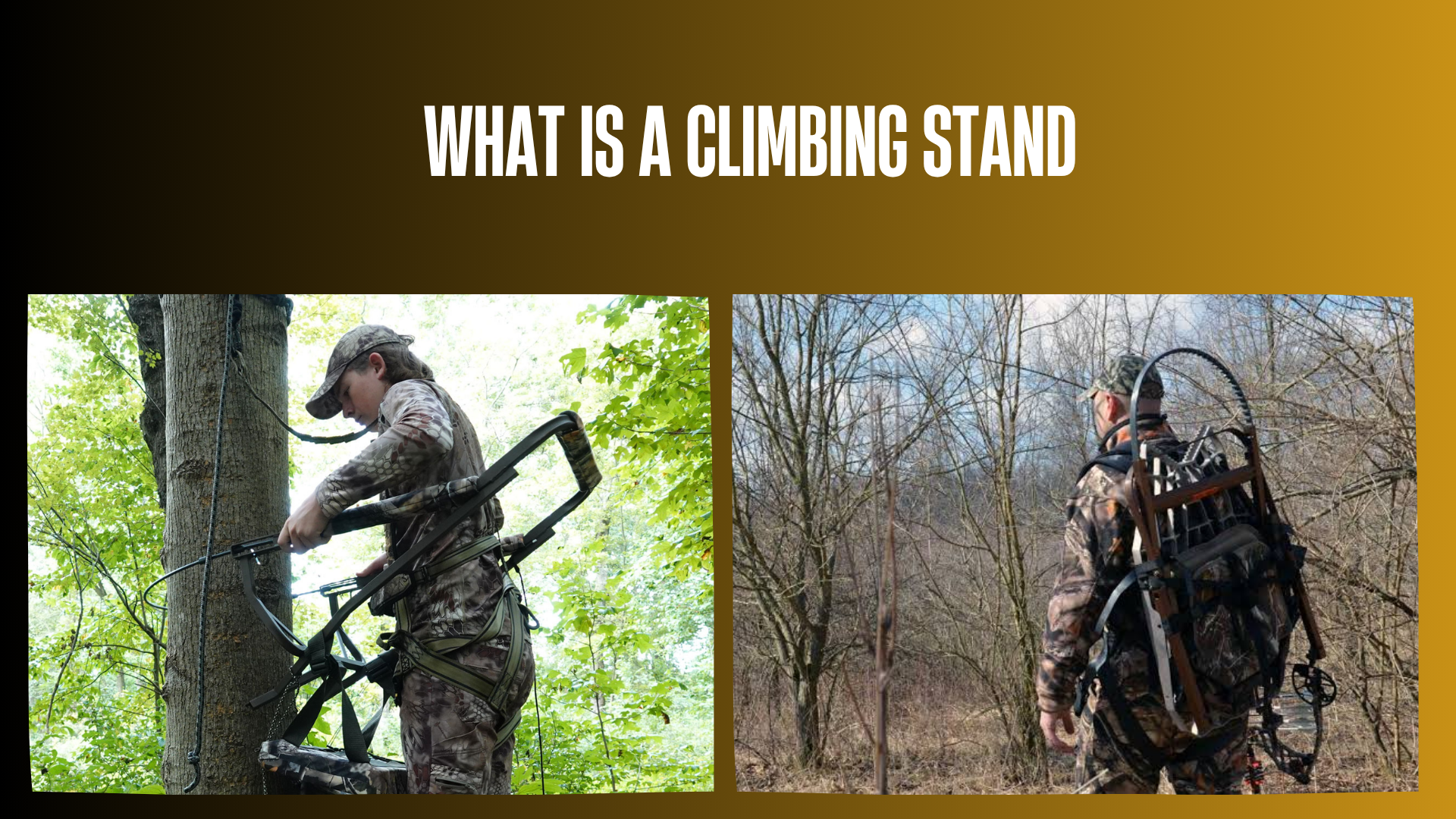

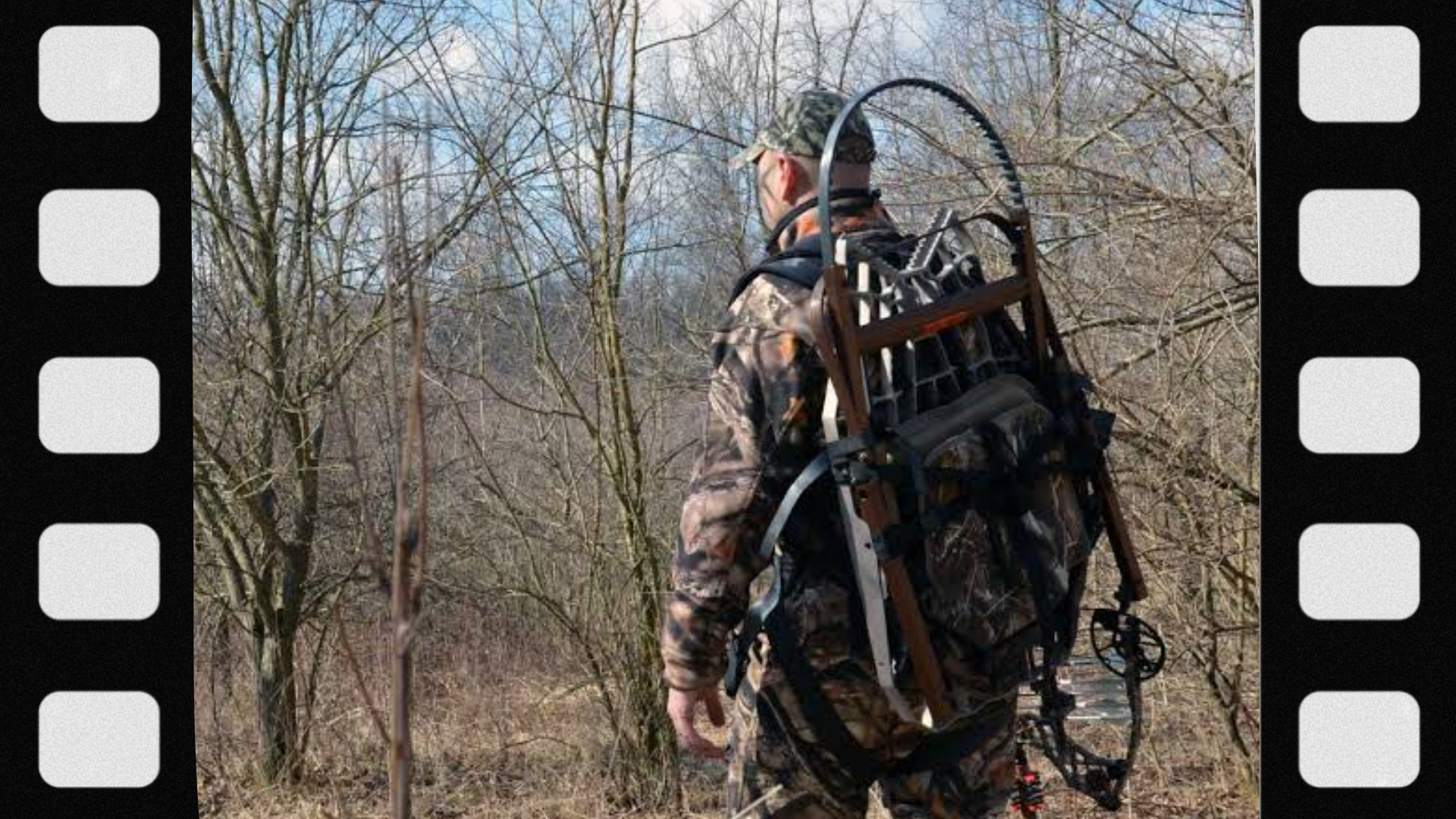
If you are comparing elevated hunting setups, you may wonder, what is a climbing stand? A climbing stand, also called a climbing tree stand or climber, is a portable two-piece tree stand that a hunter uses to move up and down a suitable tree trunk. The lower section supports the feet, while the upper section generally provides a seat or climbing frame.
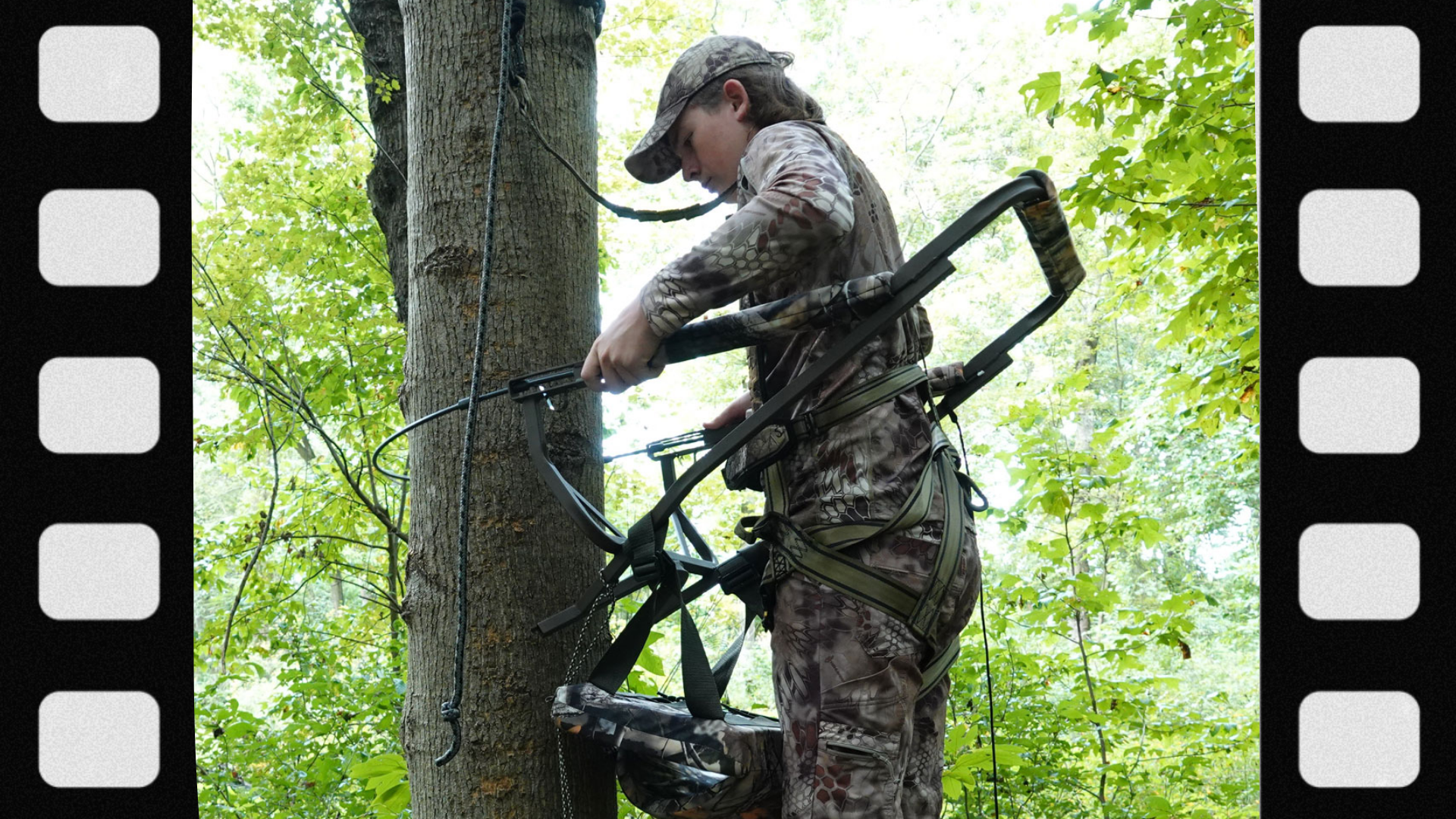
The hunter alternately moves the two sections in small, controlled increments, following the manufacturer’s exact instructions. This design can provide a portable elevated position without a separate ladder or installed climbing sticks. It also exposes the user to a potentially fatal fall during ascent, descent, setup, hunting, and transition, so a correctly fitted full-body fall-arrest system, continuous attachment, proper training, and a rescue plan are essential.
Quick Answer: What Is a Climbing Stand?
A climbing stand is a portable tree stand with an upper and lower section that grip a tree and move upward or downward with the hunter. It is intended only for a live, healthy, sufficiently straight tree that fits the stand manufacturer’s specified diameter range and has no obstructing branches along the climbing path. The two stand sections must remain connected as designed, and the hunter must use the specified full-body harness and attachment system from the time they leave the ground until they return. Beginners should read the complete manual, take hunter and tree-stand safety training, and practice at ground level with a competent partner before attempting elevation.
Climbing Stands at a Glance
| Feature | Typical Climbing Stand | Safety Check |
|---|---|---|
| Main parts | Upper seat/frame and lower foot platform | Both sections connected and assembled exactly as instructed |
| Attachment | Cable, belt, band, or other model-specific system around the trunk | No wear, cracks, corrosion, missing hardware, modification, or recall |
| Tree type | Live, healthy, straight trunk with a clear climbing path | Tree diameter and bark condition within manufacturer limits |
| Mobility | Carried in and removed more easily than many fixed stands | Total weight within personal and stand limits |
| Fall protection | Full-body harness with the approved tree attachment method | Continuous connection, short tether as directed, and rescue plan |
| Common use | Stationary elevated hunting, often for deer | Legal placement, safe field of fire, and real backstop |
Important Safety and Legal Notice
Falls from tree stands can cause permanent injury or death. Never rely on balance, experience, the stand’s rail, or a single waist belt. Wear a properly fitted full-body fall-arrest system and remain connected to the tree with the system specified by the stand and harness manufacturers from the moment you leave the ground until you return. Read every warning and instruction for the exact stand, harness, attachment device, and accessory; different models do not necessarily use the same procedure.
The Wisconsin Department of Natural Resources tree-stand guidance recommends a full-body harness, a short tether, three points of contact, a haul line for an unloaded firearm or bow, and connection during ascent and descent. The Virginia Department of Wildlife Resources also advises users to inspect equipment, practice at ground level, follow manufacturer instructions, and check for product recalls. These principles do not replace the manual for your exact equipment.
Tree-stand placement and use rules vary on public and private land. Verify current wildlife regulations and site-specific land-manager rules covering stand dates, overnight placement, owner identification, tree damage, screw-in equipment, access, hunter orange, weapons, seasons, and removal. Obtain landowner permission before entering private property. A stand left on public land may not reserve the location or exclude other lawful users.
Every firearm user must follow the four primary safety rules:
- Treat every firearm as if it is loaded.
- Keep the muzzle pointed in a safe direction.
- Keep your finger outside the trigger guard until ready to shoot.
- Be certain of the target and what is beyond it.
What Is a Climbing Stand in Hunting?
A climbing stand is one of the main categories of portable elevated hunting stands. Rather than climbing a separate ladder and stepping onto a platform, the hunter uses the stand itself as the climbing device. The stand grips the trunk when loaded at the intended angle. The user moves one section, sets it securely, transfers weight as directed, and then moves the other section.
The lower portion is commonly called the platform or foot platform. The upper portion may be a seat-and-frame assembly, a hand climber, or another model-specific configuration. A factory-specified connector keeps the two sections together. Without that connection, a lower platform that becomes detached could slide or fall out of reach, leaving the hunter suspended or stranded.
“Self-climbing stand,” “climber stand,” and “climbing tree stand” usually refer to the same general category. The term does not mean the stand moves automatically, nor does it mean the user climbs without fall protection. It describes a stand designed to ascend a suitable trunk with its occupant.
How Does a Climbing Tree Stand Work?
Each section wraps around and grips the tree through a cable, band, belt, arm, or other attachment system. The exact geometry is engineered for a particular design. When the user’s weight is placed on the section as instructed, the contact points bite or press against the trunk to hold position. When weight is removed and the section is manipulated correctly, it can be moved a short distance.
The hunter alternates the two sections to ascend. On descent, the sequence is reversed. Because tree trunks usually narrow with height, the initial setup and section angle may need model-specific adjustment to finish level at hunting height. This is not a place for improvisation: follow the manufacturer’s procedure, diameter limits, allowable adjustment points, and fastening instructions exactly.
A full-body harness and approved tree-attachment method provide independent fall protection. The attachment must move with the hunter without allowing a large slack loop. Some systems use a tree belt or rope arrangement specific to climbers; others may use compatible accessories. Do not substitute an ordinary rope, homemade knot, waist belt, or unrelated climbing product.
Once at the intended height, the hunter secures the stand as the manual requires, checks the platform, and settles into the hunting position while remaining attached. The firearm, bow, and pack stay on the ground during the climb and are raised with a haul line only after the hunter is secured. They are lowered before descent.
Main Parts of a Climbing Stand
| Part | Purpose | What to Inspect |
|---|---|---|
| Upper section | Seat, frame, or hand support during climbing and hunting | Frame, welds, cables, joints, seat fabric, fasteners, and padding |
| Lower platform | Supports feet and standing position | Platform mesh, frame, traction, welds, leveling system, and debris |
| Tree attachment | Wraps around the trunk and creates grip | Wear, kinks, cracks, corrosion, coating damage, pins, and locks |
| Section connector | Keeps upper and lower parts within reach | Correct installation, adjustment, abrasion, and secure attachment |
| Foot restraints | Allow controlled movement of the lower section | Fit, wear, fastening, and compatibility with boots |
| Full-body harness | Limits an uncontrolled fall when used correctly | Webbing, stitching, buckles, labels, service life, fit, and fall history |
| Tether or approved climbing attachment | Connects the harness to the tree | Correct routing, compatibility, damage, slack, and manufacturer limits |
| Haul line | Raises and lowers unloaded equipment | Strength, knots or connectors, wear, length, and clear path |
Names and configurations differ. Use the parts list in the original manual, not a generic diagram, when assembling, inspecting, replacing, or ordering components. Only use manufacturer-approved replacement parts.
Climbing Stand vs. Other Elevated Hunting Setups
| Stand Type | How the Hunter Reaches It | Typical Advantage | Important Limitation |
|---|---|---|---|
| Climbing stand | Two stand sections move up the trunk with the hunter | Portable and no separate sticks required | Needs a suitable branch-free trunk and careful climbing technique |
| Hang-on stand | Separate legal climbing aid, then transition onto platform | Works on more irregular trees when installed correctly | Installation and transition create substantial fall exposure |
| Ladder stand | Integrated ladder supports access and platform | Defined climbing route and often more space | Heavy; erection and stabilization require helpers and instructions |
| Tree saddle | Separate climbing system; hunter remains supported by saddle and tether | Compact and adaptable | Requires specialized training, compatible components, and rescue planning |
| Tower or tripod stand | Freestanding ladder or stairs | Does not require a climbable tree | Bulky, wind-exposed, and site-specific |
| Ground blind | No elevated climbing | Avoids tree-stand fall exposure | Lower sightline and different scent, visibility, and backstop concerns |
No elevated option is automatically safe. The best choice depends on the user’s training, physical ability, tree availability, equipment instructions, local rules, weather, intended method, and ability to remain connected. A ground setup is the responsible alternative whenever climbing conditions or personal ability are doubtful.
Advantages of a Climbing Stand
Portability between suitable trees
A climber can often be packed to a location, used, and removed without leaving a ladder or climbing sticks in place. That can suit mobile hunting or land with short placement windows. Actual portability depends on stand weight, pack configuration, terrain, distance, and the user’s conditioning.
No separate climbing sticks
The two stand sections create the climbing system. This reduces the number of major pieces compared with some hang-on setups, but it does not reduce the need for a full-body harness, approved tree connection, connector between sections, haul line, and rescue equipment.
Seat and platform move together
The hunter arrives with both the seat and platform rather than installing a stand at height. Correct use can provide a stable sitting or standing area. Stability still depends on the exact tree, setup, securement, maintenance, and compliance with instructions.
Flexible hunting position
A hunter can choose among several suitable trees as wind, access, cover, and safe shooting directions change. Flexibility is limited by branches, trunk size, leaning trees, rough terrain, property rules, and the availability of a safe backstop.
Limitations and Risks
- Tree selection is narrow. Low branches, forks, heavy taper, excessive lean, damage, unsuitable bark, or an out-of-range diameter can make a tree incompatible.
- The user is exposed throughout the climb. Slips, section movement, equipment failure, fatigue, or a medical event can occur before reaching hunting height.
- The lower platform can be lost. If the factory-specified connector is missing or incorrectly attached, a dislodged platform may fall out of reach.
- Trunk taper changes platform angle. Incorrect initial adjustment can leave a platform tilted at height. Never make an unapproved midair modification.
- Weather changes grip. Rain, frost, ice, snow, wind, and wet bark can make climbing or remaining aloft unsafe.
- Carrying adds fatigue. The stand, harness, clothing, and other gear count toward both human capability and manufacturer load limits.
- Elevation changes shot geometry. A downward angle is not automatically a safe backstop, and bow shot angles can change body position and effective form.
- Suspension after a fall is an emergency. A harness can prevent a ground impact but cannot guarantee self-rescue or prevent suspension trauma.
How to Choose a Suitable Tree
Use only a live, healthy tree that meets every criterion in the stand manual. The trunk should be straight enough for the model, free of obstructing branches along the full planned path, and within the stated minimum and maximum diameter at all relevant heights. Tree species, bark texture, trunk shape, taper, and surface condition can affect grip; follow the stand manufacturer rather than relying on a general list of “good” trees.
Reject a tree with visible rot, cracks, lightning damage, cavities, fungal growth, a broken top, loose bark, dead limbs overhead, root disturbance, severe lean, storm damage, or uncertain health. Look above and around for widow-makers, neighboring dead trees, power lines, hornet nests, animal activity, and falling-object hazards. Do not climb utility poles or any structure not approved by the stand maker and landowner.
Inspect the base and landing area. Steep slopes, rocks, water, fences, stumps, machinery, and unstable soil can worsen a fall or make rescue difficult. Choose no more height than needed for the lawful setup. If the tree, weather, or access route creates doubt, hunt from the ground.
Before You Leave the Ground
- Read the exact manuals. Review assembly, adjustment, tree criteria, load limits, harness use, climbing sequence, securement, descent, storage, and warnings.
- Check recalls. Search the manufacturer’s current safety notices and the U.S. Consumer Product Safety Commission recall database using the exact brand and model.
- Inspect every component. Look for cracks, bent tubing, metal fatigue, loose or missing hardware, worn cables, damaged coating, frayed webbing, failed stitching, corrosion, and unauthorized repair.
- Confirm total load. Include the hunter, stand-carried gear, clothing, firearm or bow after hauling, and any accessories when checking manufacturer limits.
- Evaluate the tree and weather. Confirm diameter, health, path, overhead hazards, wind, precipitation, ice, lightning, and the condition expected during descent.
- Fit the full-body harness. Follow its labels and manual, inspect it, and attach only compatible components as specified.
- Connect the stand sections. Install and adjust the manufacturer-provided connector before climbing.
- Plan continuous attachment. Set up the approved tree connection at ground level and know how it moves during the entire climb.
- Prepare the haul line. Keep the unloaded firearm, uncocked crossbow or safely prepared bow, and pack on the ground, clear of the climbing area.
- Share the hunt plan. Give a trusted person the precise stand location, parking point, companions, and return time.
Practice the complete routine only at minimal height with competent supervision before hunting. Wear the same boots and harness and use the same stand configuration. Stop if the equipment shifts unexpectedly, instructions are unclear, or physical effort compromises control.
Safe Climbing Principles
The manual for the exact model controls the climbing sequence. In general, users move only one section at a time in short, deliberate increments while the other section supports them as designed. They maintain the required contact, keep their body centered, avoid bouncing, and verify that each section has re-engaged the trunk before transferring weight.
Maintain continuous fall protection. Move the approved tree attachment as instructed and keep excess tether slack to the minimum specified by the manufacturer. A long slack tether allows a longer fall and can make recovery harder. Do not disconnect simply to pass an obstacle; a branch in the climbing path usually means the tree is unsuitable for a climbing stand.
Keep the two stand sections connected. Keep hands and boots where the manual specifies, and ensure footwear is secured in the designed restraints. Never rush to beat legal light, approaching weather, or another hunter. If the climb becomes difficult, descend while you still have control.
Never climb with a firearm, bow, crossbow, backpack, or loose gear in your hands or on your back when official or manufacturer guidance prohibits it. Equipment can snag, alter balance, or interfere with the harness. Raise only unloaded or otherwise safely prepared equipment after the stand is secured; lower it before starting down.
At Hunting Height
Secure the upper and lower sections exactly as directed. Keep the full-body harness attached with the tether positioned to minimize fall distance and allow the intended shooting position. Test the stand gently without leaning beyond the platform. Do not modify, drill, weld, remove guards, or add an accessory unless the stand manufacturer approves it for that model.
Organize the platform so nothing lies underfoot or can contact the trigger. Keep broadheads covered until needed. Establish safe muzzle directions and do not rest a firearm barrel on a metal rail. Maintain three points of contact during any transition and avoid standing unnecessarily.
Use binoculars for identification rather than pointing a firearm at uncertain movement. Confirm the legal animal, shooting lane, people, buildings, roads, livestock, property boundaries, and what lies beyond. A tree trunk, leaves, or the downward view alone may not stop a projectile. Take only a shot within your practiced ability and with a reliable backstop.
Descending Safely
Many incidents occur after the hunt when the user is cold, tired, hurried, or working in darkness. Unload the firearm completely and lower it, the bow, crossbow, and other equipment on a haul line to the side opposite the descent path. Confirm the area below is clear.
Check the harness, connection, stand sections, connector, and foot restraints before moving. Follow the manufacturer’s descent sequence in small, controlled increments while remaining attached. Do not jump the final distance. Stay connected until both feet are safely on the ground and the manual permits disconnection.
If ice, wind, injury, equipment movement, or a trapped section makes normal descent unsafe, do not improvise a risky maneuver. Use the communication device carried on your body, activate the rescue plan, and seek trained help.
Full-Body Harness and Rescue Planning
A fall-arrest system works only when worn, fitted, connected, and maintained correctly. Inspect webbing, stitching, buckles, labels, tether, connectors, and attachment components before every use. Follow retirement dates and replace any component subjected to a fall according to the manufacturer. Do not use a single waist belt or chest-only restraint as a substitute.
Plan for what happens after the harness catches a fall. The hunter may be injured, unable to regain the platform, or suspended with restricted blood flow. Carry a suspension-relief device specified for the harness and a phone, radio, whistle, or other signal tool on the body—not in a pack hanging below.
Tell someone where the tree is and when to call for help. Learn the manufacturer-approved self-recovery or controlled-descent procedure before the season from qualified instruction. If a fall occurs, call emergency services when possible, use the relief system as trained, and avoid cutting or disconnecting the only life-supporting attachment without a secure alternative.
Firearm and Archery Safety in a Climbing Stand
Keep firearms unloaded during ascent and descent. When hauling, keep the action open where practical and orient the muzzle according to manufacturer and hunter-education guidance so it cannot point at the hunter. Keep the haul line away from the trigger and never tie it to the trigger guard.
Once secure, load only when it is legal and safe. The mechanical safety is not a substitute for muzzle and trigger control. Keep hearing and eye protection accessible. When moving from seated to standing, maintain control of the firearm and do not allow the muzzle to sweep another person.
For bows and crossbows, cover broadheads during hauling, prevent strings or limbs from striking the tree or stand, and never dry-fire. Follow the crossbow maker’s cocking, loading, shooting, and decocking procedure. Practice elevated angles from an approved training setup with professional supervision; never take a shot that requires leaning beyond the platform or loading the harness improperly.
Weather and Physical Readiness
Do not use a climbing stand during lightning, dangerous wind, ice, freezing rain, or any condition that reduces tree grip, footing, visibility, or control. Consider not only the climb up but the forecast for the return. A dry trunk before dawn can become wet, icy, or wind-loaded several hours later.
Fatigue, illness, dehydration, poor sleep, alcohol, drugs, and medications that impair balance or alertness increase risk. Know the combined physical demand of carrying the stand, attaching it, climbing, sitting in cold conditions, and descending. If strength, mobility, sensation, judgment, or confidence is reduced, use a ground blind or hunt from the ground.
Wear boots compatible with the foot restraints and conditions. Bulky clothing must not prevent proper harness fit or obscure buckles. Keep emergency communication and a light on your person. Turn around early rather than allowing discomfort to become a rescue.
Public-Land and Private-Land Rules
Public lands can regulate when a stand may be placed, how long it may remain, how it must be labeled, what attachment methods are permitted, and whether devices can damage trees. Motorized access, pruning, screw-in steps, trail marking, baiting, and retrieval may have separate restrictions. Federal refuges, state wildlife areas, forests, and county lands can apply different rules even within one state.
On private land, obtain permission for the exact location, access route, pruning, parking, stand storage, and recovery plan. Discuss agricultural work, livestock, neighboring hunters, property lines, and buildings before choosing a field of fire. Permission from one tenant or hunting partner may not equal authority from the owner.
Always check current regulations immediately before the hunt. A legal stand does not make every weapon, season, target, shooting direction, or access method legal.
Common Beginner Mistakes
- Learning at hunting height. Read the manual and practice near ground level with qualified help first.
- Attaching the harness only after the climb. Use continuous approved attachment from ground to ground.
- Choosing a tree by appearance alone. Confirm health, diameter, straightness, taper, branches, bark, overhead hazards, and manufacturer compatibility.
- Forgetting the section connector. The upper and lower sections must remain linked exactly as designed.
- Starting with the platform level at the base without considering taper. Use only the manufacturer’s model-specific adjustment procedure.
- Carrying gear while climbing. Keep hands and body free; use a haul line for unloaded equipment after securing the stand.
- Climbing too high. More height increases consequence and is rarely a substitute for careful concealment and safe shot planning.
- Ignoring total load. Clothing, equipment, accessories, and hauled gear all contribute to the relevant limits.
- Using mismatched parts. Do not mix cables, pins, harness components, or accessories without explicit manufacturer approval.
- Having no post-fall plan. A harness catch begins an emergency; it does not complete the rescue.
What Not to Do With a Climbing Stand
- Do not climb a dead, damaged, leaning, forked, heavily tapered, branch-obstructed, or out-of-range tree.
- Do not use a recalled, modified, incomplete, damaged, or unidentified stand.
- Do not leave the ground without the correct full-body fall-arrest system already attached as directed.
- Do not disconnect to pass a branch or move around the trunk.
- Do not exceed the manufacturer’s weight, tree-size, height, weather, or use limits.
- Do not carry a loaded firearm, exposed broadhead, bow, crossbow, or bulky pack while climbing.
- Do not climb in darkness until you can perform the entire routine safely and the tree and stand have been inspected in adequate light.
- Do not use alcohol, impairing drugs, or medications that make climbing unsafe.
- Do not shoot at unidentified movement, beyond your proven ability, or without a safe backstop.
- Do not trespass, damage trees, leave equipment unlawfully, or assume a stand reserves public land.
Climbing Stand Inspection Checklist
- Exact make, model, serial information, original manual, and current recall status verified
- Upper frame and lower platform free of cracks, bends, failed welds, corrosion, and missing parts
- Tree cables, belts, bands, pins, locks, sleeves, coatings, and attachment points undamaged
- Seat, straps, stitching, padding, foot restraints, and section connector secure
- Full-body harness, tether, tree attachment, buckles, labels, and relief device serviceable
- No unauthorized repairs, holes, welds, paint-hidden damage, or aftermarket components
- All fasteners torqued or secured as the manual specifies
- Total planned load within the rated limit
- Live tree confirmed within the model’s diameter and form requirements
- Weather, access, overhead hazards, ground hazards, and rescue route acceptable
- Haul line, communication, light, first aid, and location-sharing plan ready
- Safe shooting directions, property boundaries, target area, and backstop rechecked
Is a Climbing Stand Right for a Beginner?
A climbing stand can be learned, but it is not a learn-by-guessing tool. A beginner needs hunter education, the exact manual, a compatible full-body harness, a safety course, ground-level practice, and direct supervision from a competent person familiar with that model. The user must be physically able to control both sections and self-rescue or activate help.
A ground blind is a sound choice when suitable trees are scarce, the user is uncomfortable with height, weather makes climbing uncertain, or mobility and strength do not match the equipment. Choosing the ground is not a failure; it removes the leading hazard of elevated hunting.
You do not need the most expensive equipment to hunt responsibly. Choose a stand based on safety certification or recognized standards, correct fit, tree compatibility, load capacity, weight, packability, platform and seat dimensions, manufacturer support, replacement parts, recall history, and the user’s training. Comfort features come after fall protection and reliable construction.
Final Answer: What Is a Climbing Stand?
A climbing stand is a portable two-part tree stand that ascends and descends a suitable tree with the hunter. Its upper section serves as a seat or climbing frame, and its lower platform supports the feet. It can be mobile and effective where live, straight, branch-free trunks fit the stand’s specified diameter range, but it is unsuitable for many trees and exposes the user to serious fall risk throughout the climb.
Use only a complete, undamaged, non-recalled stand with its original instructions and approved parts. Wear a properly fitted full-body harness, stay continuously attached from ground to ground, connect both stand sections, keep tether slack controlled, haul unloaded equipment separately, and prepare for self-rescue or emergency assistance. Verify current land and hunting rules, identify the target and background, and choose a ground setup whenever equipment, weather, tree condition, or personal ability creates doubt.
FAQs
1. What is another name for a climbing stand?
Common names include climbing tree stand, climber stand, self-climbing stand, and tree climber. These terms generally describe a portable two-section stand that moves up a trunk with the user.
2. What are the two parts of a climbing stand?
The lower section is the foot platform, and the upper section is generally the seat or climbing frame. Designs vary, so use the exact parts terminology and assembly shown in the stand manual.
3. Do climbing stands need climbing sticks?
Normally no. The stand’s two sections form the climbing system. Climbing sticks are generally used with hang-on stands or saddles. Never combine systems unless the manufacturers explicitly approve the configuration.
4. Can a climbing stand be used on any tree?
No. It needs a live, healthy tree with suitable diameter, straightness, bark, taper, and a branch-free climbing path within manufacturer limits. Many trees are incompatible.
5. Can a climbing stand go past branches?
Generally, an obstructing branch means the path is unsuitable because passing it may require dangerous disconnection or stand manipulation. Never cut or bypass a branch aloft; choose another tree and follow the manual.
6. How high should a climbing stand be?
There is no universal height. Use no more elevation than needed and never exceed manufacturer or local limits. Visibility, cover, shooting angle, backstop, wind, tree form, and personal comfort all matter.
7. Do I need a harness with a climbing stand?
Yes. Use a properly fitted full-body fall-arrest system and approved tree attachment throughout ascent, hunting, and descent. A seat rail, waist belt, or confidence in balance is not adequate fall protection.
8. When should I attach my harness?
Attach at ground level before climbing and remain connected until safely back on the ground. Follow the stand and harness manufacturers’ exact method for moving the attachment during ascent and descent.
9. Why must the two stand sections be connected?
The connector helps keep the lower platform within reach if it slips or becomes detached from the user’s feet. Use the manufacturer-provided or approved connector in the prescribed location and adjustment.
10. Can I carry my rifle while climbing?
No. Keep it unloaded on the ground during ascent and descent. After you are secured, use a haul line arranged so the firearm cannot point at you or snag by the trigger guard.
11. Can I climb with a bow or crossbow?
Do not carry it in your hands or on your back while climbing. Haul it after you are secured, with broadheads covered and the crossbow in the safe condition specified by its manufacturer.
12. What is a haul line for a tree stand?
It is a line used to raise and lower unloaded hunting equipment while the hunter remains safely secured. It keeps hands free and reduces snagging and balance problems during the climb.
13. Is a climbing stand safer than a hang-on stand?
Neither is automatically safer. They create different climbing and transition tasks. Safety depends on equipment condition, correct fall protection, training, tree suitability, installation, weather, and strict adherence to instructions.
14. Is a climbing stand safer than a ladder stand?
Not inherently. A ladder stand has erection and access risks; a climber exposes the hunter while alternately moving two sections. Both require a full-body harness, inspection, proper setup, and manufacturer compliance.
15. Is a climbing stand better than a tree saddle?
“Better” depends on the user, trees, training, weight, comfort, and hunting method. Saddles fit more tree shapes but require a separate climbing system and specialized technique. Both demand continuous attachment and rescue planning.
16. Can I use a climbing stand on a leaning tree?
Only if the exact manufacturer expressly permits the degree and direction of lean, which many setups will not. A lean changes balance and grip. The safe default is to select a healthier, straighter compatible tree.
17. Can I use a climbing stand when the tree is wet?
Wet bark and equipment can reduce traction and control. Rain may also become ice or worsen during descent. Follow manufacturer weather restrictions and use a ground setup whenever footing or grip is uncertain.
18. Can I use a climbing stand in freezing weather?
Only when the tree, stand, footwear, harness, and weather remain within manufacturer guidance and completely free of unsafe ice or snow. If surfaces can slip or parts can freeze, do not climb.
19. How do I know whether my climbing stand was recalled?
Identify the exact brand, model, and serial information, then check the manufacturer’s current recall notices and the CPSC recall database. Stop using any stand that cannot be identified or is affected by an unresolved recall.
20. Can I buy a used climbing stand?
A used stand may have hidden fall damage, metal fatigue, missing parts, modifications, or an unknown recall history. Obtain the exact identity and manual, have it evaluated as appropriate, and replace questionable equipment rather than guessing.
21. Can I repair or weld a damaged climbing stand?
Do not perform an unapproved repair or modification. Contact the manufacturer about inspection, replacement parts, or retirement. Welding or drilling can change strength and void intended safety performance.
22. How often should I inspect a climbing stand?
Inspect it before the season, before and after each use, after transport or impact, and whenever conditions change. Follow the manual’s maintenance schedule and retire components after damage or a fall as directed.
23. What should I do if the foot platform slips?
Stay attached to the tree, avoid sudden movement, and follow the manufacturer’s recovery procedure. The section connector should keep it within reach. If safe recovery is uncertain, activate the rescue plan rather than improvising.
24. What is suspension trauma?
It is a dangerous medical condition that can develop while a person hangs motionless in a harness. Plan prompt rescue, carry the approved relief device, keep communication on your body, and seek emergency assistance after a fall.
25. Can two people use one climbing stand?
Only if the manufacturer specifically designed and rated that exact stand for two users, which typical climbers are not. Never exceed capacity or add a second person to a single-user platform.
26. Are climbing stands legal on public land?
They may be, but placement dates, labeling, removal, tree attachment, and damage rules vary. Check the current regulations for the exact state property, refuge, forest, or other land unit before carrying one in.
27. Can I leave a climbing stand in the woods?
Only if the landowner and current rules allow it. Weather, theft, corrosion, animals, and unauthorized use can affect a left stand. Placement does not necessarily reserve a public-land hunting location.
28. Are climbing stands good for bow hunting?
They can provide a platform for bow hunting where legal, but the seat frame, tree, and tether may limit draw and shot angles. Practice safely, check limb clearance, and never lean outside the platform to create a shot.
29. Are climbing stands good for beginners?
Only after hunter education, a dedicated tree-stand safety course, complete manual study, ground-level practice, and competent supervision. A ground blind is the better option if the user lacks strength, comfort, or a reliable rescue plan.
30. What is the most important rule for a climbing stand?
Stay continuously connected to a suitable tree with a correctly fitted full-body fall-arrest system from ground to ground, while following every instruction for the exact stand and harness.
Read more: