
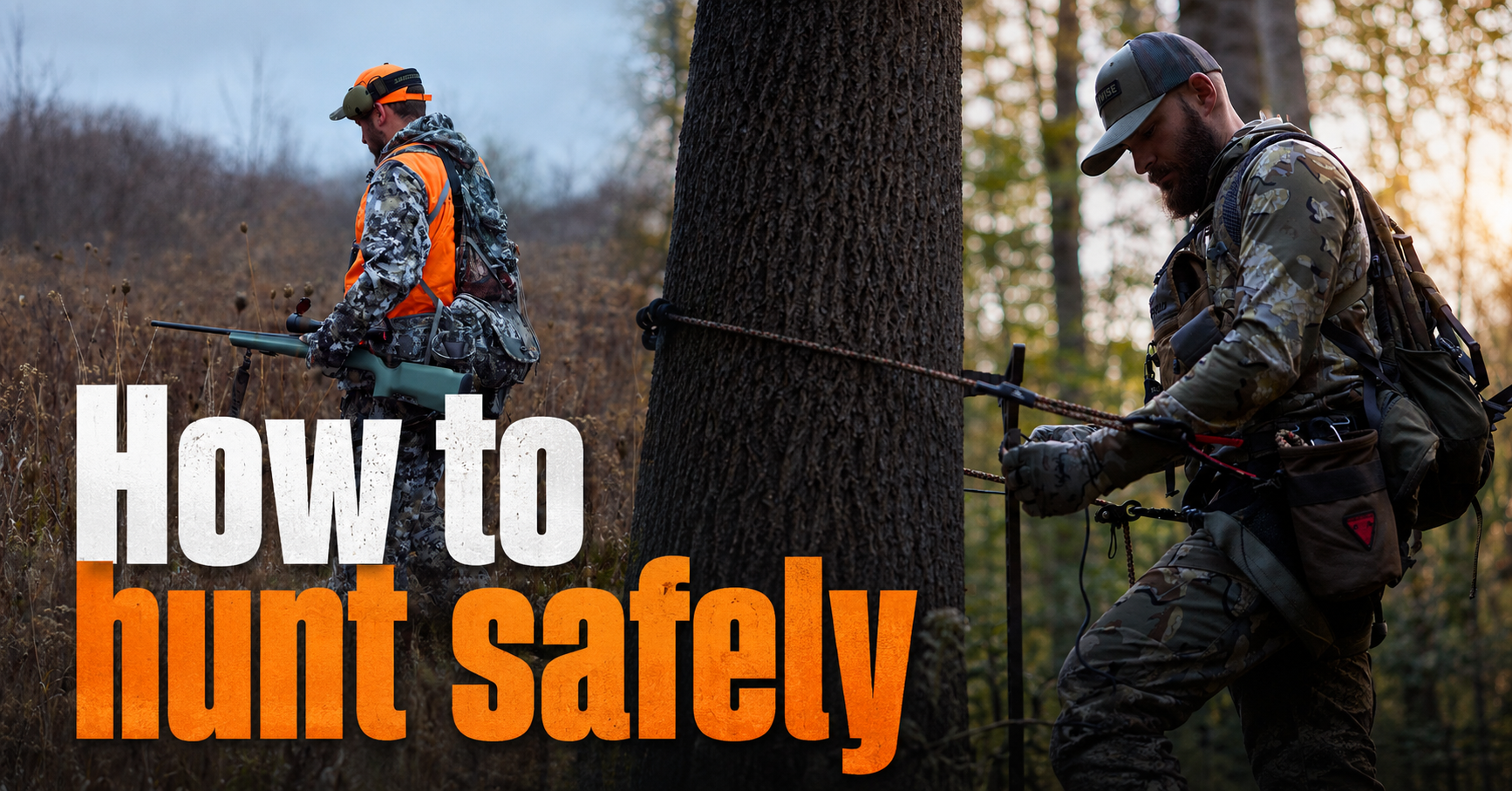
Learning how to hunt safely involves much more than handling a firearm or bow correctly. A safe hunter also understands current regulations, identifies wildlife positively, plans for weather and emergencies, respects property boundaries, communicates with hunting partners, and knows when conditions require ending the hunt.
This guide is designed for beginners, returning hunters, mentors, and anyone who wants to review responsible field practices. It covers preparation at home, safe equipment handling, public- and private-land awareness, elevated stands, boats, weather, navigation, ethical shot decisions, game recovery, and responsible care after the hunt.
No online article replaces certified hunter education or hands-on instruction. Hunter education programs commonly cover firearm and archery safety, hunting laws, wildlife identification, conservation, survival, first aid, ethics, and elevated-stand safety.
This general safety guide was reviewed on July 24, 2026. Hunting laws and access rules change, so always verify current regulations before entering the field.
Quick Answer
To hunt safely, complete hunter education, obtain every required license and permit, learn your equipment, practice before the season, identify your target positively, and confirm that the area beyond it is safe. Share a detailed hunt plan, monitor the weather, carry navigation and emergency equipment, and stay within your physical and shooting abilities. Use a full-body fall-arrest system in elevated stands and a life jacket when hunting from boats or around hazardous water. When any target, boundary, regulation, shot angle, or recovery situation is uncertain, stop and choose the safer option.
Important Legal and Safety Notice Before You Hunt
Hunting requirements vary by country, state, province, county, wildlife management unit, species, season, land ownership, hunting method, and hunter age. General advice cannot tell you whether a particular season, weapon, property, trail, baiting method, electronic device, or hunting hour is legal where you plan to hunt.
Before every hunt, consult your official wildlife agency and the agency or landowner responsible for the property. Check the regulation booklet again shortly before departure because emergency closures, fire restrictions, disease-control rules, access conditions, and season orders can change.
- License and education: Confirm hunter-education and license requirements.
- Permits and tags: Carry every required permit, stamp, tag, or authorization.
- Species and season: Verify open dates, legal animals, sex or age restrictions, and bag limits.
- Legal hours: Know the exact legal start and end times for the species and location.
- Equipment: Confirm legal firearms, bows, ammunition, projectiles, magazine capacities, optics, calls, and other devices.
- Visibility clothing: Follow current blaze-orange, blaze-pink, or other hunter-visibility requirements.
- Access: Verify property ownership, public access, parking, road, trail, vehicle, and camping rules.
- Reporting: Understand tagging, validation, harvest reporting, transportation, and evidence-of-sex requirements.
- Health rules: Check disease-testing, carcass-transport, and meat-handling advisories.
- Emergency planning: Review weather, navigation, communication, first aid, water, and evacuation needs.
The Core Principles of Safe Hunting
| Safety Principle | What It Means in the Field | Reason It Matters |
|---|---|---|
| Control the equipment | Keep firearms, bows, knives, stands, boats, and vehicles within manufacturer instructions and your training. | Mechanical equipment cannot correct unsafe behavior. |
| Identify before acting | Confirm the entire animal, species, legal status, background, and safe shooting zone. | Color, sound, movement, antler tips, or a partial outline are not enough. |
| Plan for the environment | Prepare for weather, terrain, water, darkness, navigation problems, and medical emergencies. | Many hunting emergencies are outdoor emergencies rather than shooting incidents. |
| Communicate clearly | Share plans and establish safe zones, meeting points, signals, and emergency procedures. | Partners cannot make safe decisions without knowing one another’s positions. |
| Respect personal limits | Stay within your practiced accuracy, physical conditioning, experience, and equipment capability. | Fatigue, excitement, cold, and poor visibility increase mistakes. |
| Choose restraint | Pass any uncertain, hurried, obstructed, illegal, or unsafe opportunity. | No harvest is worth risking a person, property, wildlife, or the future of hunting. |
How to Hunt Safely: Step-by-Step Guide
Step 1: Complete Hunter Education
Start with an official hunter education course approved for your jurisdiction. Even when an apprentice or mentored-hunting exemption is available, completing the course provides a stronger foundation in safe equipment handling, wildlife identification, conservation, ethics, laws, field survival, and responsible decision-making.
Online instruction can be useful, but beginners benefit from a classroom course, field day, range session, or supervised skills event. Hands-on instruction allows a certified educator to correct unsafe habits before those habits enter the field. Iowa’s Department of Natural Resources, for example, recommends in-person instruction or a field day for people without prior firearm-handling experience.
An experienced and ethical mentor can help bridge the gap between passing a course and managing an actual hunt. The mentor should model restraint, legal compliance, safe handling, landowner respect, and realistic expectations rather than focusing only on harvesting an animal.
Step 2: Verify Every Current Regulation
Read the official regulations for the exact species, unit, land type, season segment, and hunting method. Do not rely solely on a social post, old regulation booklet, mapping-app note, sporting-goods conversation, or what was legal during a previous season.
Write down the rules most likely to affect your hunt:
- Season dates and legal hunting hours
- License, stamp, permit, and tag requirements
- Legal species, sex, age, and bag limits
- Legal firearms, bows, ammunition, and projectiles
- Hunter-visibility requirements
- Baiting, feeding, calling, and electronic-equipment restrictions
- Public-road and vehicle restrictions
- Property-specific access and discharge rules
- Tag validation and harvest reporting procedures
- Carcass transportation and disease-testing rules
Download or carry an offline copy of the regulations when cell service may be unavailable. Official regulations override general online guidance.
Step 3: Choose a Legal Hunting Location
Confirm that hunting is allowed on the property, that the species and method are permitted, and that you can reach the location legally. A property appearing open or undeveloped does not make it public hunting land.
On private land, obtain clear permission from the landowner or authorized manager. Discuss boundaries, gates, livestock, buildings, vehicles, other hunters, retrieval procedures, parking, fire restrictions, and any areas the landowner wants you to avoid. Written permission may be required by law and is useful even where it is optional.
On public land, study the managing agency’s map and rules. Identify legal access points, closed roads, private inholdings, restricted zones, trails, campgrounds, buildings, shooting setbacks, and areas shared with hikers, horseback riders, cyclists, anglers, workers, or other hunters.
Do not cross private property merely because it provides the shortest route to public land. Mapping apps are useful planning tools, but they may contain outdated or imprecise boundary information. Compare multiple official sources and recognize boundaries on the ground.
Step 4: Develop a Written Hunt Plan
Tell a reliable person exactly where you are going and when you intend to return. The U.S. Forest Service advises hunters to know the area, check weather conditions, tell someone where they are hunting, and provide an expected return time.
Your hunt plan should include:
- Your name and the names of all partners
- Vehicle description and license plate
- Parking location and intended access route
- Property, unit, trailhead, or general hunting area
- Planned destination or stand locations
- Departure and expected return times
- Communication schedule
- Equipment and clothing description
- Emergency contacts
- The time at which your contact should request assistance
Update the plan when you change areas. A plan left in the truck is less useful than one given to a responsible person who knows what to do when you miss the check-in time.
Step 5: Inspect and Learn Your Equipment
Read the manufacturer’s manual for every firearm, bow, crossbow, tree stand, harness, boat, heater, navigation device, and other safety-critical product. Do not assume that experience with one model transfers perfectly to another.
Before leaving home:
- Confirm that the equipment is appropriate and legal for the hunt.
- Inspect it for damage, loose fasteners, corrosion, obstruction, or excessive wear.
- Verify ammunition or arrow compatibility using manufacturer information.
- Test optics, batteries, lights, communication devices, and navigation tools.
- Check stands, straps, lifelines, platforms, ladders, and attachment points.
- Confirm that knives and broadheads have secure protective covers.
- Inspect boots, rainwear, waders, flotation devices, and cold-weather equipment.
- Pack a suitable repair kit without improvising changes to safety systems.
Do not modify a firearm, bow, stand, safety harness, boat, or other equipment outside approved manufacturer procedures. A mechanical safety or protective device cannot make careless handling acceptable.
Step 6: Practice Before the Hunt
Practice with the same equipment, clothing, support position, optics, and lawful ammunition or arrows you expect to use. Range performance from a comfortable bench does not automatically translate to a cold, kneeling, seated, elevated, or unsupported field position.
Establish a personal effective range based on repeatable accuracy under realistic conditions. This range may be much shorter than the equipment’s advertised capability. Wind, low light, excitement, unstable footing, target movement, obstructing vegetation, or an uncertain background should shorten it further or eliminate the opportunity completely.
Practice these non-shooting skills as well:
- Safely checking and unloading equipment
- Maintaining muzzle or arrow direction while moving
- Entering and leaving a blind
- Communicating with hunting partners
- Using binoculars rather than a firearm scope to identify objects
- Operating the sling, safety, rest, or shooting support
- Using navigation and emergency communication tools
- Putting on a harness or life jacket correctly
Step 7: Check Weather, Terrain, Water, and Fire Conditions
Review the forecast before departure and again near the hunting area. Consider temperature, wind, rain, snow, lightning, flooding, ice, wildfire activity, road conditions, tides, water levels, heat index, and wind chill.
Prepare for conditions worse than the basic forecast. A warm vehicle or lodge at the beginning of the day does not protect you after an injury, navigation mistake, vehicle problem, sudden storm, or delayed recovery.
Cancel or shorten the hunt when:
- Lightning, high wind, wildfire, flooding, unstable ice, or severe weather threatens the area.
- Road or trail conditions could prevent a safe exit.
- Your clothing, shelter, water, or communication equipment is inadequate.
- Heat, cold, illness, injury, or fatigue is affecting judgment.
- Water or mountain conditions exceed your experience.
- Visibility prevents positive identification and a safe background check.
Step 8: Establish Safe Handling and Zones of Fire
Before loading any firearm or preparing a bow, confirm everyone’s location and assign safe shooting directions. A safe zone of fire is the area in which a hunter may act without pointing toward another person, dog, vehicle, road, trail, home, livestock, or unsafe background. Partners must communicate whenever positions change. Texas Parks and Wildlife hunter education materials emphasize adjusting and communicating safe zones as terrain and hunting methods change.
Keep the group organized:
- Know who is on the left, center, and right.
- Never swing a firearm through another person’s position.
- Stop immediately when a person, dog, vehicle, or recreationist enters the area.
- Use agreed verbal signals before moving or recovering game.
- Never fire over a ridge or toward an unseen area.
- Do not separate without notifying the group.
- Reestablish everyone’s position after darkness, vegetation, or terrain interrupts visibility.
Step 9: Move Through the Field Deliberately
Travel slowly enough to maintain balance, equipment control, and awareness. Unload a firearm before entering a vehicle, climbing a tree, crossing a difficult fence, negotiating a dangerous obstacle, or performing another activity that prevents safe muzzle control.
Use extra caution around:
- Wet logs, rocks, ice, mud, steep slopes, and loose soil
- Fences, ditches, creeks, blowdowns, and thick brush
- Boats, docks, tree stands, ladders, and elevated platforms
- Roads, homes, trails, camps, and livestock areas
- Other hunting parties and working dogs
- Low light, fog, snow, and heavy vegetation
Do not carry a loaded firearm by pulling it toward yourself or another person. Do not use the trigger guard as an attachment point. Keep arrows and broadheads secured until they are needed.
Step 10: Identify the Target and Everything Around It
Never act on sound, color, movement, tracks, antler tips, a partial outline, or an assumption. Identify the entire animal clearly and confirm that it is a legal species and legal animal for your license, tag, season, and location.
Before considering an opportunity, answer all of these questions:
- Can I positively identify the complete animal?
- Is this species and individual legal to harvest here and now?
- Are all hunting partners, dogs, livestock, and recreationists accounted for?
- What is directly in front of, beside, and behind the animal?
- Where could the projectile travel after passing through or missing?
- Could a hard surface cause a ricochet?
- Is the opportunity within my practiced ability?
- Is my footing or shooting support stable?
- Can I complete a legal and responsible recovery?
- Would waiting create a safer opportunity?
Use binoculars for observation. A firearm scope should never be used to examine an unidentified person, animal, vehicle, or object.
Step 11: Take Only a Safe, Legal, and Ethical Opportunity
Do not allow excitement, competition, fading light, an expensive trip, or pressure from another hunter to change your safety standards. A responsible hunter passes when the target is uncertain, the background is unsafe, the animal is moving unpredictably, vegetation obstructs the path, the distance exceeds demonstrated skill, or recovery is unlikely.
A legal opportunity is not automatically an ethical one. Consider the animal’s position, your stability, your practiced accuracy, the equipment’s limitations, the terrain, and your ability to recover and care for the game.
Keep your finger outside the trigger guard until the sights are on a positively identified legal target and you have made the decision to fire. With archery equipment, keep broadheads controlled and do not draw when the arrow could be released toward an unsafe direction.
Step 12: Pause and Observe After the Opportunity
Remain calm and maintain equipment control. Do not run with a loaded firearm or rush into dangerous terrain. Observe carefully, note the animal’s last known location, mark your position, and communicate with partners.
Unload or secure equipment as appropriate before crossing difficult terrain or beginning a recovery. Follow the local rules for waiting, tracking, dogs, artificial lights, nighttime activity, vehicles, public roads, and entering adjoining property.
Step 13: Make a Responsible Recovery Effort
Hunters have an ethical responsibility to make every reasonable, legal, and safe effort to recover game. However, recovery does not authorize trespassing, unsafe night travel, entry onto closed land, crossing dangerous water, or ignoring severe weather.
When recovery leads toward private property:
- Stop at the property boundary.
- Contact the landowner or authorized manager.
- Follow local laws governing retrieval.
- Contact a conservation officer or wildlife agency when guidance is needed.
- Use a licensed or trained tracking service where legal and appropriate.
Mark relevant locations without disturbing the area unnecessarily. Seek experienced help when you are uncertain how to proceed.
Step 14: Tag, Report, and Transport the Harvest Legally
Complete every required tag, validation, registration, check station, reporting, and transportation step within the required timeframe. Rules may specify when a tag must be attached, what evidence must remain with the animal, how multiple hunters’ animals must be identified, and which carcass parts may cross county or state boundaries.
Do not postpone reporting because cell service is unavailable. Know whether the agency provides an offline method, telephone system, physical station, or later deadline.
Step 15: Handle Game and Tools Responsibly
Plan for clean handling, rapid cooling, legal transportation, and appropriate storage before the hunt begins. Wear disposable or washable gloves, protect open cuts, clean tools and surfaces, prevent cross-contamination, and follow official guidance for the species and local disease conditions.
The CDC advises hunters to wear gloves while handling dead wildlife, cover open wounds, wash hands after contact, take precautions against ticks, and cook wild meat safely.
For deer, elk, moose, and related species in chronic wasting disease areas, consult your wildlife and health agencies about testing and carcass rules. CDC guidance advises against handling or eating animals that appear sick or were found dead and recommends following local testing advice; meat from an animal that tests positive should not be eaten.
The Four Essential Firearm Safety Rules
Safe firearm handling requires consistent habits from storage at home through the end of the hunt. Official hunter education and firearm-safety resources emphasize muzzle control, trigger discipline, unloaded storage and transport, correct ammunition, and positive target identification.
- Treat every firearm as if it is loaded. Personally check the chamber, magazine, and action according to the manufacturer’s instructions. Never accept another person’s assurance as a substitute for checking.
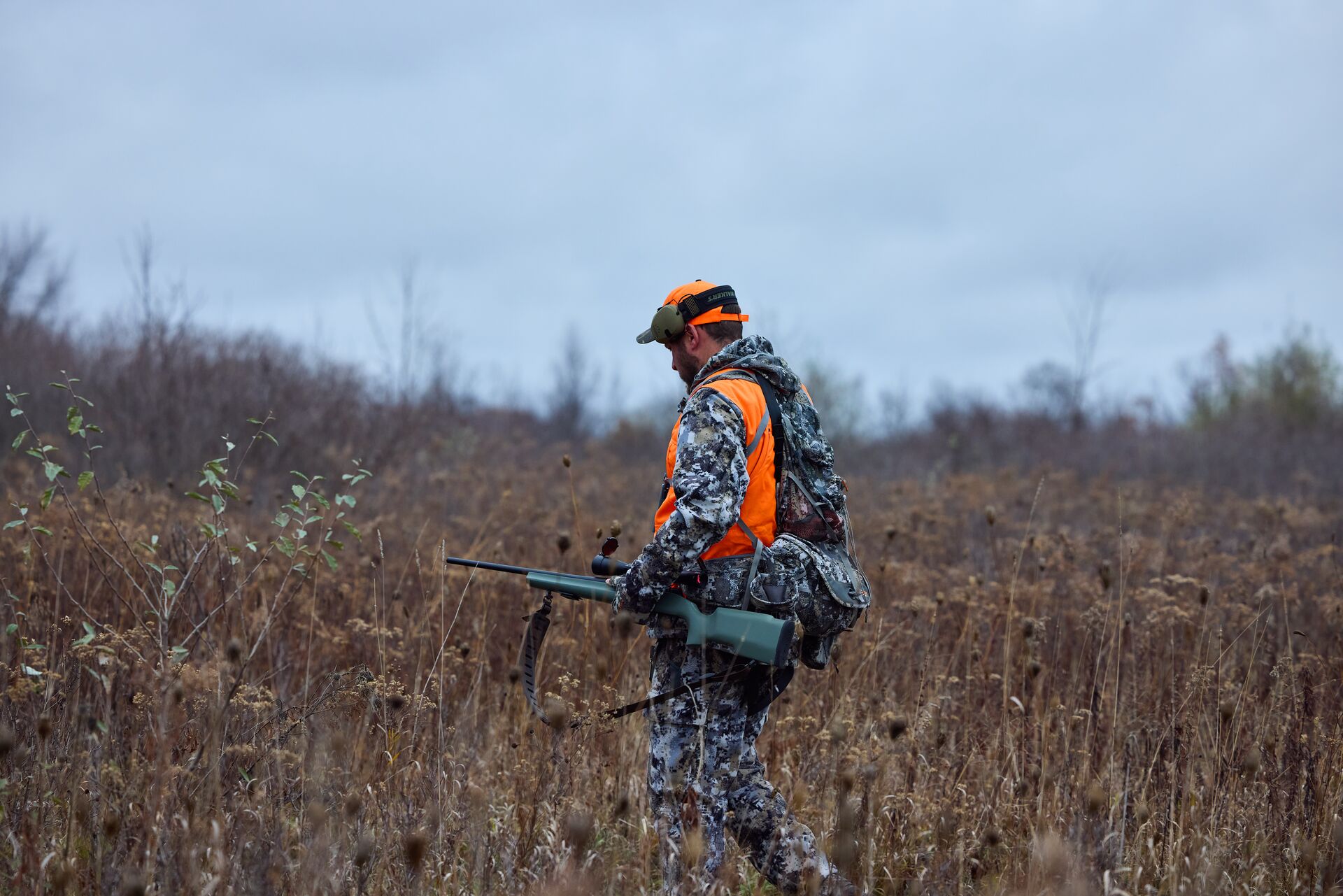
- Keep the muzzle pointed in a safe direction. Maintain control while standing, sitting, walking, entering a blind, crossing terrain, and interacting with partners.
- Keep your finger outside the trigger guard until ready to shoot. Rest the finger along the frame or receiver while carrying, aiming, or repositioning.
- Be certain of the target and what is beyond it. Confirm the entire legal animal and ensure the possible projectile path is safe.
Additional Firearm Practices
- Use only the exact ammunition approved by the firearm manufacturer.
- Check the barrel and action for obstructions before use.
- Do not rely on the mechanical safety as the primary safety practice.
- Unload before entering a vehicle or building.
- Unload before climbing, crossing a difficult obstacle, or hauling equipment.
- Keep firearms secured from unauthorized users during storage and transport.
- Follow local transport laws and use an appropriate case.
- Wear suitable hearing and eye protection during practice and whenever practical.
- Never mix alcohol, impairing drugs, or unsafe fatigue with firearm handling.
- Stop using any firearm that is damaged, malfunctioning, or behaving unexpectedly.
Bowhunting and Crossbow Safety
Archery equipment does not eliminate hunting risk. Broadheads are sharp, arrows can travel beyond the intended target, damaged equipment can fail, and elevated-stand hazards remain the same.
- Inspect limbs, strings, cables, cams, arrows, nocks, fasteners, and accessories.
- Use arrows with the correct spine and components approved for the equipment.
- Keep broadheads covered during transport and handling.
- Never dry-fire a bow or crossbow.
- Follow approved cocking and decocking procedures for a crossbow.
- Confirm local draw-weight, broadhead, and equipment requirements.
- Know your personal effective range through repeated practice.
- Do not draw or load while another person is in an unsafe position.
- Check the complete target and background before releasing an arrow.
- Use a haul line for equipment when entering an elevated stand.
Seek instruction from a certified archery or bowhunter-education instructor when you cannot consistently inspect, load, carry, shoot, and unload or decock the equipment safely.
Tree Stand and Elevated Hunting Safety
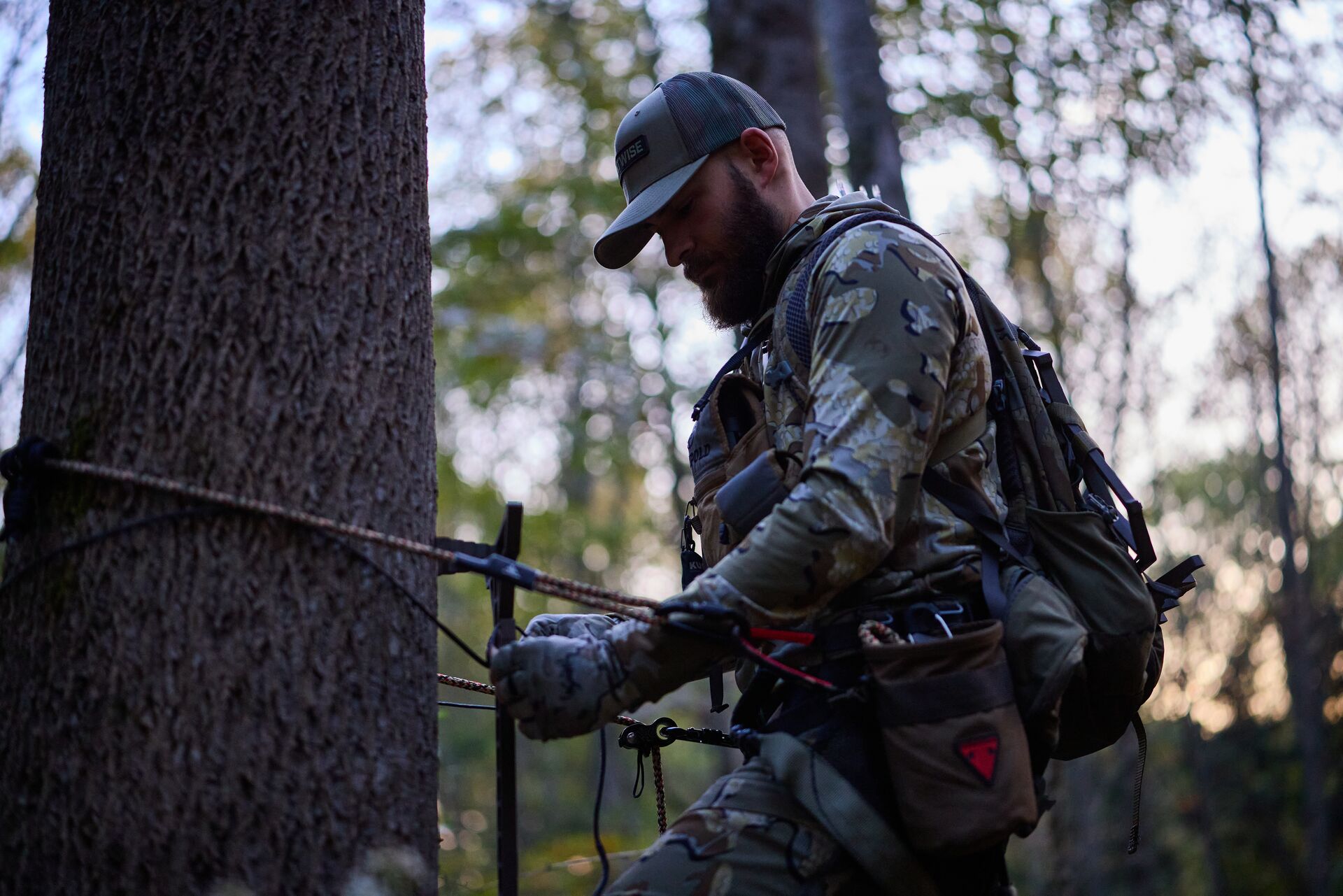
Falls are a serious hunting hazard. Use a properly fitted full-body fall-arrest system whenever your feet leave the ground, and remain connected to an approved lifeline or attachment system while climbing, hunting, and descending.
Official state safety guidance recommends inspecting the stand and straps before use, maintaining three points of contact, using a full-body harness, and raising unloaded equipment with a haul line.
- Read and follow the stand and harness manuals.
- Inspect straps, cables, chains, welds, bolts, platforms, steps, and tree condition.
- Do not exceed the total weight rating for the hunter and equipment.
- Use only the approved climbing and attachment system.
- Stay connected from the time you leave the ground until you return.
- Maintain three points of contact while climbing.
- Use a haul line for an unloaded firearm, bow, pack, and other equipment.
- Never attach a haul line to a trigger guard.
- Do not climb while carrying equipment in your hands.
- Do not use an improvised platform or damaged stand.
- Avoid climbing in ice, high wind, lightning, exhaustion, or other unsafe conditions.
- Carry a suspension-relief device and have a rescue plan.
Ground blinds remove the fall hazard but still require safe muzzle direction, ventilation, legal visibility markings where required, and awareness of other hunters approaching the blind.
Waterfowl, Boat, Wader, and Ice Safety
Waterfowl hunting adds cold-water, boating, balance, dog, and visibility risks. Chest waders are not personal flotation devices.
- Wear a properly fitted and approved life jacket in boats and hazardous water.
- Stay within the boat’s weight and passenger capacity.
- Distribute hunters, dogs, decoys, and equipment evenly.
- Remain seated or low when the boat is moving.
- Unload and case firearms as required for transport.
- Establish safe shooting zones before the hunt begins.
- Do not fire across another hunter, dog, boat, road, dock, or building.
- Fasten a wading belt before entering the water.
- Use a staff to test depth and bottom conditions.
- Avoid unfamiliar current, deep mud, submerged obstacles, and unstable ice.
- Carry waterproof emergency communication.
- Plan for cold-water immersion and hypothermia.
Do not assume that ice supporting another person, animal, or vehicle will support you. Local ice conditions can vary over very short distances, and no harvest justifies unsafe travel.
Safe Public-Land Hunting
Public hunting land may also be used by hikers, campers, anglers, cyclists, horseback riders, forestry workers, and other hunters. Treat every road, trail, parking area, building, and developed site as a possible location for people.
- Use official maps to verify boundaries and access.
- Check closures, fire restrictions, weapon rules, and shooting setbacks.
- Park without blocking gates, roads, emergency access, or other vehicles.
- Do not claim an area by confrontation or intimidation.
- Give other hunting parties reasonable space.
- Communicate calmly when you encounter another person.
- Never fire toward a trail, road, campground, parking area, or unseen drainage.
- Recognize that other users may not be wearing hunter orange.
- Secure unattended equipment only where permitted.
- Leave the area cleaner than you found it.
The Forest Service specifically advises hunters to identify targets clearly, remain alert near developed areas and trails, check weather, tell someone their plans, and prepare for changing conditions.
Safe Private-Land Hunting
Landowner permission is the beginning of responsible private-land access, not the end. Ask questions and follow the owner’s instructions.
- Confirm exactly who has authority to grant permission.
- Carry written permission when required or requested.
- Review property boundaries and neighboring homes.
- Ask about livestock, workers, family members, pets, and other hunters.
- Discuss gates, parking, vehicles, fires, stands, blinds, and overnight access.
- Establish a recovery plan for animals crossing onto neighboring land.
- Report damaged fences, injured livestock, illegal activity, or unsafe conditions.
- Remove litter, flagging, spent materials, and temporary equipment.
- Express appreciation and avoid assuming permission continues indefinitely.
Weather, Navigation, and Physical Safety
Navigation
Carry more than one navigation method. A phone application is useful, but batteries fail, screens break, cold reduces performance, and remote areas may lack coverage.
- Download offline maps before leaving home.
- Carry a map and compass and know how to use them.
- Mark the vehicle, legal access route, boundaries, and emergency exits.
- Track time as well as distance.
- Use reflective markers only where legal and remove temporary markers afterward.
- Turn around before darkness, weather, or fatigue removes your safety margin.
Cold
Dress in moisture-managing layers, carry rain protection, and avoid becoming soaked with sweat during the approach. Watch for persistent shivering, confusion, poor coordination, unusual fatigue, slurred speech, or irrational behavior.
Heat
Start hydrated, carry adequate water, pace physical work, use shade, and adjust the hunt when heat and humidity rise. Headache, dizziness, nausea, weakness, confusion, or loss of coordination require immediate attention.
Lightning
Do not remain in an elevated stand or exposed ridge during a thunderstorm. Leave exposed water and avoid isolated tall objects. Check current official weather guidance before the trip.
Physical Exertion
Hiking steep terrain, climbing, pulling equipment, and transporting harvested game can be demanding. Condition gradually, divide heavy loads, use assistance, and stop when chest discomfort, severe breathlessness, faintness, confusion, or another concerning symptom occurs.
Knife and Game-Handling Safety
Use a sharp, appropriate knife with a secure handle. A dull blade often requires excessive force and may slip unexpectedly.
- Wear cut-resistant or protective gloves when appropriate.
- Cut away from your body and other people.
- Keep your free hand outside the blade path.
- Work slowly on stable ground with adequate light.
- Sheath or fold the knife when it is not being used.
- Do not place an open knife where it can be stepped on or covered by vegetation.
- Clean and disinfect tools according to health guidance.
- Keep game-processing tools separate from ordinary kitchen tools when disease guidance recommends it.
- Protect cuts and wash thoroughly after handling wildlife.
Hunting Gear and Safety Checklist
| Category | Essential Items to Consider | What to Verify |
|---|---|---|
| Legal documents | License, permits, stamps, tags, permission, regulation copy | Current dates, correct unit, species, and reporting method |
| Visibility | Required blaze orange or blaze pink | Required amount, placement, and season |
| Navigation | Offline map, compass, GPS, spare battery | Boundaries, access, closures, vehicle location |
| Communication | Charged phone, radio or satellite device | Coverage, emergency numbers, check-in plan |
| Medical | First aid kit, personal medications, emergency information | Condition of supplies and training to use them |
| Weather protection | Layers, rainwear, gloves, hat, shelter material | Forecast, wind chill, heat, storms, road conditions |
| Food and water | Water, snacks, emergency ration | Trip duration, heat, exertion, delays |
| Equipment safety | Correct ammunition or arrows, case, covers, manual | Compatibility, condition, legal requirements |
| Elevated hunting | Full-body harness, lifeline, haul line, suspension relief | Inspection, fit, ratings, rescue plan |
| Water hunting | Life jacket, wading belt, dry bag, emergency signaling | Capacity, water temperature, depth, ice, wind |
| Game care | Gloves, clean tools, game bags, cooler | Disease advisories, testing, tagging, transport rules |
Common Mistakes to Avoid
Assuming Experience Prevents Accidents
Familiarity can create complacency. Review the same handling, identification, weather, and communication rules before every hunt, regardless of experience.
Using a Scope as Binoculars
Never point a firearm at something merely to identify it. Carry binoculars or another observation tool.
Ignoring the Background
Seeing a legal animal is only one part of the decision. Roads, buildings, livestock, rocks, water, other hunters, and unseen terrain can make the opportunity unsafe.
Failing to Communicate Positions
Hunters who move without telling their partners may enter another person’s safe zone. Establish signals and stop the hunt when anyone’s location is uncertain.
Carrying Equipment While Climbing
Use both hands for climbing and raise unloaded equipment separately with an approved haul line.
Relying on a Phone Alone
A phone may lose service, power, or function. Carry an offline map, backup power, and a navigation method that does not depend entirely on cellular coverage.
Pushing Through Dangerous Weather
A limited season or distant trip can create pressure to continue. Turn around when weather, water, fire, road, or physical conditions become unsafe.
Assuming an Animal-Looking Shape Is an Animal
Movement, color, sound, or a partial shape is not positive identification. Wait until the complete animal is visible and legal.
Crossing a Boundary During Recovery
Recovery responsibilities do not cancel property law. Stop, request permission, and obtain official guidance when necessary.
Failing to Plan Meat Care
Warm weather, distance, and difficult terrain can quickly complicate responsible use of the harvest. Bring the necessary supplies and a realistic transportation plan.
Troubleshooting Common Safety Problems
| Problem | Possible Cause | Safer Response |
|---|---|---|
| You are unsure whether the animal is legal. | Poor visibility, incomplete identification, confusing regulation, or obstructed view | Do not act. Review the regulations and wait for complete identification. |
| You have lost sight of a hunting partner. | Unplanned movement, thick cover, terrain, or failed communication | Stop hunting, maintain safe equipment control, and reestablish contact before continuing. |
| A person or dog enters the shooting area. | Shared land, overlapping setups, or poor communication | Stop immediately, unload or secure equipment as appropriate, and reorganize positions. |
| You cannot confirm the property boundary. | Inaccurate map, weak signal, missing markers, or unfamiliar land | Back out to a confirmed legal location and consult the landowner or managing agency. |
| Your optic, firearm, bow, or other equipment malfunctions. | Damage, incorrect setup, weather, obstruction, or incompatible component | Stop using it, unload or secure it safely, and follow the manufacturer’s service process. |
| The weather worsens rapidly. | Fast-moving storm, temperature change, flood, wind, or wildfire conditions | End the hunt early and use the planned safe exit before conditions deteriorate further. |
| You become disoriented. | Darkness, fog, changing terrain, fatigue, or navigation failure | Stop moving, stay calm, establish your location, communicate, and request assistance when needed. |
| You are becoming unusually cold or confused. | Wet clothing, wind exposure, exhaustion, or hypothermia | Stop hunting, seek shelter, replace wet layers, warm gradually, and activate emergency help. |
| You experience dizziness or severe weakness in heat. | Dehydration, heat exhaustion, overexertion, or illness | Stop activity, move to a cooler area, begin appropriate first aid, and seek medical help. |
| Recovery leads into dangerous terrain or water. | Animal movement, darkness, flood, ice, slope, or inadequate equipment | Do not continue recklessly. Mark the location and seek legal, experienced assistance. |
| A harvested animal appears sick. | Disease, injury, contamination, or another health concern | Avoid unnecessary contact and contact the wildlife or health agency for instructions. |
| A conflict develops with another land user. | Overlapping access, noise, parking, or misunderstanding | Keep equipment controlled, remain calm, disengage, and contact the managing authority if necessary. |
Ethical Hunting and Conservation
Safe hunting and ethical hunting are inseparable. A hunter who obeys handling rules but ignores boundaries, wastes game, damages habitat, or takes uncertain opportunities is not acting responsibly.
- Respect wildlife and learn to identify legal species accurately.
- Follow seasons, permits, limits, and reporting requirements.
- Pass uncertain or low-probability opportunities.
- Practice before hunting and stay within demonstrated ability.
- Make every reasonable legal recovery effort.
- Use harvested game responsibly and avoid waste.
- Respect landowners, other hunters, and non-hunting recreationists.
- Protect waterways, vegetation, roads, fences, and facilities.
- Pack out trash and spent materials.
- Report suspected violations through the appropriate agency rather than confronting people.
- Support habitat conservation and responsible wildlife management.
- Help new hunters learn safe and respectful practices.
When to Get More Training or Professional Guidance
Seek additional instruction before hunting independently when:
- You have never handled the intended firearm, bow, or crossbow.
- You have not completed hunter education.
- You cannot confidently unload and inspect the equipment.
- You do not understand the current regulations.
- You are uncertain about property boundaries or legal access.
- You have not practiced from realistic hunting positions.
- You plan to use an elevated stand for the first time.
- You are entering mountain, desert, water, ice, or remote terrain beyond your experience.
- You need help with wildlife identification.
- You do not understand legal recovery, tagging, or reporting procedures.
- You need guidance on disease testing or meat care.
Useful sources include official wildlife agencies, certified hunter-education instructors, certified shooting or archery instructors, conservation organizations, experienced ethical mentors, and recognized tracking or game-care professionals.
The International Hunter Education Association provides course and student resources for new hunters, while each jurisdiction’s wildlife agency remains the authority for local legal requirements.
After the Hunt: Follow-Up, Gear Care, and Learning
- Unload and verify the condition of firearms before transport or storage.
- Store firearms, ammunition, bows, broadheads, knives, and tags securely.
- Clean and inspect equipment according to manufacturer instructions.
- Dry boots, clothing, waders, stands, harnesses, and safety equipment fully.
- Complete every harvest report, check-in, or record requirement.
- Follow meat-cooling, storage, testing, and transportation guidance.
- Remove stands, blinds, flagging, and litter when required.
- Thank the landowner and report property issues.
- Review weather, animal activity, access, navigation, and safety decisions.
- Record lessons that can improve the next hunt.
A post-hunt review should evaluate more than whether an animal was harvested. Ask whether the plan worked, everyone communicated clearly, the equipment remained controlled, boundaries were respected, and every decision protected people and wildlife.
Recommended Hunting Gear and Tools to Consider
You do not need the most expensive equipment to hunt responsibly. Choose equipment according to local law, hunting method, terrain, weather, safety requirements, skill level, fit, reliability, and budget.
- Legal, correctly fitted hunting equipment and approved ammunition or arrows
- Protective firearm case or covered archery system
- Binoculars for target observation
- Required hunter-orange or other visibility clothing
- Weather-appropriate layers, rainwear, boots, and gloves
- Official regulation copy and required documents
- Offline map, compass, GPS, and backup battery
- First aid kit and personal medications
- Charged communication device and emergency signaling equipment
- Water, food, fire-starting supplies where appropriate, and emergency shelter
- Full-body fall-arrest system and lifeline for elevated hunting
- Approved life jacket and waterproof communication for boat hunting
- Gloves, clean tools, game bags, and cooling supplies
- Headlamp and backup light where legal and appropriate
Final Thoughts on How to Hunt Safely
Knowing how to hunt safely begins with preparation and continues through every decision in the field. Complete hunter education, verify current laws, practice with your equipment, make a written trip plan, inspect your gear, and prepare for weather, terrain, and medical problems.
During the hunt, maintain muzzle or arrow control, communicate safe zones, identify the entire target, examine the background, and pass any uncertain opportunity. Use a full-body harness when elevated, wear appropriate flotation around hazardous water, respect property boundaries, and end the hunt when conditions exceed your ability or equipment.
A successful hunt is one in which everyone returns safely, the law is followed, wildlife is respected, the land is protected, and responsible decisions take priority over harvesting an animal.
FAQs
1. What is the most important rule for hunting safely?
The most important habit is maintaining control of your equipment while positively identifying the target and confirming a safe background. No opportunity should proceed when either identification or the possible projectile path is uncertain.
2. Do beginners need hunter education before hunting?
Requirements vary, but hunter education is strongly recommended for every beginner and is legally required for many hunters. An approved course teaches safety, laws, ethics, conservation, wildlife identification, and outdoor survival.
3. Can I learn hunting safety entirely online?
Online study can provide important knowledge, but hands-on instruction is valuable for equipment handling, field scenarios, stands, archery, and practical judgment. Attend a field day or work with a certified instructor whenever possible.
4. Should a new hunter go with a mentor?
Yes. An experienced, patient, and ethical mentor can help a beginner apply classroom knowledge in real conditions. The mentor should reinforce safety and restraint rather than pressure the beginner to harvest an animal.
5. What are the four basic firearm safety rules?
Treat every firearm as loaded, keep the muzzle pointed in a safe direction, keep your finger outside the trigger guard until ready to shoot, and be certain of the target and what lies beyond it.
6. Is a firearm safe when the mechanical safety is engaged?
No mechanical device makes careless handling acceptable. Continue to control the muzzle, keep your finger outside the trigger guard, and follow every other handling rule.
7. When should a hunting firearm be loaded?
Follow local law, manufacturer instructions, and hunter-education guidance. It should remain unloaded during storage, inappropriate transport, climbing, difficult obstacle crossings, and any situation in which safe muzzle control cannot be maintained.
8. Should I check whether a firearm is unloaded after someone hands it to me?
Yes. Keep it pointed safely, open the action according to the manufacturer’s instructions, and personally verify the chamber and feeding system.
9. Can I use my rifle scope to identify movement?
No. Pointing a firearm at an unidentified object is unsafe. Use binoculars or another dedicated observation tool.
10. What does “know your target and beyond” mean?
It means identifying the complete legal animal and understanding what is in front of, beside, and behind it. You must also consider where a missed or passing projectile could travel.
11. Is shooting at sound or movement ever safe?
No. Sound and movement do not provide positive identification. Wait until the full animal is clearly visible and every legal and safety condition has been satisfied.
12. What is a safe zone of fire?
It is the direction or area in which a hunter can act without endangering partners, dogs, buildings, roads, livestock, vehicles, or other people. The group must revise safe zones whenever anyone changes position.
13. What should hunting partners discuss before starting?
Discuss positions, safe shooting directions, movement signals, meeting points, communication methods, recovery procedures, boundaries, emergency plans, and the conditions that will end the hunt.
14. What should be included in a hunting trip plan?
Include the hunting area, access route, vehicle information, names of partners, expected return time, communication schedule, emergency contacts, and the time at which someone should request help.
15. Is it safe to hunt alone?
Solo hunting adds risk because immediate assistance may not be available. Beginners should hunt with an experienced partner, and solo hunters should use a detailed plan, reliable communication, conservative routes, and clear turnaround limits.
16. What navigation equipment should a hunter carry?
Carry an offline map, compass, GPS or mapping device, backup power, and the skills needed to use them. Do not depend completely on cellular service.
17. What should I do if I become lost while hunting?
Stop moving, remain calm, control your equipment, protect yourself from weather, and establish your location. Contact your emergency person or authorities rather than wandering farther from the known route.
18. How much water should a hunter carry?
The amount depends on temperature, terrain, duration, exertion, body size, and available safe water. Carry more than the minimum expected need and have a treatment method when relying on natural sources.
19. What first aid items should hunters carry?
Carry a practical kit for bleeding control, minor wounds, blisters, allergies, burns, sprains, and personal medical needs. Training is as important as the contents of the kit.
20. Should hunters wear blaze orange?
Wear it whenever required and consider it whenever visibility to other hunters improves safety. Rules concerning color, amount, placement, and season vary, so check official regulations.
21. Does blaze orange replace target identification?
No. Visibility clothing helps people see one another, but every hunter must still identify the complete target and background before acting.
22. How can hunters stay safe on public land?
Use official maps, follow closures and setbacks, expect other users, communicate calmly, avoid crowded setups, and never fire toward roads, trails, parking areas, buildings, or unseen terrain.
23. How can hunters avoid trespassing?
Verify ownership and legal access before the hunt, compare official maps, recognize boundaries on the ground, and obtain permission before crossing private land. When uncertain, turn back.
24. Is verbal permission enough for private-land hunting?
That depends on local law and landowner preference. Written permission provides clearer documentation and may be legally required.
25. Can I enter private property to recover game?
Do not assume that recovery permits entry. Stop at the boundary, contact the landowner, and follow local retrieval laws or conservation-officer guidance.
26. What is the safest way to use a tree stand?
Use an inspected stand within its weight rating, wear a full-body fall-arrest system, remain attached while climbing and hunting, maintain three points of contact, and haul unloaded equipment separately.
27. Can I climb into a stand while carrying a firearm?
No. Use both hands for climbing and raise the unloaded firearm with an approved haul line after you are secured.
28. Do ground blinds require safety precautions?
Yes. Maintain safe muzzle direction, establish shooting lanes and partner positions, ensure adequate heater ventilation, and use any legally required exterior visibility marking.
29. Are chest waders a substitute for a life jacket?
No. Waders are not flotation devices. Wear an approved and correctly fitted life jacket in boats and whenever cold, deep, or moving water creates an immersion risk.
30. Is hunting on ice safe?
Ice is never guaranteed safe. Thickness and strength vary with current, springs, temperature, snow, vegetation, and nearby structures. Avoid ice travel when conditions are uncertain.
31. How can hunters prepare for cold weather?
Use moisture-managing layers, protect against wind and rain, carry dry backup items and emergency shelter, and avoid excessive sweating. Monitor every group member for confusion, poor coordination, and persistent shivering.
32. How can hunters prevent heat illness?
Hydrate before and during the hunt, pace strenuous activity, use shade, wear suitable clothing, and stop when dizziness, nausea, weakness, headache, or confusion develops.
33. Should hunters continue during a thunderstorm?
No. Leave exposed ridges, elevated stands, open water, and other high-risk areas. Use current official weather guidance and seek safer shelter early.
34. How should hunters cross fences safely?
Use a gate when available and legal. For difficult crossings, unload and safely control the firearm, cross deliberately, and never pull a loaded firearm toward yourself or another person.
35. Can alcohol be consumed during a hunt?
Alcohol and impairing substances should not be combined with firearms, bows, vehicles, boats, knives, stands, or difficult terrain. Impairment reduces judgment, coordination, and reaction time.
36. How far should a beginner shoot while hunting?
Only within a distance at which the hunter has demonstrated consistent accuracy from realistic positions. Weather, target movement, poor support, low light, and unsafe background conditions should reduce that range further.
37. Does more powerful equipment make hunting safer?
No. Equipment cannot replace judgment, training, accuracy, positive identification, or a safe background. Select equipment that is legal, suitable, manageable, and familiar.
38. What should a bowhunter check before hunting?
Inspect the bow or crossbow, strings, cables, limbs, arrows, nocks, broadheads, accessories, and safety mechanisms. Confirm legal specifications and follow manufacturer instructions.
39. Why should bows and crossbows never be dry-fired?
Releasing without the correct arrow can damage the equipment and cause serious injury. Stop using equipment that has been dry-fired until it has been inspected properly.
40. What should a hunter do after an uncertain hit?
Remain calm, note the last known location, communicate with partners, and follow legal recovery guidance. Avoid rushing, trespassing, contaminating evidence, or entering dangerous terrain without preparation.
41. Is nighttime recovery always legal?
No. Rules governing lights, weapons, dogs, vehicles, public land, and nighttime access vary. Check the official regulations or contact a conservation officer.
42. What should I do if a harvested animal looks sick?
Avoid unnecessary handling and contact the wildlife or public-health agency. Do not eat an animal that official guidance says should be tested, condemned, or discarded.
43. Should hunters wear gloves when handling game?
Yes. Gloves help reduce contact with blood, tissues, parasites, and pathogens. Cover open cuts and wash hands, tools, and surfaces afterward.
44. How quickly should wild game be cooled?
Cooling should begin as promptly as conditions and the species require. Exact procedures depend on temperature, animal size, local health guidance, and transportation time.
45. Do hunters need to report a harvest?
Many jurisdictions require immediate or time-limited tagging, registration, validation, or reporting. Verify the exact method and deadline before hunting.
46. What should I do if another hunter behaves unsafely?
Keep your equipment controlled, create distance, and avoid confrontation. Leave the area and report serious violations or immediate danger to the appropriate authority.
47. How can parents make youth hunting safer?
Follow youth-specific laws, use properly fitted equipment, maintain direct supervision, keep the experience short and positive, and make safety—not harvest—the measure of success.
48. What is an ethical shot opportunity?
It is a legal opportunity involving a positively identified animal, safe background, manageable distance, stable position, suitable equipment, and a high likelihood of responsible recovery.
49. When should a hunter end the hunt early?
End it when weather, darkness, fatigue, illness, equipment failure, uncertain boundaries, poor communication, unsafe water, or changing conditions remove an adequate safety margin.
50. Where can I learn more about hunting safety?
Start with your official state or provincial wildlife agency and an approved hunter education course. The International Hunter Education Association course finder can help locate recognized training resources.