
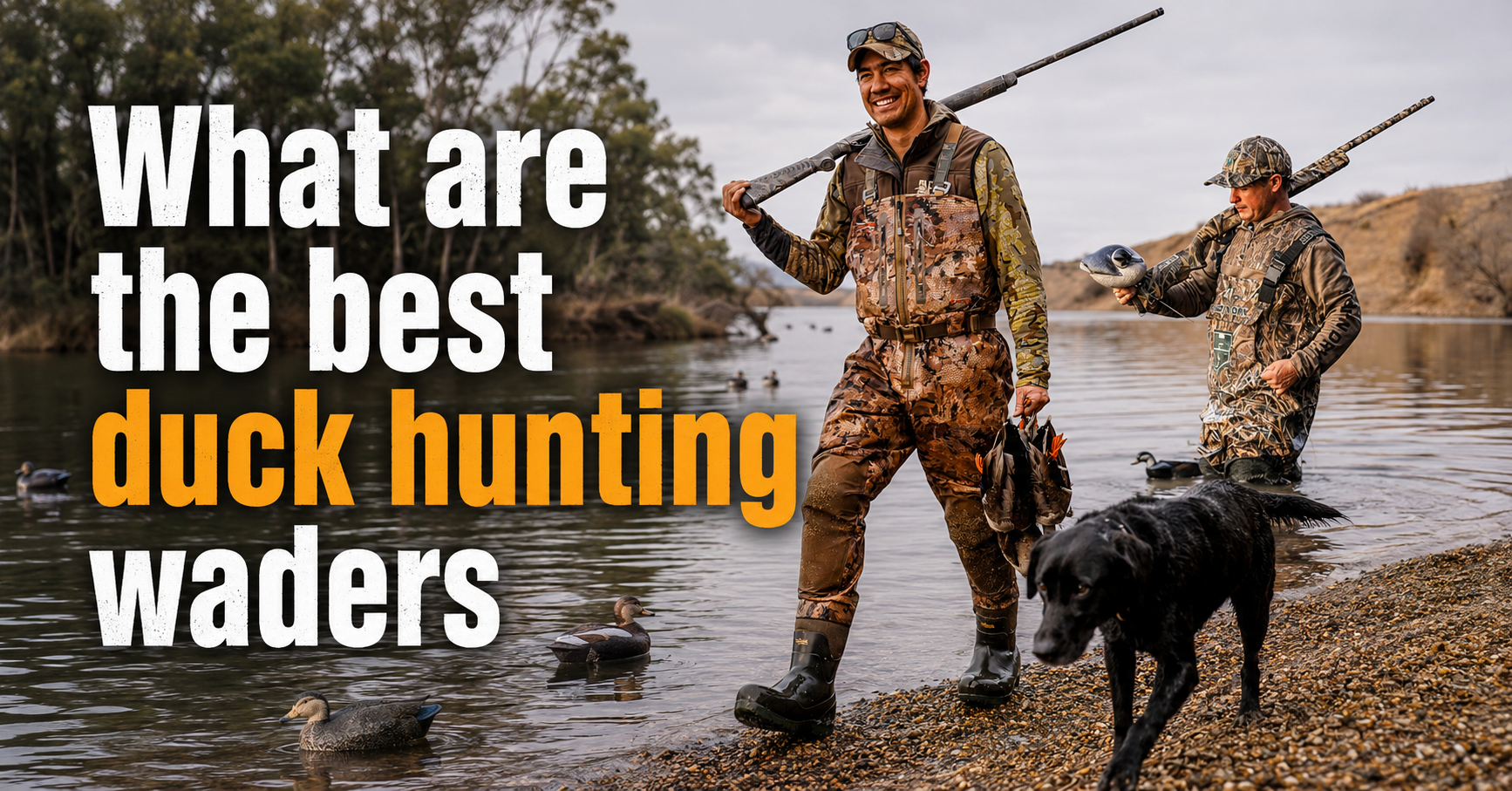

If you are asking “what are the best duck hunting waders,” the most useful answer depends on where, when, and how you hunt. A hunter walking a mile into a warm southern marsh needs a different wader than someone standing in icy water during a late-season hunt.
For most hunters, breathable bootfoot chest waders provide the best balance of mobility, weather protection, and layering flexibility. However, fit, boot comfort, reinforced construction, insulation, traction, repair support, and safe use matter more than any logo or camouflage pattern.
This guide compares current wader models, explains which features are worth paying for, and shows beginners how to choose waders without assuming that the most expensive pair is automatically the best.
Product information was checked on July 24, 2026. Models, specifications, warranties, and availability may change, so confirm the current details with the manufacturer before purchasing.
Quick Answer: What Are the Best Duck Hunting Waders?
The SITKA Delta Pro Zip GTX Wader is the strongest overall choice for a serious waterfowl hunter who wants a breathable, reinforced, front-zip wader suitable for a wide range of temperatures. The Chêne 2S Wader is an excellent durability-focused alternative, while the Frogg Toggs Grand Refuge 3.0 offers useful versatility at a more approachable level.
For long walk-in hunts or warmer weather, choose a lightweight uninsulated breathable wader and control warmth with removable layers. For icy water and extended stationary hunting, prioritize an insulated boot, enough room for circulation, reinforced knees and legs, and a reliable wading belt.
No wader is universally best. The correct choice is the pair that fits your body and boots properly, matches your climate and walking distance, and allows you to move safely.
Best Duck Hunting Waders at a Glance
| Wader | Best For | Notable Features | Main Limitation |
|---|---|---|---|
| SITKA Delta Pro Zip GTX | Best overall | Breathable GORE-TEX construction, waterproof front zipper, reinforced knees and comfortable boot system | Premium investment |
| SITKA Delta VentLite Zip GTX | Premium walk-in and early-season hunting | Very lightweight boot and upper, breathable four-layer construction and front zipper | Costs more than most occasional hunters need to spend |
| Chêne 2S Wader | Durability and hard seasonal use | Four-layer nylon fabric, reduced seam count, waterproof zipper and reinforced seam construction | Premium price and substantial construction may be unnecessary for light use |
| Drake BMF1600 Kevlar Wader | Cold weather and abrasive cover | Four-layer upper, heavily reinforced lower sections and warm insulated boots | Heavier and warmer than needed for mild conditions |
| Frogg Toggs Grand Refuge 3.0 | Best adaptable value | Removable insulated liner, reinforced wear areas and insulated bootfoot design | Bulkier than lightweight uninsulated models |
| Dive Bomb DB Zip Wader | Feature-rich front-zip value | Four-layer fabric, waterproof YKK front zipper, reinforced knees and 1,200-gram insulated boots | Warm boot may be excessive for hot early-season hunts |
| Drake Guardian Elite HND Front Zip | Mid-priced uninsulated option | Four-layer upper, reinforced lower body, front zipper and layering flexibility | Requires suitable base and mid-layers in cold weather |
| TIDEWE Breathable Insulated Wader | Budget-conscious beginners | Breathable shell, insulated boot and hunting-oriented storage | Fit, long-term repair support and finish may not match premium models |
A recent field-tested roundup from Outdoor Life also selected the SITKA Delta Pro as its overall choice, the Chêne wader for durability, and the Drake Guardian Elite as a strong mid-priced option. The testers evaluated leakage, walking comfort, mobility, boot performance and field use, although individual durability will still vary according to fit, terrain and frequency of use.
Important Wader, Water and Firearm Safety
Chest waders help keep water away from your clothing, but they are not personal flotation devices. Wear an appropriately fitted, U.S. Coast Guard-approved life jacket when boating and whenever cold, deep or moving water creates an immersion risk. A life jacket provides buoyancy if cold, fatigue or injury prevents you from keeping yourself afloat.
Cold water can become life-threatening even when the weather appears calm. Avoid overloaded boats, sudden weight shifts, rough-water crossings and conditions that exceed the boat’s rated capacity or your experience.
- Fasten a properly fitted wading belt before entering the water.
- Wear a life jacket when boating or when an unexpected swim is possible.
- Scout water depth, current, bottom conditions, holes and submerged obstacles.
- Use a wading staff in unfamiliar, soft or uneven bottoms.
- Carry emergency communication and tell someone where you are hunting.
- Turn around when wind, ice, current, visibility or fatigue makes the route unsafe.
- Do not assume a familiar marsh has the same depth as it did on a previous hunt.
When firearms are present, follow the four universal firearm safety principles:
- Treat every firearm as if it is loaded.
- Keep the muzzle pointed in a safe direction.
- Keep your finger outside the trigger guard until you are ready to shoot.
- Be certain of the target and what is beyond it.
Maintain strict muzzle control around boats, dogs, partners and blinds. Follow manufacturer instructions and local regulations for loading, unloading and transporting firearms in watercraft. A mechanical safety does not replace responsible handling.
What Are the Best Duck Hunting Waders for Different Conditions?
1. Best Overall: SITKA Delta Pro Zip GTX Wader
The SITKA Delta Pro Zip GTX is the best overall recommendation for a hunter who wants one premium wader for early, middle and late-season use. Its breathable construction lets the hunter adjust warmth through layering rather than relying on a permanently thick body liner.
The current model uses a waterproof, breathable GORE-TEX upper, a front zipper and a purpose-built Wetlands Boot. SITKA describes the boot as having temperature-regulating insulation, a closer-fitting shape and a traction-focused outsole.
Choose it when: You hunt frequently, cover varied terrain, value mobility and want an adaptable all-season system.
Think twice when: You only hunt a few shallow-water days each year or do not need premium materials and repair support.
2. Best Premium Walk-In Wader: SITKA Delta VentLite Zip GTX
The Delta VentLite Zip GTX is designed for hunters who walk farther, generate more body heat or prioritize the lightest possible bootfoot system. This makes it especially appealing for early seasons, mobile jump-shooting setups and long approaches across levees or wet fields.
Its current specifications include a four-layer GORE-TEX Pro upper, waterproof YKK front zipper, reinforced knee areas and a lightweight boot with an aggressive outsole. The boot still contains insulation, but the overall design emphasizes low weight, breathability and walking comfort.
Choose it when: Walking efficiency and reduced bulk matter more than maximum stationary warmth.
Think twice when: Your hunts involve short walks followed by hours of standing in frozen water, or your budget would be better spent on safety equipment and quality layering.
3. Best for Durability: Chêne 2S Wader
The Chêne 2S is designed around one of the most common wader failure points: seams. It reduces the number of major seams and moves critical leg seams away from high-friction areas.
The manufacturer lists a four-layer nylon Oxford fabric, mechanically bonded seams in critical lower areas, reinforced seam tape and a waterproof YKK AQUASEAL front zipper. Its published fabric ratings are 20,000 millimeters for waterproofing and 12,000 millimeters for breathability.
Choose it when: You regularly encounter flooded timber, ice, stumps, boat edges or dense vegetation and expect to hunt many days each season.
Think twice when: You mainly hunt open, shallow fields and do not need a heavily built premium wader.
4. Best for Cold Weather and Abrasive Cover: Drake BMF1600 Kevlar Wader
The Drake BMF1600 is built for hunters who prioritize reinforcement and warmth over minimum weight. Its construction includes a four-layer stretch upper and six-layer reinforcement through high-abrasion sections of the lower body.
The model also uses a front zipper and heavily insulated boots, making it best suited to cold marshes, flooded timber, rough boat entries and late-season conditions.
Choose it when: You hunt cold water, remain stationary for long periods or routinely contact brush, timber and ice.
Think twice when: You walk long distances in mild weather, because excess insulation and weight can increase perspiration and fatigue.
5. Best Adaptable Value: Frogg Toggs Grand Refuge 3.0
The Grand Refuge 3.0 offers a practical solution for hunters who experience changing temperatures but do not want separate early- and late-season waders. Its removable insulated liner can be installed for colder hunts and removed when conditions become milder.
Current features include a four-ply upper, abrasion-resistant material in the shins, knees and seat, an adjustable wading belt, a removable 120-gram liner and a 5-millimeter boot with 1,200 grams of Thinsulate insulation.
Choose it when: You want a versatile hunting wader with removable body insulation and reinforced high-wear areas.
Think twice when: You need the lightest possible system for hot-weather walking or highly athletic access.
6. Best Feature-Rich Front-Zip Value: Dive Bomb DB Zip Wader
The Dive Bomb DB Zip combines many premium-style features without positioning itself solely as an ultralight wader. It uses four-layer Toray fabric, a waterproof YKK AQUASEAL front zipper, reinforced knees, shins and seat, and insulated bootfoot construction.
The current model lists 1,200-gram Thinsulate boots, a low-profile shoulder system, a molded footbed, hand-warmer pockets and a limited lifetime warranty. The manufacturer correctly distinguishes its water-resistant storage pockets from fully waterproof submerged storage.
Choose it when: You want a front zipper, warm boots, reinforcement and extensive field storage in one package.
Think twice when: Your normal season is hot and humid, where a lighter boot may regulate temperature better.
7. Best Mid-Priced Uninsulated Wader: Drake Guardian Elite HND Front Zip
The uninsulated Guardian Elite is a strong option for hunters who prefer to control warmth with base and mid-layers. This approach works well across changing seasons and reduces the risk of overheating during long walks.
The model uses a waterproof, windproof and breathable four-layer upper with a five-layer lower body. It also includes a front zipper and hunting-oriented pocket and suspension features.
Choose it when: You want a front-zip breathable wader that can be adapted with separate insulating layers.
Think twice when: You dislike selecting layers or routinely stand in freezing water without much movement.
8. Best Budget-Conscious Option: TIDEWE Breathable Insulated Wader
A TIDEWE breathable insulated wader can be suitable for a beginner, backup pair or occasional hunter who needs basic bootfoot protection without entering the premium price range.
The current product description lists a breathable nylon shell, sealed construction and insulated boots. Specifications differ among TIDEWE models and revisions, so verify the exact boot insulation, body liner, sizing and warranty for the variation being considered.
Choose it when: Price matters, you hunt only several days per season or you need a backup pair.
Think twice when: You hunt professionally, guide clients or regularly expose your waders to sharp timber, wire, ice and long-distance walking.
Breathable Versus Neoprene Duck Hunting Waders
| Factor | Breathable Waders | Neoprene Waders |
|---|---|---|
| Mobility | Usually lighter and easier to walk in | Usually thicker and more restrictive |
| Temperature control | Easy to adjust with separate layers | Built-in material warmth but easier to overheat in |
| Cold stationary hunts | Effective with proper insulation and warm boots | Can be comfortable when movement is limited |
| Early season | Usually the better option | May become hot and sweaty |
| Drying time | Generally faster, depending on liners | Can retain moisture and take longer to dry |
| Layering flexibility | High | Lower |
| Typical use | Walking, mixed seasons and adaptable systems | Cold weather, shorter access and hunters who prefer a simple insulated body |
Modern breathable waders are usually the most versatile choice. Neoprene remains useful, but it should not be treated as automatically warmer in every situation. Warmth also depends on the boot fit, socks, air space, moisture control, circulation, wind and how long the hunter remains still.
Bootfoot Versus Stockingfoot Waders
Bootfoot Waders
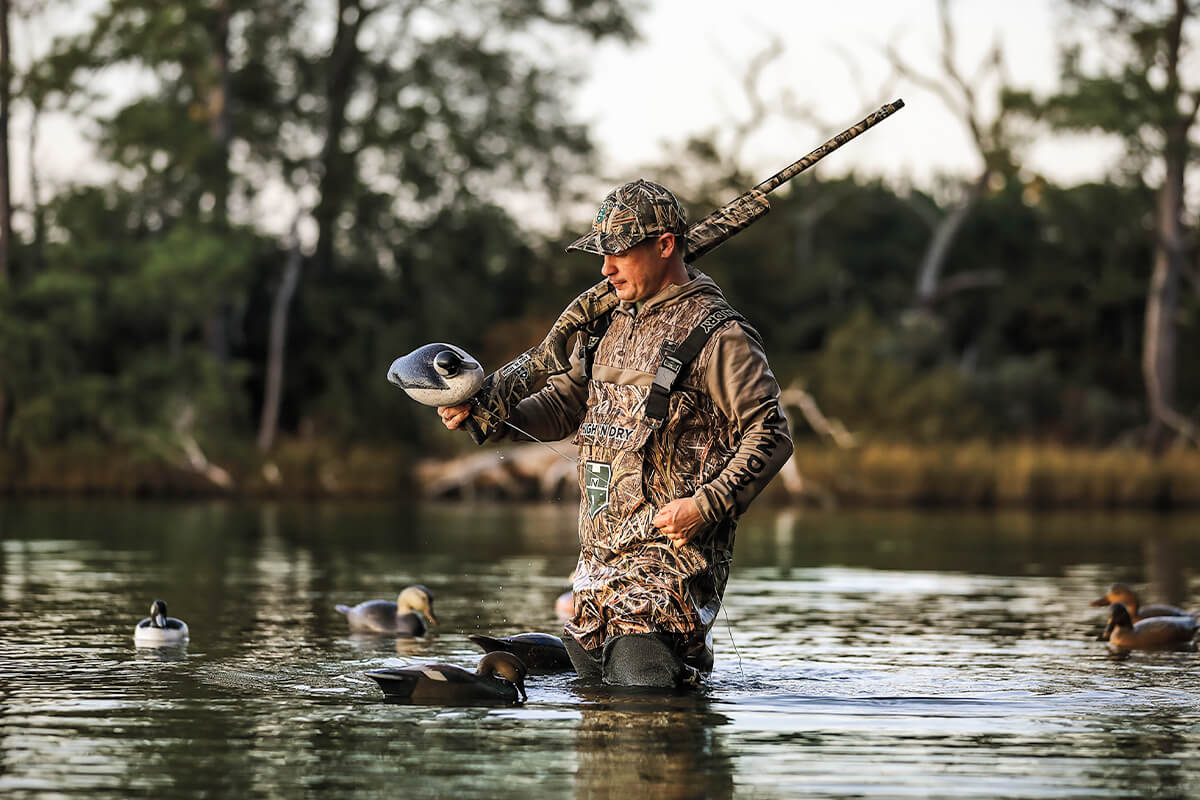
Bootfoot waders have the rubber boot permanently attached. They dominate waterfowl hunting because they are quick to put on, reduce the number of separate components and are convenient in mud, flooded fields and boats.
The main weakness is fit. A boot can fit the foot correctly while the body fits poorly, or the body can fit correctly while the boot is too loose. A loose boot may lift at the heel, rub the foot and become difficult to pull from deep mud.
Stockingfoot Waders
Stockingfoot waders end in waterproof neoprene socks that are worn inside separate wading boots. They can provide better ankle support and a more precise boot fit, especially during long walks over rocks or firm ground.
However, separate boots can collect mud and vegetation, require more time to put on and may not be as convenient in soft marsh conditions. Some areas also restrict certain sole materials to reduce the spread of aquatic invasive species.
How Much Insulation Do Duck Hunting Waders Need?
Insulation numbers are useful for comparing models within a similar product line, but they do not create a guaranteed temperature rating. A 1,200-gram boot is not automatically warmer for every hunter than a lower-rated boot.
Your feet may become cold in heavily insulated boots when the fit is so tight that thick socks compress the insulation or restrict circulation. Conversely, an oversized boot can allow excessive movement, instability and cold air circulation.
| Hunting Condition | Practical Starting Point | Important Qualification |
|---|---|---|
| Warm early season | Uninsulated breathable body with moderate boot insulation | Prioritize moisture control and walking comfort |
| Variable midseason | Breathable body with removable or separate layers | Carry an extra insulating layer rather than starting overdressed |
| Cold late season | Insulated boots with wool or synthetic socks and adequate toe room | Warmth depends on circulation, dryness and activity |
| Long stationary hunts | Higher boot insulation and substantial leg layering | Avoid standing deeper than necessary and monitor cold stress |
| Long walk-in access | Lightweight breathable wader | Pack insulation separately to reduce perspiration during the approach |
How Duck Hunting Waders Should Fit
Waders should provide enough room for bending, kneeling, stepping over obstacles and sitting in a blind without pulling tightly across the knees, crotch or shoulders. At the same time, excess fabric should not hang low enough to snag on boat hardware, brush or blind edges.
- Try the waders with the same socks and layers you expect to wear while hunting.
- Walk, squat, kneel and lift each knee toward your chest.
- Check whether the boot heel lifts excessively.
- Confirm that your toes can move without sliding forward.
- Make sure the belt can sit securely above the hips.
- Mount an unloaded firearm in a safe setting to check whether buckles interfere with shoulder placement.
- Verify that the body remains comfortable when seated.
Do not select an oversized boot only to accommodate very thick socks. A better approach is a correctly fitted boot, one moisture-wicking liner sock if needed, and an appropriate wool or synthetic outer sock.
Features That Matter Most
Waterproof Construction
Look for a waterproof membrane or coated fabric, properly sealed seams and a well-protected boot-to-wader connection. More layers can improve abrasion resistance, but fabric quality and seam placement also matter.
Reinforced Knees, Shins and Seat
These areas contact ice, timber, boat floors, blind edges and the ground. Reinforcement is especially valuable for hunters who kneel frequently or move through flooded timber.
Comfortable Boots
Boot comfort affects warmth, balance and walking efficiency. Evaluate heel retention, toe room, arch support, outsole grip and how easily the boot releases from mud.
Reliable Wading Belt
A belt helps reduce how quickly water can move into the lower wader after a fall. It does not make deep or swift water safe and does not replace a life jacket.
Front Zipper
A waterproof front zipper makes dressing and restroom breaks easier. It also adds cost and requires cleaning and care. Operate it according to the manufacturer’s instructions rather than forcing it when muddy, frozen or misaligned.
Useful Pockets
Hand-warmer pockets and accessible storage are valuable, but many exterior pockets are merely water-resistant. Keep a phone, license, keys and emergency equipment in a separate waterproof pouch.
Repair and Warranty Support
All waders can eventually develop leaks. Before buying, examine the repair process, exclusions, turnaround expectations, required proof of purchase and whether the manufacturer offers local or factory service.
Recommended Layering Under Breathable Waders
Breathable waders block external water but do not prevent sweat. A practical layering system moves moisture away from the skin and allows insulation to be adjusted.
- Base layer: Wool or synthetic fabric that manages moisture.
- Mid-layer: Fleece, synthetic insulation or wader pants selected for the temperature.
- Cold-weather layer: Additional loft around the legs and seat without restricting movement.
- Socks: Wool or synthetic socks that fit without compressing the foot.
Avoid cotton as the primary cold-weather layer. Cotton absorbs moisture and can remain wet against the body, reducing comfort and increasing cold stress.
Wader Inspection Checklist
- Check the body fabric for cuts, worn areas and punctures.
- Inspect the boot-to-wader connection.
- Examine seam tape and reinforced panels.
- Test the front zipper and clean it as directed.
- Check suspenders, buckles, hooks and belt.
- Inspect boot soles for damage and adequate traction.
- Confirm that the repair kit is complete.
- Test for leaks before opening day rather than at the boat ramp.
- Verify that emergency communication is protected from water.
- Pack a life jacket appropriate for the activity and conditions.
Common Duck Hunting Wader Mistakes
- Buying by boot size alone: Body length, chest size, inseam and layering room also matter.
- Wearing too many socks: Compressed feet and restricted circulation can make heavily insulated boots feel colder.
- Starting a long walk overdressed: Sweat can chill the body after the hunter stops moving.
- Skipping the wading belt: The belt should be fastened before entering the water.
- Treating waders as flotation: Waders do not replace a properly fitted life jacket.
- Carrying electronics in a water-resistant pocket: Use a true waterproof pouch.
- Ignoring small leaks: Repair minor damage before it expands or causes a cold-weather emergency.
- Drying waders beside intense heat: Excessive heat can damage boots, coatings, adhesives and seam tape.
- Storing them wet: Persistent moisture encourages odor, material degradation and mildew.
- Choosing camouflage over fit: A perfectly patterned wader is still a poor choice when it restricts movement or causes blisters.
How to Clean and Store Duck Hunting Waders
- Remove mud, vegetation, seeds and debris after the hunt.
- Rinse salt, dirty water and abrasive sediment from the exterior.
- Clean the interior according to the manufacturer’s instructions.
- Allow both the inside and outside to dry completely.
- Keep the waders away from open flames, heaters and prolonged intense sunlight.
- Store them loosely in a cool, dry place without tightly folding the boot connections.
- Keep waterproof zippers clean and use only manufacturer-approved zipper care products.
Waders, boots and other wet equipment can transport aquatic plants, organisms and contaminated sediment between waterways. Clean, drain and dry your equipment before using it in a different location, and follow any local decontamination rules.
Legal and Ethical Considerations
Wader ownership is generally not regulated, but the hunt itself is. Waterfowl seasons, licenses, stamps, bag limits, access rules, boating requirements and legal shooting hours vary by jurisdiction.
In the United States, federal waterfowl rules operate alongside state regulations. Applicable requirements may include a signed federal duck stamp for hunters of the required age, Harvest Information Program enrollment, approved nontoxic shot and rules governing boats, baiting and possession. State rules may be more restrictive.
Before hunting, verify:
- The open season and legal shooting hours
- Required licenses, stamps and permits
- Species and daily possession limits
- Approved nontoxic shot requirements
- Boat registration and life-jacket rules
- Public-land or refuge access restrictions
- Motor, airboat, kayak and launch restrictions
- Dog-use and retrieval requirements
- Property boundaries and landowner permission
Official regulations override general online advice. Check them again immediately before hunting because emergency closures, water conditions and access rules can change.
What Not to Do
- Do not enter deep, swift, icy or unfamiliar water merely because you are wearing chest waders.
- Do not use waders as a substitute for a life jacket.
- Do not overload a boat with hunters, dogs, decoys and equipment.
- Do not stand suddenly or shift weight recklessly in a small boat.
- Do not fire across a person, dog, boat, road, building or unsafe background.
- Do not shoot at unidentified movement or sound.
- Do not hunt without checking current federal, state and property-specific regulations.
- Do not use damaged waders in cold water without completing an appropriate repair and leak test.
- Do not force a dirty or frozen waterproof zipper.
- Do not continue when weather, visibility, fatigue or water conditions become unsafe.
Final Answer: What Are the Best Duck Hunting Waders?
When readers ask what are the best duck hunting waders, the best overall answer is a properly fitted breathable bootfoot chest wader with reinforced wear areas, a secure belt, comfortable boots and enough room for adjustable layering.
The SITKA Delta Pro Zip GTX is the leading all-season premium choice. The Chêne 2S is a strong durability-focused option, the Drake BMF1600 suits cold and abrasive environments, and the Frogg Toggs Grand Refuge 3.0 provides practical temperature versatility. Dive Bomb and Drake offer compelling front-zip and mid-range alternatives, while TIDEWE can serve beginners or occasional hunters on a tighter budget.
Choose by fit and hunting conditions rather than reputation alone. Test movement before hunting, inspect the waders before every trip, wear a wading belt, use an approved life jacket where immersion is possible, follow firearm safety rules and verify all current waterfowl and boating regulations.
FAQs
1. What are the best duck hunting waders overall?
The SITKA Delta Pro Zip GTX is the strongest all-around premium option for hunters who need mobility, breathable construction, reinforcement and all-season layering flexibility. It is not automatically the best value for occasional hunters.
2. What are the best duck hunting waders for the money?
The Frogg Toggs Grand Refuge 3.0 is a practical value because its removable liner adapts to multiple temperatures. The Drake Guardian Elite and Dive Bomb DB Zip are also worth comparing when a front zipper is important.
3. What are the best budget duck hunting waders?
TIDEWE and entry-level breathable models from established waterfowl brands can meet a beginner’s needs. Prioritize correct fit, sealed seams, a functional belt and warranty terms rather than choosing the lowest advertised price.
4. What are the best duck hunting waders for cold weather?
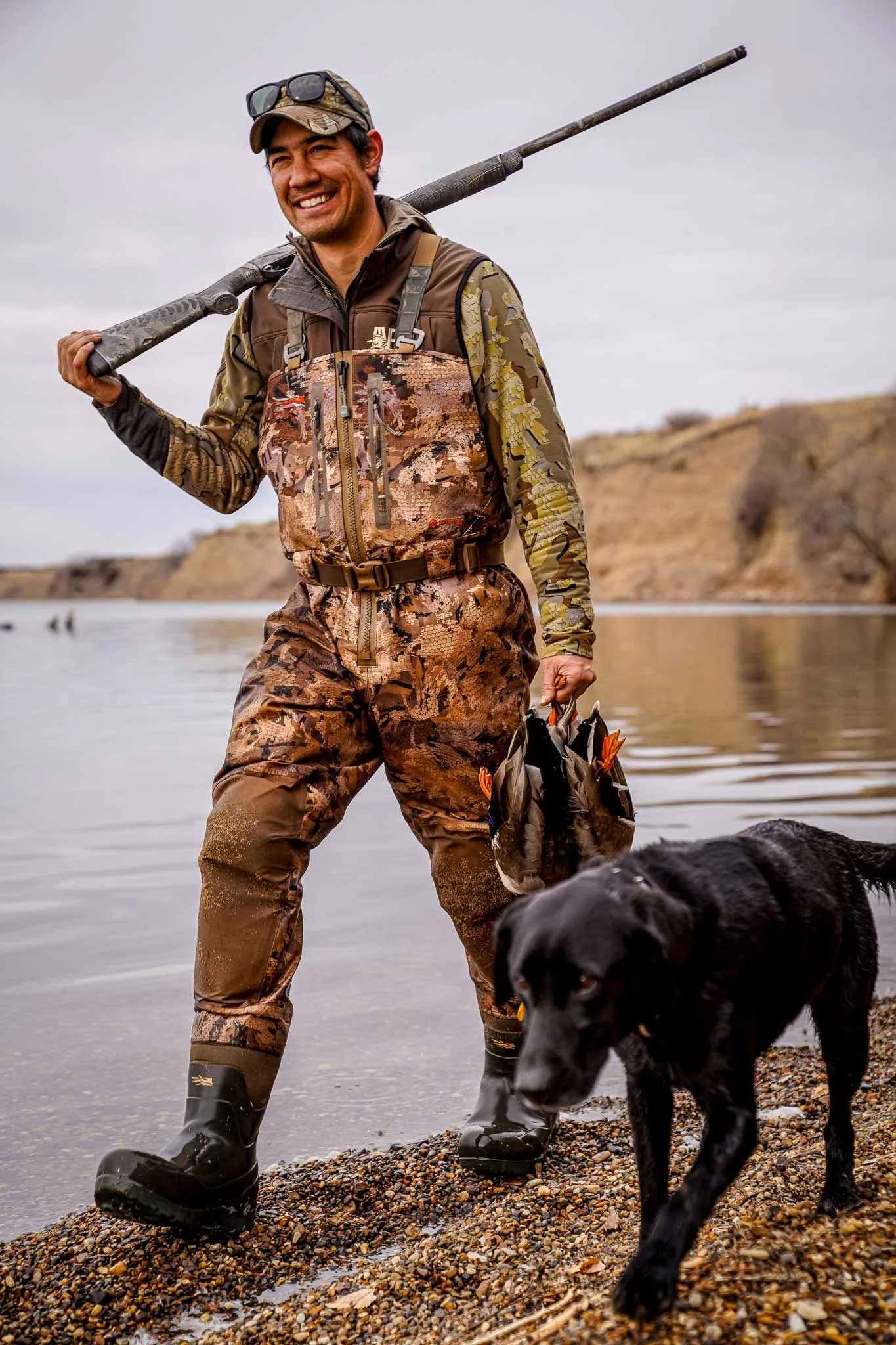
Look for insulated boots, enough body room for layers and reinforced construction. The Drake BMF1600, Dive Bomb DB Zip, Frogg Toggs Grand Refuge 3.0 and Rogers insulated two-in-one models are examples designed for colder conditions.
5. What are the best waders for early-season duck hunting?
A lightweight uninsulated breathable wader is usually best for warm early seasons. The SITKA Delta VentLite and Drake Guardian Elite are examples of designs that emphasize mobility and layering flexibility.
6. What are the best waders for walk-in duck hunting?
Choose breathable waders with a supportive, secure boot and minimal excess fabric. Weight, heel retention, ankle stability and moisture management matter more than maximum insulation during long approaches.
7. Are breathable or neoprene waders better for duck hunting?
Breathable waders are better for most mixed-season hunters because they are lighter and easier to layer. Neoprene can still work for cold, short-access hunts but may become hot and restrictive during walking.
8. Should duck hunting waders be insulated?
Body insulation is optional. Many experienced hunters prefer an uninsulated breathable shell with separate layers because it can be adjusted throughout the season. Insulated boots remain useful in cold water.
9. Can one pair of waders work all season?
Yes. A breathable shell with removable insulation or enough room for separate layers can cover a wide temperature range. Extremely hot and extremely cold conditions may still justify specialized systems.
10. Are bootfoot or stockingfoot waders better for duck hunting?
Bootfoot waders are more convenient in mud, boats and flooded fields. Stockingfoot waders can provide a more precise boot fit and support for long walks, but separate boots require more setup and cleaning.
11. Are front-zip duck hunting waders worth it?
A front zipper makes dressing and restroom breaks much easier. It is worth considering for frequent hunters, but it increases cost and adds a component that must be kept clean and maintained.
12. Do waterproof wader zippers leak?
A correctly closed and maintained waterproof zipper should remain dry during normal use, but dirt, damage, poor alignment or worn seals can cause leakage. Follow the manufacturer’s cleaning and lubrication instructions.
13. How should duck hunting waders fit?
They should allow squatting, kneeling, climbing and sitting without tight pulling. The boot should secure the heel, leave toe room and avoid excessive sliding.
14. Should I size up in duck hunting waders?
Size up only when the manufacturer’s chart and your intended layers require it. Excessively large waders create folds, snag hazards, heel lift and inefficient walking.
15. How much room should waders have for layers?
You should be able to wear normal cold-weather layers without compressing insulation or restricting movement. Test the fit while bending, kneeling and sitting before removing the tags.
16. How should attached wader boots fit?
The heel should remain reasonably secure, the toes should move freely and the boot should not squeeze the forefoot when worn with hunting socks. Avoid filling an oversized boot with multiple thick socks.
17. Is 1,200-gram boot insulation enough for duck hunting?
It can be suitable for many cold-weather hunts, but insulation weight alone does not guarantee warmth. Fit, circulation, socks, moisture, water temperature, wind and activity all affect comfort.
18. What socks should I wear with duck hunting waders?
Wear wool or synthetic socks that manage moisture and fit without compressing the foot. A thin liner sock may help some hunters, but excessive sock thickness can restrict circulation.
19. What should I wear under breathable waders?
Use a moisture-wicking base layer and add fleece, synthetic insulation or purpose-built wader pants as temperatures fall. Adjust the system to your walking distance and expected stationary time.
20. Can I wear jeans or cotton sweatpants under waders?
They can feel restrictive and retain moisture. Wool or synthetic layers generally provide better mobility, drying and temperature management.
21. Do I need a wading belt with chest waders?
Yes. Fasten the belt before entering the water. It can slow water movement into the lower wader after a fall, but it does not make dangerous water safe.
22. Do duck hunters need a life jacket while wearing waders?
A life jacket should be worn while boating and whenever cold, deep or moving water creates a realistic immersion risk. Local boating laws may also require specific flotation equipment. Waders are not a PFD.
23. Will water-filled waders make a hunter sink?
The immediate danger is not a simple “waders pull you straight down” effect. Loss of footing, panic, cold shock, restricted movement, heavy wet clothing and lack of flotation can all contribute to drowning. Wear a life jacket and avoid relying on myths during emergency planning.
24. Is it safe to duck hunt alone in waders?
Solo hunting increases the consequences of a fall, injury, boat problem or cold-water immersion. Hunting with a partner is safer. At minimum, leave a detailed plan, carry waterproof communication and establish a return time.
25. How deep should I wade while duck hunting?
Stay as shallow as the hunt allows. Water near the top of chest waders leaves little margin for waves, soft bottoms, hidden holes or loss of balance. There is no universal safe depth for every hunter or location.
26. Should duck hunters carry a wading staff?
A staff is useful in current, soft mud, uneven bottoms and unfamiliar water. It helps locate holes and obstacles before committing your full weight.
27. How important is camouflage on duck hunting waders?
Camouflage can help a hunter blend into certain surroundings, but remaining still, using natural cover and setting up intelligently usually matter more than selecting a precise pattern.
28. Are women-specific duck hunting waders better for women?
They often provide improved torso, hip, inseam and boot proportions. The best choice is whichever size system allows safe movement and correct boot fit, regardless of the label.
29. How should youth duck hunting waders fit?
Youth waders should fit the child now rather than being dangerously oversized for future growth. Closely supervise young hunters around water and follow all youth life-jacket and hunter-education requirements.
30. What makes duck hunting waders durable?
Durability comes from abrasion-resistant fabric, thoughtful seam placement, reinforced knees and seat, protected boot connections and correct fit. Even premium waders can be punctured by wire, sharp timber or metal blind edges.
31. How long should duck hunting waders last?
Service life varies from a few hunts to many seasons. Frequency of use, fit, terrain, drying, storage, seam stress and repair quality have more influence than price alone.
32. How do I test waders for leaks?
Follow the manufacturer’s approved testing process. Some small leaks can be located by carefully inspecting damp areas, seams and abrasion points. Do not use unsafe inflation pressure or a repair method that could damage the membrane.
33. Can leaking duck hunting waders be repaired?
Small punctures and some seam leaks can often be repaired with the manufacturer’s recommended patch or sealant. Major boot, zipper or delamination failures may require professional or factory service.
34. How should I clean duck hunting waders?
Remove mud and vegetation, rinse the exterior and use only cleaning products approved for the material. Harsh detergents, solvents and aggressive brushes can damage waterproof coatings.
35. How should I dry and store waders?
Dry both sides completely in a ventilated area away from intense heat. Store them loosely in a cool, dry location without sharply folding or crushing the boot connections.
36. Can duck hunting waders be used in saltwater?
Many waterproof waders can be used around saltwater, but salt should be rinsed from the fabric, boots, zipper and hardware after use. Check the manufacturer’s instructions for material-specific restrictions.
37. Can waders spread invasive species?
Yes. Mud, plant fragments and organisms can cling to boots and fabric. Clean, drain and dry the equipment before moving between waterways, and follow local decontamination rules.
38. Are wader pockets waterproof?
Do not assume they are. Many exterior pockets are described as water-resistant and may leak during submersion. Store electronics, documents and emergency supplies in a separate waterproof container.
39. Can fishing waders be used for duck hunting?
They can keep a hunter dry, but they may lack camouflage, insulated boots, reinforced knees, shell storage and hunting-oriented fit. Stockingfoot fishing waders can still work well for long, firm-bottom approaches.
40. What regulations apply when hunting ducks in waders?
Wader use itself is rarely the main legal issue. Verify hunting seasons, licenses, stamps, bag limits, approved nontoxic shot, shooting hours, boating requirements, refuge restrictions and land access rules.
41. How should a firearm be handled while wearing waders?
Maintain safe muzzle direction, keep your finger outside the trigger guard, positively identify the target and know what lies beyond it. Use extra care around slippery footing, boats, dogs and hunting partners.
42. What should I check immediately before entering the marsh?
Check the weather, water depth, route, wader belt, boot traction, life jacket, communication device, firearm condition, required documents and return plan. Stop the hunt when conditions no longer match your equipment or experience.
Read more: