
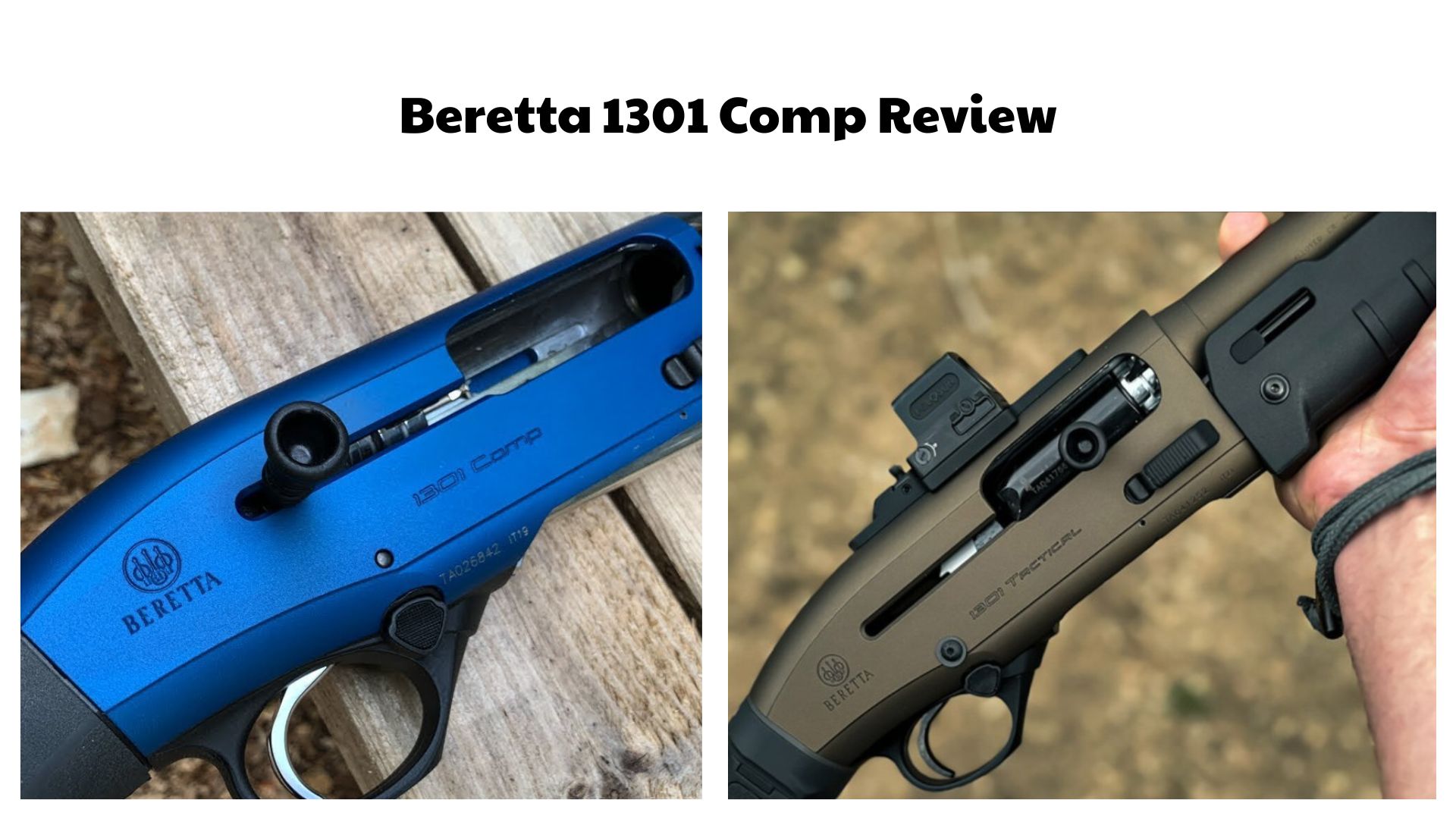

The Beretta 1301 Comp Review focuses on one of the most respected modern semi-automatic shotguns built specifically for speed and competition performance. The Beretta 1301 Comp has earned a strong reputation among 3-Gun competitors, sport shooters, and tactical training communities due to its fast cycling behavior and lightweight handling characteristics.
At the core of its performance is Beretta’s BLINK gas operating system, widely recognized for its rapid cycling speed and efficient recoil management. This system helps the shotgun deliver quick follow-up shots while maintaining control, even during fast-paced shooting sequences. Combined with its lightweight design and competition-focused ergonomics, the 1301 Comp has become a standout option in its category.
This review will take a detailed look at the shotgun’s design philosophy, operating system, real-world performance, upgrades, and overall value. The goal is to understand why the Beretta 1301 Comp is considered one of the fastest and most capable competition shotguns available today, and whether it truly lives up to its reputation in practical use.
Beretta 1301 Comp Overview and Design Philosophy
Purpose-Built Competition Shotgun
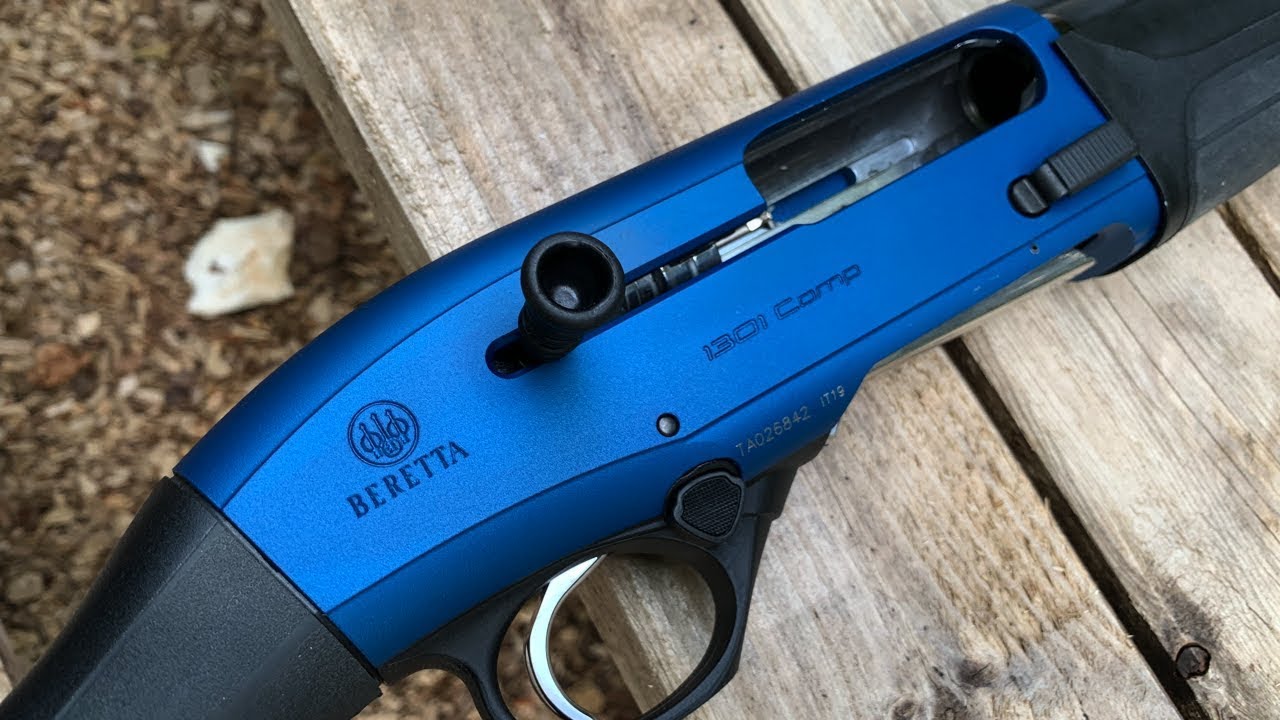
The Beretta 1301 Comp was designed with a very specific goal in mind: competitive shooting performance. Unlike general-purpose shotguns, this platform is optimized for speed, efficiency, and reduced split times between shots. It is widely used in disciplines such as 3-Gun competitions, where shooters must engage multiple targets quickly and accurately under time pressure.
The design philosophy behind the 1301 Comp focuses heavily on reducing unnecessary delays in cycling and target transitions. Every element of the shotgun, from its gas system to its lightweight frame, is engineered to support fast, repeatable performance. This makes it especially appealing to competitive shooters who value speed as much as accuracy.
The 1301 Comp is also an evolution of Beretta’s A400 platform. While it shares some mechanical lineage, it is tuned specifically for competition use. This refinement helps it stand apart as a purpose-built sporting tool rather than a general hunting or defensive shotgun.
Key Model Variants
The Beretta 1301 Comp is available in multiple configurations, each tailored for slightly different user preferences. The standard 1301 Comp is the base model, offering strong performance right out of the box with minimal setup required. It is often considered competition-ready from the factory.
The 1301 Comp Pro version adds several enhancements designed for more advanced shooters. These may include upgraded stock systems, improved controls, and additional adjustability features that help fine-tune fit and handling. The Pro variant is generally favored by serious competitors who want maximum customization potential.
There are also differences between tactical-oriented versions and pure competition setups. While they share the same core operating system, tactical models may prioritize durability and defensive features, whereas competition versions focus more on speed, ergonomics, and reload efficiency.
Why It Became Popular in Shooting Sports
The Beretta 1301 Comp gained popularity in shooting sports primarily because of its out-of-the-box readiness. Unlike many shotguns that require extensive modifications before competitive use, the 1301 Comp performs at a high level immediately after purchase. This makes it attractive to both new and experienced competitors.
Its lightweight construction also plays a major role in its popularity. In long competition stages, reduced weight helps shooters maintain speed and reduce fatigue. The shotgun’s balance and handling characteristics allow for quick transitions between targets, which is critical in timed events.
Over time, the 1301 Comp has developed a strong reputation among competitive shooters for being both fast and reliable. This combination of speed and dependability has helped it establish itself as a serious contender in modern semi-automatic shotgun categories.
BLINK Gas Operating System Explained
How BLINK Technology Works
At the heart of the Beretta 1301 Comp is the BLINK gas operating system, a key factor in its performance advantage. This system is derived from Beretta’s A400 platform but is optimized for faster cycling and reduced friction. It uses gas pressure from fired shells to cycle the bolt assembly in a highly efficient manner.
The BLINK system is known for its extremely fast cycling speed, often described as one of the fastest in the semi-automatic shotgun category. This rapid operation helps reduce delays between shots, allowing shooters to maintain momentum during fast-paced shooting sequences.
The system is also designed to minimize internal resistance. By reducing friction and streamlining the cycling process, the shotgun achieves smoother operation and improved consistency across multiple shots.
Speed Advantage in Real Use
One of the most noticeable advantages of the BLINK system is its impact on shooting speed. Compared to traditional gas-operated systems, the Beretta 1301 Comp cycles noticeably faster, which translates into quicker follow-up shots. In competitive environments, even small improvements in split times can significantly affect overall performance.
This speed advantage becomes especially important in timed stages where shooters must engage multiple targets under pressure. The ability to fire, cycle, and reacquire the target quickly gives the 1301 Comp a clear competitive edge.
At the same time, the system helps manage recoil during rapid fire. While it is still a lightweight shotgun, the gas operation absorbs enough energy to reduce sharp recoil impulses, allowing shooters to stay on target more effectively.
Reliability and Maintenance Benefits
The BLINK gas system also offers practical benefits in terms of reliability and maintenance. It has self-cleaning tendencies, meaning that gas flow helps reduce excessive buildup in critical areas. This contributes to more consistent operation over extended shooting sessions.
The shotgun generally performs best with quality ammunition and may require a short break-in period to achieve optimal consistency. Once properly broken in, it tends to cycle reliably with a wide range of target and competition loads.
Routine maintenance is still required, but the system is designed to be efficient and relatively easy to clean compared to more complex mechanical designs. This balance of speed and practicality is a key part of its appeal.
Design, Weight, and Build Quality
Lightweight Competition Construction
The Beretta 1301 Comp is built with a strong emphasis on lightweight performance. It typically falls within the 6.5 to 7-pound range, making it significantly lighter than many traditional semi-automatic shotguns. This reduced weight plays a major role in its fast handling characteristics.
The construction combines aluminum and high-quality synthetic materials, creating a balance between durability and weight reduction. This design allows the shotgun to remain strong enough for repeated competition use while still being easy to handle over long shooting sessions.
The lightweight nature of the platform is especially beneficial in competitive environments where shooters must move quickly between stages. It reduces fatigue and helps maintain consistent performance throughout extended matches.
Ergonomics and Handling Characteristics
Ergonomics are a major strength of the Beretta 1301 Comp. The shotgun features a slim profile that makes it easy to mount and transition between targets quickly. This streamlined design supports fast handling, which is essential in competitive shooting scenarios.
Weight distribution is carefully balanced to enhance control during firing. The shotgun feels stable without being sluggish, allowing shooters to maintain both speed and accuracy during rapid sequences.
For long competition days, comfort becomes an important factor. The 1301 Comp is designed to reduce strain and maintain usability over extended periods, making it a practical choice for serious competitors.
Barrel and Sight Setup
The Beretta 1301 Comp is available with barrel lengths typically in the 21-inch and 24-inch range. These options allow shooters to choose between slightly faster handling or improved stability depending on their preference and competition style.
Most configurations include a fiber optic front sight or bead sight system, which provides a clear and fast sight picture in varying lighting conditions. This is particularly useful in dynamic shooting environments where speed is critical.
The platform also supports optional optics mounting solutions, allowing users to install red dot sights or other aiming devices. This flexibility helps modernize the shotgun and adapt it to different competitive or training setups.
Performance and Real-World Testing
Cycling Speed and Follow-Up Shots
The Beretta 1301 Comp is widely recognized for its extremely fast semi-automatic cycling performance. This is one of the defining characteristics that sets it apart in the competition shotgun category. The BLINK gas system cycles quickly and efficiently, allowing shooters to move from shot to shot with minimal delay.
In real-world testing and competitive environments, this speed translates into a noticeable reduction in split times. Even small improvements in cycle speed can make a significant difference in 3-Gun and similar disciplines, where fractions of a second matter.
The shotgun also provides a clear advantage in competitive shooting stages that require multiple target transitions. Its fast action helps shooters maintain rhythm and momentum, which is especially important when engaging targets under time pressure.
Recoil Management
Despite its lightweight design, the Beretta 1301 Comp offers surprisingly soft recoil characteristics. This is largely due to the efficiency of the BLINK gas operating system, which absorbs and redistributes energy during cycling.
Instead of transferring all recoil force directly to the shooter, the system smooths out the recoil impulse. This makes the shotgun easier to control, especially during rapid fire sequences.
As a result, shooters are able to maintain better sight alignment and faster target reacquisition. This improvement in control is one of the key reasons the 1301 Comp is favored in competitive shooting environments where speed and accuracy must work together.
Reliability in Different Ammunition Types
The Beretta 1301 Comp performs best with target-grade and high-quality ammunition. These loads provide consistent pressure levels that work well with the BLINK gas system, resulting in smooth cycling and dependable performance.
Some users report occasional sensitivity during the break-in period, especially when using lighter loads. This is not uncommon in high-performance semi-automatic shotguns designed for competition use.
After an initial use period, cycling tends to improve noticeably. Once the system is fully settled, the shotgun becomes more consistent across a wider range of ammunition types, though it still performs best with quality loads designed for competition or training.
Controls and Ergonomics
Oversized Tactical Controls
The Beretta 1301 Comp is designed with speed-oriented controls that support fast manipulation under pressure. One of the key features is the enlarged bolt release, which allows for quicker and more intuitive operation during reloads or malfunctions.
The safety and charging handle are also designed with usability in mind, featuring enlarged or enhanced shapes that make them easier to operate, even when wearing gloves or under stressful conditions.
These control upgrades are not just cosmetic; they are intended to improve performance in competitive environments where every second matters. The overall design reflects a strong focus on usability and efficiency.
Loading Port and Reload Efficiency
The loading port on the Beretta 1301 Comp is enlarged to support faster reload techniques commonly used in competition shooting. This design allows shooters to load shells more quickly and smoothly under time pressure.
It is fully compatible with advanced reload techniques such as quad-loading, which is commonly used in 3-Gun competitions. This makes it a strong choice for competitive shooters looking to maximize reload speed.
However, some users choose to perform minor tuning or polishing on the loading port to achieve even smoother shell insertion. While not strictly necessary, these modifications can help optimize performance for high-level competition use.
Stock Adjustability and Fit
The Beretta 1301 Comp features an adjustable stock system that uses spacers to modify the length of pull. This allows shooters to customize the fit of the shotgun based on their body type, shooting stance, or equipment setup.
This adjustability improves comfort and consistency, especially during long competition days where fatigue can affect performance. A proper fit helps maintain better control and reduces strain during repeated firing sequences.
The stock design is clearly competition-oriented, focusing on stability, repeatability, and ergonomic efficiency rather than hunting or general-purpose versatility.
Beretta 1301 Comp vs Competitors
1301 Comp vs Benelli M2
When comparing the Beretta 1301 Comp to the Benelli M2, the differences reflect two distinct operating philosophies. The 1301 Comp is known for its faster cycling speed and lighter overall weight, which gives it an edge in pure speed-based competition environments.
The Benelli M2, on the other hand, uses an inertia-driven system that is highly respected for its reliability and broad ammunition compatibility. It also benefits from a strong aftermarket ecosystem, which allows for extensive customization.
In simple terms, the 1301 Comp is often preferred for speed-focused competition shooting, while the M2 is valued for versatility and long-term customization potential.
1301 Comp vs Mossberg 940 JM Pro
The comparison between the Beretta 1301 Comp and the Mossberg 940 JM Pro highlights a balance between premium performance and value. The 1301 Comp offers a smoother recoil impulse and a more refined overall shooting experience, largely due to its BLINK gas system and lightweight design.
The Mossberg 940 JM Pro is generally more affordable and is also designed with competition in mind. It is heavier, which can help with recoil control, and it includes competition-focused features out of the box.
The choice between them often comes down to budget versus performance refinement. The Beretta tends to offer higher-end performance, while the Mossberg provides strong competition capability at a more accessible price point.
1301 Comp vs Entry-Level Semi-Autos
Compared to entry-level semi-automatic shotguns, the Beretta 1301 Comp represents a significant step up in both speed and ergonomics. The difference in cycling speed alone can be noticeable in real shooting scenarios, especially in competitive environments.
The out-of-the-box readiness of the 1301 Comp is another major advantage. While many entry-level shotguns require upgrades or tuning to reach competition standards, the Beretta is already optimized for high-performance use from the factory.
Although it comes at a higher price, the performance gains in speed, recoil control, and handling often justify the investment for serious shooters.
Ideal Use Cases for the Beretta 1301 Comp
3-Gun Competition Shooting
The Beretta 1301 Comp is specifically designed for 3-Gun competition shooting. Its fast cycling speed, lightweight design, and efficient controls make it highly effective in timed shooting stages.
Shooters benefit from quick reloads and fast target transitions, which are essential in competitive environments. The shotgun’s ability to maintain speed without sacrificing control gives it a strong competitive edge.
Sporting and Clay Shooting
While not a traditional hunting shotgun, the Beretta 1301 Comp can also be used for sporting and clay shooting applications. Its smooth cycling and lightweight handling make it comfortable for repeated shots.
The reduced weight helps minimize fatigue during long sessions, which is beneficial in sporting environments. However, its design is still primarily competition-focused rather than traditional field hunting use.
Tactical Training and Home Defense
The Beretta 1301 Comp can also be used for tactical training and home defense scenarios. Its reliable semi-automatic performance and fast follow-up shot capability make it suitable for defensive applications.
However, it is best suited for trained users who are familiar with semi-automatic shotgun operation. Its competition-oriented design means it performs best in the hands of shooters who understand its speed-focused characteristics.
Accessories and Upgrades
Competition Enhancements
The Beretta 1301 Comp supports a wide range of competition-focused upgrades. Extended magazine tubes are commonly used to increase capacity for match settings. These upgrades help reduce reload frequency during competition stages.
Oversized bolt releases and charging handles are also popular modifications, improving speed and ease of manipulation under pressure. Shell carriers and side saddles provide additional onboard ammunition storage, further supporting competitive use.
Optics and Sighting Options
The platform is compatible with red dot optics, which are increasingly common in competitive shotgun setups. These optics improve target acquisition speed and accuracy in dynamic environments.
Alternatively, fiber optic or ghost ring sight configurations may be used depending on shooter preference. Each setup offers different advantages based on shooting style and competition format.
Ergonomic Modifications
Many users choose to further refine the ergonomics of the Beretta 1301 Comp through aftermarket upgrades. Stock systems from brands like Magpul can improve comfort and adjustability.
Loading port polishing is another common modification, helping to improve reload speed and shell insertion efficiency. Trigger and control enhancements may also be added to further optimize performance for competitive shooting.
Reliability and Maintenance
Cleaning and Field Stripping
The Beretta 1301 Comp is designed with practical maintenance in mind, which is important for a competition-focused semi-automatic shotgun. One of its strengths is a relatively simple breakdown process. Field stripping does not require advanced tools, and most users can disassemble the shotgun quickly after a short learning period. This simplicity makes it appealing for shooters who need to clean their firearm regularly during training or competition seasons.
The gas system is efficient, but it still requires periodic maintenance to ensure long-term reliability. The BLINK gas system helps reduce excessive fouling compared to older or more complex designs, but carbon buildup will still occur over time, especially with high round counts typical in competition environments. Regular cleaning of the gas piston area, barrel, and bolt assembly helps maintain consistent cycling performance.
Routine cleaning is especially important for shooters who participate in frequent matches or training sessions. While the 1301 Comp is not considered high-maintenance compared to some semi-automatic platforms, it still benefits significantly from consistent care. Proper lubrication and inspection of key components ensure that the shotgun continues to perform at its peak level, especially under fast-paced shooting conditions.
Break-In Period Considerations
Like many high-performance semi-automatic shotguns, the Beretta 1301 Comp may require a break-in period before reaching optimal performance. During early use, some shooters may notice that the shotgun is slightly more sensitive to lighter ammunition loads. This is not unusual for competition-oriented gas systems designed for speed and efficiency.
As the shotgun is used more, internal components begin to smooth out, and the cycling process becomes more consistent. This improvement is especially noticeable after firing a moderate number of rounds with proper target or competition-grade ammunition. Once broken in, the system tends to stabilize and perform more reliably across a wider range of loads.
It is generally recommended to begin the break-in process using heavier shells or standard target loads rather than ultra-light recoil-reduced ammunition. This helps ensure that the gas system cycles fully and consistently during the initial phase. After this period, the shotgun typically becomes more forgiving and stable in its operation.
Long-Term Durability
The Beretta 1301 Comp benefits from strong Italian manufacturing standards, which are well regarded in the firearms industry. Build quality is a key factor in its long-term durability, with attention paid to both materials and mechanical precision. The combination of aluminum receiver components and high-quality synthetic parts helps maintain strength while keeping weight low.
In competitive shooting environments, durability is tested through high round counts, rapid firing sequences, and frequent handling. The 1301 Comp has demonstrated strong performance under these conditions, maintaining reliability when properly maintained. Its gas system is designed to handle repeated use without significant degradation in cycling speed or consistency.
Over time, the shotgun proves to be reliable when treated with consistent maintenance habits. While it is a competition-focused platform rather than a heavy-duty military shotgun, it still offers impressive longevity for its intended role. With proper care, it can serve as a long-term performance tool for both competitive and advanced training use.
Pros and Cons of the Beretta 1301 Comp
Pros
The Beretta 1301 Comp offers several clear advantages that make it a standout in the semi-automatic competition shotgun category. One of its most important strengths is its extremely fast cycling speed, made possible by the BLINK gas system. This speed directly contributes to reduced split times and improved performance in competitive shooting environments.
Its lightweight and well-balanced design is another major advantage. Weighing significantly less than many traditional shotguns, it allows for faster target transitions and reduced shooter fatigue during long matches. This makes it especially appealing for 3-Gun competitors and sport shooters who prioritize agility.
Recoil management is also excellent for a lightweight shotgun. The gas system absorbs and distributes energy efficiently, allowing shooters to maintain better control during rapid fire sequences. Combined with strong ergonomics and well-designed controls, the 1301 Comp provides a smooth and intuitive shooting experience.
Another key benefit is that it is competition-ready out of the box. Unlike many platforms that require extensive modification, the Beretta 1301 Comp performs at a high level immediately after purchase. This reduces setup time and makes it accessible for both experienced and newer competitive shooters.
Cons
Despite its strengths, the Beretta 1301 Comp does have some limitations. The most obvious is its premium price compared to entry-level semi-automatic shotguns. While the performance justifies the cost for serious users, it may be a significant investment for casual shooters.
Another consideration is its relatively limited aftermarket support compared to platforms like the Benelli series. While upgrades are available, the ecosystem is not as extensive, which may limit customization options for some users.
The shotgun can also be sensitive to light loads during its initial break-in period. Although this typically improves with use, it may require shooters to select ammunition more carefully in early stages of ownership.
Finally, the 1301 Comp is not specifically optimized for heavy-duty tactical use. While it can be used in defensive roles, its design philosophy is centered on speed and competition rather than rugged military or law enforcement applications.
Price and Value Analysis
Why It Costs More
The Beretta 1301 Comp is positioned in the premium price range due to several key factors. One of the most important is its advanced gas system engineering. The BLINK system is designed for extremely fast cycling and efficient performance, which requires precise manufacturing and high-quality components.
Italian manufacturing quality also plays a significant role in its pricing. Beretta is known for maintaining high production standards, and this level of craftsmanship contributes to both performance and durability. Precision engineering ensures that the shotgun functions consistently under demanding competition conditions.
In addition, the 1301 Comp is purpose-built for competitive shooting. Features such as its lightweight frame, ergonomic controls, and fast cycling system are all designed specifically to improve performance in timed shooting sports. These specialized design features naturally increase production costs compared to general-purpose shotguns.
Is It Worth It?
The value of the Beretta 1301 Comp depends heavily on the user’s intended purpose. For competitive shooters, it offers high value due to its speed, reliability, and out-of-the-box readiness. It can provide a real performance advantage in 3-Gun and similar disciplines where timing is critical.
For casual or occasional shooters, however, it may be more than what is necessary. In those cases, less expensive shotguns can still perform adequately without the premium investment. The 1301 Comp is best suited for users who actively engage in competitive shooting or high-performance training.
From a long-term perspective, it can also be considered a strong investment for performance-focused shooters. Its durability, consistency, and competitive advantages help justify its cost over time, especially for those who regularly participate in shooting sports.
Final Verdict
The Beretta 1301 Comp stands out as one of the most refined and performance-oriented competition shotguns in its class. Its biggest strengths lie in its exceptional cycling speed, excellent recoil control, and lightweight handling characteristics. These qualities combine to create a shotgun that is highly effective in fast-paced shooting environments.
At the same time, it does have some limitations, including its premium price, relatively limited aftermarket ecosystem, and initial sensitivity to light ammunition. It is also not specifically designed for heavy-duty tactical roles, which may limit its appeal for certain users.
Overall, the Beretta 1301 Comp remains one of the fastest and most refined semi-automatic competition shotguns available today. It is best suited for competitive shooters, sport shooting enthusiasts, and advanced users who prioritize performance and speed over budget or general-purpose versatility.
In simple terms, it is a specialized tool built for high-performance shooting—and in that role, it performs exceptionally well.
Beretta 1301 Comp Review – 55 Frequently Asked Questions (FAQ)
1. What is the Beretta 1301 Comp designed for?
The Beretta 1301 Comp is designed primarily for competitive shooting, especially 3-Gun and practical shotgun sports. It focuses on speed, fast cycling, and efficient handling rather than hunting or traditional field use. The platform is built to reduce split times and improve transitions between targets. Its lightweight design and BLINK gas system make it ideal for timed shooting environments where performance consistency is critical.
2. Why is the Beretta 1301 Comp so popular?
The Beretta 1301 Comp is popular because it delivers very fast cycling speed combined with excellent recoil control. Many shooters appreciate that it performs well out of the box without extensive modifications. Its reputation in competitive shooting sports has grown due to its reliability and ease of use. The balance of weight, ergonomics, and speed makes it a strong choice for both experienced and newer competitors.
3. What is the BLINK gas system?
The BLINK gas system is Beretta’s proprietary operating system designed for ultra-fast cycling. It uses gas pressure from fired shells to cycle the action with minimal delay and reduced friction. The system is optimized for efficiency and speed, which helps reduce split times in competition. It also contributes to smoother recoil management by distributing energy more evenly during operation.
4. Is the Beretta 1301 Comp good for beginners?
Yes, but it depends on the beginner’s goals. For those interested in competitive shooting, it is an excellent platform because it is easy to operate and very forgiving in handling. However, its premium price and competition-focused design may be more than what a casual beginner needs. It is best suited for beginners who are serious about learning competitive shotgun disciplines.
5. How fast does the Beretta 1301 Comp cycle?
The Beretta 1301 Comp cycles extremely fast compared to most semi-automatic shotguns. The BLINK system is designed for rapid action, allowing very short intervals between shots. In practical terms, this means faster follow-up shots and reduced split times in competition. While exact speed depends on ammunition and shooter skill, it is widely regarded as one of the fastest cycling shotguns in its class.
6. Is the Beretta 1301 Comp reliable?
Yes, the Beretta 1301 Comp is considered highly reliable when used with appropriate ammunition and proper maintenance. It performs best with target-grade or competition loads and becomes more consistent after a short break-in period. Once broken in, it cycles smoothly and consistently in competitive environments. Routine cleaning helps maintain its reliability over time.
7. What ammunition works best in the 1301 Comp?
The 1301 Comp performs best with standard target loads and competition-grade ammunition. These loads provide consistent pressure that works well with the BLINK gas system. Heavier shells tend to cycle more reliably during the break-in period. Very light recoil-reduced loads may occasionally cause cycling issues, especially in early use.
8. Does the 1301 Comp have recoil issues?
No, the Beretta 1301 Comp is known for excellent recoil management despite being lightweight. The gas system absorbs and distributes energy efficiently, resulting in a softer shooting experience than many comparable shotguns. This helps shooters maintain control during rapid fire and improves follow-up shot accuracy.
9. Is the Beretta 1301 Comp good for 3-Gun competition?
Yes, it is one of the most popular shotguns for 3-Gun competition. Its fast cycling speed, lightweight design, and ergonomic controls make it ideal for timed shooting events. Competitors value its ability to reduce split times and improve transitions between targets. It is widely regarded as competition-ready straight from the factory.
10. How heavy is the Beretta 1301 Comp?
The Beretta 1301 Comp typically weighs around 6.5 to 7 pounds depending on configuration. This makes it one of the lighter semi-automatic shotguns in its category. The reduced weight improves handling speed but still maintains enough balance to control recoil effectively during rapid fire sequences.
11. Does the 1301 Comp require a break-in period?
Yes, a short break-in period is recommended. During early use, the shotgun may be slightly sensitive to lighter loads. After firing several rounds with proper ammunition, the internal components smooth out and cycling becomes more consistent. This is common in high-performance gas-operated systems.
12. Can the 1301 Comp handle slugs?
Yes, the 1301 Comp can handle slug ammunition effectively. Slugs provide strong and consistent cycling energy for the gas system. They are often used in competition stages requiring accuracy at longer distances. The shotgun performs well with slugs when properly sighted and configured.
13. Is the Beretta 1301 Comp better than the Benelli M2?
It depends on user preference. The 1301 Comp is faster cycling and lighter, making it ideal for speed-focused competition. The Benelli M2 uses an inertia system known for durability and broader aftermarket support. The choice often comes down to speed versus versatility and customization options.
14. Can the 1301 Comp be used for home defense?
Yes, it can be used for home defense, but it is primarily designed for competition. Its fast cycling and reliability make it effective in defensive scenarios. However, its lightweight and competition tuning mean it is optimized more for speed shooting than traditional defensive setups.
15. How does recoil compare to pump shotguns?
The recoil of the 1301 Comp is generally softer and more controlled than pump-action shotguns. The gas system helps absorb energy, reducing felt recoil. Additionally, semi-automatic operation eliminates the need for manual cycling, which improves shooter comfort during rapid firing.
16. Is the Beretta 1301 Comp good for clay shooting?
Yes, the Beretta 1301 Comp can be used for clay shooting, although it is not its primary purpose. Its fast cycling and lightweight design make it enjoyable for repeated shots on clays. However, dedicated clay shotguns may offer better balance for traditional sporting disciplines. Still, many shooters appreciate its speed and responsiveness on the range.
17. What is the main advantage of the BLINK system?
The main advantage of the BLINK system is its extremely fast cycling speed combined with efficient gas operation. It allows the shotgun to fire and cycle faster than many traditional systems. This directly improves split times and helps shooters stay on target during rapid engagements. It also contributes to smoother recoil management.
18. Does the 1301 Comp work with light birdshot?
The 1301 Comp can work with light birdshot, but performance may vary depending on break-in status and load quality. Heavier or standard target loads are generally more reliable, especially during early use. Once the shotgun is broken in, it becomes more consistent with a wider range of ammunition types.
19. Is the Beretta 1301 Comp easy to clean?
Yes, it is relatively easy to clean. The design allows for simple field stripping without specialized tools. The gas system reduces excessive fouling, making maintenance less demanding compared to older designs. Regular cleaning of the barrel, bolt, and gas components ensures consistent performance.
20. How durable is the Beretta 1301 Comp?
The Beretta 1301 Comp is highly durable for its intended use. Built with quality materials and Italian manufacturing standards, it is designed to withstand high round counts in competitive environments. With proper maintenance, it can remain reliable for many years of regular use.
21. What barrel lengths are available?
The Beretta 1301 Comp is commonly available in barrel lengths such as 21 inches and 24 inches. The shorter barrel offers faster handling and quicker transitions, while the longer barrel provides slightly better stability and sighting control. Choice depends on competition style and shooter preference.
22. Does the 1301 Comp have good ergonomics?
Yes, ergonomics are one of its strengths. The shotgun is designed with a slim profile, intuitive controls, and balanced weight distribution. These features make it easy to handle during fast-paced shooting stages and long competition days.
23. Is the loading port large enough for competition use?
The loading port is enlarged compared to standard shotguns, making it suitable for competition loading techniques. It supports faster reloads and can accommodate advanced methods like quad-loading. Some competitive shooters still choose to polish or slightly modify it for maximum speed.
24. Can the 1301 Comp be modified?
Yes, it supports a range of modifications. Common upgrades include extended magazine tubes, improved charging handles, optics, and ergonomic enhancements. While aftermarket support is not as large as some platforms, there are still many performance-focused options available.
25. Is the Beretta 1301 Comp expensive?
Yes, it is considered a premium shotgun. Its price reflects advanced engineering, competition-focused design, and Italian manufacturing quality. While expensive compared to entry-level models, many users believe the performance justifies the cost.
26. How does it compare to Mossberg 940 JM Pro?
The 1301 Comp is generally faster cycling and lighter, while the Mossberg 940 JM Pro is more affordable and heavier. The Beretta offers a more refined shooting experience, while the Mossberg provides strong competition features at a lower price point. Both are solid choices depending on budget and preference.
27. Is the 1301 Comp good for tactical training?
Yes, it is suitable for tactical training, especially for users who want to improve speed and handling skills. Its fast cycling and ergonomic design make it useful for dynamic shooting drills. However, it is still primarily a competition-focused shotgun.
28. Does it support optics?
Yes, many versions include a receiver rail or compatibility for mounting optics such as red dot sights. This improves target acquisition speed and accuracy in both competition and tactical scenarios.
29. What makes it competition-ready out of the box?
The 1301 Comp comes with features like fast cycling, enlarged controls, adjustable stock options, and an ergonomic design. These features reduce the need for immediate upgrades, making it ready for competition use straight from the factory.
30. Is the shotgun balanced well?
Yes, it has excellent balance for a lightweight platform. Weight distribution helps improve control during rapid firing and target transitions. This balance contributes significantly to its popularity in competitive shooting.
31. Can beginners use it in competitions?
Yes, beginners can use it in competitions, especially if they are serious about learning. Its simplicity and fast operation make it easy to adapt to. However, beginners should be prepared for its premium cost and competition-focused design.
32. Does it require frequent maintenance?
It does not require overly frequent maintenance, but regular cleaning is recommended. The gas system reduces fouling, but consistent care ensures long-term reliability. Competitive shooters typically clean it after matches or training sessions.
33. How does it perform under rapid fire?
It performs very well under rapid fire due to its fast cycling system and recoil management. Shooters can maintain control and accuracy even during fast sequences. This makes it highly effective in competition environments.
34. Is the stock adjustable?
Yes, the stock typically uses a spacer system that allows adjustment of length of pull. This helps shooters achieve a more comfortable and consistent shooting position depending on body size or gear setup.
35. What is its biggest weakness?
Its biggest weaknesses are its high price, limited aftermarket compared to some competitors, and sensitivity to lighter ammunition during break-in. It is also less suited for heavy-duty tactical roles compared to more rugged platforms.
36. Is the Beretta 1301 Comp good for defensive use?
The Beretta 1301 Comp can be used for defensive purposes, but it is primarily designed for competition. Its fast cycling speed and reliability are advantages in defensive scenarios. However, its competition-oriented tuning means it is optimized more for speed shooting than dedicated duty or tactical environments.
37. How does it handle multiple target transitions?
The 1301 Comp handles multiple target transitions very well due to its lightweight design and fast cycling action. Shooters can move quickly between targets while maintaining stability and control. This is one of the key reasons it performs strongly in 3-Gun competitions.
38. Is the recoil similar to pump-action shotguns?
No, the recoil is noticeably softer than most pump-action shotguns. The gas system absorbs part of the energy during cycling, which reduces felt recoil. This makes it easier to stay on target during rapid shooting sequences.
39. Does the 1301 Comp have ambidextrous controls?
The shotgun has partially ambidextrous usability but is not fully ambidextrous out of the box. Some controls are easier for right-handed shooters. Left-handed users can still operate it effectively, though minor adjustments or training may improve comfort.
40. How long does the barrel last?
The barrel is built for long-term use and can last for many thousands of rounds under normal competition conditions. Proper cleaning and maintenance help extend barrel life significantly. It is designed to handle repeated firing without rapid wear.
41. Is it suitable for high-volume shooting?
Yes, the 1301 Comp is well-suited for high-volume shooting such as training or competition seasons. Its gas system is designed to handle repeated firing while maintaining consistent performance. Regular maintenance ensures long-term reliability under heavy use.
42. Does it overheat during long sessions?
Like most semi-automatic shotguns, it can become warm during extended firing sessions. However, the materials and design help manage heat effectively. It is not typically a major issue in standard competition or training use.
43. What makes it better than entry-level shotguns?
The 1301 Comp offers significantly faster cycling, better ergonomics, and improved recoil management compared to entry-level shotguns. It is also competition-ready out of the box, whereas many entry-level models require upgrades to reach similar performance levels.
44. Is the trigger good for competition?
Yes, the trigger is designed for consistent and predictable performance. While not the lightest trigger available, it is suitable for competition shooting where reliability and control are more important than extremely light pull weights.
45. Can it be used in wet conditions?
Yes, the Beretta 1301 Comp performs well in wet and humid conditions when properly maintained. The gas system is designed to operate reliably even in less-than-ideal environments. Drying and cleaning after exposure to moisture is still recommended.
46. How does it compare to inertia-driven shotguns?
Compared to inertia-driven shotguns, the 1301 Comp offers smoother recoil and faster cycling. Inertia systems may handle a wider range of ammunition more naturally, while the Beretta gas system focuses on speed and reduced recoil for competition use.
47. Is it beginner-friendly for training?
Yes, it is beginner-friendly for structured training, especially in competitive shooting disciplines. Its controls are intuitive, and recoil is manageable. However, beginners should be prepared for its performance-oriented design and higher cost.
48. Does it require aftermarket upgrades?
It does not require upgrades to perform well, as it is competition-ready from the factory. However, many shooters choose to add accessories like extended magazine tubes, optics, or improved controls to further enhance performance.
49. How does it perform in speed shooting?
The 1301 Comp excels in speed shooting due to its fast cycling system and lightweight handling. It allows shooters to engage multiple targets quickly while maintaining control. This makes it one of the preferred choices in timed shooting sports.
50. Is it worth the price?
For competitive shooters, it is often considered worth the price due to its performance advantages and reliability. For casual shooters, it may be more expensive than necessary. Its value is highest for users who actively participate in shooting sports.
51. What are common upgrades?
Common upgrades include extended magazine tubes, oversized charging handles, improved bolt releases, optics, and shell carriers. Some shooters also modify the loading port to improve reload speed during competition.
52. Is the 1301 Comp used by professionals?
Yes, it is used by competitive shooters and training professionals in shooting sports. Its reliability and speed make it a strong choice in professional-level competition environments.
53. Does it have a strong aftermarket?
The aftermarket exists but is not as large as some competing platforms like the Benelli M2. However, there are still plenty of quality upgrades available for performance and ergonomic improvements.
54. What is the final verdict on durability?
The Beretta 1301 Comp is highly durable for its intended purpose. With proper care and maintenance, it can withstand high round counts and repeated competition use without significant performance degradation.
55. What is the final overall verdict?
The final verdict is that the Beretta 1301 Comp is one of the fastest and most refined semi-automatic competition shotguns available today. It offers excellent speed, recoil control, and handling in a lightweight package. While it has some limitations such as price and aftermarket size, it remains a top-tier choice for competitive shooters who prioritize performance.
Read more: