
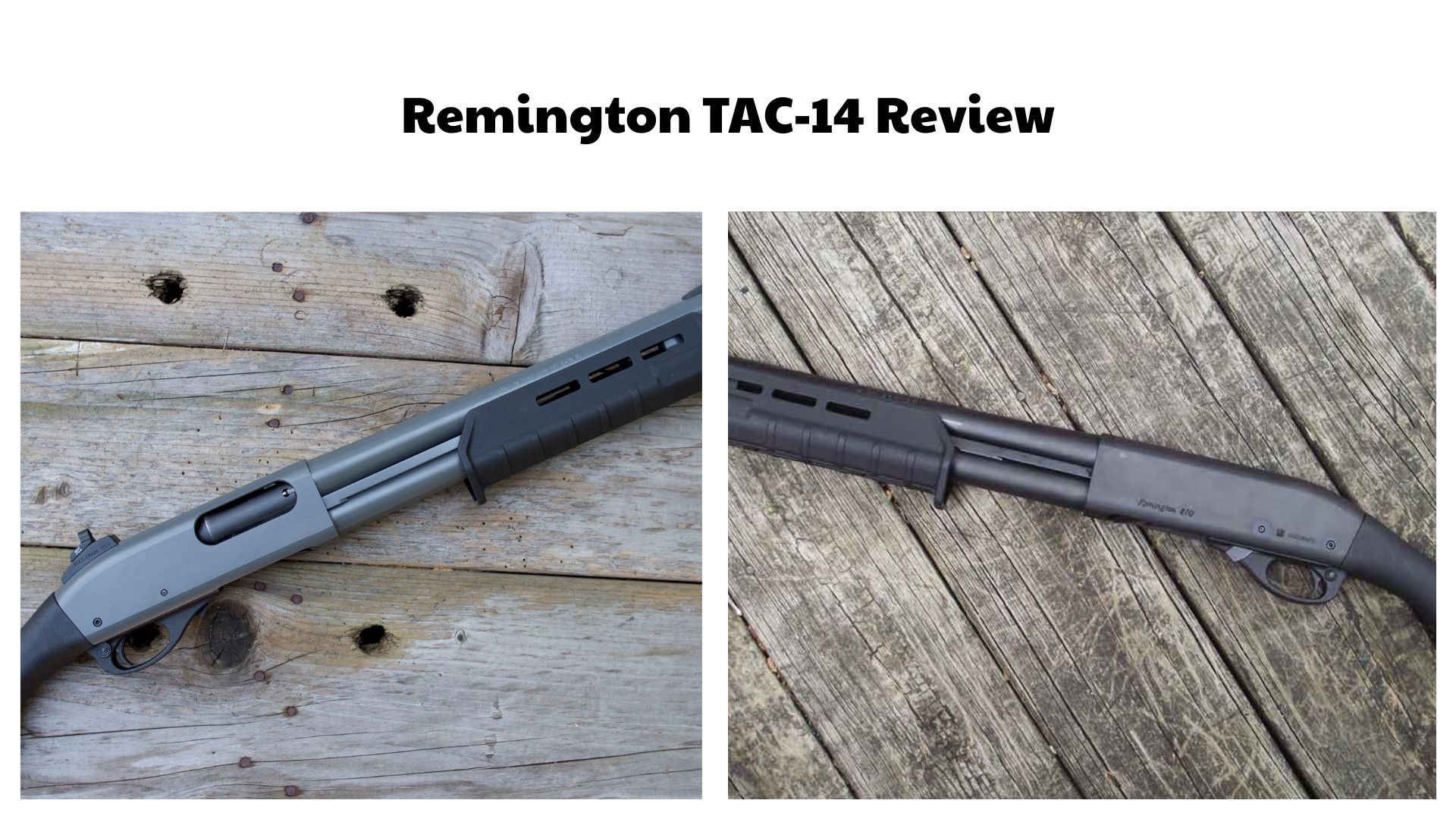

The Remington TAC-14 is a compact pump-action firearm built on the proven Remington 870 platform, designed for users who want maximum defensive power in a minimal footprint. Unlike a traditional shotgun or short-barreled shotgun (SBS), it is classified as a “firearm” under U.S. federal law, allowing its unique 14-inch barrel configuration while remaining compliant under federal regulations. This makes it one of the most distinctive compact defensive platforms in its category. The TAC-14 features a Raptor-style bird’s-head grip, with some models offering Magpul furniture upgrades for improved control and modularity. It is primarily intended for close-quarters defensive roles such as home defense and vehicle use, rather than hunting or sport shooting. Combining portability, raw 12-gauge power, and the legendary reliability of the 870 pump-action system, the TAC-14 delivers a highly specialized defensive tool. This review evaluates its design, legality, performance, ergonomics, reliability, pros and cons, and real-world usability.
Remington TAC-14 Overview and History
Origins of the TAC-14 Platform
The Remington TAC-14 is derived from the classic Remington 870 pump-action shotgun platform, one of the most widely used shotgun systems in history. It was developed to meet demand for a compact defensive firearm that does not fall under short-barreled shotgun (SBS) restrictions. This design approach allowed manufacturers to create ultra-compact defensive firearms while remaining compliant with federal firearm regulations. The TAC-14 represents part of a broader trend in the industry toward compact, high-power defensive platforms optimized for close-quarters use.
Federal Classification and Legal Status
Legally, the TAC-14 is classified as a “firearm” under U.S. federal law rather than a shotgun, due to its configuration. Its 14-inch barrel combined with an overall length greater than 26 inches allows it to avoid classification as an SBS. This legal distinction is critical for understanding its design and market positioning. However, ownership laws can vary significantly by state, making it essential for users to verify local regulations before acquisition. It is also important to distinguish the TAC-14 from both traditional shotguns and federally regulated short-barreled shotguns, as each category carries different legal requirements and handling considerations.
Why the Remington TAC-14 Became Popular
The TAC-14 gained popularity due to its combination of extreme compactness and full-power 12-gauge capability. It provides a legal alternative for users who want SBS-like dimensions without the regulatory burden. Its appeal is especially strong among home defense users and those seeking a compact “truck gun” for emergency preparedness. The balance between portability, simplicity, and stopping power has made it a recognizable option in the defensive firearm market.
Design and Build Quality
Compact Pump-Action Construction
The TAC-14 is built on the steel receiver of the Remington 870, known for its durability and long service history. It features heavy-duty internal components and a robust barrel designed to withstand repeated use under defensive conditions. The overall design is intentionally simplified, prioritizing mechanical reliability and ease of operation over complexity or modular expansion.
Bird’s Head Grip and Ergonomics
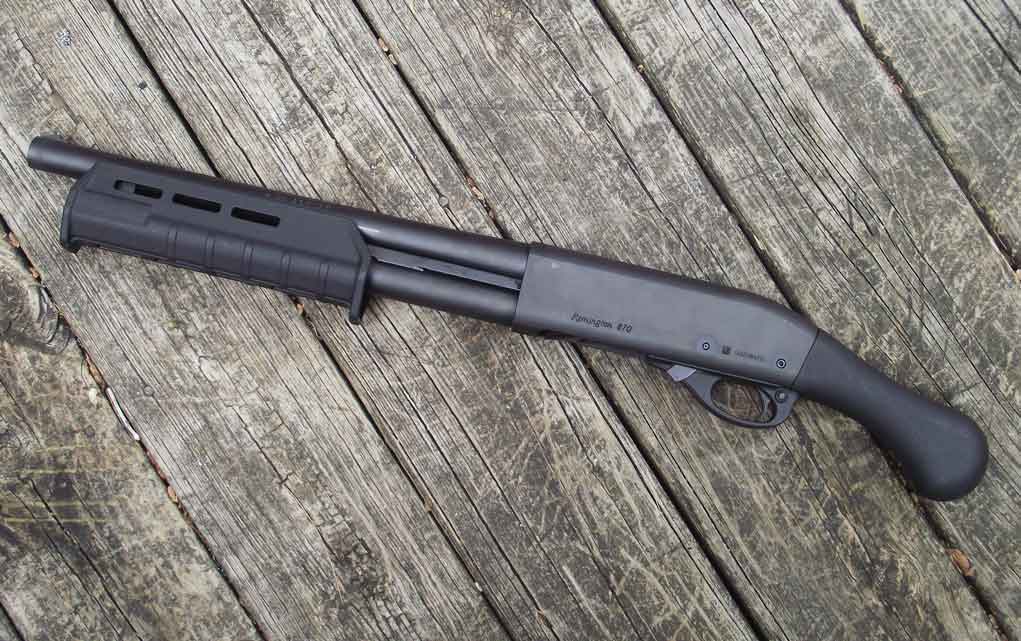
Instead of a traditional shoulder stock, the TAC-14 uses a Raptor-style bird’s-head grip. This design reduces upward recoil leverage and allows for a more compact rear profile, improving maneuverability in tight spaces. However, it also changes how recoil is managed, requiring more deliberate technique from the shooter. While it enhances compactness, it introduces trade-offs in stability compared to full-stock shotguns.
Weight, Balance, and Handling Characteristics
Due to its short barrel and compact layout, the TAC-14 has a front-heavy balance profile. This contributes to controllability during firing but can make prolonged handling more demanding. Its compact size excels in confined environments such as hallways or vehicles. However, recoil management is heavily influenced by shooter experience and grip technique, especially with full-power 12-gauge loads.
Pump-Action Operation and Reliability
Simple Manual Cycling System
The TAC-14 uses the proven Remington 870 pump-action mechanism, which relies entirely on user operation to cycle the action. This manual system ensures consistent performance across a wide range of ammunition types. Because it does not depend on gas or recoil systems, it maintains reliability even under varied or adverse conditions.
Reliability Under Stress
Built on the legendary 870 platform, the TAC-14 benefits from decades of proven durability in both civilian and law enforcement applications. It performs reliably in harsh environments such as dirt, moisture, and heavy use conditions. Additionally, pump-action operation reduces sensitivity to ammunition quality, making it more forgiving than semi-automatic systems in defensive scenarios.
Ammunition Compatibility
The TAC-14 is compatible with a wide range of 12-gauge ammunition including buckshot, slugs, and birdshot. It performs best with full-power defensive loads that ensure consistent cycling and energy transfer. While some users experiment with mini-shells, compatibility and reliability may vary depending on configuration and accessories used.
Performance and Real-World Testing
Close-Quarters Handling
The Remington TAC-14 excels in close-quarters environments due to its extremely compact overall length. This makes it highly effective for navigating hallways, tight rooms, and confined spaces where a full-length shotgun would be slower and more cumbersome. Its short profile also allows for fast deployment from storage locations or vehicle compartments, which is one of the key reasons it is often considered for defensive roles. In short-range defensive scenarios, the TAC-14 provides significant stopping power in a very small package, making it well-suited for emergency use where maneuverability is critical.
Recoil Management and Shooting Experience
Recoil is one of the most notable characteristics of the TAC-14, particularly in its 12-gauge configuration. Because it lacks a traditional shoulder stock, felt recoil is more pronounced and must be managed primarily through grip technique and stance. The bird’s head grip design does not reduce recoil force but instead changes its direction and distribution. As a result, effective control requires training and familiarity. Without proper technique, follow-up shots can become more difficult, especially under stress.
Accuracy and Defensive Effectiveness
The TAC-14 is designed for very close engagement distances, where precision aiming is less critical than rapid defensive response. At typical home-defense ranges, buckshot patterns remain effective and manageable, delivering sufficient spread for defensive stopping power. Slug performance is also viable at short-to-mid defensive distances, offering extended reach when needed. However, the platform is not intended for precision shooting or extended-range engagement.
Ergonomics and Handling Challenges
Learning Curve for Users
The TAC-14 presents a significantly different shooting experience compared to traditional stocked shotguns. Many users must adapt to a modified or hip-level shooting stance, as the lack of a shoulder stock changes how the firearm is controlled. This creates a steeper learning curve, especially for beginners who are accustomed to conventional shotgun ergonomics. Proper training is essential to develop safe and effective handling habits.
Pump Manipulation and Control
The shortened platform alters the dynamics of pump cycling, requiring more deliberate control during operation. Support-hand placement becomes critical for maintaining stability while cycling the action. Additionally, recoil management directly impacts how quickly follow-up shots can be delivered, making coordination between grip and pump operation an essential skill for effective use.
Aiming and Sighting Limitations
Most TAC-14 models come equipped with a simple bead sight system, which is functional but minimal. The reduced sight radius compared to full-length shotguns can make precise aiming more challenging. As a result, many users opt for laser sights or other aiming enhancements to improve target acquisition speed in defensive situations, especially under low-light conditions.
Remington TAC-14 vs Competitors
TAC-14 vs Mossberg Shockwave
Both the Remington TAC-14 and Mossberg Shockwave fall under the same federally defined “firearm” category and share a similar compact, pump-action design philosophy. The TAC-14 benefits from the Remington 870 platform, offering a smoother action feel, while the Mossberg Shockwave is based on the 590 platform, known for its durability reputation and tang-mounted safety. The choice between them often comes down to user preference in ergonomics and action feel.
TAC-14 vs Full-Size Pump Shotguns
Compared to full-size pump shotguns, the TAC-14 offers superior compactness and ease of storage, making it highly practical for tight spaces or vehicle carry. However, full-length shotguns provide significantly better recoil control, sighting stability, and overall shootability. This creates a clear trade-off between maneuverability and comfort during firing.
TAC-14 vs Semi-Automatic Tactical Firearms
Pump-action reliability is a key advantage of the TAC-14, especially when using a wide range of ammunition types. Semi-automatic tactical firearms, on the other hand, offer faster follow-up shots and reduced felt recoil due to gas or inertia systems. Ultimately, the TAC-14 prioritizes mechanical simplicity and reliability, while semi-autos prioritize speed and shooting comfort.
Ideal Use Cases for the Remington TAC-14
Home Defense Applications
The TAC-14 is well-suited for home defense due to its compact size, which allows for easier maneuvering in tight indoor environments. When paired with defensive loads, it delivers strong stopping power at close range. Its quick deployment capability also makes it practical for emergency defensive situations where accessibility is crucial.
Vehicle and Truck Gun Role
Thanks to its short overall length, the TAC-14 can be stored more easily in vehicles compared to traditional shotguns. This makes it a viable option for users seeking a compact defensive firearm for travel or emergency preparedness. Its legal classification also provides an alternative to short-barreled shotguns in jurisdictions where those are restricted.
Recreational and Training Use
While not designed for sporting applications, the TAC-14 offers a unique and challenging shooting experience. It is often used for defensive mindset training and close-range handling practice. However, it is not ideal for precision shooting or traditional sporting disciplines due to its design limitations.
Accessories and Customization Options
Laser and Optic Enhancements
Laser sights are among the most popular upgrades for the TAC-14, helping improve target acquisition speed in high-stress situations. While optic compatibility is more limited compared to railed platforms, some configurations allow for basic mounting solutions. These enhancements are particularly useful for close-quarters defensive use.
Tactical Accessories
Common tactical additions include weapon-mounted lights for low-light environments, sling systems for improved control and carry, and side saddle shell carriers for increased onboard ammunition capacity. These accessories help improve the TAC-14’s practicality in defensive scenarios.
Grip and Furniture Upgrades
Aftermarket bird’s head grips and stabilizing components are available to improve handling comfort. Enhanced forends can provide better pump control, while recoil mitigation accessories can help reduce fatigue during extended use. These modifications aim to improve usability without changing the firearm’s core design.
Reliability and Maintenance
Cleaning and Field Stripping
The Remington TAC-14 benefits directly from the proven Remington 870 design, which is known for its straightforward maintenance and durability. Field stripping is simple and does not require specialized tools, allowing users to quickly access key internal components for cleaning and inspection. Because of its pump-action simplicity and lack of gas or recoil-operated systems, overall maintenance requirements remain relatively low compared to semi-automatic firearms.
Long-Term Durability
Built on a steel receiver foundation, the TAC-14 offers strong long-term durability and resistance to wear under repeated use. The Remington 870 platform has decades of proven reliability in both civilian and professional environments, reinforcing confidence in its structural longevity. Additionally, the firearm is well-suited to harsh environmental conditions, including moisture, dirt, and temperature variations, when properly maintained.
Maintenance Considerations
Routine maintenance for the TAC-14 is straightforward but still important for optimal performance. Regular lubrication of the action bars helps ensure smooth pump cycling and reduces friction over time. Users should also periodically inspect the pump assembly, rails, and magazine tube for wear or debris buildup. Overall, the simplicity of the design significantly reduces the likelihood of mechanical failure, making it an easy firearm to maintain for long-term defensive readiness.
Pros and Cons of the Remington TAC-14
Pros
- Extremely compact defensive firearm ideal for tight spaces and vehicle storage
- Proven reliability based on the legendary Remington 870 platform
- Powerful 12-gauge stopping capability in a small package
- Legal alternative to short-barreled shotguns in many jurisdictions
- Simple and dependable pump-action mechanical operation
Cons
- Severe felt recoil, especially in 12-gauge configurations
- Steep learning curve for effective and controlled use
- Limited accuracy and basic sighting system
- Less ergonomic and comfortable compared to stocked shotguns
Price and Value Analysis
Why It Is Affordable
The TAC-14 remains relatively affordable because it is based on the mass-produced Remington 870 platform, which benefits from decades of manufacturing efficiency and economies of scale. Its simple pump-action design eliminates the complexity and cost associated with gas-operated or semi-automatic systems. This straightforward engineering approach helps keep production and retail costs lower than more advanced tactical firearms.
Is It Worth It?
The Remington TAC-14 offers strong value for experienced defensive firearm users who understand its limitations and strengths. It appeals particularly to enthusiasts who want a compact, high-power defensive option without the legal complications of an SBS. However, it is less suitable for beginners who lack training, as its recoil and handling characteristics require skill and familiarity to use effectively.
Final Verdict
The Remington TAC-14 stands out as one of the most practical ultra-compact pump-action defensive firearms available today. It combines legality, portability, and raw 12-gauge power in a minimalist design built on the proven 870 platform.
Its strengths lie in its compact size, mechanical reliability, legal accessibility, and stopping power. However, it also presents challenges in the form of heavy recoil, limited ergonomics, and reduced precision compared to full-stock shotguns.
Overall, the TAC-14 is best suited for experienced home defense users, vehicle gun owners, and tactical firearm enthusiasts who value compact power and understand its operational demands.
55 Frequently Asked Questions (FAQs) About the Remington TAC-14
1. What exactly is the Remington TAC-14?
The Remington TAC-14 is a compact pump-action firearm built on the Remington 870 platform. It is not classified as a traditional shotgun under U.S. federal law because it lacks a shoulder stock and has a short barrel with an overall length exceeding legal thresholds for short-barreled shotguns. Instead, it is categorized as a “firearm,” which allows its unique configuration while maintaining legal compliance. It is designed primarily for close-quarters defensive use rather than sporting applications.
2. Is the TAC-14 considered a shotgun?
Federally, no. The TAC-14 is not legally classified as a shotgun because it does not meet the definition requiring a shoulder stock. Instead, it falls under a special “firearm” category. However, it still fires 12-gauge shotgun shells and operates mechanically like a pump shotgun. This distinction is important because it allows its compact design without being regulated as a short-barreled shotgun (SBS).
3. Why is the TAC-14 legal despite its short barrel?
The TAC-14 remains legal because its overall length exceeds 26 inches and it does not include a stock, which prevents it from being classified as an SBS under the National Firearms Act. These legal thresholds allow manufacturers to create compact defensive firearms that retain shotgun power while remaining outside stricter federal regulations. However, state laws may vary and can impose additional restrictions.
4. What platform is the TAC-14 based on?
The TAC-14 is based on the Remington 870 pump-action shotgun platform. This means it inherits the 870’s steel receiver, dual action bars, and proven mechanical reliability. The 870 is one of the most widely used shotgun platforms in history, and the TAC-14 benefits directly from its durability and parts compatibility.
5. What is the purpose of the TAC-14?
The TAC-14 is designed for close-quarters defensive scenarios where compact size and immediate accessibility are critical. It is commonly used for home defense, vehicle storage, and emergency preparedness. It is not intended for hunting or sporting clay shooting due to its lack of shoulder stock and reduced sighting capability.
6. How powerful is the TAC-14?
The TAC-14 uses standard 12-gauge shotgun shells, which are among the most powerful common civilian firearm cartridges. With buckshot or slugs, it delivers significant stopping power at close range. However, its effectiveness depends heavily on shot placement and user control due to its compact, stockless design.
7. Does the TAC-14 have a stock?
No, the TAC-14 does not have a traditional shoulder stock. Instead, it uses a bird’s head or Raptor-style grip designed to reduce recoil leverage and maintain legal classification. This significantly changes how the firearm is handled compared to standard shotguns.
8. How does the bird’s head grip affect recoil?
The bird’s head grip does not reduce recoil energy but changes how recoil is transferred to the shooter. Instead of being directed into the shoulder, recoil is absorbed through the hands and wrists, which can feel more abrupt. Proper technique is essential to maintain control during firing.
9. Is the TAC-14 good for home defense?
Yes, the TAC-14 can be effective for home defense in experienced hands. Its compact size allows for easy maneuverability in tight spaces, and its 12-gauge power is highly effective at close range. However, it requires training due to recoil and non-traditional handling characteristics.
10. Is the TAC-14 suitable for beginners?
It is generally not recommended for beginners. The lack of a stock, heavy recoil, and unique handling style create a steep learning curve. Beginners may find a traditional stocked shotgun more controllable and easier to learn with before transitioning to compact platforms like the TAC-14.
11. What type of ammunition works best?
Full-power 2¾-inch defensive loads such as buckshot and slugs perform best in the TAC-14. These loads ensure reliable cycling and effective terminal performance. Light target loads may be less consistent depending on break-in and specific firearm tuning.
12. Can it use mini-shells?
Mini-shell compatibility varies depending on the specific setup and possible use of adapters. While mini-shells can increase capacity, they may reduce reliability unless a proper adapter is installed. Users should test extensively before relying on them for defensive use.
13. How reliable is the TAC-14?
The TAC-14 is highly reliable due to its 870-based pump-action system. It is not dependent on gas pressure or recoil operation, making it more forgiving with different ammunition types. Reliability improves further with proper maintenance and lubrication.
14. Does the TAC-14 require a break-in period?
Some users may experience a short break-in period where cycling becomes smoother after initial use. This is common in pump-action firearms and is typically resolved by firing a variety of full-power loads and performing routine cleaning.
15. How accurate is the TAC-14?
Accuracy is limited by its design. The TAC-14 is intended for very close-range defensive use, typically within room distances. While slugs can extend effective range slightly, it is not designed for precision shooting or long-distance engagement.
16. What sights does it use?
Most TAC-14 models feature a simple bead sight. This minimalist system is designed for quick target acquisition rather than precision aiming. Many users add lasers or compact optics to improve aiming speed in defensive scenarios.
17. Can optics be mounted?
Some models allow limited optic mounting options, often through aftermarket modifications or rail attachments. However, the platform is not inherently optic-friendly compared to modern tactical shotguns with integrated rails.
18. Is recoil manageable?
Recoil is significant and can be challenging for inexperienced users. While the bird’s head grip helps control movement, it does not reduce recoil force. Proper stance, grip, and training are essential to manage it effectively.
19. Is it legal in all states?
No, legality varies by state and local jurisdiction. While federally legal under the “firearm” classification, some states impose restrictions on barrel length, overall configuration, or firearm classification. Always verify local laws before purchase.
20. How does it compare to a shotgun with a stock?
A stocked shotgun offers significantly better recoil control, accuracy, and ease of use. The TAC-14 sacrifices these advantages in exchange for extreme compactness. It is a trade-off between maneuverability and shootability.
21. Can it be fired one-handed?
Technically it can be fired one-handed, but it is not recommended. Recoil control and accuracy are greatly reduced without a two-handed grip. Proper technique requires both hands for safe and effective operation.
22. How does pump action affect performance?
Pump action ensures reliability and allows the user to manually cycle each round, making it less sensitive to ammunition variations. However, it is slower than semi-automatic systems and requires deliberate cycling between shots.
23. Is it good for vehicle defense?
Yes, its compact size makes it suitable for vehicle storage and emergency defense scenarios. However, safe handling and legal considerations are critical due to the confined nature of vehicle environments.
24. How difficult is it to reload?
Reloading is straightforward but slower than magazine-fed systems. Shells are loaded individually into the magazine tube, requiring practice to perform efficiently under stress.
25. What is the magazine capacity?
Capacity depends on shell length but typically ranges around 4+1 or similar configurations. Extended magazine tubes are not standard due to the firearm’s compact design.
26. Is it suitable for law enforcement?
It is generally not standard issue for law enforcement due to its unconventional ergonomics. However, it may be used in specialized roles where compact size is prioritized.
27. Does it have safety features?
Yes, it retains the traditional Remington cross-bolt safety system, which is simple and familiar to most shotgun users. This design is intended for quick and intuitive operation.
28. How does it handle slugs?
Slugs perform effectively at short to moderate defensive distances. However, accuracy is limited by the lack of a stock and sight radius, requiring practice for consistent placement.
29. Is it loud compared to other firearms?
Yes, like all 12-gauge shotguns, it produces extremely high sound levels when fired. In confined spaces, this effect is even more pronounced and should be considered in defensive planning.
30. What maintenance does it require?
Basic maintenance includes cleaning the barrel, lubricating action bars, and inspecting moving parts. The simple mechanical design keeps maintenance requirements relatively low compared to semi-automatic firearms.
31. How durable is the receiver?
The steel receiver is highly durable and designed to withstand heavy use. It is one of the key strengths of the 870-based platform and contributes to the TAC-14’s long service life.
32. Does it rust easily?
Like most steel firearms, it can rust if neglected. Regular cleaning and proper storage prevent corrosion, especially in humid environments.
33. Is it comfortable to shoot?
Comfort is limited due to recoil and grip design. It is functional rather than comfortable, and its design prioritizes compactness over shooter comfort.
34. Can it be modified?
Yes, it supports various aftermarket upgrades such as grips, lights, lasers, and fore-end enhancements. However, customization is more limited than full-size shotgun platforms.
35. What makes it different from a normal shotgun?
The main differences are its lack of a stock, extremely short barrel, and legal classification as a firearm rather than a shotgun. These factors significantly change how it is handled and used.
36. Is it good for hunting?
No, it is not designed for hunting. Its handling characteristics and sight limitations make it unsuitable for ethical or practical hunting applications.
37. Can it be used for sport shooting?
It is not suitable for sporting clays or competitive shotgun sports due to its design and handling constraints.
38. How fast can follow-up shots be?
Follow-up shots depend on user skill but are generally slower than stocked shotguns due to recoil control challenges and manual pump operation.
39. Does it require special training?
Yes, training is strongly recommended to master recoil control, pump operation, and safe handling techniques.
40. How does it compare to semi-automatic shotguns?
Semi-automatics offer faster follow-up shots and reduced recoil, while the TAC-14 offers greater mechanical simplicity and reliability with varied ammunition.
41. Is it good for concealed storage?
Yes, its compact size makes it easier to store in vehicles, safes, or tight spaces where full-size shotguns would not fit.
42. What is its main disadvantage?
The primary disadvantage is recoil control and handling difficulty, especially for inexperienced shooters.
43. Does it have aftermarket support?
Yes, but not as extensive as full-size 870 shotguns. However, essential upgrades and accessories are widely available.
44. Is it reliable in extreme conditions?
Yes, it performs well in dirt, moisture, and adverse environments due to its simple mechanical design.
45. How heavy is it?
Weight varies by configuration but is generally manageable and contributes to stability during firing.
46. Does it come in different gauges?
Most commonly it is available in 12-gauge, though similar compact firearms may exist in other configurations depending on manufacturer offerings.
47. Is it legal to modify into a shotgun?
Adding a stock may reclassify it as a shotgun or SBS under federal law, requiring ATF compliance and tax stamp approval.
48. What is the effective range?
It is most effective within close defensive distances, typically under 25 yards, depending on ammunition type.
49. Can it be used in low light?
Yes, especially when equipped with a weapon-mounted light or laser system, which improves target identification.
50. Is it safe for inexperienced shooters?
It is not ideal for inexperienced shooters due to recoil and handling complexity. Training is essential for safe use.
51. How does it compare in cost?
It is generally affordable compared to advanced tactical firearms because it uses a simplified pump-action design and existing 870 components.
52. Does it require special ammunition?
No special ammunition is required, but full-power defensive loads perform best for reliable cycling and effectiveness.
53. Is it good for emergency preparedness?
Yes, it is often chosen for emergency kits due to its compact size and reliable stopping power.
54. What is its biggest advantage?
Its biggest advantage is combining extreme compactness with full 12-gauge defensive power on a proven pump-action platform.
55. Who should avoid the TAC-14?
Beginners, recoil-sensitive users, and those without proper training should avoid it until they gain experience with more stable, stocked shotgun platforms.
Read more: