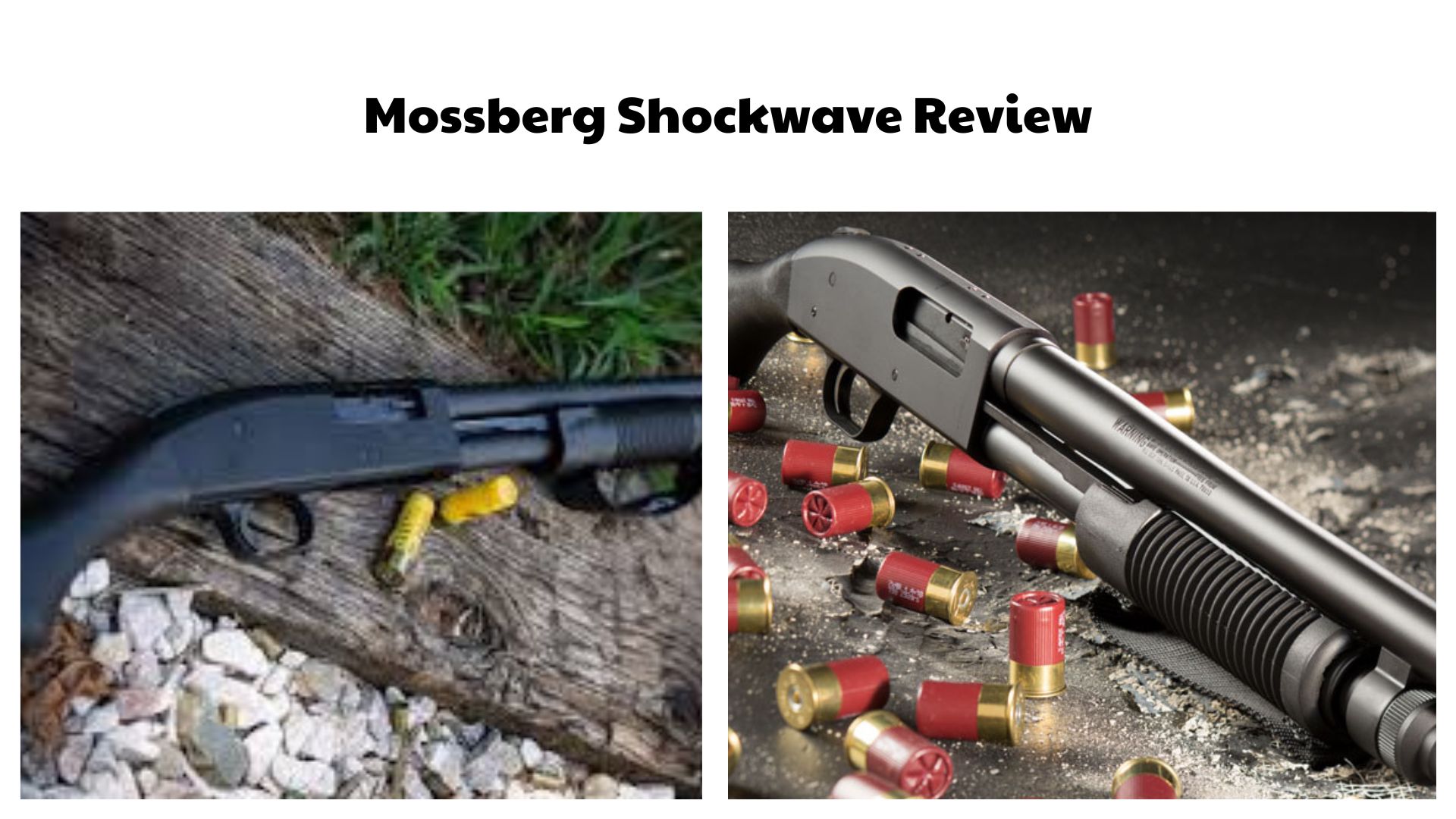

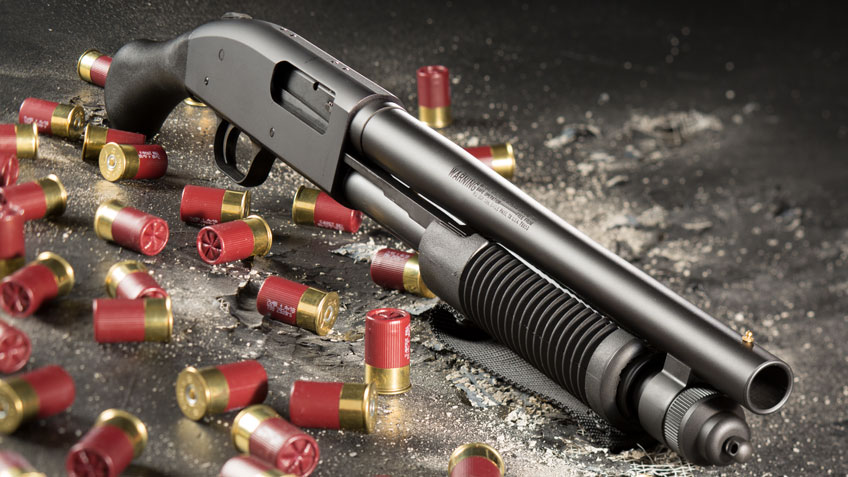
The Mossberg Shockwave is one of the most recognizable compact defensive firearms ever released in the modern tactical market. Built on the proven Mossberg 590 pump-action platform, the Shockwave combines the raw power of a 12-gauge firearm with an ultra-compact layout designed specifically for close-quarters applications. Its short 14-inch barrel and unique bird’s head grip create a firearm that feels dramatically different from traditional pump-action shotguns while still maintaining the rugged reliability Mossberg is known for.
One of the most talked-about aspects of the Mossberg Shockwave is its unusual legal classification. Under U.S. federal law, it is categorized as a “firearm” rather than a standard shotgun or short-barreled shotgun because of its overall length and factory grip configuration. This legal distinction helped the Shockwave gain massive popularity among defensive firearm enthusiasts looking for compact firepower without entering National Firearms Act territory in many states.
The Shockwave quickly became popular for home defense, vehicle storage setups, truck gun applications, and tactical range use due to its small size and intimidating defensive capability. However, its unconventional design also creates a learning curve that separates experienced users from beginners. This Mossberg Shockwave review takes a detailed look at its design, legality, performance, ergonomics, reliability, advantages, disadvantages, and real-world practicality to determine whether this compact firearm is truly useful or simply a tactical novelty.
Mossberg Shockwave Overview and History
Origins of the Shockwave Platform
The Mossberg Shockwave was developed directly from the highly respected Mossberg 590 pump-action shotgun platform. The 590 series already had a strong reputation for durability, military-inspired reliability, and defensive practicality, making it a natural foundation for a compact defensive firearm. Mossberg wanted to create a firearm that retained the strength and dependability of the 590 while dramatically reducing overall length for maneuverability in confined environments.
A major influence behind the project came from Shockwave Technologies, the company responsible for the distinctive Raptor bird’s head grip. This grip design altered the recoil angle and allowed the firearm to remain compact while still meeting federal overall length requirements. By combining the shorter barrel with the unique grip, Mossberg created a platform that legally avoided classification as a short-barreled shotgun under federal law.
The result was a compact firearm that immediately stood out in the tactical market. Instead of being marketed as a hunting shotgun or sporting firearm, the Shockwave was introduced as a defensive-focused platform built for close-range protection and portability. Its unusual appearance and aggressive tactical identity quickly attracted attention from both firearm enthusiasts and first-time buyers looking for something different.
Federal Classification and Legal Status
One of the biggest reasons the Mossberg Shockwave gained widespread attention was its legal classification under U.S. federal law. Unlike traditional shotguns, the Shockwave is classified as a “firearm” because it was manufactured with a bird’s head grip rather than a shoulder stock and maintains an overall length greater than 26 inches. This distinction allows it to avoid being categorized as a short-barreled shotgun (SBS) under the National Firearms Act in many jurisdictions.
The firearm uses a 14-inch barrel, which would normally place a shotgun into SBS territory if paired with a shoulder stock. However, because the Shockwave was never designed as a stocked shotgun from the factory, federal law treats it differently. This legal technicality became one of the firearm’s most heavily marketed features and helped fuel its popularity in the tactical firearms market.
Despite its federal legality, state and local laws can vary dramatically. Some states restrict or prohibit ownership of firearms like the Shockwave regardless of federal classification. Because regulations frequently change, potential owners must carefully verify local laws before purchasing or transporting the firearm. This is especially important for interstate travel or concealed transport situations.
Why the Mossberg Shockwave Became Popular
The Mossberg Shockwave became popular largely because it delivered the power of a 12-gauge defensive firearm in an unusually compact package. Many users were attracted to the idea of having significant stopping power in a firearm small enough to maneuver through tight hallways, vehicles, or confined spaces. The overall size made it far more portable than traditional pump shotguns while still maintaining strong defensive capability.
Its appearance also played a major role in its success. The aggressive design, short barrel, and bird’s head grip gave the Shockwave a futuristic and intimidating look that immediately stood out on gun store shelves and online firearm discussions. It became one of the most visually recognizable defensive firearms on the market.
Additionally, the Shockwave found a strong following among home defense enthusiasts and vehicle-defense users. Many people appreciated the compact size for storage in trucks, safes, or discreet defensive setups where a full-sized shotgun would be more difficult to manage. While some buyers were drawn to it as a novelty firearm, many others viewed it as a serious defensive tool when used with proper training.
Design and Build Quality
Compact Pump-Action Construction
The Mossberg Shockwave is built on the same core receiver system used in the Mossberg 590 series, which is widely respected for its reliability and durability. The firearm uses a steel receiver paired with robust internal components designed to withstand heavy defensive use and repeated pump-action cycling.
One of the defining features of the Shockwave is its heavy-walled barrel design. Even though the barrel is significantly shorter than a standard shotgun barrel, it remains thick and durable enough to handle repeated use with defensive 12-gauge loads. This heavy construction contributes to overall strength and longevity while helping maintain structural integrity during recoil.
The pump-action design itself remains extremely simple mechanically. Unlike semi-automatic systems that rely on gas pressure or recoil operation, the Shockwave depends entirely on manual cycling by the user. This simplicity reduces potential failure points and contributes to the firearm’s strong reliability reputation.
Bird’s Head Grip Design
The Shockwave’s Raptor bird’s head grip is one of its most important and controversial design elements. Unlike a traditional shoulder stock, the grip angles downward in a curved shape intended to redirect recoil energy away from the shooter’s wrist. This helps reduce the harsh upward recoil effect commonly associated with compact 12-gauge firearms.
The compact rear profile also dramatically improves maneuverability. Without a full stock extending rearward, the firearm becomes easier to store, transport, and operate in confined spaces. This design makes the Shockwave particularly appealing for close-quarters environments such as hallways, vehicles, or small rooms.
However, the grip also changes the shooting experience significantly compared to traditional shotguns. Because the firearm is not intended to be shouldered like a conventional shotgun, users must learn alternative handling and aiming techniques. This creates a learning curve that can be challenging for inexperienced shooters unfamiliar with compact defensive firearms.
Weight, Balance, and Handling Characteristics
The Mossberg Shockwave features a somewhat front-heavy balance due to its extremely compact rear profile combined with the pump assembly and heavy barrel construction. While the firearm itself is shorter than most pump shotguns, the weight distribution can feel unusual during initial handling.
Despite this front-heavy feel, the firearm remains highly maneuverable in confined environments. The reduced overall length allows users to move through doorways, hallways, and vehicles much more easily than with a traditional shotgun. This is one of the biggest advantages of the platform in defensive situations where mobility matters.
The trade-off for this compactness is reduced shooting comfort. The lack of a shoulder stock means recoil management becomes more demanding, especially with full-power 12-gauge defensive loads. Users willing to train with the platform can adapt to its unique handling style, but it is not as naturally comfortable or intuitive as a full-sized shotgun.
Mossberg Shockwave Variants and Configurations
Standard 12-Gauge Models
The standard 12-gauge Mossberg Shockwave remains the most popular and widely recognized version of the platform. These models typically feature a 14-inch barrel and offer a capacity of 5+1 rounds depending on shell length. The 12-gauge chambering provides substantial defensive power, making it the preferred option for most tactical and home defense users.
This configuration is designed primarily for defensive applications rather than hunting or sporting purposes. The short barrel and compact design prioritize maneuverability over long-range accuracy or sporting ergonomics. Most users choose the 12-gauge version because it delivers the classic stopping power associated with defensive pump firearms.
However, the 12-gauge models also produce the most recoil, especially given the firearm’s compact grip design. As a result, many users spend additional time practicing recoil control techniques and defensive handling methods to maximize effectiveness.
20-Gauge and .410 Variants
To appeal to a broader audience, Mossberg later introduced 20-gauge and .410 bore versions of the Shockwave. These alternatives provide reduced recoil compared to the standard 12-gauge configuration, making them more manageable for smaller or recoil-sensitive shooters.
The 20-gauge model still offers respectable defensive performance while producing a noticeably softer shooting experience. For users concerned about controlling full-power 12-gauge recoil, this version can provide a more balanced compromise between power and handling.
The .410 variant offers the lightest recoil of the lineup and is often considered the easiest version to control. However, it also sacrifices some defensive effectiveness compared to larger gauge options. Choosing between these models ultimately depends on the user’s recoil tolerance, defensive goals, and experience level.
Specialty and Tactical Editions
Mossberg has released multiple specialty editions of the Shockwave platform over time, including Cerakote finishes, custom colors, and tactical upgrade packages. These versions allow buyers to select firearms that better match their personal preferences or defensive setups.
Some models include integrated laser saddle systems or optics-ready configurations designed to improve aiming speed in defensive situations. Since the Shockwave can be difficult to aim traditionally, laser systems have become especially popular among owners looking to improve close-range targeting efficiency.
Factory accessory packages may also include upgraded forends, rails, sling attachments, or enhanced grip textures. These additions help improve practical handling while maintaining the compact and aggressive design philosophy that defines the Shockwave platform.
Pump-Action Operation and Reliability
Manual Pump Cycling System
One of the defining characteristics of the Mossberg Shockwave is its straightforward pump-action operating system. Unlike semi-automatic firearms that rely on gas pressure or recoil energy to cycle shells, the Shockwave uses a fully manual pump mechanism controlled directly by the shooter. This simple design dramatically reduces mechanical complexity and contributes heavily to the platform’s strong reliability reputation.
The pump-action system is built around the same proven mechanical layout found in the Mossberg 590 series. Dual action bars help maintain smooth cycling while reducing the chances of binding during operation. Even under rough handling or stressful defensive conditions, the action remains dependable when operated correctly. This simplicity is one of the major reasons pump-action firearms continue to maintain popularity despite the growing number of modern semi-automatic tactical shotguns on the market.
Because the user manually cycles each shell, the firearm is far less dependent on ammunition pressure levels than semi-automatic systems. Semi-auto firearms can sometimes struggle with lighter target loads, low-brass shells, or inconsistent ammunition, especially during break-in periods. The Shockwave largely avoids these concerns because the shooter physically extracts and chambers each round. As long as the shell fits within chamber specifications and the action is cycled properly, the firearm generally functions reliably.
This manual operation also provides greater flexibility for defensive users who may want to use different ammunition types interchangeably. Whether using buckshot for home defense, slugs for deeper penetration, or lighter birdshot for recreational shooting, the pump system handles a broad range of loads without requiring tuning or adjustment.
The trade-off, however, is speed and recoil management. Since the shooter must manually operate the pump after every shot, follow-up shots are slower compared to semi-automatic platforms. Under stress, inexperienced users may also short-stroke the action, which can create failures to feed or eject. Proper training and familiarity with the platform are essential for maintaining reliable operation during rapid defensive shooting.
Reliability Under Stress
The Mossberg Shockwave has developed a strong reputation for reliability under difficult conditions, largely because of its mechanically simple pump-action design. Unlike gas-operated or inertia-driven systems that rely on internal timing and ammunition pressure, the Shockwave’s manual cycling system remains dependable even in dirty or adverse environments.
Pump-action firearms have historically been favored by military personnel, law enforcement officers, and defensive shooters because they continue functioning under conditions that can cause semi-automatic systems to fail. Dirt, mud, dust, and carbon buildup generally have less impact on a manually operated shotgun. The Mossberg Shockwave benefits directly from this reputation, especially since it inherits much of its internal design from the battle-proven Mossberg 590 platform.
Another advantage is the firearm’s minimal dependence on ammunition power levels. Weak or inconsistent shells that might fail to cycle in a semi-auto firearm can still operate successfully in the Shockwave because the shooter manually controls extraction and chambering. This makes the platform especially appealing for users who prioritize simplicity and reliability over maximum firing speed.
In defensive scenarios, reliability is often considered more important than comfort or speed. The Shockwave’s robust action, steel receiver components, and heavy-duty internal parts contribute to confidence during high-stress situations. When used correctly, the firearm can cycle shells consistently even during rapid firing sequences or extended range sessions.
That said, reliability still depends heavily on user technique. Because the firearm lacks a shoulder stock and uses a compact bird’s head grip, maintaining proper control during recoil becomes critical. Users who fail to maintain a solid grip or fully cycle the action may encounter operational problems caused by technique rather than mechanical failure. This is why training is especially important with compact pump firearms like the Shockwave.
Ammunition Compatibility
One of the major strengths of the Mossberg Shockwave is its broad ammunition compatibility. Thanks to its pump-action operating system, the firearm can reliably handle a wide range of shotgun loads without the cycling limitations often associated with semi-automatic designs.
The Shockwave is compatible with common defensive buckshot loads, rifled slugs, and birdshot ammunition. Buckshot remains the most popular choice for defensive use because it balances stopping power with spread characteristics suitable for close-range engagements. Slugs offer greater penetration and improved accuracy at longer defensive distances, while birdshot is frequently used for recreational shooting or training sessions.
One particularly interesting feature is compatibility with mini-shells when used alongside specific adapters. Mini-shells are shorter shotgun shells that allow increased magazine capacity while also reducing felt recoil. Many users appreciate this setup because it can make the Shockwave easier to control while increasing onboard ammunition count. However, reliability with mini-shells often depends on the use of aftermarket adapters designed to improve feeding consistency.
The flexibility to run multiple ammunition types makes the Shockwave useful for various roles beyond simple home defense. Some owners configure different loads for training, pest control, recreational shooting, or tactical preparedness. The ability to mix shell types within the magazine tube also allows defensive users to customize their ammunition strategy depending on specific needs.
Despite this versatility, most experienced users recommend sticking with high-quality defensive ammunition for serious use. Cheap or inconsistent shells may still create operational issues, particularly if the shooter cycles the action too aggressively or inconsistently. As with any firearm, testing preferred defensive loads before relying on them is essential for ensuring dependable performance.
Performance and Real-World Testing
Close-Quarters Handling
The Mossberg Shockwave was specifically designed for close-quarters maneuverability, and this is where the platform performs best. Its short overall length allows it to move through confined spaces much more easily than traditional pump-action shotguns with full shoulder stocks. Hallways, staircases, doorways, and vehicles are all environments where the Shockwave’s compact dimensions become immediately noticeable.
In indoor defensive scenarios, maneuverability can play a major role in weapon handling efficiency. A long shotgun barrel combined with a full stock can become awkward when navigating corners or tight rooms. The Shockwave’s reduced profile minimizes this issue, allowing users to maintain better mobility in close environments.
Vehicle use is another area where the Shockwave excels. The compact layout makes it easier to store inside trucks, off-road vehicles, or emergency preparedness kits. Many users appreciate that the firearm can fit into spaces where a full-sized shotgun would be impractical or difficult to deploy quickly.
Target transitions at close range also feel fast due to the reduced weight distribution and shorter barrel length. Moving from one target to another requires less overall movement compared to longer shotguns. This can provide an advantage during close-range defensive drills or tactical training exercises.
However, compactness also creates trade-offs. The shorter sight radius and lack of a shoulder stock reduce stability compared to traditional shotguns. While maneuverability improves dramatically, precision shooting becomes more challenging, especially for inexperienced users who are unfamiliar with non-traditional shotgun handling techniques.
Recoil Management and Shooting Experience
Recoil is one of the most heavily discussed aspects of the Mossberg Shockwave, especially in the 12-gauge configuration. Without a traditional shoulder stock to absorb recoil energy, the shooting experience feels substantially different from that of a standard pump-action shotgun.
The bird’s head grip partially changes the recoil angle by redirecting force downward rather than directly rearward into the shoulder. This design helps reduce some of the sharp upward motion commonly associated with compact 12-gauge firearms. Even so, recoil remains strong and very noticeable, particularly when firing full-power buckshot or slug loads.
For experienced shooters, the recoil is manageable with proper technique and consistent practice. Most users learn to maintain a firm forward grip while allowing the firearm to move naturally during recoil. Proper stance and arm positioning become extremely important for maintaining control during rapid follow-up shots.
New shooters, however, may initially find the platform uncomfortable or difficult to control. The compact size and aggressive recoil can make extended range sessions physically tiring, especially without proper shooting fundamentals. This is one reason many firearm instructors recommend dedicated practice before relying on the Shockwave for defensive use.
Despite these challenges, many owners still enjoy the unique shooting experience the Shockwave provides. Its compact nature, powerful recoil impulse, and tactical design create a firearm that feels dramatically different from traditional shotguns. For experienced users who value maneuverability and defensive capability, the recoil trade-off may be worthwhile.
Accuracy and Defensive Effectiveness
The Mossberg Shockwave is designed primarily for close-range defensive use rather than precision shooting. At typical home-defense distances, however, it can still deliver effective and consistent performance when used properly.
One common misconception about shotguns is that they create extremely wide spread patterns at close range. In reality, buckshot patterns often remain relatively tight inside normal home-defense distances. This means accurate aiming is still extremely important with the Shockwave despite its compact size and short barrel.
Slug performance can also be surprisingly effective within practical defensive ranges. While the firearm is not intended for long-distance accuracy, slugs can still provide strong stopping power and acceptable precision at moderate distances when the shooter practices proper control techniques.
The biggest challenge comes from the platform’s unconventional aiming style. Without a shoulder stock, maintaining consistent sight alignment requires practice and familiarity. Some users rely heavily on point-shooting techniques, while others install lasers or optics to improve close-range aiming speed.
Ultimately, the Shockwave’s effectiveness depends heavily on user skill. In trained hands, it can serve as a powerful close-range defensive firearm with excellent maneuverability. In inexperienced hands, however, the lack of stability and strong recoil may reduce practical accuracy and overall effectiveness.
Ergonomics and Handling Challenges
Learning Curve for New Users
The Mossberg Shockwave presents a much steeper learning curve than traditional pump-action shotguns. Because it lacks a shoulder stock, the firearm requires different handling techniques that many new users are unfamiliar with.
Traditional shotguns are typically shouldered and aimed using a stable cheek weld and sight picture. The Shockwave changes this dynamic entirely. Most users rely on either hip-level aiming, chest-level positioning, or modified eye-level techniques depending on comfort and training background.
This unconventional shooting style can initially feel awkward, especially for shooters with extensive experience using standard long guns. Recoil management, aiming consistency, and pump manipulation all require adaptation. Many first-time users underestimate how different the platform feels compared to a standard shotgun.
Dedicated practice is essential for developing confidence with the firearm. Defensive drills, recoil control exercises, and close-range target transitions help users become more comfortable with the Shockwave’s unique ergonomics. Without proper training, the platform can feel difficult to control under stress.
For this reason, the Shockwave is generally better suited to experienced firearm owners willing to invest time into learning the system. While beginners can certainly learn to use it safely, it is not as intuitive or forgiving as a conventional pump shotgun with a full stock.
Pump Manipulation and Grip Control
The compact dimensions of the Mossberg Shockwave significantly change the rhythm and feel of pump-action operation. Because the firearm is shorter overall, the support hand travels a reduced distance during cycling, which can initially feel unusual for shooters accustomed to traditional pump shotguns.
Maintaining proper grip control is extremely important due to the firearm’s recoil characteristics. Under heavy recoil, inexperienced shooters may lose forward pressure or fail to maintain stable control during pump operation. This can lead to slower cycling or short-stroking errors.
Support-hand placement also becomes critical because of the shorter forend travel. Many users prefer upgraded forends with hand stops or recoil straps to improve retention and reduce the risk of the support hand slipping forward near the muzzle during aggressive cycling.
Once users become familiar with the platform, pump manipulation can feel fast and efficient at close range. However, this level of proficiency usually requires significantly more practice than standard shotguns due to the firearm’s unique balance and recoil behavior.
Sighting Systems and Aiming
Most Mossberg Shockwave models come equipped with a simple bead sight mounted near the muzzle. While functional at close range, this minimal sighting system is less precise than the ghost ring or optic setups found on many tactical shotguns.
Because the firearm lacks a shoulder stock, maintaining a consistent sight picture can be difficult. The shorter sight radius also limits precision compared to full-sized pump-action shotguns. As a result, many users choose to install laser aiming systems to improve close-range targeting efficiency.
Laser saddles are particularly popular because they allow faster target acquisition without requiring a traditional shouldered shooting position. In low-light defensive scenarios, lasers can provide a practical advantage by simplifying aiming under stress.
Some aftermarket optics mounts also exist for users interested in red dot sights, although the compact platform is not always ideal for traditional optic setups. Ultimately, the best sighting solution depends on the user’s shooting style, defensive goals, and comfort level with the firearm.
Mossberg Shockwave vs Competitors
Shockwave vs Remington TAC-14
The Remington TAC-14 is often considered the Mossberg Shockwave’s closest direct competitor because both firearms use nearly identical legal classification concepts. Like the Shockwave, the TAC-14 uses a bird’s head grip and compact barrel design to avoid classification as a short-barreled shotgun under federal law.
The Mossberg Shockwave’s biggest advantage is arguably its tang-mounted safety system, which many shooters find easier to operate under stress. Mossberg’s 590-based action also carries a long-standing reputation for rugged reliability and military-inspired durability.
The TAC-14, however, offers a different action feel and ergonomics due to its Remington 870 lineage. Some users prefer the smoother receiver feel and traditional pump-action characteristics of the Remington platform, while others favor Mossberg’s simpler controls and reliability reputation.
Ultimately, both firearms serve very similar defensive purposes. The decision often comes down to personal preference regarding ergonomics, controls, and familiarity with either the Mossberg or Remington shotgun ecosystem.
Shockwave vs Full-Size Pump Shotguns
Compared to full-sized pump-action shotguns, the Mossberg Shockwave offers dramatically improved compactness and maneuverability. Its reduced overall length makes it much easier to store, transport, and maneuver through confined spaces.
Traditional shotguns, however, maintain major advantages in recoil control and aiming stability. A full shoulder stock allows shooters to absorb recoil more effectively while maintaining a stable sight picture for accurate follow-up shots.
The Shockwave sacrifices some practical shootability in exchange for portability. While experienced users can become highly effective with the platform, traditional shotguns remain easier to shoot accurately and comfortably for most people.
This comparison ultimately highlights the trade-off between maneuverability and stability. Users prioritizing compact defensive storage may prefer the Shockwave, while those focused on overall shooting comfort and versatility may lean toward full-sized pump shotguns.
Shockwave vs Semi-Auto Tactical Firearms
When compared to semi-automatic tactical firearms, the Mossberg Shockwave offers greater mechanical simplicity and reliability. Pump-action systems are generally less sensitive to ammunition types, fouling, and maintenance requirements than gas-operated or inertia-driven semi-autos.
Semi-automatic firearms, however, provide clear advantages in recoil reduction and firing speed. Gas-operated systems especially tend to produce softer recoil impulses while allowing faster follow-up shots during defensive engagements.
The Shockwave prioritizes rugged simplicity over advanced shooting comfort. Users who value reliability, low maintenance, and ammunition flexibility may appreciate the pump-action design, while shooters focused on rapid engagement speed may prefer semi-auto alternatives.
Both systems have legitimate defensive applications, but they represent different tactical philosophies. The Shockwave emphasizes compactness and reliability, while semi-auto platforms prioritize speed, reduced recoil, and higher shooting efficiency.
Ideal Use Cases for the Mossberg Shockwave
Home Defense
The Mossberg Shockwave was designed primarily with defensive applications in mind, and home defense remains one of its most practical use cases. Its compact size allows it to maneuver through hallways, doorways, staircases, and confined rooms far more easily than a traditional full-length shotgun. In close-quarters defensive situations, this reduced overall length can make a major difference in handling speed and weapon retention.
One of the Shockwave’s biggest advantages for home defense is its powerful 12-gauge chambering. Even in its compact configuration, the firearm still delivers substantial stopping power with defensive buckshot or slug loads. At standard indoor engagement distances, buckshot patterns generally remain tight enough to maintain effective target concentration while still offering the devastating terminal performance associated with defensive shotguns.
The firearm’s shorter profile also makes storage easier. Many homeowners choose the Shockwave because it fits inside safes, closets, vehicle compartments, or bedside storage setups where a full-sized shotgun would be more difficult to accommodate. This compactness improves accessibility without sacrificing the raw defensive capability of a 12-gauge platform.
Another reason the Shockwave appeals to home-defense users is its mechanical simplicity. Pump-action firearms are widely respected for reliability under stress, especially when compared to more maintenance-sensitive semi-auto systems. Since the firearm does not rely on gas pressure or recoil operation, it can function reliably with a broad range of defensive loads.
However, the Shockwave is not automatically ideal for every homeowner. The strong recoil, unconventional ergonomics, and lack of a shoulder stock create a learning curve that demands dedicated practice. New firearm owners may initially struggle with recoil management and aiming consistency. For experienced users who train regularly, though, the Shockwave can become an effective close-range defensive platform with excellent maneuverability advantages.
Vehicle and Truck Gun Applications
The Mossberg Shockwave has become especially popular as a vehicle-defense firearm due to its extremely compact dimensions. Traditional shotguns often prove difficult to store inside trucks, off-road vehicles, or emergency preparedness setups because of their overall length. The Shockwave solves much of this problem by maintaining a powerful 12-gauge platform in a package short enough to fit into tight storage spaces.
Many truck owners appreciate the firearm’s ability to remain portable while still delivering serious defensive capability. The compact design allows it to fit behind seats, inside lockboxes, or within discreet storage compartments that would not accommodate standard long guns. This portability makes it attractive for users who travel through rural environments or spend extended time on the road.
The Shockwave’s maneuverability also becomes valuable in confined environments such as vehicle interiors. Drawing and positioning a full-sized shotgun inside a truck cab can be awkward and slow. The shorter overall length of the Shockwave improves movement flexibility while reducing the risk of snagging the firearm during rapid deployment.
Pump-action reliability is another advantage in vehicle-defense roles. Firearms stored in vehicles may be exposed to dust, temperature fluctuations, and rough handling over time. The Shockwave’s simple mechanical design is generally more tolerant of these conditions than some semi-automatic systems.
Despite these strengths, vehicle deployment still requires careful planning and training. The firearm’s recoil and unconventional handling characteristics remain present regardless of storage environment. Users should also pay close attention to local transportation laws and storage regulations, especially when traveling between states or jurisdictions.
Recreational and Range Use
Although the Mossberg Shockwave was built primarily for defensive applications, it has also become extremely popular as a recreational range firearm. Many shooters are drawn to the platform because it offers a shooting experience that feels very different from traditional shotguns or rifles.
The combination of compact size, powerful recoil, and aggressive tactical appearance creates a firearm that is both entertaining and challenging to shoot. For experienced firearm enthusiasts, the Shockwave offers an opportunity to practice alternative shooting techniques while exploring a highly unconventional platform.
The firearm is also useful for defensive-style range training. Close-range target drills, movement exercises, and pump-action manipulation practice all translate well to the Shockwave’s intended tactical role. Some users incorporate it into home-defense training programs specifically to improve close-quarters handling and recoil control skills.
Additionally, the Shockwave has developed a reputation as a “range conversation piece.” Its unusual design and compact dimensions attract attention almost everywhere it appears. Many owners admit that part of the firearm’s appeal comes from its unique appearance and novelty factor within the tactical firearm world.
However, extended range sessions can become physically tiring due to the firearm’s strong recoil impulse and unconventional ergonomics. While it is undeniably enjoyable for many experienced shooters, the Shockwave is generally less comfortable for high-volume recreational shooting compared to traditional stocked shotguns or softer-shooting semi-autos.
Accessories and Customization Options
Laser and Optic Systems
One of the most common upgrades for the Mossberg Shockwave is the addition of laser aiming systems. Because the firearm lacks a shoulder stock and traditional cheek weld, maintaining a consistent sight picture can be difficult, especially during rapid defensive shooting. Laser systems help solve this problem by allowing shooters to aim more naturally from unconventional firing positions.
Laser saddles are particularly popular because they mount directly to the receiver while maintaining the firearm’s compact profile. These systems improve target acquisition speed in low-light environments and make close-range defensive aiming more intuitive. Many home-defense users consider lasers one of the most practical upgrades available for the platform.
Certain Shockwave variants also support red dot optic adapters. Miniature red dot sights can improve aiming precision and speed for shooters who prefer eye-level defensive shooting techniques. However, because the firearm was not originally designed around traditional optic use, some setups may feel less natural compared to full-sized tactical shotguns.
Low-light performance is another major reason owners invest in optics and lasers. Defensive scenarios often occur in poor lighting conditions, and upgraded sighting systems can improve target identification and engagement speed significantly.
Ultimately, the best optic setup depends on the shooter’s preferred handling style. Some users rely entirely on point shooting and keep the firearm minimalist, while others prioritize upgraded aiming systems to maximize defensive effectiveness.
Tactical Accessories
The Mossberg Shockwave supports a wide range of tactical accessories that enhance defensive capability and practical usability. Weapon-mounted lights are among the most common additions because they improve visibility during low-light home-defense situations.
A mounted light allows users to identify threats more effectively without needing to carry a separate flashlight. This becomes especially important in indoor defensive scenarios where target identification is critical. Compact weapon lights pair particularly well with the Shockwave’s close-quarters design philosophy.
Side saddles are another popular upgrade because they provide additional ammunition storage directly on the firearm. Since the Shockwave has limited onboard capacity compared to magazine-fed firearms, carrying spare shells on the receiver can improve reload efficiency during extended defensive use.
Sling attachments are also common among tactical users. A properly configured sling improves retention and allows the firearm to remain secured while freeing the user’s hands when necessary. Single-point and two-point sling setups are both widely used depending on personal preference.
Some owners also install rail systems or upgraded forends to improve accessory compatibility. While the Shockwave remains relatively simple mechanically, its growing aftermarket support allows users to tailor the firearm to specific defensive or recreational roles.
Grip and Furniture Upgrades
Aftermarket grip upgrades are extremely common for the Mossberg Shockwave because many users seek improved recoil management and handling comfort. Alternative bird’s head grips with enhanced textures or modified angles can help improve control during rapid firing sequences.
Enhanced forends are another major upgrade category. Some users prefer textured or oversized forends that improve grip retention during recoil and pump operation. Others install recoil straps to help prevent the support hand from slipping forward near the muzzle during aggressive cycling.
Recoil straps have become particularly popular because of the firearm’s compact dimensions and strong recoil impulse. These straps improve confidence during rapid pump manipulation while adding an additional layer of safety during stressful shooting conditions.
Certain aftermarket furniture options also focus on aesthetics. Cerakote finishes, custom colors, and specialized grip textures allow owners to personalize the firearm’s appearance while maintaining its defensive functionality.
While customization can improve comfort and handling, most experienced users recommend prioritizing practical upgrades over cosmetic modifications. Accessories that improve recoil control, aiming efficiency, and retention generally provide the greatest real-world benefit.
Reliability and Maintenance
Cleaning and Field Stripping
The Mossberg Shockwave benefits greatly from the same straightforward maintenance process used in the Mossberg 590 series. Field stripping the firearm is relatively simple and requires minimal tools, making routine cleaning easy even for less experienced firearm owners.
Disassembly typically involves removing the magazine cap, separating the barrel, and accessing the internal components through the receiver. The process is intuitive and much less complicated than many semi-automatic tactical firearms that contain gas systems or complex internal assemblies.
Because the Shockwave is manually operated, it produces less carbon fouling than gas-operated semi-autos. This reduces overall cleaning frequency and minimizes maintenance demands during regular defensive or recreational use.
Easy access to the receiver and barrel components allows users to clean critical areas quickly after shooting sessions. Routine maintenance mainly involves wiping down fouling, lubricating moving parts, and inspecting the action bars and magazine tube for debris or wear.
For many owners, this low-maintenance design is one of the firearm’s biggest advantages. The simpler the system, the fewer opportunities there are for mechanical complications or maintenance-related failures.
Long-Term Durability
The Mossberg Shockwave inherits much of its durability reputation from the Mossberg 590 platform, which has been widely used in military, law enforcement, and defensive roles for decades. The firearm’s steel receiver components and heavy-duty barrel design contribute to excellent long-term structural strength.
The pump-action system itself is mechanically simple and highly resistant to wear when properly maintained. Unlike semi-automatic systems with multiple timing-sensitive components, the Shockwave’s manually operated action experiences fewer stress-related cycling issues over time.
Its rugged design also handles rough environmental conditions effectively. Dirt, dust, moisture, and temperature fluctuations generally have less impact on operation compared to many semi-auto tactical firearms. This makes the Shockwave appealing for defensive storage, truck gun use, or emergency preparedness applications.
Owners who maintain proper lubrication and routine cleaning habits often report years of dependable performance with minimal parts replacement. The platform’s long production history and large aftermarket also ensure replacement parts remain widely available.
Although the firearm’s compact design can produce heavy recoil forces, the overall construction is durable enough to withstand repeated defensive use without significant long-term reliability concerns.
Maintenance Considerations
While the Mossberg Shockwave requires less maintenance than many semi-automatic firearms, regular upkeep still plays an important role in long-term reliability. Lubricating the pump rails and action bars helps maintain smooth cycling while reducing unnecessary wear during operation.
Users should also inspect the magazine tube and follower regularly, especially after extended shooting sessions involving heavy recoil loads. Dirt, fouling, or debris inside the magazine tube can interfere with feeding reliability if ignored for long periods.
Routine inspection of the action bars and internal components is recommended to ensure everything remains properly aligned and free from damage. Fortunately, the firearm’s simple design makes these inspections straightforward even for newer owners.
Another advantage of the Shockwave’s simplicity is reduced risk of catastrophic mechanical failure. Since there are fewer moving parts compared to semi-auto systems, troubleshooting and repairs are generally easier and less expensive.
Overall, the Shockwave’s maintenance requirements remain very manageable. For users seeking a defensive firearm that prioritizes simplicity and durability, the platform performs extremely well in long-term ownership scenarios.
Pros and Cons of the Mossberg Shockwave
Pros
One of the biggest strengths of the Mossberg Shockwave is its extremely compact and maneuverable design. The reduced overall length makes it highly effective in close-quarters environments where traditional shotguns may feel cumbersome or difficult to handle.
The firearm also benefits from the proven reliability of a pump-action operating system. Because it does not depend on gas pressure or recoil energy, it functions with a wide variety of ammunition types while remaining mechanically simple and dependable.
Defensive stopping power is another major advantage. Even in a compact package, the 12-gauge platform remains highly effective at close range when loaded with quality defensive ammunition.
Wide ammunition compatibility further increases versatility. Users can run buckshot, slugs, birdshot, or mini-shells depending on personal preference and intended role.
Finally, the Shockwave remains relatively affordable compared to many premium tactical firearms. Its price point makes it accessible to a wide range of defensive firearm enthusiasts looking for something compact and unique.
Cons
Despite its strengths, the Mossberg Shockwave also comes with several notable disadvantages. The most obvious is recoil. Full-power 12-gauge loads generate significant force, and the lack of a shoulder stock makes recoil management more demanding than with traditional shotguns.
The firearm also requires substantial training to use effectively. New shooters may struggle with aiming consistency, pump manipulation, and recoil control due to the unconventional ergonomics.
Long-range precision is limited as well. The short barrel and reduced sight radius make the platform far less stable and accurate than full-sized shotguns designed for sporting or tactical precision.
Comfort is another issue during extended shooting sessions. While the compact design improves maneuverability, it sacrifices much of the stability and shooting comfort offered by traditional stocked firearms.
For these reasons, the Shockwave tends to perform best in specialized defensive roles rather than as a universal shotgun replacement.
Price and Value Analysis
Why the Shockwave Is Affordable
One reason the Mossberg Shockwave remains competitively priced is its use of the existing Mossberg 590 manufacturing platform. By adapting an already proven design rather than creating an entirely new firearm system, Mossberg reduced development and production costs significantly.
The simple pump-action operating system also contributes to affordability. Compared to semi-automatic firearms with gas systems or complex recoil assemblies, the Shockwave contains fewer moving parts and requires less manufacturing complexity.
Large-scale production further helps keep pricing reasonable. The firearm’s popularity and widespread demand allow Mossberg to maintain efficient production while offering the platform at a lower cost than many premium tactical shotguns.
This balance between affordability and reliability has become one of the Shockwave’s strongest selling points in the defensive firearms market.
Is It Worth It?
For experienced users seeking a compact close-range defensive firearm, the Mossberg Shockwave offers very strong value. Its combination of portability, reliability, and 12-gauge stopping power creates a platform that fills a unique tactical niche.
The firearm particularly appeals to users who prioritize maneuverability in confined environments such as homes, vehicles, or emergency preparedness setups. Few other firearms provide this level of compactness while retaining full-sized shotgun power.
However, the Shockwave is not ideal for everyone. Inexperienced shooters may find the recoil and unconventional ergonomics difficult to master without dedicated training. Those seeking an all-purpose shotgun for hunting, sporting use, and defense may be better served by a traditional stocked platform.
Ultimately, the value depends heavily on the user’s intended role and willingness to train. For the right owner, the Shockwave can be an extremely practical defensive firearm. For casual shooters, it may feel more like a specialty tool or novelty firearm.
Final Verdict
The Mossberg Shockwave stands out as one of the most recognizable compact defensive firearms available today. Its combination of pump-action reliability, aggressive tactical styling, and ultra-compact dimensions helped create an entirely new category of defensive firearm that continues to attract attention years after its release.
Its greatest strengths include excellent maneuverability, strong defensive stopping power, broad ammunition compatibility, and mechanical simplicity. The firearm performs especially well in close-quarters environments where portability and compact handling matter most.
At the same time, the platform demands respect and proper training. Heavy recoil, unconventional ergonomics, and reduced aiming stability create challenges that inexperienced users may initially struggle to overcome. The Shockwave is not as forgiving or comfortable as a traditional stocked shotgun.
Overall, the Mossberg Shockwave succeeds best as a specialized defensive firearm rather than a general-purpose shotgun. For experienced home-defense users, vehicle-defense owners, and tactical firearm enthusiasts willing to practice regularly, it remains one of the most practical and distinctive compact pump firearms ever produced.
Frequently Asked Questions About the Mossberg Shockwave
1. What is the Mossberg Shockwave?
The Mossberg Shockwave is a compact pump-action firearm built on the Mossberg 590 platform. Although many people casually refer to it as a shotgun, it is technically classified as a “firearm” under U.S. federal law because of its overall length and bird’s head grip configuration. It uses a short 14-inch barrel and a Raptor-style grip instead of a shoulder stock, which keeps it outside the legal definition of a short-barreled shotgun in many jurisdictions.
The Shockwave became extremely popular because it combines the power of a 12-gauge platform with a compact footprint ideal for home defense, vehicle storage, and tactical use. Its aggressive appearance, proven Mossberg reliability, and portability helped it become one of the most recognizable compact defensive firearms on the market.
2. Is the Mossberg Shockwave legally considered a shotgun?
Under federal law in the United States, the Mossberg Shockwave is not classified as a traditional shotgun. Instead, it falls into a separate “firearm” category because it leaves the factory without a shoulder stock and maintains an overall length greater than 26 inches. The 14-inch barrel would normally place a shotgun into short-barreled shotgun territory, but the absence of a stock changes the classification.
However, legality can vary significantly depending on state and local laws. Some states restrict or prohibit ownership of firearms like the Shockwave regardless of federal classification. Anyone interested in purchasing one should always verify current laws in their state before buying or transporting the firearm.
3. What makes the Mossberg Shockwave unique?
The biggest feature that separates the Mossberg Shockwave from traditional shotguns is its compact size combined with 12-gauge firepower. It delivers the capability of a defensive shotgun while remaining short enough for tight indoor spaces, vehicle carry, or easy storage.
Its bird’s head grip also creates a very different shooting experience compared to standard shotguns. The design helps redirect recoil and keeps the firearm legally compliant under federal regulations. Combined with Mossberg’s proven pump-action reliability, the Shockwave offers a blend of portability, durability, and raw defensive power that few firearms can match.
4. What gauge options are available for the Mossberg Shockwave?
The Mossberg Shockwave is available in several calibers and gauges, including 12-gauge, 20-gauge, and .410 bore. The 12-gauge version is the most common and provides maximum defensive power, but it also produces the strongest recoil.
The 20-gauge version offers a softer shooting experience while still maintaining good defensive performance. The .410 version is especially popular among recoil-sensitive shooters because it is easier to control and lighter overall. Choosing the right version depends on recoil tolerance, intended use, and personal shooting experience.
5. Is the Mossberg Shockwave good for home defense?
Many firearm owners consider the Mossberg Shockwave an effective home defense tool because of its compact size and powerful close-range performance. The short overall length makes it easier to maneuver through hallways, doorways, and tight rooms compared to a full-size shotgun.
However, the platform requires training. The lack of a shoulder stock changes recoil management and aiming technique considerably. In experienced hands, the Shockwave can be highly effective for defensive situations, but beginners should spend significant time practicing before relying on it for home protection.
6. How much recoil does the Mossberg Shockwave have?
Recoil on the 12-gauge Mossberg Shockwave is substantial. Because the firearm lacks a traditional shoulder stock, recoil energy is transferred differently into the shooter’s hands and arms. Many new users are surprised by how aggressive the recoil feels during rapid shooting sessions.
The bird’s head grip helps redirect some of the recoil downward instead of straight backward, but the Shockwave still requires proper grip technique and body positioning. Reduced recoil shells and the 20-gauge or .410 variants can make the firearm much easier to control for less experienced shooters.
7. What is the capacity of the Mossberg Shockwave?
Most standard 12-gauge Mossberg Shockwave models feature a 5+1 capacity, meaning five shells in the magazine tube and one in the chamber. Capacity can vary slightly depending on shell size and model configuration.
Some owners also use mini-shells with adapters to increase capacity further. This allows additional rounds to fit into the tube while reducing recoil. However, reliability with mini-shells may depend on the specific adapter and ammunition brand being used.
8. Can the Mossberg Shockwave shoot mini-shells?
Yes, the Mossberg Shockwave can often use mini-shells when equipped with an appropriate adapter. Mini-shells are shorter shotgun shells that allow increased magazine capacity while producing significantly less recoil than standard loads.
Without an adapter, feeding reliability may be inconsistent because the firearm was designed around standard shell lengths. Many shooters install aftermarket adapters specifically made for Mossberg pump shotguns to improve cycling reliability with mini-shell ammunition.
9. Is the Mossberg Shockwave reliable?
The Mossberg Shockwave is generally considered highly reliable because it uses the same proven pump-action system found in the Mossberg 590 series. Pump-action firearms are mechanically simple and less dependent on ammunition power levels than semi-automatic designs.
As long as the shooter cycles the action firmly and maintains the firearm properly, the Shockwave can function reliably with a wide range of loads including buckshot, slugs, birdshot, and reduced recoil ammunition.
10. How difficult is it to aim the Mossberg Shockwave?
Aiming the Mossberg Shockwave is different from aiming a traditional shotgun because it is not designed to be shouldered. Most users rely on point shooting techniques, hip-level aiming, or chest-level presentation rather than traditional cheek weld methods.
Many owners add lasers to improve target acquisition, especially in home defense situations. Proper training is extremely important because the shorter sight radius and unconventional grip can make accurate shooting more challenging for inexperienced users.
11. Does the Mossberg Shockwave use the same action as the Mossberg 590?
Yes, the Shockwave is based heavily on the Mossberg 590 pump-action system. It uses similar internal components, controls, and operating mechanics. This gives the firearm a reputation for durability and reliability because the 590 platform has decades of military and law enforcement use behind it.
The main differences involve the shortened barrel and the bird’s head grip configuration, which dramatically change the firearm’s handling characteristics and legal classification.
12. Is the Mossberg Shockwave easy to maneuver indoors?
One of the biggest advantages of the Mossberg Shockwave is its compact size. The short overall length makes it much easier to maneuver through tight indoor spaces compared to full-length shotguns with 18.5-inch or longer barrels.
This compactness is especially useful for home defense, vehicle carry, or confined environments where a traditional shotgun may feel cumbersome. The trade-off is reduced stability and more difficult recoil control during firing.
13. Can beginners use the Mossberg Shockwave effectively?
While beginners can learn to use the Mossberg Shockwave, it is generally not considered the easiest defensive firearm for new shooters. The strong recoil, unusual grip design, and nontraditional aiming methods create a noticeable learning curve.
A full-size shotgun or pistol-caliber carbine may be easier for inexperienced users to control initially. However, with proper instruction and regular practice, many shooters become highly proficient with the Shockwave platform.
14. What type of ammunition works best in the Mossberg Shockwave?
The best ammunition depends on the intended role. For home defense, many owners choose buckshot because it offers strong stopping power at close range. Slugs can provide deeper penetration and improved accuracy at longer distances, though recoil increases significantly.
Birdshot is commonly used for range practice because it is cheaper and produces slightly less recoil. Reduced recoil defensive loads are also popular because they improve controllability without sacrificing too much effectiveness.
15. Is the Mossberg Shockwave better than a full-size shotgun?
The answer depends entirely on intended use. The Shockwave excels in compactness and maneuverability, making it easier to store and move through tight environments. For close-range defensive use, these advantages can be significant.
However, a traditional stocked shotgun usually provides better recoil control, improved aiming stability, and greater comfort during extended shooting sessions. The Shockwave sacrifices some shootability in exchange for portability and compact size.
16. How durable is the Mossberg Shockwave?
The Shockwave is extremely durable because it shares much of its construction with the Mossberg 590 platform. The heavy-walled barrel, steel receiver components, and rugged pump-action design are built to withstand hard use.
Many users rely on Mossberg firearms in demanding environments because the design is mechanically simple and resistant to dirt, debris, and harsh weather conditions. With proper maintenance, the Shockwave can last for many years of regular use.
17. Can the Mossberg Shockwave be customized?
Yes, the Mossberg Shockwave has strong aftermarket support. Owners commonly add lasers, weapon lights, side saddles, sling mounts, upgraded forends, and recoil straps to improve functionality and handling.
Some versions also include optics rails or factory accessory packages. Because the firearm is based on the Mossberg 590 platform, many compatible accessories are already widely available.
18. Is the Mossberg Shockwave good for vehicle carry?
The compact size of the Shockwave makes it particularly attractive as a vehicle-defense firearm or “truck gun.” It can fit into tighter storage spaces where a full-size shotgun would be difficult to secure.
Its maneuverability inside confined environments is another advantage. However, owners should always follow local transportation laws and ensure the firearm is stored safely and legally while traveling.
19. What are the biggest disadvantages of the Mossberg Shockwave?
The largest drawbacks are recoil and the learning curve. Many shooters find the platform harder to control than a traditional shotgun, especially during rapid follow-up shots. The lack of a shoulder stock reduces stability and changes recoil dynamics significantly.
Another limitation is reduced precision at longer ranges. The Shockwave is optimized for close-range defensive use rather than precision shooting or sporting applications.
20. Can you install a stock on a Mossberg Shockwave?
Installing a shoulder stock on a standard Shockwave may create legal issues under federal law. Once a stock is attached to a firearm with a 14-inch barrel, it could legally become a short-barreled shotgun requiring NFA registration and tax stamp approval.
Anyone considering modifications should carefully research all applicable federal, state, and local laws before changing the firearm’s configuration.
21. Does the Mossberg Shockwave have an ambidextrous safety?
Yes, one of Mossberg’s signature features is its tang-mounted safety located on the top rear portion of the receiver. This design is naturally ambidextrous and easy to access with either hand.
Many shooters prefer this safety placement because it remains intuitive and easy to manipulate under stress, especially during defensive situations.
22. How accurate is the Mossberg Shockwave?
The Shockwave is reasonably accurate at defensive distances, particularly when using buckshot or slugs. At close range, shotgun patterns remain relatively tight, allowing effective engagement of defensive targets.
However, accuracy decreases at longer distances due to the short barrel, reduced sight radius, and lack of a shoulder stock. It is best viewed as a close-range defensive platform rather than a precision firearm.
23. Can the Mossberg Shockwave be used for hunting?
Technically, the Shockwave can fire hunting ammunition, but it is generally not ideal for traditional hunting purposes. The short barrel and unconventional handling characteristics make accurate field shooting more difficult.
Some jurisdictions may also restrict hunting with firearms that do not meet standard shotgun definitions. Most owners purchase the Shockwave primarily for defensive or recreational purposes rather than sporting applications.
24. What is the effective range of the Mossberg Shockwave?
The effective range largely depends on ammunition type. Buckshot is most effective at typical home-defense distances, usually within 10 to 20 yards. Slugs can extend practical range further, potentially out to 50 yards or more in skilled hands.
Because the Shockwave lacks a shoulder stock, maintaining accuracy becomes increasingly difficult as distance grows. The platform is optimized for close-quarters use rather than long-range shooting.
25. Is the Mossberg Shockwave worth buying?
For shooters seeking a compact, powerful, and reliable defensive firearm, the Mossberg Shockwave can offer excellent value. It combines proven pump-action reliability with a unique compact layout that stands out in the tactical firearm market.
However, it is not ideal for everyone. Users who prioritize comfort, low recoil, or easy aiming may prefer a traditional shotgun platform instead. The Shockwave rewards practice and familiarity more than casual ownership.
26. What type of grip does the Mossberg Shockwave use?
The Mossberg Shockwave uses a Raptor-style bird’s head grip developed by Shockwave Technologies. This grip design is one of the defining features of the platform because it changes the angle of recoil and helps keep the firearm within federal legal length requirements.
Unlike traditional pistol grips or shoulder stocks, the bird’s head grip encourages a lower shooting position and provides a more compact overall profile. Many users find it surprisingly controllable with proper technique, although it still requires practice to master effectively.
27. Does the Mossberg Shockwave kick harder than a regular shotgun?
In many cases, yes. While the firearm fires the same ammunition as a standard shotgun, the lack of a shoulder stock changes how recoil is absorbed by the body. Instead of distributing recoil into the shoulder, much of the force transfers directly into the shooter’s wrists and arms.
The bird’s head grip helps reduce some of the upward recoil angle, but the Shockwave still feels more aggressive than many full-size pump shotguns. Reduced recoil shells and proper stance can help make shooting more manageable.
28. Can you add a laser to the Mossberg Shockwave?
Yes, lasers are among the most popular accessories for the Mossberg Shockwave. Because the platform is often fired from chest or hip level rather than from the shoulder, lasers can improve target acquisition and aiming speed in defensive situations.
Many owners install laser saddles or rail-mounted laser systems for home defense setups. Combined with a weapon-mounted light, a laser can significantly improve usability in low-light environments.
29. How easy is it to reload the Mossberg Shockwave?
Reloading the Shockwave is similar to reloading most Mossberg pump-action shotguns. Shells are inserted into the tubular magazine underneath the barrel through the loading port on the bottom of the receiver.
The compact size slightly changes the handling dynamics during reloads, but most experienced shotgun users adapt quickly. Practice is important because defensive reload speed can become critical during high-stress situations.
30. Does the Mossberg Shockwave have a safety?
Yes, the firearm includes Mossberg’s well-known tang-mounted safety. Positioned on top of the receiver, the safety is easy to reach with either hand and is considered highly intuitive during stressful handling.
This ambidextrous design is one reason many shooters prefer Mossberg platforms over competitors that use cross-bolt safeties. It allows quick engagement and disengagement without dramatically shifting grip position.
31. Is the Mossberg Shockwave practical for everyday carry?
The Shockwave is not designed for concealed everyday carry like a handgun. Its size, weight, and 12-gauge configuration make it better suited for home defense, vehicle storage, or range use.
That said, its compact footprint does make it easier to transport and store than a traditional shotgun. Some users keep it as a dedicated truck or emergency-defense firearm because it offers substantial stopping power in a relatively compact package.
32. How does the Mossberg Shockwave compare to the Remington TAC-14?
The Mossberg Shockwave and Remington TAC-14 share a very similar concept. Both are compact pump-action firearms designed around bird’s head grips and short barrels while maintaining legal overall lengths.
The main differences come down to ergonomics and brand preference. The Mossberg platform offers the tang safety and 590-based reliability, while the TAC-14 uses the Remington 870 action with a different safety location and action feel.
33. Is the Mossberg Shockwave difficult to control during rapid fire?
Rapid firing the Shockwave requires training and good recoil management skills. Because there is no shoulder stock, muzzle rise and recoil recovery can feel more demanding than with a standard shotgun.
Experienced shooters often use push-pull techniques and aggressive stances to maintain better control. While rapid follow-up shots are possible, the platform is generally slower and more physically demanding than a semi-automatic shotgun.
34. Can the Mossberg Shockwave fire slugs accurately?
Yes, the Shockwave can fire slugs effectively at practical defensive distances. Slugs provide improved penetration and tighter impact patterns compared to buckshot, making them useful for certain defensive or range applications.
However, slug recoil in the 12-gauge version is substantial. Accuracy also depends heavily on the shooter’s skill because the firearm lacks a shoulder stock and extended sight radius.
35. Is the Mossberg Shockwave suitable for left-handed shooters?
The Mossberg Shockwave is generally considered friendly to left-handed users because of its ambidextrous tang-mounted safety. The controls are accessible from either side without requiring major hand repositioning.
Pump operation remains essentially identical for left- and right-handed shooters. This flexibility is one reason Mossberg shotguns maintain strong popularity among a wide range of firearm owners.
36. What materials are used in the Mossberg Shockwave?
The firearm uses a steel receiver combined with robust internal components and synthetic furniture. The heavy-walled barrel adds additional durability, especially for defensive and tactical use.
Depending on the variant, finishes may include standard matte bluing, Cerakote coatings, or specialized tactical treatments designed to improve corrosion resistance and durability.
37. Can the Mossberg Shockwave be used in competitions?
While technically possible, the Shockwave is not commonly used in competitive shotgun sports. Most shooting competitions favor traditional shotguns with shoulder stocks because they are easier to control and faster to aim accurately.
The Shockwave is more of a specialized defensive or recreational firearm rather than a purpose-built competition platform. However, some tactical-oriented events may allow its use in novelty or defensive categories.
38. Is the Mossberg Shockwave safe for inexperienced shooters?
The firearm can be safe when handled responsibly, but it is generally not recommended as a first firearm for inexperienced shooters. The recoil, unusual handling characteristics, and aiming techniques require more practice than many standard shotguns.
New shooters often benefit from beginning with lighter-recoiling firearms before transitioning to compact 12-gauge platforms like the Shockwave. Professional instruction can also dramatically improve safety and confidence.
39. How often should the Mossberg Shockwave be cleaned?
Like most pump-action firearms, the Shockwave does not require excessive maintenance. Basic cleaning after range sessions and periodic lubrication of moving parts are usually sufficient to maintain reliability.
The magazine tube, action bars, chamber, and barrel should be inspected regularly, especially if the firearm is used in dusty, humid, or dirty environments. Routine maintenance helps preserve smooth pump operation over time.
40. Does the Mossberg Shockwave have aftermarket support?
Yes, aftermarket support for the Shockwave is extensive. Owners can choose from a wide range of accessories including rail systems, side saddles, weapon lights, recoil straps, upgraded forends, and sling mounts.
Because the platform shares many similarities with the Mossberg 590 series, compatible components and upgrades are widely available from numerous manufacturers.
41. What is the best sighting option for the Mossberg Shockwave?
Many shooters prefer lasers because they work well with the firearm’s unconventional shooting position. Lasers allow faster target acquisition without requiring a traditional cheek weld or shoulder stock.
Some owners also add red dot optics using aftermarket rails, though optics can feel less natural on a firearm designed primarily for close-range point shooting. The best option depends on personal preference and intended use.
42. Can the Mossberg Shockwave handle adverse weather conditions?
Yes, the Shockwave is known for strong reliability in harsh conditions. The pump-action system is mechanically simple and less sensitive to dirt, mud, moisture, or temperature changes than many semi-automatic platforms.
Models with corrosion-resistant finishes or Cerakote coatings provide additional protection against rust and environmental exposure, making them well suited for defensive or outdoor storage roles.
43. Is the Mossberg Shockwave considered a novelty firearm?
Some people initially view the Shockwave as a novelty because of its unique appearance and unusual legal classification. However, many experienced shooters consider it a legitimate defensive tool when used correctly.
Its compact size and close-range effectiveness provide real tactical advantages, though those benefits come with trade-offs in recoil and handling complexity. It is far more practical than many novelty firearms on the market.
44. What makes the Mossberg Shockwave different from a short-barreled shotgun?
The key difference is legal classification. A short-barreled shotgun typically has a shoulder stock combined with a barrel shorter than 18 inches, which places it under National Firearms Act regulations.
The Shockwave leaves the factory without a stock and maintains an overall length above the federal minimum, allowing it to avoid SBS classification under federal law in many jurisdictions.
45. Is the Mossberg Shockwave loud?
Yes, the Shockwave produces extremely loud muzzle blast, especially in indoor environments. The short barrel amplifies noise and concussion compared to longer shotguns.
Hearing protection is strongly recommended during training or recreational shooting. In defensive situations, the blast can also be disorienting indoors, which is another reason proper training is important.
46. Can the Mossberg Shockwave be fired one-handed?
While physically possible, firing the Shockwave one-handed is generally not recommended. The recoil from 12-gauge ammunition can make one-handed shooting difficult and potentially unsafe for inexperienced users.
Most effective shooting techniques involve a firm two-handed grip with aggressive body positioning to maintain better recoil control and faster follow-up shots.
47. Is the Mossberg Shockwave suitable for apartment defense?
The compact size can make the Shockwave appealing for apartment defense because it is easier to maneuver in narrow hallways and tight rooms. However, overpenetration and recoil management must be carefully considered.
Selecting appropriate ammunition and understanding local laws are both critical. Reduced recoil buckshot loads are often recommended to improve controllability in confined environments.
48. How long does it take to learn the Mossberg Shockwave?
The learning curve varies depending on the shooter’s prior experience with pump-action firearms. Experienced shotgun users may adapt relatively quickly, while beginners often require extensive practice.
Regular range time focused on recoil control, aiming technique, and pump manipulation is important for becoming proficient with the platform. Training dramatically improves effectiveness and confidence.
49. Is the Mossberg Shockwave better than a handgun for home defense?
The answer depends on the user and situation. The Shockwave offers significantly more stopping power than most handguns, but it is larger, heavier, and more difficult to maneuver one-handed.
Handguns are easier to store discreetly and may be more practical for some users. The Shockwave excels when maximum close-range defensive power and compact shotgun performance are the primary goals.
50. Can the Mossberg Shockwave be concealed?
Although shorter than a standard shotgun, the Shockwave is still much larger than a handgun and is not realistically designed for concealed carry in most situations.
Its compact dimensions primarily benefit transportation, storage, and maneuverability rather than true concealment. Laws regarding transport and carry should always be reviewed carefully before use.
51. Does the Mossberg Shockwave require special training?
Yes, the Mossberg Shockwave benefits greatly from dedicated training. Although the firearm uses a simple pump-action system, the lack of a shoulder stock changes recoil management, aiming technique, and overall handling compared to traditional shotguns.
Many professional instructors recommend learning push-pull recoil control methods, defensive reload drills, and low-light operation techniques. Training helps users become more comfortable with the firearm’s unique balance and improves confidence during stressful defensive situations.
52. What is the best upgrade for the Mossberg Shockwave?
One of the most popular upgrades is a laser aiming system because it complements the firearm’s unconventional shooting position. A laser allows faster target acquisition without relying entirely on traditional eye-level aiming methods.
Other common upgrades include weapon-mounted lights, recoil straps for the forend, side saddles for spare ammunition, and improved grips. The best upgrade depends on whether the firearm is intended for home defense, vehicle storage, or recreational shooting.
53. How does the Mossberg Shockwave compare to a semi-automatic tactical firearm?
The Mossberg Shockwave prioritizes simplicity and reliability through its pump-action design. Because the shooter manually cycles the action, the firearm is less sensitive to ammunition power levels and generally easier to maintain than many semi-automatic platforms.
Semi-automatic tactical firearms usually offer faster follow-up shots and softer recoil, especially in gas-operated designs. However, they can also be more expensive and mechanically complex. The choice often comes down to whether the user values simplicity or speed more heavily.
54. Is the Mossberg Shockwave a good value for the money?
Many firearm owners consider the Shockwave an excellent value because it combines compactness, reliability, and defensive capability at a relatively affordable price point. Since it is built from the established Mossberg 590 platform, production costs remain lower than many specialized tactical firearms.
For users seeking a compact defensive firearm with strong stopping power, the Shockwave provides features that are difficult to match in the same price range. However, buyers should also budget for training, ammunition, and accessories to maximize effectiveness.
55. Who should buy the Mossberg Shockwave?
The Mossberg Shockwave is best suited for experienced firearm owners, home defense users, tactical enthusiasts, and shooters looking for a compact pump-action platform. Its portability and close-range effectiveness make it especially appealing for defensive roles in tight spaces.
At the same time, the firearm may not be ideal for absolute beginners because of its recoil and handling characteristics. Shooters willing to invest time into training and practice are far more likely to appreciate the platform’s strengths and use it effectively.
Read more: