
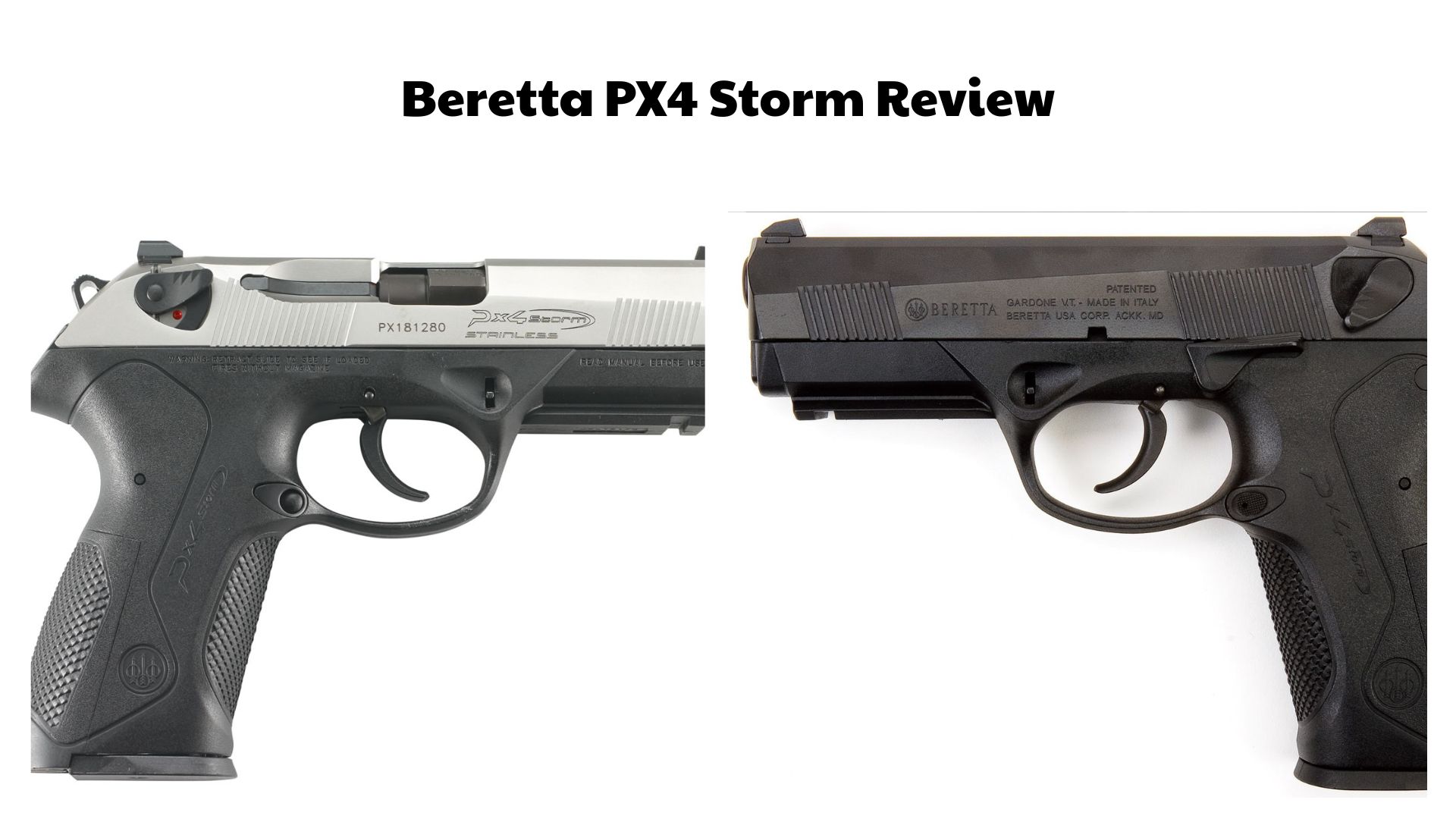

The Beretta PX4 Storm is a modern DA/SA (double-action/single-action) polymer-frame pistol designed for defensive, duty, and concealed carry applications. Developed by Beretta, one of the world’s oldest and most respected firearms manufacturers, the PX4 Storm was engineered to combine traditional hammer-fired operation with modern ergonomics, modularity, and recoil-reduction technology.
Introduced as a modern duty handgun platform, the PX4 Storm was created to compete directly with service pistols from manufacturers such as Glock, SIG Sauer, and Heckler & Koch. Unlike many striker-fired pistols dominating today’s handgun market, the PX4 retains a traditional DA/SA operating system, giving shooters an alternative that emphasizes deliberate trigger control, safety, and mechanical reliability.
One of the key reasons the PX4 Storm remains unique in the handgun market is its rotating barrel operating system. While most modern semi-automatic pistols use a tilting barrel design, the PX4 utilizes a rotating barrel mechanism that helps redirect recoil forces differently during cycling. This design contributes to noticeably reduced muzzle flip and a smoother shooting experience compared to many competing polymer-frame pistols.
The rotating barrel system has become one of the defining features of the PX4 platform. Many shooters praise the pistol for its soft recoil impulse, particularly in 9mm configurations. This smoother recoil behavior can improve control during rapid fire and make follow-up shots faster and more manageable for both experienced and newer shooters.
The PX4 Storm has also earned a strong reputation for reliability and long-term durability. Beretta designed the pistol to withstand demanding defensive and duty environments, with durable internal components, corrosion-resistant finishes, and a robust locking system intended for extended service life.
Over the years, Beretta expanded the PX4 lineup to include several variants tailored to different use cases. These include the Full Size model for duty and home defense, the Compact version for concealed carry, the Compact Carry model optimized with carry-focused enhancements, and the Subcompact model designed for maximum concealability.
Overall, the Beretta PX4 Storm is designed for a wide range of users, including home defense owners, concealed carry permit holders, law enforcement officers, and DA/SA enthusiasts who appreciate traditional hammer-fired pistol systems combined with modern features and recoil management technology.
What Is the Beretta PX4 Storm?
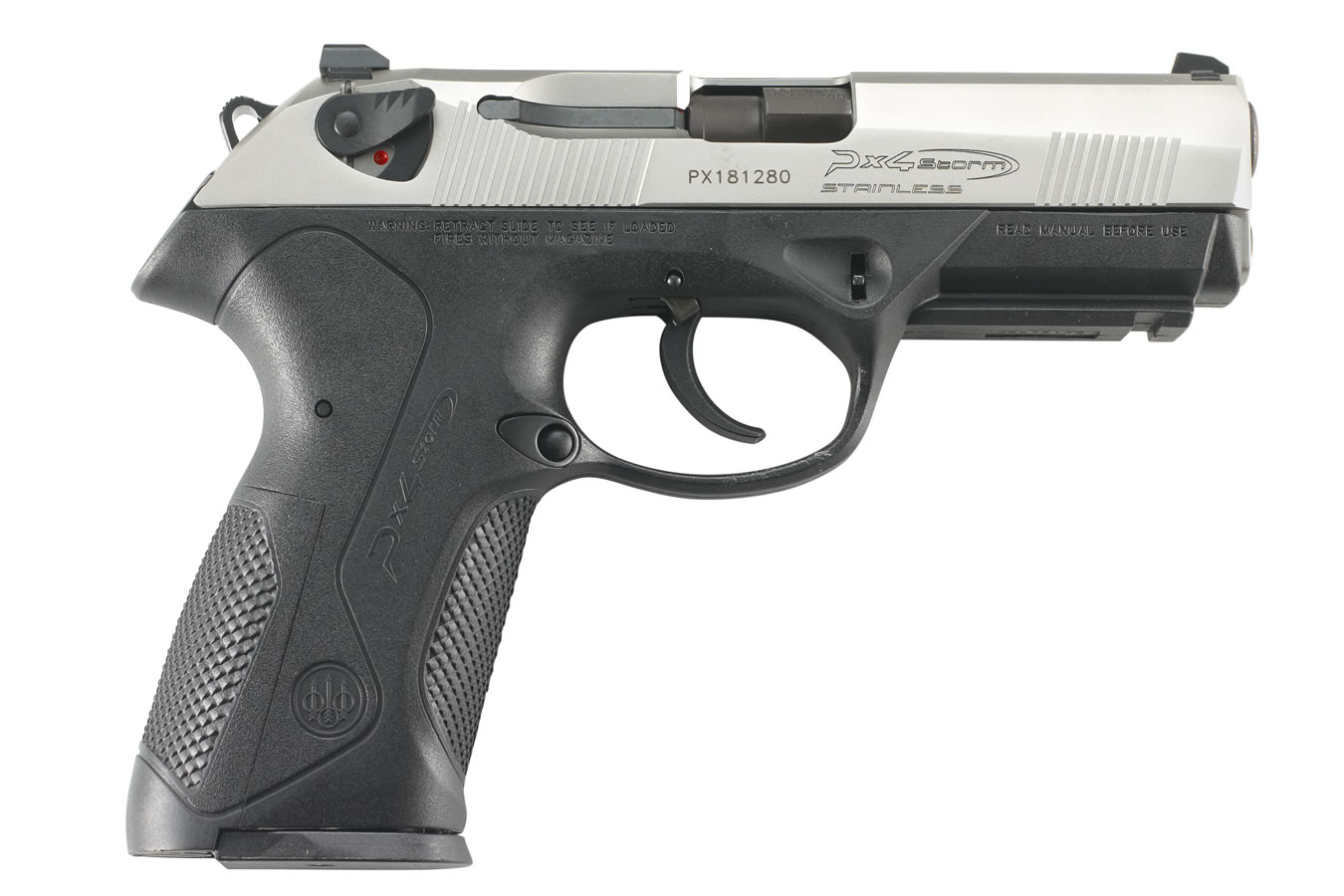
History and Development of the PX4 Storm
The Beretta PX4 Storm was introduced in the mid-2000s as Beretta’s modern polymer handgun platform. At the time, the handgun market was rapidly shifting toward lighter polymer-frame service pistols, and Beretta sought to create a platform capable of competing with dominant designs from Glock, SIG Sauer, and HK.
The PX4 Storm evolved from the earlier Beretta Cougar pistol, which also utilized a rotating barrel locking system. Beretta refined and modernized this concept by integrating it into a lighter polymer frame while improving ergonomics, modularity, and overall handling characteristics.
One of the primary design goals behind the PX4 Storm was reduced recoil and improved shootability. Beretta focused heavily on ergonomics, grip comfort, interchangeable backstraps, and balanced weight distribution to create a pistol that felt controllable and natural in the hand.
The pistol was also designed with modularity in mind, allowing users to adapt the firearm for different defensive and professional applications. Features such as accessory rails, ambidextrous controls, and multiple size variants increased the platform’s versatility.
Over time, the PX4 Storm gained adoption among various military and law enforcement organizations around the world. Its reliability, smooth recoil impulse, and durable construction contributed to its reputation as a dependable duty-grade sidearm.
The Rotating Barrel System Explained
One of the most distinctive features of the Beretta PX4 Storm is its rotating barrel operating system. Unlike the traditional tilting barrel design found in most modern semi-automatic pistols, the PX4’s barrel rotates slightly during the firing cycle instead of tilting downward.
This rotating action changes the way recoil energy is transferred through the firearm. Instead of producing abrupt upward muzzle movement, the system helps redirect some of the recoil forces into rotational motion, which many shooters perceive as softer and smoother.
A major advantage of this design is reduced muzzle flip. Because the pistol stays flatter during recoil, shooters can recover their sight picture more quickly and perform faster follow-up shots during defensive or rapid-fire shooting.
Compared to many striker-fired pistols, the PX4 Storm often feels smoother during firing. The recoil impulse is more linear and less abrupt, which contributes to improved comfort during long training sessions and reduced shooter fatigue.
The rotating barrel system is also known for strong long-term durability and reliability. Despite concerns some shooters initially had about mechanical complexity, the PX4 platform has demonstrated dependable operation across high round counts and demanding environments.
Because of these characteristics, many shooters consider the PX4 Storm one of the softest-shooting polymer pistols available, especially in the compact and full-size 9mm configurations.
Beretta PX4 Storm Variants Explained
PX4 Storm Full Size
The PX4 Storm Full Size is the standard duty-sized version of the platform. It offers a full grip frame, longer barrel length, and higher magazine capacity compared to smaller variants.
In 9mm configuration, the Full Size model typically offers a 17-round magazine capacity, making it well-suited for home defense, duty use, and extended range sessions.
Its larger dimensions also improve recoil control and shooting stability, making it one of the easiest versions of the PX4 family to shoot accurately and comfortably.
PX4 Storm Compact
The PX4 Storm Compact reduces overall dimensions while maintaining the rotating barrel operating system found in the larger model. This allows users to retain much of the recoil reduction benefit while improving concealability.
The Compact model is widely considered one of the best-balanced versions of the PX4 platform because it combines strong shootability with practical concealed carry dimensions.
For many users, it represents an ideal compromise between comfort, capacity, and concealment performance.
PX4 Compact Carry
The PX4 Compact Carry was heavily influenced by Langdon Tactical Technology and designed specifically with concealed carry performance in mind.
This version includes optimized controls, low-profile decocker levers, improved sights, and various carry-focused ergonomic refinements that enhance comfort and usability during everyday carry.
Many enthusiasts consider the Compact Carry one of the most refined versions of the PX4 platform due to its improved trigger characteristics and enhanced practical handling.
PX4 Storm Subcompact
The PX4 Storm Subcompact is the smallest member of the PX4 family and is intended primarily for concealed carry use.
Unlike the Full Size and Compact variants, the Subcompact model does not use the rotating barrel system. Instead, it relies on a more traditional tilting-barrel recoil system to accommodate its smaller size and simplified design.
The Subcompact offers easier concealment and lighter carry weight, though it sacrifices some shootability and recoil softness compared to the larger rotating-barrel PX4 models.
Beretta PX4 Storm Specifications
Technical Specifications Overview
The Beretta PX4 Storm is available in several caliber options, including 9mm, .40 S&W, and .45 ACP. This variety allows users to select a configuration that best matches their defensive preferences, recoil tolerance, and intended application.
Barrel length and overall dimensions vary depending on the specific model. Full Size versions feature longer barrels and grip frames optimized for duty and home defense use, while Compact and Subcompact models reduce dimensions for improved concealment and carry comfort.
Magazine capacity also depends on the caliber and model configuration. The Full Size 9mm variant commonly offers a 17-round magazine capacity, while Compact and Subcompact models typically provide reduced capacities to accommodate smaller frame dimensions.
The PX4 Storm uses a traditional DA/SA trigger system, giving users a double-action first trigger pull followed by lighter single-action pulls for subsequent shots. This operating system appeals to shooters who prefer a hammer-fired defensive handgun with added safety characteristics.
Most PX4 models include ambidextrous safety and decocker controls mounted on the slide. These controls allow users to safely lower the hammer and engage manual safety functions when desired.
Construction consists of a lightweight polymer frame paired with a steel slide. This combination helps reduce overall carry weight while maintaining durability and structural strength during long-term use.
The PX4 Storm also includes an integrated accessory rail, allowing users to mount weapon lights or lasers for defensive and tactical applications.
Size, Weight, and Carry Considerations
The Full Size and Compact versions of the PX4 Storm differ significantly in concealment practicality. The Full Size model provides superior recoil control and shooting comfort but can be more difficult to conceal under lightweight clothing.
The Compact version reduces overall grip and slide dimensions, making it more practical for everyday concealed carry while still retaining much of the platform’s excellent shootability.
One commonly discussed characteristic of the PX4 Storm is its thickness. Compared to many modern slimline striker-fired pistols, the PX4 has a wider grip and slide profile, which may affect concealment for some users.
However, the pistol’s weight balance contributes positively to recoil management. The balanced frame and rotating barrel system help distribute recoil forces efficiently, resulting in a smoother shooting experience than many similarly sized pistols.
Concealed carry practicality depends heavily on body type, holster selection, and carry position. Many users find the Compact Carry variant especially comfortable for inside-the-waistband and appendix carry setups.
Holster compatibility for the PX4 Storm has improved over time, with numerous manufacturers offering quality Kydex and leather options for both concealed carry and duty applications.
First Impressions of the PX4 Storm
Ergonomics and Grip Design
One of the first things many shooters notice about the PX4 Storm is its ergonomic grip design. Beretta designed the pistol with interchangeable backstraps, allowing users to customize grip size and improve hand fit.
The grip angle feels natural for many shooters, contributing to strong pointability and instinctive sight alignment during defensive shooting drills.
The PX4 is generally comfortable for both small and large hands thanks to its rounded grip contours and modular backstrap system. The Compact models are especially appreciated for offering a secure grip without feeling excessively bulky.
Grip texture provides a moderate level of traction without being overly aggressive. This helps maintain control during recoil while still remaining comfortable during extended carry or long training sessions.
The beavertail design helps position the hand higher on the frame, improving recoil control and reducing the likelihood of slide bite. Control placement is also designed for practical defensive use, though some shooters may need time to adapt to the slide-mounted safety system.
Build Quality and Finish
The polymer frame of the PX4 Storm feels solid and durable, with minimal flex during firing. Beretta engineered the frame to withstand high round counts and demanding defensive use.
The steel slide demonstrates strong machining quality and smooth operation. Many users praise the consistency of Beretta’s manufacturing and the refined feel of the pistol during cycling.
Most PX4 models use Beretta’s Bruniton finish, which provides corrosion resistance and durability against wear from regular carry and handling.
Overall fit and finish are commonly regarded as excellent for a duty-grade polymer pistol. The pistol feels well-assembled, with tight tolerances and quality materials throughout the platform.
Controls and User Interface
The PX4 Storm uses a slide-mounted safety and decocker system, which remains one of the platform’s most debated features. Some shooters appreciate the additional safety functionality, while others prefer frame-mounted controls or decocker-only systems.
Ambidextrous controls are included on most models, making the pistol accessible for both left- and right-handed users.
Magazine release operation is generally smooth and easy to access, though shooters with smaller hands may need slight grip adjustments during reloads.
The slide-mounted safety offers both advantages and disadvantages. It allows safe hammer decocking and manual safety engagement, but some shooters dislike its placement because it can be slower to manipulate during rapid defensive handling compared to frame-mounted controls.
Beretta PX4 Storm Trigger Review
DA/SA Trigger System
The Beretta PX4 Storm uses a traditional double-action/single-action trigger system. The first trigger pull is longer and heavier in double-action mode, while subsequent shots transition into a lighter and shorter single-action pull after the slide cycles.
The double-action trigger pull is intentionally heavier to provide additional safety during carry and handling. Many users appreciate this system because it reduces the likelihood of negligent discharges under stress.
Single-action trigger performance is generally smooth and predictable, allowing for accurate follow-up shots and improved practical shooting speed.
Trigger reset quality is also considered respectable for a defensive handgun, with a tactile and audible reset that supports controlled rapid fire.
One of the key advantages of DA/SA carry is the balance between safety and performance. Users can carry the pistol with the hammer decocked while still having immediate readiness for defensive use.
Trigger Performance in Real Use
The heavy double-action pull is one of the most commonly discussed aspects of the PX4 trigger system. Some shooters find it challenging initially, especially if transitioning from striker-fired pistols.
However, the trigger typically becomes smoother after a break-in period and regular use. Many owners report noticeable improvements in trigger feel after several hundred rounds.
In practical defensive shooting scenarios, the PX4 trigger system performs reliably and consistently. The lighter single-action mode allows accurate rapid fire once the initial shot has been fired.
Compared to the Beretta 92, the PX4 trigger often feels slightly different due to the polymer frame and rotating barrel dynamics, though both share traditional DA/SA characteristics. Compared to SIG DA/SA pistols, opinions vary depending on shooter preference and training background.
Langdon Tactical Trigger Upgrades
Langdon Tactical Technology has become closely associated with the PX4 platform due to its popular performance upgrades and carry-focused modifications.
One of the most well-known upgrades is the “Trigger Job in a Bag,” which includes optimized internal components designed to reduce trigger pull weight and improve smoothness.
These upgrades can significantly enhance the double-action and single-action trigger feel, resulting in shorter reset distances and cleaner trigger breaks.
Other popular aftermarket enhancements include low-profile decocker levers, improved springs, and enhanced trigger bars for smoother operation.
Many PX4 owners choose to upgrade the trigger system because it further refines an already capable platform and brings the pistol closer to premium defensive handgun performance standards.
Beretta PX4 Storm Performance Review
Accuracy at Defensive Distances
The Beretta PX4 Storm performs very well at typical defensive distances ranging from 7 to 25 yards. Its stable design and manageable recoil characteristics contribute to consistent shot placement.
Mechanical accuracy is generally excellent for a duty-grade handgun, especially in the Full Size and Compact configurations.
The pistol performs reliably with both defensive hollow-point ammunition and standard FMJ range loads, maintaining strong accuracy across different ammunition types.
In practical shooting situations, many users find the PX4 capable of matching or exceeding the accuracy performance of common striker-fired pistols.
Recoil and Shootability
One of the biggest strengths of the PX4 Storm is its soft recoil impulse generated by the rotating barrel system. The pistol tends to feel smoother and flatter shooting than many competing polymer handguns.
Reduced muzzle rise allows shooters to maintain faster sight recovery during rapid fire, improving follow-up shot speed and overall control.
Many shooters specifically compare the PX4 favorably against Glock pistols in terms of recoil behavior, noting that the PX4 feels less abrupt during firing.
This softer recoil characteristic is especially noticeable during extended training sessions, where reduced shooter fatigue becomes an important advantage.
Reliability and Durability
The PX4 Storm has developed a strong reputation for reliability under high round counts and demanding defensive conditions. Its internal components are engineered for durability and long service life.
The pistol generally performs well with both FMJ training ammunition and hollow-point defensive loads, maintaining reliable feeding and extraction.
Long-term durability of the rotating barrel system has also proven impressive. Despite being mechanically different from tilting-barrel systems, the rotating design has demonstrated excellent longevity when properly maintained.
The PX4 is capable of functioning reliably in harsh environments including heat, dirt, moisture, and extended training conditions.
Some shooters have discussed isolated reliability concerns or tolerance stacking issues in certain individual pistols, but widespread reliability problems are relatively uncommon across the platform overall.
Beretta PX4 Storm for Concealed Carry
Is the PX4 Storm Good for CCW?
The Beretta PX4 Storm can be an effective concealed carry pistol, particularly in its Compact and Compact Carry configurations. These models offer a balance between shootability, capacity, and concealment that appeals to users who prefer hammer-fired DA/SA pistols over modern striker-fired alternatives.
The Compact version is especially popular for concealed carry because it retains the rotating barrel system while reducing overall grip length and slide dimensions. This helps preserve the soft recoil characteristics of the platform while improving comfort during everyday carry.
The Full Size PX4 Storm can still be concealed, but its larger dimensions and thicker profile make it more challenging compared to compact or slimline handguns. Concealing the Full Size model often requires looser clothing, a quality holster, and careful positioning.
Appendix carry is possible with the Compact models, though comfort can vary depending on body type and holster setup. The rounded contours of the PX4 help reduce sharp pressure points, but the pistol’s thickness may still be noticeable during extended carry sessions.
Weight and thickness are two of the most discussed aspects of carrying the PX4 Storm. While the polymer frame keeps overall weight manageable, the pistol remains wider than many modern micro-compacts and slim striker-fired handguns.
Carry Comfort and Practicality
Holster availability for the PX4 Storm has improved significantly over the years. Many manufacturers now offer inside-the-waistband (IWB), outside-the-waistband (OWB), and appendix carry holsters specifically molded for different PX4 variants.
The pistol works well in multiple carry positions depending on the user’s preference. Compact versions are commonly carried in IWB or appendix positions, while the Full Size model is more often carried OWB or under heavier garments.
Printing under clothing can become an issue due to the PX4’s relatively thick slide and grip dimensions. However, careful holster selection and proper belt support can greatly improve concealment performance.
The Compact Carry variant is widely considered one of the best concealed carry versions of the PX4 platform. Its carry-focused modifications improve comfort, handling, and practical usability for daily defensive carry.
PX4 Compact Carry II Overview
The PX4 Compact Carry II is heavily influenced by Langdon Tactical Technology, a company well known for refining defensive DA/SA pistols. This collaboration helped transform the PX4 into a more carry-oriented and performance-focused handgun.
The Compact Carry II includes improved controls specifically optimized for concealed carry use. These modifications help reduce snagging during draws and improve handling under stress.
One of the most appreciated upgrades is the use of low-profile decocker levers. These smaller controls reduce bulk on the slide and make concealed carry more comfortable while minimizing accidental engagement during manipulation.
Additional carry-focused enhancements often include improved trigger components, upgraded sights, and ergonomic refinements that improve overall defensive shooting performance.
Beretta PX4 Storm for Home Defense
Why the PX4 Excels as a Home Defense Pistol
The Beretta PX4 Storm performs exceptionally well as a home defense handgun due to its combination of soft recoil, reliability, and user-friendly handling characteristics.
The rotating barrel system significantly reduces felt recoil and muzzle rise, allowing shooters to recover their sights faster and make rapid follow-up shots more effectively during defensive situations.
High magazine capacity is another major advantage, particularly in the Full Size 9mm models that commonly offer 17-round magazines. This provides substantial defensive capability without requiring frequent reloads.
The integrated accessory rail allows users to attach weapon-mounted lights, which are extremely valuable for low-light home defense scenarios and positive target identification.
The DA/SA trigger system also offers safety advantages for some users. Carrying or staging the pistol with the hammer decocked provides a longer and heavier initial trigger pull, which some shooters feel adds an additional layer of safety during stressful situations.
Weapon Light and Accessory Compatibility
The PX4 Storm supports a wide range of weapon-mounted lights thanks to its integrated accessory rail system. This allows users to customize the pistol for defensive or tactical applications.
Popular weapon light options include compact and full-size lights designed for defensive handguns. These accessories improve visibility and situational awareness in low-light environments.
Rail mounting on the PX4 is straightforward and secure, allowing users to attach or remove accessories without major modifications.
For nightstand setups, many owners pair the PX4 with a mounted light, spare magazine, and dedicated bedside storage solution to create a complete home defense configuration.
Beretta PX4 Storm Pros and Cons
Major Advantages
One of the biggest advantages of the Beretta PX4 Storm is its rotating barrel system, which noticeably reduces recoil and muzzle flip compared to many competing polymer-frame pistols.
The reliable DA/SA operating system appeals strongly to shooters who prefer traditional hammer-fired defensive pistols and appreciate the added safety characteristics of double-action carry.
Ergonomics and overall comfort are also major strengths of the platform. The grip design, interchangeable backstraps, and rounded contours make the pistol comfortable for a wide range of hand sizes.
Ambidextrous controls improve accessibility for left-handed shooters and increase the platform’s versatility for defensive and professional use.
The PX4 Storm also offers relatively high magazine capacity for a hammer-fired pistol, especially in 9mm Full Size configurations.
Long-term durability and reliability are widely praised by owners and professional users alike. The pistol is designed to handle high round counts and demanding environments with minimal issues.
Main Drawbacks
One of the most common complaints involves the slide-mounted safety and decocker system. Some shooters find the placement less intuitive than frame-mounted controls, especially during rapid defensive manipulations.
The PX4’s thick and somewhat chunky design can also be a drawback compared to modern slimline concealed carry pistols. Its wider profile may make concealment more difficult for some users.
Aftermarket support for the PX4 remains smaller than the massive ecosystem available for Glock pistols. While upgrades and accessories exist, options are comparatively limited.
Most PX4 models are also not optics-ready from the factory, which can be a disadvantage in a market increasingly dominated by red-dot-equipped defensive pistols.
The heavy double-action trigger pull may require additional training for shooters unfamiliar with traditional DA/SA systems.
Beretta PX4 Storm vs Competitors
PX4 Storm vs Glock 19
The Beretta PX4 Storm and Glock 19 serve similar defensive roles but differ significantly in operating systems and shooting characteristics.
The PX4 uses a traditional DA/SA hammer-fired system, while the Glock 19 uses a striker-fired trigger design. Shooters who prioritize simplicity often prefer the Glock, while DA/SA enthusiasts may favor the PX4.
In terms of recoil, many shooters believe the PX4 offers a softer and smoother shooting experience due to its rotating barrel system.
The Glock 19 generally holds an advantage in concealment practicality because of its slimmer slide profile and lighter overall feel.
Aftermarket support strongly favors the Glock 19, which benefits from one of the largest handgun accessory ecosystems in the firearms industry.
PX4 Storm vs SIG Sauer P229
The SIG Sauer P229 and PX4 Storm are both respected DA/SA defensive pistols, but they offer very different shooting experiences.
The PX4 typically feels lighter due to its polymer frame, while the P229’s metal frame provides a heavier and more traditional feel.
Trigger quality comparisons often depend on shooter preference. Some users prefer SIG’s refined DA/SA trigger system, while others appreciate the PX4’s smoother recoil characteristics.
For concealed carry, the lighter PX4 generally offers better comfort during extended carry periods.
Both pistols have strong reputations for duty performance and long-term reliability.
PX4 Storm vs Beretta 92
The PX4 Storm and Beretta 92 share Beretta’s DA/SA heritage but use very different operating systems.
The Beretta 92 uses a locking block system, while the PX4 employs a rotating barrel design focused on recoil reduction.
The PX4 is typically easier to conceal due to its polymer frame and more compact dimensions, especially in Compact variants.
Ergonomics differ substantially between the two platforms. Some shooters prefer the classic feel of the Beretta 92, while others find the PX4 more modern and adaptable.
For defensive use, both platforms are highly reliable, though the PX4 generally offers greater concealment practicality and softer perceived recoil.
PX4 Storm vs CZ P-07
The CZ P-07 is another polymer-frame DA/SA pistol often compared to the PX4 Storm.
Both pistols offer strong reliability and modern defensive features, but they differ in trigger feel, ergonomics, and recoil characteristics.
The PX4’s rotating barrel system typically produces softer recoil, while the CZ P-07 is often praised for its trigger system and aggressive grip ergonomics.
Carry suitability depends largely on personal preference, as both pistols are similar in overall size and defensive role.
Reliability for both platforms is generally excellent, making either a strong choice for defensive carry or duty applications.
PX4 Storm Customization and Accessories
Popular PX4 Upgrades
Langdon Tactical trigger kits are among the most popular upgrades for the PX4 Storm platform. These kits improve trigger smoothness, reduce pull weight, and shorten reset distance.
Low-profile safety levers are another common modification, especially for concealed carry users seeking improved comfort and reduced snag risk.
Many owners also install upgraded night sights or fiber optic sights to improve visibility in defensive and low-light conditions.
Grip tape and stippling enhancements can improve traction and recoil control for users who want a more secure firing grip.
Extended magazines and enhanced controls are also popular among defensive shooters looking to increase capacity and improve handling efficiency.
Best Accessories for the PX4 Storm
Weapon-mounted lights are one of the most useful accessories for the PX4 Storm, especially for home defense and duty applications.
Concealed carry holsters designed specifically for the PX4 improve comfort, retention, and draw consistency during daily carry.
Magazine carriers are valuable for users who carry spare ammunition during defensive training or concealed carry.
High-quality defensive ammunition is also an essential part of optimizing the PX4 Storm for personal protection and defensive readiness.
Real User Opinions and Community Feedback
What Owners Love About the PX4 Storm
One of the most commonly praised aspects of the Beretta PX4 Storm is its surprisingly soft recoil. Many owners are initially skeptical of the rotating barrel system, but after shooting the pistol, they often notice a smoother recoil impulse and reduced muzzle rise compared to many traditional polymer-frame handguns.
Long-term reliability is another major reason owners continue to trust the PX4 platform. Numerous users report thousands of rounds fired with minimal malfunctions, reinforcing the pistol’s reputation as a dependable defensive and duty handgun.
Comfortable ergonomics are frequently highlighted in user reviews and forum discussions. The rounded grip shape, interchangeable backstraps, and balanced frame design make the PX4 comfortable for extended range sessions and daily carry use.
Many enthusiasts also describe the PX4 Storm as an underrated handgun. Despite not receiving the same level of mainstream attention as Glock or SIG Sauer pistols, the PX4 has developed a loyal following among shooters who appreciate traditional DA/SA systems and unique engineering.
Home defense performance is another area where owners consistently praise the PX4. Its soft recoil, high magazine capacity, and reliable operation make it an excellent bedside or defensive firearm for many households.
Common Complaints From Users
One of the most common criticisms of the PX4 Storm involves its appearance and bulky overall design. Some shooters consider the pistol visually outdated or overly thick compared to newer slimline and optics-ready handguns.
The slide-mounted safety and decocker system also generates mixed opinions. While some users appreciate the additional safety features, others dislike the placement and feel it is less intuitive during rapid defensive manipulations.
Limited aftermarket support compared to Glock platforms is another frequently mentioned drawback. Although the PX4 has a dedicated enthusiast community and quality upgrade options, the overall accessory ecosystem remains much smaller than that of more mainstream striker-fired pistols.
Some users also mention difficulty finding optics-ready solutions for the PX4 Storm. Since most factory models are not cut for red dot optics, mounting modern pistol optics often requires custom slide milling or specialized aftermarket modifications.
Community Reputation Among Enthusiasts
Within the firearms community, the Beretta PX4 Storm is often referred to as one of the most underrated handguns on the market. Many shooters believe it never received the level of recognition it deserved despite its innovative recoil system and strong reliability.
The pistol has developed a particularly strong following among DA/SA enthusiasts who prefer traditional hammer-fired handguns over striker-fired designs. These users often appreciate the added safety characteristics and shooting experience provided by the DA/SA operating system.
Langdon Tactical upgrades have become extremely popular within the PX4 community. Many owners view these modifications as transformative improvements that elevate the pistol’s trigger system and overall carry performance.
Reddit discussions and enthusiast forums frequently describe the PX4 as a “hidden gem” in the defensive handgun market. Owners often recommend it to shooters looking for something different from the standard striker-fired options dominating modern handgun sales.
Is the Beretta PX4 Storm Still Worth It in 2026?
How It Competes in the Modern Handgun Market
In 2026, the Beretta PX4 Storm continues competing in a market heavily dominated by striker-fired pistols and optics-ready handgun platforms. Despite this shift in industry trends, the PX4 still maintains a unique position due to its rotating barrel system and DA/SA operating mechanism.
Many shooters still prefer DA/SA pistols because they appreciate the combination of a heavier first trigger pull and lighter follow-up shots. For these users, the PX4 offers a level of safety and trigger control that striker-fired pistols may not provide in the same way.
Compared to modern optics-ready pistols, the PX4 may appear less advanced on paper. However, its value proposition lies in shootability, recoil management, and long-term reliability rather than trend-focused features.
For defensive shooters in 2026, the PX4 remains highly relevant. Its smooth recoil characteristics, dependable operation, and ergonomic comfort still make it a capable defensive firearm for concealed carry, home defense, and professional use.
Best Use Cases for the PX4 Storm
Home Defense
The PX4 Storm excels as a home defense pistol due to its soft recoil, high magazine capacity, and compatibility with weapon-mounted lights. Its DA/SA system also appeals to users seeking additional safety during storage and defensive handling.
Concealed Carry
Compact and Compact Carry variants are especially well-suited for concealed carry users who want a hammer-fired defensive pistol with strong recoil control and practical defensive performance.
Duty and Security Use
The PX4’s reliability and durable construction make it suitable for duty and security roles where dependable operation under stress is essential.
Range and Training Pistol
Thanks to its smooth shooting characteristics and ergonomic design, the PX4 is also an excellent range and training handgun for shooters who enjoy extended practice sessions with reduced fatigue.
Final Verdict on the Beretta PX4 Storm
Who Should Buy the PX4 Storm?
The Beretta PX4 Storm is an excellent option for shooters seeking soft recoil and smooth shooting characteristics in a defensive handgun. Its rotating barrel system genuinely improves recoil behavior and follow-up shot control for many users.
DA/SA handgun enthusiasts are also likely to appreciate the PX4 platform due to its traditional hammer-fired operation and refined defensive handling characteristics.
Home defense users can benefit greatly from the pistol’s reliability, high magazine capacity, and compatibility with lights and defensive accessories.
Beretta fans looking for a modern polymer-frame pistol will also find the PX4 appealing because it combines classic Beretta engineering concepts with updated ergonomics and modularity.
Who Might Prefer Another Option?
Users prioritizing slim concealed carry pistols may prefer newer micro-compact or slimline striker-fired handguns that are easier to conceal and lighter to carry daily.
Shooters who favor striker-fired simplicity may also find the PX4’s DA/SA system less appealing due to the additional training required to master double-action trigger transitions.
Buyers who prioritize optics-ready systems and massive aftermarket support may prefer Glock, SIG Sauer, or other modern platforms that offer more extensive customization options directly from the factory.
Overall Recommendation
Overall, the Beretta PX4 Storm remains one of the most underrated DA/SA pistols currently available on the market. Its unique rotating barrel system provides genuine recoil reduction benefits that many shooters immediately notice during live fire.
The pistol delivers an excellent balance of reliability, comfort, ergonomics, and shootability, making it highly practical for defensive applications and recreational shooting alike.
Even in 2026, the PX4 Storm continues to stand out as a capable and relevant defensive handgun for shooters who value smooth recoil, traditional DA/SA operation, and proven long-term durability.
Frequently Asked Questions About the Beretta PX4 Storm
1. Is the Beretta PX4 Storm a good handgun for beginners?
Yes, the Beretta PX4 Storm can be an excellent handgun for beginners, especially for those willing to learn a traditional DA/SA trigger system. One of the biggest advantages for new shooters is the pistol’s soft recoil impulse caused by the rotating barrel design. Compared to many polymer striker-fired pistols, the PX4 often feels smoother and easier to control during rapid fire.
The ergonomics are also beginner-friendly thanks to interchangeable backstraps and a comfortable grip shape. However, beginners must understand the DA/SA trigger transition because the first trigger pull is heavier than subsequent shots. With proper training and range time, many new shooters become highly proficient with the PX4 platform.
2. What makes the PX4 Storm different from other pistols?
The biggest feature that separates the PX4 Storm from most modern pistols is its rotating barrel operating system. Unlike the common tilting barrel design found in Glock, SIG Sauer, and Smith & Wesson pistols, the PX4’s barrel rotates slightly during cycling.
This system helps reduce muzzle flip and creates a smoother recoil impulse. Many shooters notice flatter shooting behavior and faster follow-up shots compared to traditional striker-fired handguns. The PX4 also retains a traditional hammer-fired DA/SA trigger system, which is becoming less common in the modern handgun market.
3. Is the Beretta PX4 Storm reliable?
The PX4 Storm has developed a strong reputation for reliability over many years of defensive, duty, and civilian use. Beretta designed the pistol for hard use environments, and many owners report firing thousands of rounds with minimal malfunctions.
The pistol generally functions reliably with FMJ training ammunition as well as modern hollow-point defensive loads. Its rotating barrel system has also proven durable despite initial concerns from shooters unfamiliar with the design.
4. Is the PX4 Storm good for concealed carry?
Yes, particularly the Compact and Compact Carry versions. These models provide a strong balance between concealability and shootability. While the PX4 is thicker than many slimline pistols, its rounded edges and ergonomic frame make it comfortable for many concealed carriers.
The Compact Carry version is especially popular because it includes carry-oriented improvements such as low-profile controls and upgraded sights.
5. Which PX4 Storm model is best for concealed carry?
Most concealed carry users prefer the PX4 Compact or PX4 Compact Carry models. These variants maintain the rotating barrel system while offering smaller dimensions than the Full Size model.
The Compact Carry model is often considered the premium carry configuration because of its improved trigger components, reduced-profile controls, and enhanced defensive ergonomics.
6. Is the PX4 Storm better than the Glock 19?
Whether the PX4 Storm is better than the Glock 19 depends on personal preference and intended use. The PX4 generally offers softer recoil and a smoother shooting experience due to its rotating barrel system.
However, the Glock 19 benefits from a simpler striker-fired trigger system, a slimmer overall design, and significantly larger aftermarket support. Shooters who prefer DA/SA pistols often favor the PX4, while those wanting maximum simplicity may choose the Glock.
7. Does the PX4 Storm have a safety?
Yes, most PX4 Storm models include a slide-mounted safety and decocker. This system allows users to safely lower the hammer and optionally engage a manual safety.
Some variants are configured as decocker-only models depending on user preference and regional availability.
8. Is the PX4 Storm optics-ready?
Most factory PX4 Storm pistols are not optics-ready. Unlike many modern handguns, the PX4 platform was developed before slide-mounted red dot optics became extremely popular.
Users who want optics capability often need aftermarket slide milling or specialized adapter solutions.
9. Why do people call the PX4 Storm underrated?
Many firearm enthusiasts believe the PX4 Storm never received the attention it deserved because the handgun market became dominated by striker-fired pistols shortly after its release.
Despite its excellent recoil characteristics, reliability, and ergonomics, the PX4 is often overshadowed by more heavily marketed platforms like Glock and SIG Sauer pistols.
10. Is the rotating barrel system durable?
Yes, the rotating barrel system has proven highly durable in real-world use. Some shooters initially worry that it may be mechanically fragile compared to tilting barrel systems, but long-term ownership reports generally show excellent durability and reliability.
Proper lubrication and routine maintenance help ensure long service life, just as with any semi-automatic handgun.
11. Does the PX4 Storm reduce recoil?
Yes. The rotating barrel system helps reduce felt recoil and muzzle rise compared to many traditional polymer pistols. This is one of the most praised characteristics of the platform.
Many shooters describe the recoil impulse as smoother, flatter, and less abrupt than comparable striker-fired handguns.
12. Is the PX4 Storm good for home defense?
The PX4 Storm is an excellent home defense handgun. It combines high magazine capacity, strong reliability, accessory rail compatibility, and soft recoil characteristics.
The Full Size version is especially effective for home defense because of its longer sight radius and greater recoil control.
13. What calibers does the PX4 Storm come in?
The PX4 Storm has been offered in multiple calibers including 9mm, .40 S&W, and .45 ACP. Availability varies depending on the specific model and production generation.
The 9mm versions are the most popular because they offer the best combination of capacity, recoil control, and ammunition affordability.
14. Is the PX4 Storm heavy?
The PX4 Storm is not excessively heavy thanks to its polymer frame construction. However, it is somewhat bulkier and thicker than many modern slimline pistols.
Most users consider the weight manageable for both concealed carry and duty use.
15. Is the PX4 Storm easy to maintain?
Yes, the PX4 Storm is relatively easy to maintain and field strip. The takedown process is straightforward and similar to many modern semi-automatic pistols.
Routine cleaning and lubrication are simple, though the rotating barrel assembly requires slightly different attention compared to standard tilting barrel systems.
16. Does the PX4 Storm have interchangeable backstraps?
Yes. Most PX4 Storm models include interchangeable backstraps that allow shooters to customize grip size and fit.
This feature helps improve ergonomics and comfort for users with different hand sizes.
17. Is the PX4 Storm good for left-handed shooters?
Yes, the PX4 includes ambidextrous controls that make it friendly for left-handed users. The safety and slide stop are accessible from both sides on most models.
This improves usability for defensive shooting and tactical applications.
18. What is the best PX4 Storm model overall?
Many enthusiasts consider the PX4 Compact Carry to be the best overall version because it combines concealability, recoil reduction, and upgraded defensive features.
However, the ideal model depends on whether the user prioritizes home defense, concealed carry, or range performance.
19. Is the PX4 Storm accurate?
Yes, the PX4 Storm is widely regarded as an accurate defensive pistol. The rotating barrel system and smooth recoil impulse help shooters maintain better control during rapid fire.
Most users report excellent practical accuracy at defensive distances.
20. Can the PX4 Storm use weapon lights?
Yes, the PX4 Storm includes an integrated accessory rail that supports weapon-mounted lights and lasers.
This makes the pistol highly suitable for home defense and low-light defensive applications.
21. Is the PX4 Storm better than the Beretta 92?
The answer depends on user preference. The PX4 is lighter, easier to conceal, and offers softer recoil in some situations. The Beretta 92 offers a more traditional all-metal shooting experience and legendary military history.
Many shooters prefer the PX4 for carry and modern defensive use while still appreciating the Beretta 92 for range and duty applications.
22. Does the PX4 Storm have good aftermarket support?
The PX4 has decent aftermarket support, but it is smaller than the ecosystem available for Glock pistols. Companies like Langdon Tactical provide high-quality upgrades and accessories specifically for the PX4 platform.
Popular upgrades include trigger kits, sights, decocker levers, and carry modifications.
23. Why do people upgrade the PX4 trigger?
Many owners upgrade the PX4 trigger to improve double-action smoothness, reduce pull weight, and shorten reset distance.
Langdon Tactical trigger upgrades are especially popular because they significantly enhance the pistol’s defensive shooting performance.
24. Is the PX4 Storm suitable for law enforcement?
Yes. The PX4 Storm was designed as a duty-grade handgun and has been used by military and law enforcement organizations in multiple countries.
Its reliability, capacity, and DA/SA operating system make it a practical service pistol.
25. Does the PX4 Storm shoot flatter than Glock pistols?
Many shooters believe the PX4 shoots flatter than Glock pistols due to the rotating barrel system. Reduced muzzle rise allows faster sight recovery and smoother recoil control.
However, recoil perception is subjective and depends heavily on shooter technique and experience.
26. Is the Beretta PX4 Storm good for range training?
Yes, the Beretta PX4 Storm is an excellent range pistol because of its smooth recoil impulse, comfortable ergonomics, and reliable operating system. Many shooters find the pistol less fatiguing during long training sessions compared to snappier polymer handguns.
The rotating barrel system helps reduce muzzle flip, allowing shooters to stay on target more easily during rapid-fire drills and defensive practice sessions.
27. Can the PX4 Storm handle +P defensive ammunition?
The PX4 Storm is generally capable of handling modern +P defensive ammunition, particularly in 9mm configurations. Beretta designed the pistol to function as a duty-grade firearm capable of enduring demanding defensive use.
However, regular use of high-pressure ammunition may increase wear over time, so many shooters reserve +P loads for carry and defensive purposes while using standard pressure ammunition for practice.
28. Is the PX4 Storm suitable for women or smaller-handed shooters?
Many smaller-handed shooters appreciate the PX4 Storm because of its interchangeable backstraps and rounded grip contours. The ergonomic design can provide a comfortable grip without feeling overly aggressive or difficult to control.
The soft recoil impulse is also beneficial for shooters sensitive to recoil, making the pistol easier to shoot confidently and accurately.
29. How does the PX4 Storm compare to modern micro-compacts?
Compared to modern micro-compact pistols, the PX4 Storm is larger and thicker but often significantly easier to shoot well. The additional size improves recoil management, grip comfort, and overall controllability.
Micro-compacts prioritize concealability, while the PX4 focuses more on balanced shootability and defensive performance.
30. What is the magazine capacity of the PX4 Storm?
Magazine capacity varies by model and caliber. The Full Size 9mm version commonly holds 17 rounds, while Compact and Subcompact models typically offer slightly reduced capacities.
Higher-capacity magazines are one of the platform’s strengths, especially for home defense and duty use.
31. Is the PX4 Storm available in compact versions?
Yes, Beretta offers both Compact and Compact Carry versions of the PX4 Storm. These variants are specifically designed for concealed carry and defensive use.
The Compact versions retain the rotating barrel system and are widely praised for balancing concealability with excellent shooting comfort.
32. What is the PX4 Compact Carry?
The PX4 Compact Carry is a carry-focused version developed with heavy input from Langdon Tactical Technology. It includes enhanced sights, low-profile controls, improved trigger components, and carry-oriented refinements.
Many enthusiasts consider it one of the best DA/SA concealed carry pistols available today.
33. Does the PX4 Storm have a rail for accessories?
Yes, the PX4 Storm includes an integrated accessory rail that supports lights and laser aiming devices.
This makes the pistol suitable for home defense, duty use, and low-light defensive scenarios.
34. Is the PX4 Storm expensive?
The PX4 Storm is generally priced in the mid-range handgun market. It is often more expensive than budget striker-fired pistols but less expensive than many premium metal-frame duty handguns.
The Compact Carry and Langdon Tactical variants typically cost more because of their upgraded components and enhanced features.
35. Is the PX4 Storm easy to conceal?
The Compact versions are reasonably easy to conceal for most users, though the pistol’s thickness can make it slightly more difficult to hide than slimline pistols.
Proper holster selection and carry position play a major role in concealment comfort and effectiveness.
36. Does the PX4 Storm have good ergonomics?
Yes, ergonomics are considered one of the PX4 Storm’s strongest features. The grip shape, interchangeable backstraps, and rounded contours create a comfortable shooting experience for many users.
The pistol also points naturally for many shooters, improving practical defensive accuracy.
37. Is the PX4 Storm striker-fired?
No, the PX4 Storm is a hammer-fired pistol that uses a traditional double-action/single-action trigger system.
This distinguishes it from most modern defensive pistols, which commonly use striker-fired mechanisms.
38. Why do DA/SA fans like the PX4 Storm?
DA/SA enthusiasts often appreciate the PX4 because it combines traditional hammer-fired operation with modern ergonomics and recoil management technology.
The heavier first trigger pull followed by lighter single-action shots provides a shooting experience many experienced users still strongly prefer.
39. Is the PX4 Storm safe to carry loaded?
Yes, the PX4 Storm is designed to be safely carried loaded when used responsibly and according to proper firearm safety practices.
The DA/SA system, firing pin block safety, and decocker mechanism all contribute to safe defensive carry operation.
40. Does the PX4 Storm have low recoil in .40 S&W?
Compared to many .40 caliber pistols, the PX4 Storm tends to manage recoil surprisingly well because of the rotating barrel system.
While .40 S&W naturally produces more recoil than 9mm, many users still find the PX4 softer shooting than competing .40 caliber handguns.
41. Can you mount a red dot on the PX4 Storm?
Yes, but most standard PX4 models require aftermarket slide milling or specialized mounting solutions because they are not factory optics-ready.
Some custom shops offer optic cuts for popular red dot footprints such as Trijicon RMR and Holosun systems.
42. Is the PX4 Storm still relevant in 2026?
Yes, the PX4 Storm remains highly relevant for shooters who value smooth recoil, DA/SA operation, and proven reliability.
Even though the market now favors optics-ready striker-fired pistols, the PX4 still offers a unique shooting experience that many users strongly appreciate.
43. What are the biggest weaknesses of the PX4 Storm?
The most common criticisms include the slide-mounted safety, thicker overall profile, limited optics-ready support, and smaller aftermarket ecosystem compared to Glock platforms.
Some users also dislike the heavier double-action trigger pull without aftermarket upgrades.
44. Does the PX4 Storm require special maintenance?
No special maintenance is required beyond normal cleaning and lubrication procedures. However, owners should pay attention to the rotating barrel surfaces and keep them properly lubricated.
Routine maintenance is otherwise straightforward and simple.
45. Is the PX4 Storm good for self-defense?
Yes, the PX4 Storm is highly effective for self-defense. Its reliability, recoil control, capacity, and defensive ergonomics make it a strong defensive handgun option.
Both the Full Size and Compact variants are commonly used for defensive purposes.
46. Does the PX4 Storm have a manual safety?
Most PX4 models include a manual safety integrated into the slide-mounted decocker system. Users can engage or disengage the safety manually depending on carry preferences.
Some variants are configured as decocker-only models without a traditional manual safety function.
47. Is the PX4 Storm comfortable to shoot?
Yes, many shooters consider the PX4 one of the most comfortable polymer pistols to shoot because of its smooth recoil impulse and ergonomic grip design.
The pistol is especially enjoyable during long range sessions where recoil fatigue becomes more noticeable.
48. Does the PX4 Storm have interchangeable sights?
Yes, the PX4 Storm supports aftermarket sight replacements including night sights and fiber optic options.
Many owners upgrade the factory sights to improve defensive visibility and target acquisition speed.
49. What holster works best for the PX4 Storm?
The best holster depends on the intended use. Kydex IWB holsters are popular for concealed carry, while OWB holsters are common for range and duty applications.
Appendix carry holsters designed specifically for the Compact Carry model are especially popular among concealed carriers.
50. Is the PX4 Storm a good duty pistol?
Yes, the PX4 Storm was specifically designed as a duty-grade handgun. Its reliability, durability, capacity, and recoil management make it suitable for law enforcement and security applications.
The Full Size model is particularly well-suited for professional duty use.
51. What is the best caliber for the PX4 Storm?
Most users consider the 9mm version the best overall option because it provides the best balance of recoil control, ammunition capacity, affordability, and defensive effectiveness.
The .40 S&W and .45 ACP versions appeal to shooters who prefer larger calibers.
52. Is the PX4 Storm worth upgrading?
Yes, many owners believe the PX4 benefits greatly from upgrades such as trigger kits, sights, and low-profile decocker levers.
Langdon Tactical upgrades in particular are widely regarded as excellent improvements for carry and defensive use.
53. How long does a PX4 Storm last?
With proper maintenance, a PX4 Storm can last for tens of thousands of rounds. Beretta designed the pistol for duty use and long-term durability.
Many long-term owners report excellent reliability even after extensive training use.
54. Is the PX4 Storm a good alternative to striker-fired pistols?
Yes, the PX4 Storm is one of the strongest alternatives for shooters who prefer hammer-fired pistols over striker-fired designs.
It combines traditional DA/SA operation with modern ergonomics, high capacity, and strong recoil control.
55. Why do enthusiasts still recommend the PX4 Storm?
Enthusiasts continue recommending the PX4 Storm because it delivers a unique combination of soft recoil, excellent ergonomics, reliability, and defensive practicality.
Although it is often overshadowed by more mainstream pistols, many experienced shooters believe the PX4 remains one of the most underrated defensive handguns available today.