
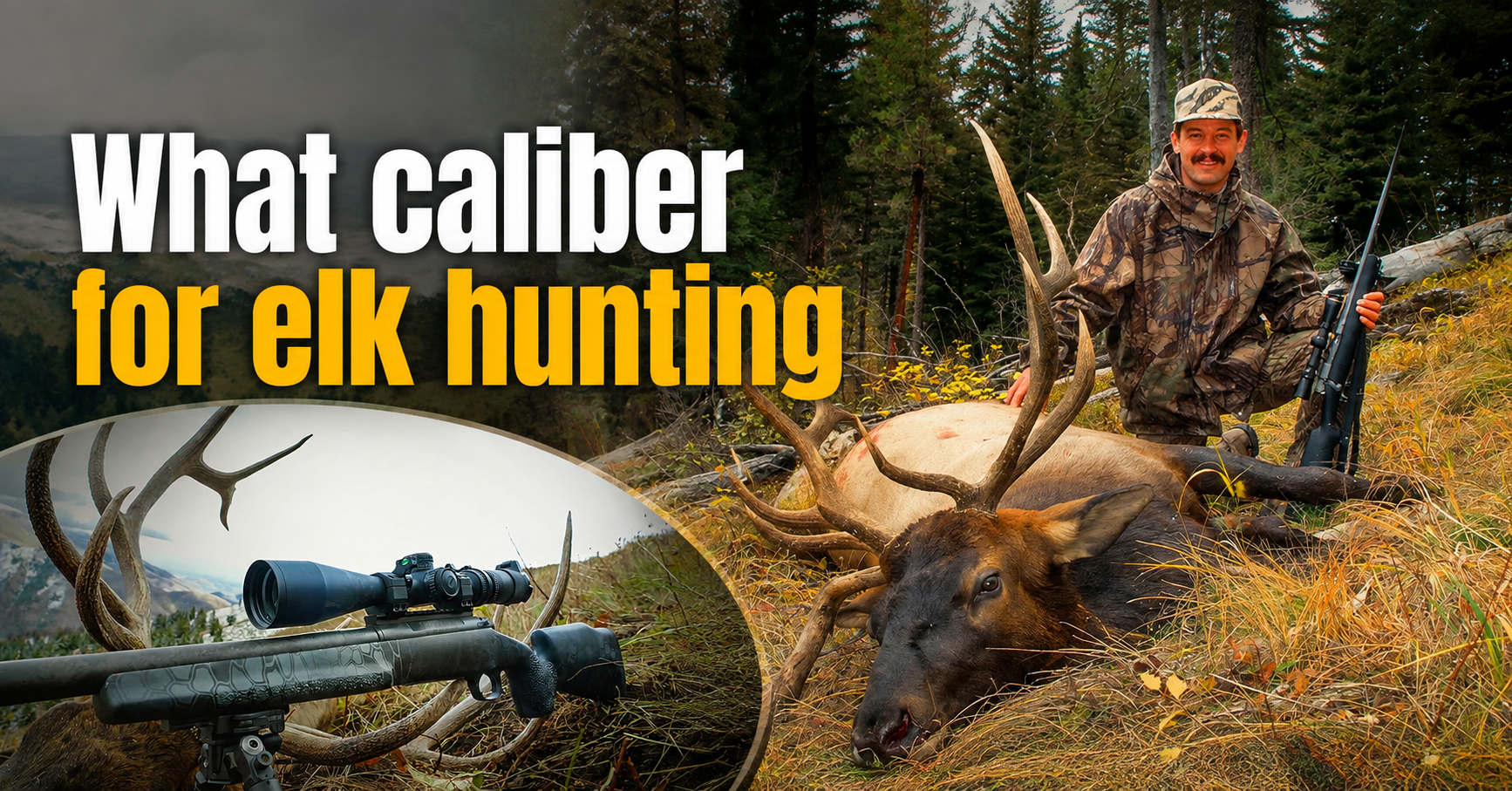

Deciding what caliber for elk hunting requires more thought than selecting the fastest cartridge or the largest bullet. Elk are large, heavily built animals, and hunters need a legal cartridge they can shoot accurately with a dependable big-game bullet.
The right choice depends on recoil tolerance, rifle fit, terrain, expected distance, ammunition availability, and your demonstrated field accuracy. This guide compares practical elk cartridges without suggesting that one caliber is automatically best for every hunter or hunt.
Quick Answer
For most hunters, practical elk cartridges include .270 Winchester, 7mm-08 Remington, .308 Winchester, .30-06 Springfield, 7mm Remington Magnum, and .300 Winchester Magnum. The .30-06 is a particularly balanced all-around choice, while the .300 Winchester Magnum suits experienced shooters who can manage additional recoil and genuinely need its downrange capability. A 6.5 Creedmoor can be suitable under controlled conditions with a robust hunting bullet, conservative shot selection, and legal compliance, but it offers less margin than larger cartridges. Whatever you choose, use an elk-appropriate expanding bullet and stay within your proven accuracy limit.
Elk Hunting Calibers at a Glance
| Cartridge | Best Application | Relative Recoil | Main Advantage | Main Limitation |
|---|---|---|---|---|
| 6.5 Creedmoor | Recoil-sensitive hunters using conservative distances | Low to moderate | Comfortable to practice with | Less margin for poor angles or unsuitable bullets |
| .270 Winchester | Open-country elk hunting | Moderate | Balanced trajectory and recoil | Bullet construction and placement require careful attention |
| 7mm-08 Remington | Moderate-distance hunts and compact rifles | Moderate | Efficient performance without magnum recoil | Local ammunition selection may be limited |
| .280 Ackley Improved | Experienced open-country hunters | Moderate | Strong trajectory without full magnum recoil | Less common ammunition and rifle availability |
| .308 Winchester | Woodland and moderate-distance elk hunting | Moderate | Broad ammunition availability | More trajectory correction as distance increases |
| .30-06 Springfield | Best traditional all-around option | Moderate to substantial | Wide selection of elk-capable loads | More recoil than some hunters need or tolerate well |
| 7mm Remington Magnum | Open terrain and variable distances | Substantial | Strong downrange performance | Recoil and muzzle blast can affect accuracy |
| 7mm PRC | Modern open-country setup | Substantial | Designed around efficient modern hunting bullets | Ammunition may cost more or be less available |
| .300 WSM | Compact magnum rifle | Substantial | Magnum-class capability in a short-action design | Strong recoil in lightweight mountain rifles |
| .300 Winchester Magnum | Experienced hunters and open country | High | Versatile elk and larger-game cartridge | Recoil, blast, cost, and rifle weight |
| .300 PRC | Specialized extended-distance setups | High | Modern heavy-bullet capability | More rifle and cartridge than most elk hunts require |
| .338 Winchester Magnum | Elk plus larger or heavier game | Very high | Large, strongly constructed bullets | Substantial recoil and unnecessary power for many hunters |
Recoil comparisons are general. Rifle weight, stock fit, bullet weight, load, shooting position, muzzle devices, and individual sensitivity substantially affect felt recoil.
Important Legal and Firearm Safety Notice
Legal elk cartridges vary by state, province, season, firearm type, wildlife management unit, and public-land designation. Regulations may specify minimum bullet diameter, cartridge length, centerfire ammunition, expanding bullets, nonlead ammunition, magazine capacity, or other requirements.
For example, official rules can differ even among major elk-hunting states. Never treat one state’s caliber minimum as a national standard. Consult the current regulation booklet from the wildlife agency responsible for your exact hunting location. Additional rules may apply on national wildlife refuges, state wildlife areas, tribal lands, or other managed properties.
The Wyoming Game and Fish Department’s firearm and archery regulations demonstrate how an agency may define legal big-game equipment in detail. Use your destination’s current official regulations rather than relying on a general online caliber recommendation.
Follow the four primary firearm safety rules at all times:
- Treat every firearm as if it is loaded.
- Keep the muzzle pointed in a safe direction.
- Keep your finger outside the trigger guard until you are ready to shoot.
- Be certain of your target and what is in front of and beyond it.
A mechanical safety does not make unsafe handling acceptable. Follow the rifle manufacturer’s instructions, use only the exact cartridge marked for the chamber, and obtain qualified instruction when needed.
Caliber and Cartridge Are Not Exactly the Same
Hunters commonly use “caliber” to mean a complete cartridge such as .308 Winchester or .300 Winchester Magnum. Technically, caliber usually refers to approximate bore or bullet diameter, while the cartridge designation describes the complete ammunition design.
Cartridges using the same bullet diameter can produce very different recoil, velocity, trajectory, and rifle requirements. The .308 Winchester, .30-06 Springfield, and .300 Winchester Magnum all use bullets of approximately the same diameter, but they are not interchangeable.
Always match the complete designation on the ammunition box to the chamber marking and firearm manual. A similar bullet diameter or cartridge name does not establish compatibility.
What Caliber for Elk Hunting Is Best for Different Hunters?
| Hunter or Situation | Practical Starting Options | Why |
|---|---|---|
| Recoil-sensitive hunter | 6.5 Creedmoor, .270 Winchester, or 7mm-08 | Manageable recoil can support better practice and placement |
| First elk rifle | .270 Winchester, .308 Winchester, or .30-06 | Common rifles, established hunting loads, and broad usefulness |
| Timber and moderate distances | .308 Winchester or .30-06 | Practical performance without requiring a magnum cartridge |
| Open western terrain | .270 Winchester, 7mm Remington Magnum, or 7mm PRC | Useful trajectories when the hunter has verified the load |
| Elk and larger North American game | .30-06 or .300 Winchester Magnum | Versatile selection of strongly constructed hunting bullets |
| Experienced long-distance specialist | 7mm PRC, .300 Winchester Magnum, or .300 PRC | Additional capability when supported by advanced practice and judgment |
| Backcountry hunter prioritizing rifle weight | 7mm-08, .270 Winchester, or .308 Winchester | Moderate cartridges can be easier to manage in a lightweight rifle |
Best Elk Cartridges Explained
1. .30-06 Springfield: Best Traditional All-Around Elk Cartridge
The .30-06 Springfield provides a useful balance of elk capability, ammunition selection, and broad rifle availability. It can use strongly constructed bullets suitable for elk without requiring full magnum velocity.
For many hunters, it offers more practical flexibility than a smaller cartridge and less recoil than the fastest .30-caliber magnums. Recoil remains substantial enough that a new shooter should try a properly fitted rifle before committing to it.
Best for: Hunters wanting one established cartridge for deer, elk, and potentially other North American big game.
Main limitation: A lightweight .30-06 can produce enough recoil to cause flinching if rifle fit or shooting technique is poor.
2. .300 Winchester Magnum: Best Powerful All-Around Option
The .300 Winchester Magnum is widely used for elk because it can launch a broad selection of heavy, controlled-expansion hunting bullets. It is particularly useful for experienced hunters working in open country or pursuing multiple large-game species.
Its advantage matters only when the hunter can shoot it accurately. Strong recoil and muzzle blast can reduce practical field performance, particularly from a lightweight mountain rifle or unsupported position.
Best for: Experienced shooters who practice regularly and want an elk rifle with broader large-game capability.
Main limitation: It is more cartridge than many close- and moderate-distance elk hunts require.
3. .270 Winchester: Best Moderate-Recoil Open-Country Choice
The .270 Winchester has a long record as a western big-game cartridge. It offers a relatively flat trajectory and less recoil than many magnum options while remaining capable of elk hunting with suitable ammunition and responsible shot selection.
Because elk are larger and heavier than deer, hunters should prioritize a durable, manufacturer-recommended big-game bullet rather than choosing ammunition by velocity alone.
Best for: Recoil-conscious hunters who expect mixed or open terrain.
Main limitation: It provides less margin than larger cartridges when presentation, distance, or bullet construction is unfavorable.
4. .308 Winchester: Best for Timber and Moderate Distances
The .308 Winchester is a practical elk option for hunters who keep shots within their verified capability. It is available in relatively compact rifles and is supported by a broad range of big-game hunting ammunition.
Its trajectory becomes more demanding as distance increases compared with faster cartridges. That is not a disadvantage in timber or broken terrain where most opportunities are closer.
Best for: Woodland hunting, compact rifles, and hunters who value ammunition availability.
Main limitation: Accurate range estimation and trajectory verification become increasingly important at longer distances.
5. 7mm Remington Magnum: Best Established Open-Country Magnum
The 7mm Remington Magnum combines efficient hunting bullets with a trajectory suited to open landscapes. It has enough versatility for elk and other big-game hunts without moving into the heaviest .30- or .33-caliber recoil levels.
It still produces substantial recoil and muzzle blast. Hunters should compare it directly with the .270 Winchester, .280 Ackley Improved, and non-magnum options before assuming the magnum is necessary.
Best for: Open-country hunters comfortable with magnum recoil.
Main limitation: Greater blast, ammunition cost, and practice demands than moderate cartridges.
6. 7mm-08 Remington: Best Compact, Manageable Option
The 7mm-08 Remington offers efficient performance in a short-action rifle. Its recoil is generally more manageable than that of common elk magnums, making it attractive to hunters who prioritize accurate practice.
It requires disciplined bullet selection and conservative judgment. Local stores may also stock fewer elk-appropriate loads for it than for .308 Winchester or .30-06.
Best for: Recoil-conscious hunters who prefer a compact rifle and moderate shooting distances.
Main limitation: Smaller local ammunition selection and less margin than larger cartridges.
7. 6.5 Creedmoor: Best Low-Recoil Option With Important Limits
The 6.5 Creedmoor can be used for elk where legal when paired with a robust hunting projectile and careful shot selection. Its mild recoil makes accurate practice easier, but its popularity should not obscure its limitations.
Not every 6.5 Creedmoor load is suitable. Target bullets should not be assumed to perform like controlled-expansion big-game bullets. The hunter should be especially conservative about distance, presentation, wind, and obstacles.
Best for: Accurate, recoil-sensitive hunters who understand ammunition performance and are willing to pass marginal opportunities.
Main limitation: Less room for error than larger, more powerful elk cartridges.
8. .280 Ackley Improved: Best Efficient Non-Magnum Alternative
The .280 Ackley Improved offers an effective middle ground between traditional .270-class cartridges and larger magnums. It can use a broad range of efficient 7mm hunting bullets and appeals to experienced hunters seeking open-country performance without maximum recoil.
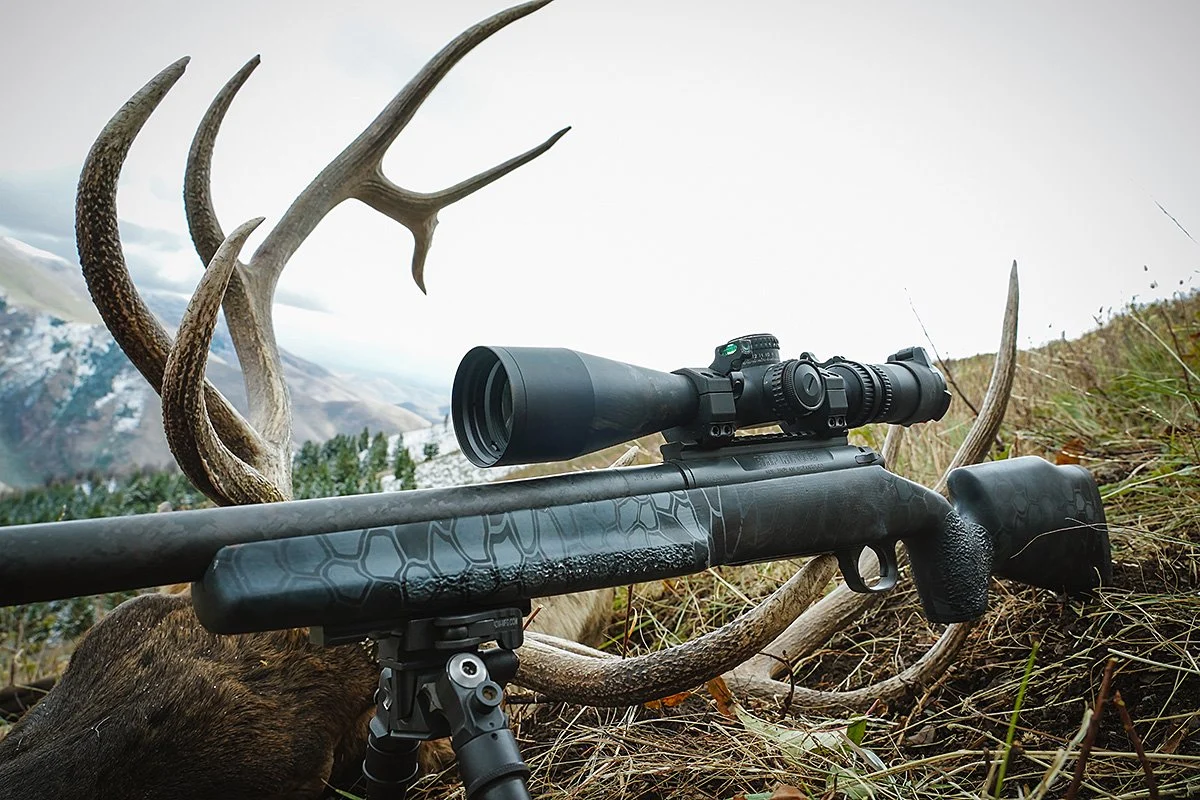
Availability is the main practical concern. Ammunition and rifles may not be as easy to find as .270 Winchester, .308 Winchester, .30-06, or .300 Winchester Magnum.
Best for: Experienced hunters who want strong 7mm performance and can maintain an adequate ammunition supply.
Main limitation: Cost and availability can make preseason practice less convenient.
9. 7mm PRC: Best Modern 7mm Elk Cartridge
The 7mm PRC is designed to work with modern, efficient hunting bullets. It can be a capable open-country elk cartridge for hunters who verify their rifle, ammunition, trajectory, and wind limitations.
Its modern design does not eliminate the fundamentals. It still creates significant recoil, and appropriate hunting ammunition may be less common or more expensive than established cartridges.
Best for: Experienced hunters building a modern open-country rifle system.
Main limitation: Additional cost and recoil without an automatic improvement in field accuracy.
10. .300 WSM: Best Short-Action Magnum
The .300 Winchester Short Magnum provides magnum-class performance in a short-action cartridge design. It is offered in mountain rifles and can use strongly constructed .30-caliber hunting bullets appropriate for elk.
Short action does not mean mild recoil. In a lightweight rifle, the .300 WSM can be uncomfortable for hunters who are sensitive to recoil.
Best for: Experienced hunters seeking a compact magnum rifle.
Main limitation: Sharp recoil and ammunition availability that may vary by location.
11. .300 PRC: Best Specialized Extended-Distance Option
The .300 PRC is designed around modern heavy bullets and specialized long-range rifle systems. It offers more capability than most hunters need for ordinary elk encounters.
Using such a cartridge responsibly requires advanced positional shooting, trajectory verification, wind judgment, recoil management, and a realistic understanding of how conditions affect a distant shot.
Best for: Highly practiced hunters with a specific extended-distance application.
Main limitation: Rifle weight, recoil, ammunition expense, and the temptation to exceed demonstrated field ability.
12. .338 Winchester Magnum: Best for Elk and Heavier Game
The .338 Winchester Magnum uses large, heavy bullets and is capable of handling elk and larger game. It may suit an experienced hunter who wants one rifle for elk, moose, and other heavy species.
It is not necessary simply because elk are large. Substantial recoil can reduce accuracy, slow recovery between shots, and limit productive practice.
Best for: Experienced hunters who can manage heavy recoil and have a broader large-game purpose.
Main limitation: Excessive recoil and power for many hunters and common elk-hunting situations.
Is There a Minimum Caliber for Elk?
There is no single minimum that applies everywhere. Wildlife agencies may define legal equipment by bullet diameter, centerfire status, cartridge dimensions, projectile type, energy, firearm type, or a list of permitted cartridges.
A caliber that is legal in one state may be prohibited in another. Requirements may also differ between rifle, handgun, muzzleloader, youth, private-land, and special-management hunts.
Before purchasing ammunition or traveling, verify:
- The correct state, province, or country
- The wildlife management unit or hunt area
- The specific elk season and license type
- The permitted firearm and cartridge
- Minimum bullet or bore requirements
- Expanding-projectile requirements
- Lead-free or other environmental restrictions
- Magazine, transport, and public-land rules
- Hunter-orange or fluorescent-pink requirements
How to Choose an Elk Cartridge
Start With Recoil You Can Control
A powerful cartridge provides no ethical advantage when recoil causes anticipation, poor trigger control, or inconsistent placement. Try the cartridge in a properly fitted rifle before buying when possible.
Rifle weight, stock dimensions, recoil pad, shooting position, bullet weight, and muzzle devices all affect the shooting experience. Lightweight backcountry rifles are easier to carry but often produce sharper felt recoil.
Match the Cartridge to Real Hunting Distance
Choose for the country you will actually hunt rather than the most distant shot imaginable. Timber hunters may benefit more from a compact, familiar rifle than from a specialized long-range system.
Open-country hunters still need accurate range estimation, a steady support, verified trajectory, and enough wind judgment to recognize when a shot should be declined.
Consider Rifle Fit and Carrying Weight
Elk hunting often involves steep terrain, long approaches, cold conditions, and significant elevation changes. A lighter rifle can reduce carrying fatigue, but reducing weight increases recoil and may make the rifle harder to hold steadily.
Check length of pull, comb height, grip reach, balance, sling compatibility, safety access, and whether you can operate the action while wearing gloves.
Verify Ammunition Availability
A less common cartridge may perform well on paper but become inconvenient when local stores do not carry the correct hunting load. Confirm access to enough identical ammunition for zeroing, field-position practice, final verification, and the hunt.
Do not save every round for the hunt and skip meaningful practice. Familiarity with the rifle is more important than owning a cartridge with impressive published specifications.
Use the Right Hunting Bullet
Elk bullet selection should emphasize reliable expansion and adequate penetration under the conditions for which the ammunition is designed. Common options include bonded bullets, partition-style bullets, expanding monolithic bullets, and other controlled-expansion big-game designs.
The ammunition manufacturer should explicitly recommend the bullet for elk or similarly sized game. Do not assume a target, match, varmint, or lightly constructed deer bullet will provide the desired performance.
Elk Bullet Construction Matters as Much as Caliber
| Bullet Category | General Purpose | What to Check |
|---|---|---|
| Bonded hunting bullet | Designed to keep the core and jacket together during expansion | Species recommendation and expected impact conditions |
| Partition-style bullet | Designed to combine expansion with continued penetration | Appropriate weight and compatibility with the rifle |
| Expanding monolithic bullet | Lead-free construction intended for controlled expansion | Twist rate, impact conditions, and local nonlead rules |
| Polymer-tipped big-game bullet | Aerodynamic profile with an expanding hunting design | Confirm that it is a big-game model rather than a target or varmint bullet |
| Target or match bullet | Primarily designed for target accuracy | Do not use unless the manufacturer explicitly approves it for the hunting application |
Official manufacturers distinguish between hunting and target projectiles. For example, Hornady describes its ELD-X as an expanding hunting bullet, while its ELD Match is identified as a target bullet. Similar names do not mean identical terminal design.
How Much Power Does an Elk Cartridge Need?
Hunters often search for a single energy or velocity threshold, but no isolated number guarantees a humane result. Published figures do not account fully for bullet construction, impact conditions, placement, angle, animal movement, wind, or shooter performance.
Use ammunition that its manufacturer recommends for elk-sized game and understand the distance window in which that bullet is designed to function. Then set a personal limit that is more conservative than the cartridge’s theoretical maximum.
Local regulations may establish a minimum specification, but legal minimum does not automatically mean ideal for every hunter or situation.
Ethical Range Is Determined by the Hunter
The name of the cartridge does not define ethical range. Your limit should reflect repeatable first-shot accuracy from realistic positions, not the smallest group you once fired from a bench.
Consider:
- The size of the vital area you can consistently hit
- Your cold-bore first-shot accuracy
- The steadiness of the available shooting position
- Wind direction and uncertainty
- Verified trajectory for the exact hunting load
- Visibility, vegetation, and the animal’s position
- Time available to identify the elk and evaluate the background
- Your ability to reach and recover the animal safely
If the elk is moving, partially obscured, at a poor angle, beyond your practiced limit, or standing without a safe background, do not shoot.
Shot Selection and Elk Recovery
A broadside presentation generally exposes the largest practical chest-vital area and is widely taught as a high-percentage opportunity for big game. A slight quartering-away presentation may also provide access to the vital area when the hunter understands the angle.
Avoid shots obstructed by brush, uncertain angles, unidentified animals, and presentations that provide little margin for error. A larger cartridge does not turn a marginal opportunity into a responsible one.
After firing:
- Maintain safe muzzle control and observe the elk’s reaction.
- Mark your shooting position and the animal’s location at the shot.
- Identify where the elk was last seen.
- Approach and track according to safe, legal recovery practices.
- Do not enter private property without permission.
- Contact an experienced tracker or local wildlife officer when appropriate.
- Make every reasonable, legal recovery effort.
Preparing Your Elk Rifle Before the Hunt
- Read the firearm manual. Learn the rifle’s controls, loading procedure, unloading procedure, and maintenance requirements.
- Inspect the system. Check the rifle, sling, optic, bases, rings, fasteners, and ammunition.
- Test several appropriate loads if practical. Select a manufacturer-recommended elk load that functions reliably and groups consistently.
- Establish and verify the zero. Confirm it at a safe range with an adequate backstop.
- Practice the cold-bore shot. The first shot is normally the one that matters during a hunt.
- Practice realistic positions. Use prone, sitting, kneeling, or supported standing positions when safely available.
- Confirm trajectory. Verify actual impacts rather than depending entirely on a calculator or box information.
- Practice with hunting equipment. Wear the clothing, backpack, gloves, and hearing protection you expect to use.
- Recheck after travel. Confirm zero if the rifle receives a significant impact or undergoes scope work.
Mountain-Hunt Considerations Beyond Caliber
Cartridge selection is only one part of elk preparation. A dependable navigation system, emergency communication plan, first-aid supplies, weather protection, water, insulation, and physical conditioning can be more important than a small difference in ballistic performance.
Before entering remote country:
- Leave a trip plan with a responsible person.
- Carry offline navigation and a backup method.
- Monitor weather and fire restrictions.
- Know your turnaround time.
- Plan how you will cool, process, and transport the meat.
- Account for the physical work required after a successful harvest.
- Stop when terrain, visibility, health, or weather becomes unsafe.
Common Elk-Caliber Mistakes
- Choosing a magnum to compensate for limited practice: More recoil often makes limited practice less productive.
- Ignoring bullet construction: A powerful cartridge does not make every projectile appropriate for elk.
- Using target ammunition for hunting: Accuracy alone does not confirm suitable terminal performance.
- Assuming one legal standard applies everywhere: Elk-equipment rules vary by jurisdiction and season.
- Buying an ultralight rifle without testing recoil: Reduced carrying weight can create a harsher shooting experience.
- Selecting an uncommon cartridge without checking supply: Limited ammunition can restrict practice and load testing.
- Using a ballistic app as proof of field ability: Calculations cannot reproduce every wind, position, or environmental variable.
- Taking a shot because an elk hunt is difficult: Time, expense, or effort never makes a marginal shot ethical.
- Failing to plan recovery: Hunters need a safe, legal plan for tracking and moving a large animal from the field.
- Neglecting rifle fit: Poor stock dimensions can make an otherwise suitable cartridge difficult to control.
What Not to Do
- Do not shoot at movement, sound, or an animal you cannot positively identify.
- Do not fire without knowing what is in front of and beyond the elk.
- Do not use ammunition that does not exactly match the rifle’s chamber designation.
- Do not assume a mechanical safety replaces safe muzzle and trigger discipline.
- Do not take a shot beyond your demonstrated field accuracy.
- Do not fire through brush or toward an unsafe background.
- Do not assume a cartridge is legal because another state permits it.
- Do not climb, cross obstacles, or enter a vehicle with a loaded firearm.
- Do not trespass while hunting or recovering an elk.
- Do not abandon a reasonable, safe, and lawful recovery effort.
Final Answer
When deciding what caliber for elk hunting, start with .270 Winchester, 7mm-08 Remington, .308 Winchester, .30-06 Springfield, 7mm Remington Magnum, and .300 Winchester Magnum. The .30-06 provides one of the strongest overall balances of ammunition selection, power, and manageable rifle size, while .270 and 7mm-08 suit recoil-conscious hunters. Magnum cartridges offer additional capability only when the hunter can control them and has a real need for their performance. Use a robust expanding hunting bullet, verify current regulations, practice from field positions, and pass any shot that exceeds your ability or lacks a safe background.
FAQs
1. What is the best overall caliber for elk hunting?
The .30-06 Springfield is one of the most balanced all-around choices because it supports numerous elk-capable hunting loads without requiring maximum magnum recoil.
2. What is the minimum caliber for elk hunting?
There is no nationwide minimum. Check the current regulations for the state, province, wildlife unit, season, firearm type, and land you will hunt.
3. Is .270 Winchester enough for elk?
Yes, it can be suitable with a strongly constructed hunting bullet, accurate placement, and responsible distance limits. It must also satisfy local regulations.
4. Is .308 Winchester good for elk?
Yes. The .308 is practical for elk at distances where the hunter has verified trajectory and accuracy. Choose an appropriate controlled-expansion big-game load.
5. Is .30-06 Springfield good for elk?
Yes. It is an established elk cartridge with broad ammunition availability and enough versatility for different terrain and other large-game species.
6. Is 6.5 Creedmoor enough for elk?
It can be where legal, but it requires a robust hunting bullet, disciplined shot selection, and conservative distance. It provides less margin than many larger cartridges.
7. Is 7mm-08 Remington suitable for elk?
Yes, within the hunter’s demonstrated ability and with suitable hunting ammunition. It appeals to people who want moderate recoil in a compact rifle.
8. Is 7mm Remington Magnum good for elk?
Yes. It is a capable open-country elk cartridge, but hunters should confirm that its recoil and blast do not reduce their accuracy.
9. Is .300 Winchester Magnum the best elk caliber?
It is an excellent option for experienced shooters, but not universally best. A hunter who controls a .30-06 or .308 more consistently may be better served by the milder cartridge.
10. Is .300 WSM good for elk?
Yes. It offers magnum-class capability in a short-action design. Recoil can be sharp in lightweight rifles, so test the complete setup before choosing it.
11. Is .300 PRC too much for elk?
It is capable but more powerful than most ordinary elk hunts require. It makes the most sense in a specialized rifle used by a highly practiced hunter.
12. Is .338 Winchester Magnum necessary for elk?
No. It can be useful for hunters pursuing elk and heavier game, but its substantial recoil is unnecessary for many elk applications.
13. Can .243 Winchester be used for elk?
Its legality and suitability are limited and controversial. Many jurisdictions or hunters prefer larger cartridges for elk because they provide more practical margin. Check official regulations and choose conservatively.
14. Is .25-06 Remington good for elk?
It has been used for elk, but it offers less margin than conventional elk cartridges. A larger option with a robust hunting bullet is generally the more flexible recommendation.
15. Is .300 Blackout suitable for elk?
It is generally not a preferred general-purpose elk cartridge because of its limited trajectory and performance compared with established elk options. Legality must also be verified.
16. Is .45-70 Government good for elk?
It can be suitable with the correct rifle-compatible hunting load at appropriate distances. Its curved trajectory requires careful range limits and verification.
17. What is the best low-recoil elk caliber?
The 6.5 Creedmoor, .270 Winchester, and 7mm-08 are common lower-recoil considerations. The best choice depends on legality, bullet construction, rifle fit, and expected distance.
18. What elk cartridge is best for beginners?
A .270 Winchester, 7mm-08, or .308 Winchester in a properly fitted rifle can be a practical starting point. The beginner should test recoil and obtain qualified instruction.
19. What caliber is best for elk in timber?
The .308 Winchester and .30-06 are practical timber choices. Compact rifle handling and safe shooting lanes matter more than having the flattest possible trajectory.
20. What caliber is best for open-country elk?
The .270 Winchester, 7mm Remington Magnum, 7mm PRC, and .300 Winchester Magnum are useful possibilities. Choose only as much recoil as you can control consistently.
21. Do I need a magnum rifle for elk?
No. Standard cartridges such as .270 Winchester, .308 Winchester, and .30-06 have practical elk applications. Magnums are optional tools, not requirements.
22. Is a larger caliber always more ethical?
No. Ethical performance requires appropriate ammunition, accurate placement, a safe presentation, and responsible recovery. Excess recoil can make a larger cartridge less effective in the hunter’s hands.
23. What bullet type is best for elk?
Use a manufacturer-recommended big-game bullet designed for controlled expansion and adequate penetration. Bonded, partition-style, and expanding monolithic bullets are common options.
24. Can I use match ammunition for elk hunting?
Do not assume that match ammunition is suitable. Use it only if the manufacturer explicitly recommends that exact projectile and load for elk-sized game.
25. Are copper bullets effective for elk?
Expanding monolithic copper or copper-alloy bullets can be effective when used within their intended conditions. They may also satisfy nonlead regulations where required.
26. Does bullet weight matter for elk?
Yes, but weight is only one factor. Construction, impact conditions, accuracy, cartridge design, and manufacturer recommendations are equally important.
27. How much energy is required for elk?
No universal energy number guarantees an ethical result. Follow legal minimums, manufacturer guidance, and a conservative personal range based on the complete rifle-and-ammunition system.
28. How far can a .308 ethically take an elk?
There is no responsible universal distance. The limit depends on the exact load, verified trajectory, impact conditions, wind, shooting position, and the hunter’s repeatable field accuracy.
29. How far can a 6.5 Creedmoor take an elk?
Its ethical limit should be conservative and based on the exact hunting bullet’s intended performance, local law, and demonstrated first-shot accuracy. Do not use a theoretical maximum.
30. How far can a .300 Winchester Magnum take an elk?
The cartridge may retain useful performance at considerable distance, but that does not establish the shooter’s ethical range. Wind, stability, identification, background, and recovery access remain limiting factors.
31. What range should I zero an elk rifle at?
The appropriate zero depends on the cartridge, load, sight height, terrain, and expected distance. Verify actual impacts at a safe range instead of relying solely on a calculator.
32. Can I use a different load after zeroing?
Not without rechecking. Different bullets and loads can change the point of impact, trajectory, recoil, and rifle function.
33. How accurate should an elk rifle be?
It should allow you to place a cold-bore first shot consistently within the elk’s vital area from realistic field positions at your chosen maximum distance.
34. Does rifle weight matter for elk hunting?
Yes. A lighter rifle is easier to carry but normally produces more felt recoil and may be harder to steady. Choose a balance you can carry and shoot well.
35. Should I use a muzzle brake on an elk rifle?
A brake may reduce recoil but increases perceived blast around the shooter. Follow manufacturer instructions and protect your hearing during practice and hunting.
36. Do suppressors change elk-caliber selection?
Where legally owned and used, a suppressor may reduce muzzle blast and alter rifle balance, but it does not replace hearing protection, safe handling, or cartridge suitability. Laws vary considerably.
37. Is ammunition availability important?
Yes. You need enough identical hunting ammunition to test function, establish zero, practice, verify trajectory, and complete the hunt responsibly.
38. Do I need lead-free ammunition for elk?
That depends on the jurisdiction and property. Check current wildlife-agency and land-manager regulations before buying or traveling with ammunition.
39. What is the safest shot angle on an elk?
A stationary broadside presentation generally offers a large, unobstructed chest-vital area. Hunters should decline obstructed, uncertain, moving, or poor-angle shots.
40. Where should I verify legal elk calibers?
Consult the current official regulations from the state or provincial wildlife agency and the applicable public-land manager. Confirm the hunt unit, season, license, firearm, and ammunition rules.