
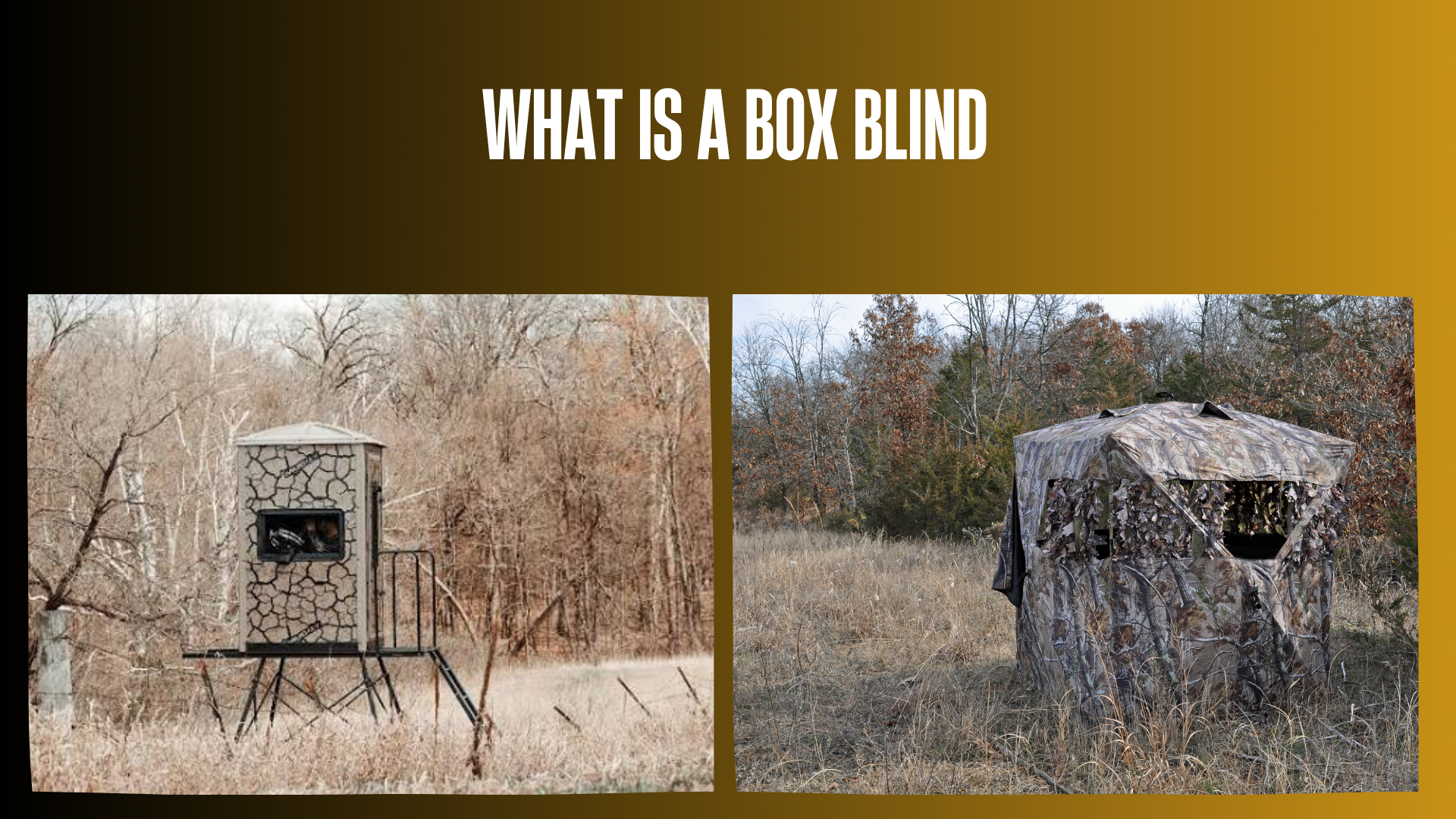

If you are new to hunting property, you may ask, what is a box blind? A box blind is an enclosed hunting shelter with rigid or semi-rigid walls, a roof, a floor, and shooting or viewing windows. It may sit directly on the ground or on a purpose-built tower, and hunters commonly use it to watch fields, food sources, travel corridors, and other legal shooting areas.
A box blind can conceal some movement, provide weather protection, and make long sits more comfortable. It does not make a hunter invisible, eliminate scent, create a safe shot, or guarantee that game will appear. Safe placement, lawful installation, positive target identification, a dependable backstop, and disciplined firearm or bow handling still control whether the setup is responsible.
Quick Answer: What Is a Box Blind?
A box blind is a fully or mostly enclosed hunting blind shaped like a small shelter, with windows through which a hunter observes and, when a lawful and ethical opportunity exists, shoots. Unlike a lightweight fabric ground blind, a box blind is usually more rigid and less portable. Some stand at ground level; others are elevated on towers. Before installing or using one, confirm landowner permission, current hunting and land-use rules, structural condition, safe access, window clearance, and every possible direction of fire.
Box Blinds at a Glance
| Feature | Typical Box Blind | What the Hunter Must Check |
|---|---|---|
| Structure | Rigid or semi-rigid walls, roof, floor, door, and windows | Damage, rot, loose fasteners, sharp edges, pests, and stability |
| Placement | Ground level or elevated on a tower | Permission, setbacks, soil, anchoring, access, and removal rules |
| Primary benefit | Movement concealment and protection from some weather | Visibility, ventilation, noise, wind, and realistic limitations |
| Shooting | Through designated windows | Muzzle or limb clearance, field of fire, target identification, and backstop |
| Mobility | Usually fixed or moved infrequently | Legal transport, equipment limits, helpers, and site disturbance |
| Common use | Deer hunting and observation from predictable locations | Species rules, seasons, tags, methods, baiting rules, and shooting hours |
Important Safety and Legal Notice
Rules for blinds vary by state, wildlife area, refuge, county, season, and landowner. A permanent structure may be allowed on one private property but prohibited on nearby public land. Some agencies allow only portable blinds, require daily removal or owner identification, limit dates, restrict vegetation cutting, or require blaze orange or fluorescent material on the outside. Official regulations override general online advice.
Check the current state wildlife regulations and the rules of the specific land-management agency before transporting, installing, leaving, or occupying a blind. Get written landowner permission where appropriate. Confirm property boundaries, licenses, tags, legal methods, shooting hours, hunter-orange requirements, baiting rules, and road or dwelling setbacks. For example, Wisconsin DNR-managed land rules include location- and season-specific blind provisions, while individual National Wildlife Refuges may prohibit permanent blinds and require daily equipment removal. Those examples are not nationwide rules.
Apply the four primary firearm-safety rules inside a blind:
- Treat every firearm as if it is loaded.
- Keep the muzzle pointed in a safe direction.
- Keep your finger outside the trigger guard until ready to shoot.
- Be certain of your target and what is beyond it.
A wall does not turn an unsafe direction into a safe one. Never allow a muzzle to cover another occupant. Do not rest a muzzle against a window frame, and do not fire unless the projectile, muzzle blast, bow limbs, broadhead, and accessories have safe clearance. Follow the firearm, ammunition, bow, blind, tower, ladder, and fall-protection manufacturers’ instructions.
What Is a Box Blind in Hunting Terms?
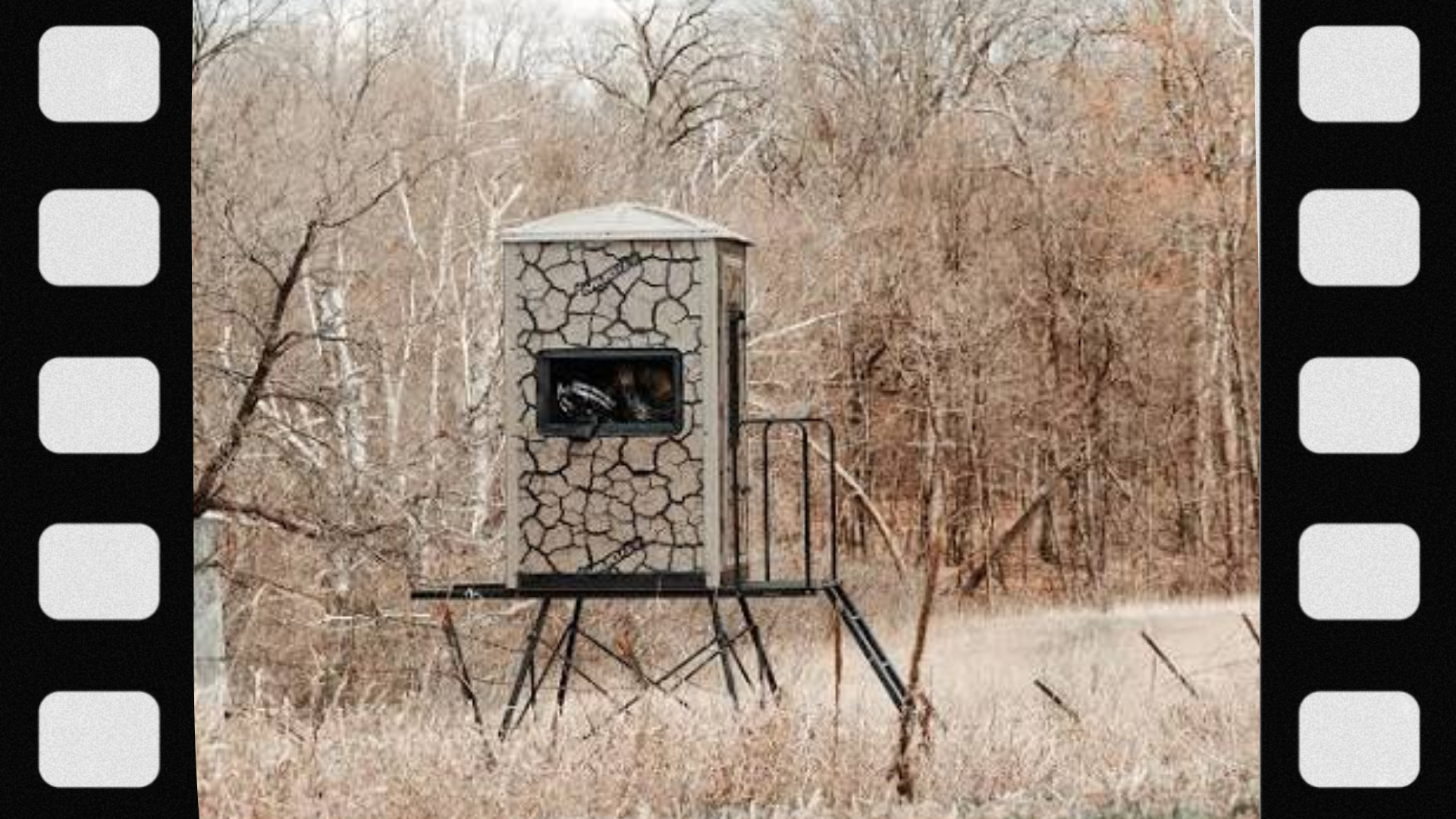
“Blind” is the broad hunting term for concealment that reduces the chance of wildlife seeing a hunter. A box blind is the enclosed, shelter-like version. It normally has a door, a solid floor, and closable windows. Construction varies widely: some models use molded synthetic panels, while others use metal, wood, or composite panels. The name describes the general form, not one required material, dimension, height, or level of insulation.
A box blind may also be called a shooting house, deer blind, hunting shack, permanent blind, or enclosed tower blind. Regional language is inconsistent. “Shooting house” often means the same thing, while “tower blind” usually emphasizes that the enclosure sits on an elevated platform. The legal definition on a particular property may differ from everyday hunting language.
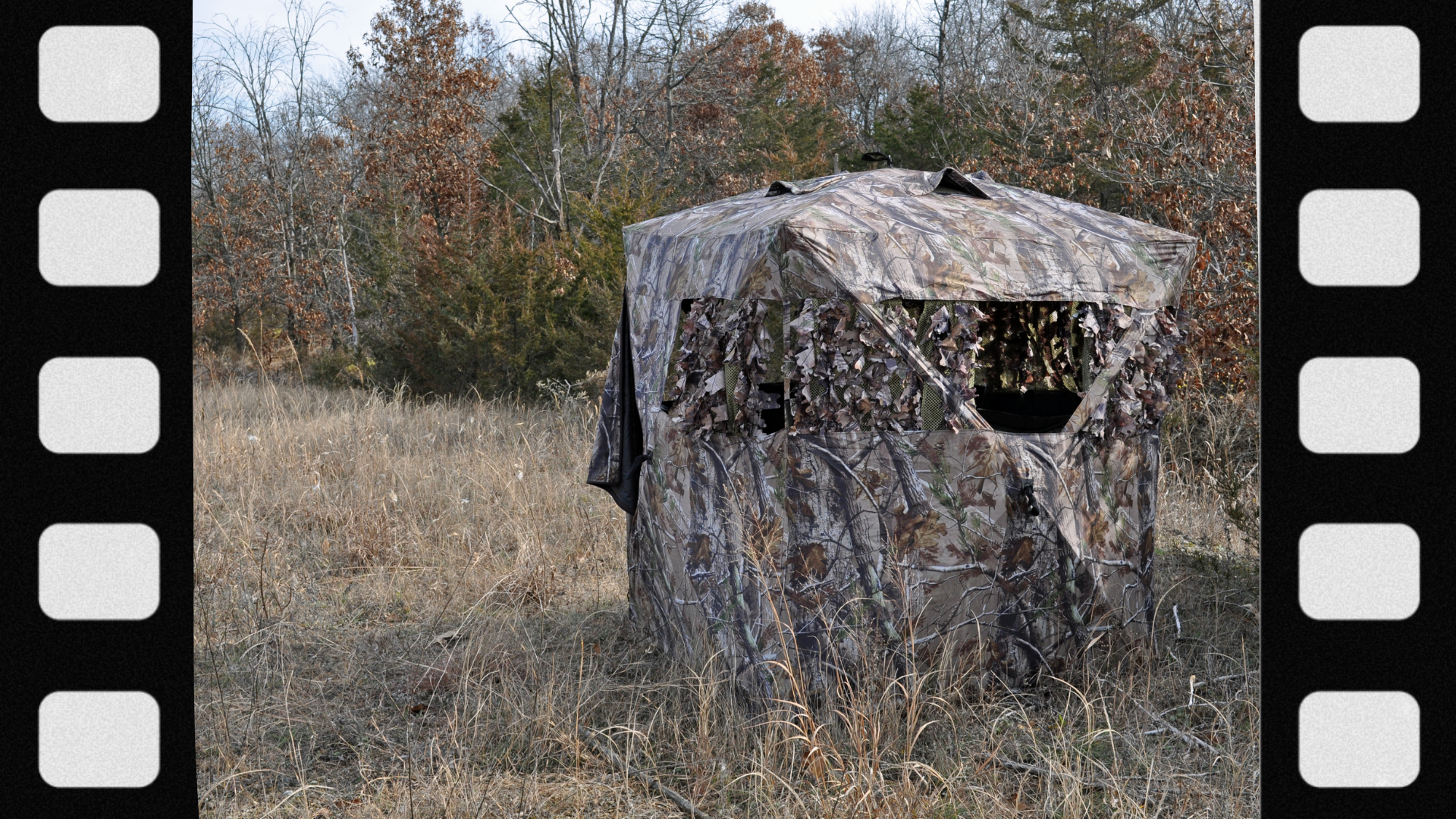
The national hunter-education material on ground blinds describes ground concealment ranging from natural cover to enclosed camouflage-fabric structures. A hard-sided box blind at ground level is therefore a type of ground blind in the broad sense, but hunters commonly distinguish a rigid box blind from a collapsible pop-up blind.
How Does a Box Blind Work?
The walls break up the visible outline of the occupants and hide much of their small movement. Windows create controlled observation and shooting openings. A roof and walls reduce exposure to rain, wind, sun, and snow, although the amount of protection depends on design, condition, orientation, and whether windows remain open.
Most hunters enter before the period they expect wildlife activity, organize equipment quietly, and watch through only the windows needed for the setup. Closing unused windows can reduce visible movement and light, but it does not seal human odor inside. Every opening, seam, door movement, and air-current change can release scent. Wind direction and thermals still matter.
The blind is only an observation location. It does not establish where an animal will travel, make an obstructed shot ethical, or confirm what lies beyond vegetation. Wildlife use changes with food, cover, season, weather, breeding behavior, hunting pressure, and individual behavior. Scout lawfully, look for current sign, and be willing to leave without shooting.
Box Blind vs. Ground Blind, Tree Stand, and Tower Blind
| Setup | Basic Form | Common Strength | Main Limitation or Risk |
|---|---|---|---|
| Box blind | Rigid enclosed shelter on ground or tower | Weather protection and movement concealment | Heavy, conspicuous, site-specific, and often regulated |
| Pop-up ground blind | Portable fabric enclosure on the ground | Fast relocation and compact transport | Less durable; wind, visibility, and fire risks require care |
| Natural blind | Existing vegetation or legal temporary natural material | Low equipment burden | Little weather protection; cutting vegetation may be prohibited |
| Tree stand | Open platform attached to or supported near a tree | Elevated view with less visual bulk | Serious fall exposure and limited weather protection |
| Tower blind | Blind or seat supported by a freestanding tower | Elevated sightline without depending on a tree | Climbing, structural, anchoring, and fall hazards |
These categories overlap. A box blind raised on legs is also an elevated or tower blind. A small rigid blind placed directly on the soil is both a box blind and a ground blind. Choose terminology that communicates the actual risk: if a person can fall from the platform or access system, treat it as elevated regardless of its marketing name.
Why Hunters Use Box Blinds
Protection from some weather
Walls and a roof can reduce wind and precipitation, making it easier to remain attentive during a long sit. Protection is not complete. Leaks, condensation, extreme heat, cold, lightning, wildfire, flooding, and falling branches can still make a blind unsafe. Dress for the actual forecast and have a safe exit plan.
Concealment of normal movement
A hunter can shift carefully, use binoculars, or assist a new hunter with less visible movement than on an open platform. Window discipline remains important. Sudden silhouettes, shiny equipment, loud chairs, and a face placed directly in a bright opening can still be noticed.
Space for a companion or mentor
A correctly sized box may accommodate a youth hunter, mentor, camera operator, or hunting partner. Capacity depends on the manufacturer and floor design, not appearance. Every occupant needs a safe seating position and a clearly assigned field of fire. Crowding increases the chance of muzzle, broadhead, trip, noise, and communication problems.
Potential accessibility
A ground-level blind with a firm approach, wide door, adequate turning space, and suitable windows may improve access for some hunters with limited mobility. “Ground level” does not automatically mean accessible: mud, thresholds, narrow doors, uneven floors, and steep ramps can be barriers. Some public hunting areas provide reservable accessible blinds; contact the managing agency rather than assuming availability.
Stable observation location
A blind kept in one lawful location can provide a repeatable place to monitor a field edge, crossing, or habitat opening. Repeatability helps with known distances and preplanned safe zones, but conditions change. Recheck livestock, roads, homes, equipment, vegetation, workers, and other hunters every time.
Limitations Beginners Often Overlook
- It is not scent-proof. Air moves through windows, doors, vents, and seams, and odors attach to equipment and access routes.
- It is not automatically quiet. Hinges, latches, chairs, loose panels, floors, and window tracks can make sharp sounds.
- It can restrict vision. Walls and narrow windows create blind spots where people, animals, or changing hazards may go unnoticed.
- It can restrict equipment. Bow limbs, crossbow limbs, suppressor length where lawful, long barrels, and rests require real clearance.
- It may be difficult to move. Relocation can require machinery, helpers, and land disturbance; improvised lifting is dangerous.
- Wildlife may react to it. A new structure can change local behavior, especially when installed suddenly or approached repeatedly.
- It requires maintenance. Moisture, UV exposure, animals, insects, corrosion, rot, and storm damage can degrade the structure.
- It can encourage complacency. Comfort never replaces alertness, target identification, legal shooting time, or an ethical shot decision.
Ground-Level or Elevated Box Blind?
A ground-level box avoids the climbing exposure of a tower and may be easier to enter, service, or evacuate. It can also blend into cover and accommodate an access route. Its lower view may be blocked by crops, brush, terrain, or snow, and the line of sight can be nearly level with roads, people, buildings, livestock, or distant property.
An elevated box can see over some vegetation and may create a more downward shooting angle in certain directions. Elevation does not guarantee a safe backstop: a shot across a valley, toward a ridge line, or from a shallow angle can still travel beyond the intended target. The tower adds foundation, wind-loading, ladder or stair, handrail, platform, anchoring, and fall considerations.
The National Hunter Safety Course material on elevated stands identifies falls as the leading injury or fatality hazard for elevated platforms. Inspect an elevated box and access system before every use, follow the manufacturer’s limits, maintain three points of contact, and use the specified fall-protection system. Never climb while carrying a loaded firearm or exposed broadhead. Use a haul line only after you are secured, following hunter-education and manufacturer guidance.
How to Choose a Responsible Location
- Confirm legal authority first. Verify ownership, written permission, structure rules, dates, identification, removal requirements, and any permits before disturbing the site.
- Map every unsafe direction. Identify roads, trails, homes, barns, neighboring property, livestock areas, parking locations, work zones, camps, waterways, and places people may appear.
- Choose a real backstop. Plan shots only where the projectile will enter safe terrain after passing through or missing the target. Brush, a blind wall, sky, or distant woods is not a dependable backstop.
- Study access. Use a route that avoids trespass, unstable slopes, hidden ditches, agricultural operations, and unnecessary disturbance to wildlife.
- Evaluate the ground. Flood-prone soil, erosion, frost movement, soft shoulders, and steep grades can compromise stability. Use qualified help for foundations and towers.
- Consider wind and sun. Prevailing wind affects scent, while low sun through a window can reduce visibility. Neither factor should override a safe field of fire.
- Match windows to the method. A bow needs vertical and lateral limb clearance; a firearm needs safe muzzle clearance and a stable position that does not contact the barrel.
- Protect habitat. Do not cut trees, clear shooting lanes, drive off-road, dig, or install anchors unless the owner and managing authority allow it.
A location can appear productive but still be unsuitable because of the background or access. Move the blind, close a window, or prohibit a direction of fire rather than trying to justify a marginal angle.
Safe Firearm Use Inside a Box Blind
Before the hunt, agree on safe muzzle directions and which person may use each window. Keep firearms unloaded until everyone is settled and it is legal and appropriate to load. Follow the firearm manual for loading, unloading, and chamber status. If the blind is cramped, load and unload one firearm at a time while all occupants pay attention.
Keep the muzzle inside the blind until preparing for a lawful shot, unless the manufacturer and range setup require another safe procedure. Do not let the muzzle sweep a companion while moving between windows. Control the firearm with both hands as needed, keep the finger indexed outside the trigger guard, and confirm that clothing, gloves, straps, window curtains, and gear cannot enter the trigger guard.
Muzzle blast in an enclosure can be extremely loud, and nearby walls may increase the perceived report. Every occupant should use suitable hearing protection; eye protection is also prudent. Never assume a window opening is large enough. Make sure the muzzle is forward of obstructions as directed by the firearm manufacturer, while never sacrificing control or extending it toward a person outside.
Do not shoot at sound, shape, movement, or an animal seen only partly through brush. Identify the species and legal animal, verify what is in front of and beyond it, and stay within the range at which you have demonstrated accuracy from the actual seated position. If another hunter, vehicle, worker, dog, livestock animal, or uncertainty enters the field of fire, do not shoot.
Bow and Crossbow Use in a Box Blind
A blind that works for a rifle may not work for a vertical bow or crossbow. Practice with an unloaded training setup or otherwise rendered-safe equipment according to manufacturer guidance before the season. Confirm that bow limbs, cams, strings, crossbow limbs, stirrups, broadheads, rests, and accessories cannot strike a wall, roof, chair, or window.
Keep broadheads covered until needed, never dry-fire a bow or crossbow, and follow the manufacturer’s cocking and decocking instructions. A window edge can change posture and tempt the hunter into an unfamiliar shot. If the required position is awkward or the limb path is uncertain, pass the opportunity.
Ventilation, Heat, and Fire Safety
An enclosed blind can become dangerously hot in sun or accumulate condensation in cold weather. Use designed vents, monitor occupants for heat or cold stress, drink water, and leave if anyone becomes dizzy, confused, unusually sleepy, nauseated, or otherwise unwell. Do not lock or block the only exit.
Open flames and fuel-burning heaters create fire, burn, oxygen-depletion, and carbon-monoxide hazards. Never improvise a stove or heater. Use a device only if its manufacturer explicitly permits that exact enclosed-space application, maintain required clearances and ventilation, and follow all land fire restrictions. A carbon-monoxide alarm is an added warning device, not permission to use an unsuitable heater. Fuel, ammunition, dry grass, fabrics, and synthetic panels must be protected from heat and flame.
Battery packs and electrical equipment also need inspection. Do not use swollen batteries, damaged wiring, or unprotected connections. Remove damaged equipment and keep the doorway clear for emergency exit.
Preseason Box-Blind Inspection Checklist
- Confirm current permission, blind rules, dates, and owner-identification requirements.
- Inspect the foundation, anchors, legs, braces, platform, ladder or stairs, rails, walls, floor, roof, and fasteners.
- Look for rot, corrosion, cracks, water intrusion, loose panels, storm damage, leaning, and soil movement.
- Check for wasps, bees, rodents, snakes, birds, nests, droppings, and other wildlife before entering.
- Test the door, latches, windows, hinges, and emergency exit without creating entrapment.
- Verify manufacturer labels, occupant capacity, weight limits, anchoring, and fall-protection instructions.
- Remove clutter and tripping hazards without disturbing wildlife habitat unlawfully.
- Recheck every field of fire, backstop, property line, road, trail, building, and neighboring activity.
- Measure or confirm distances from the seated position; do not rely on memory from a previous season.
- Practice quiet entry, seating, communication, firearm handling, and emergency exit with unloaded equipment.
- Tell a trusted person the blind location and return plan, especially where cell service is unreliable.
What to Bring Into a Box Blind
You do not need the most expensive equipment to hunt responsibly. Choose gear based on the species, terrain, weather, local regulations, fit, safety, reliability, maintenance requirements, and your actual experience.
| Category | Examples | Purpose |
|---|---|---|
| Required items | License, tags, permits, hunter orange where required, and land-access documents | Legal compliance |
| Safety | Hearing and eye protection, first-aid kit, light, communication, fall protection for elevated access | Prevent or respond to foreseeable hazards |
| Weather | Appropriate layers, rain protection, water, sun protection | Stay alert and avoid heat or cold illness |
| Observation | Binoculars and lawful rangefinder | Identify game and evaluate distance without pointing a firearm |
| Organization | Quiet chair, covered broadheads, secured pack, small trash bag | Reduce noise, clutter, and trip hazards |
| Emergency planning | Offline map, charged phone or suitable communicator, whistle, emergency contact plan | Navigate and request help |
Keep the floor and doorway clear. Secure items so they cannot roll underfoot, fall from an elevated platform, strike the trigger, or obstruct an exit. Pack out all trash and spent cases where retrieval is safe and required.
Common Box-Blind Mistakes
- Installing first and checking rules later. Get permission and read the current property rules before bringing materials or equipment.
- Assuming elevation equals a backstop. Inspect each intended angle from the exact seat and window.
- Opening every window. Use only the openings needed while maintaining adequate ventilation and awareness.
- Setting the barrel on a hard window frame. Use a stable, manufacturer-compatible support that does not contact the barrel or compromise muzzle control.
- Ignoring changes since last season. New homes, workers, cattle, trails, vegetation, erosion, or neighboring blinds can invalidate an old shooting plan.
- Overcrowding. Stay within the structure’s limits and ensure each person has a safe zone and exit route.
- Leaving food and trash. It attracts pests, creates odor, and violates Leave No Trace principles or property rules.
- Using an unsafe heater. Enclosure comfort is never worth fire or carbon-monoxide exposure.
- Skipping practice. A seated shot through a window can differ from a range bench; practice lawfully with the same safe position.
- Treating the blind as storage. Firearms, ammunition, fuel, valuables, and gear may face theft, moisture, unauthorized access, or legal storage issues.
What Not to Do in or Around a Box Blind
- Do not occupy, alter, or claim a blind that you do not own or have permission to use.
- Do not build a permanent blind on public land unless the managing authority explicitly allows it.
- Do not cut vegetation, drive off designated routes, dig footings, or attach hardware to trees without authorization.
- Do not climb with a loaded firearm or an exposed broadhead.
- Do not point a firearm at another occupant while changing windows or positions.
- Do not shoot through glass, screen, mesh, or a partly closed window unless the equipment manufacturer expressly designed and approved that arrangement.
- Do not use the blind wall, brush, fog, darkness, or distance as a substitute for knowing the target and background.
- Do not shoot toward roads, trails, homes, vehicles, livestock, people, or an unsafe backstop.
- Do not trespass to enter the blind or recover game.
- Do not stay during lightning, wildfire, flooding, structural movement, severe wind, medical symptoms, or any condition that makes exit unsafe.
Is a Box Blind Right for a Beginner?
A box blind can be a useful learning environment when a responsible mentor controls the setup. It offers a defined seating area and can hide some movement while the beginner learns observation, patience, target identification, and communication. It may also make bad habits easier to overlook, so the mentor should establish loading status, safe muzzle direction, fields of fire, and a clear “do not shoot” rule before hunting begins.
Complete hunter education and practice from a comparable position before hunting. Learn how to decline a shot without pressure. A beginner should be able to explain the legal target, safe background, range, firearm or bow condition, and recovery plan before being expected to act.
How to Use a Box Blind Ethically
Ethical use begins with lawful access and fair-chase rules. Positioning a blind does not justify baiting where prohibited, disturbing protected habitat, monopolizing public land, or interfering with another hunter. On public land, a blind may remain available to others even when privately owned, depending on the jurisdiction. Marking it does not necessarily reserve the surrounding area.
Limit shots to positively identified legal game, safe angles, and the distance at which you can place the projectile accurately under field conditions. Avoid marginal presentations and rushed decisions. After a shot, observe carefully, mark the last location, follow current recovery rules, and make every reasonable lawful effort to recover the animal. Never cross a property boundary without permission.
Minimize habitat damage, pack out waste, follow removal deadlines, and maintain the structure so it does not become dangerous litter. A box blind should support responsible hunting—not transfer risk or cleanup costs to landowners, wildlife managers, or other visitors.
Final Answer: What Is a Box Blind?
A box blind is an enclosed, usually rigid hunting shelter with a floor, roof, walls, door, and viewing or shooting windows. It may be placed on the ground or elevated on a tower. Its main benefits are concealment of movement, some weather protection, and a stable observation location; its limitations include restricted visibility, scent and noise leakage, maintenance, difficult relocation, and additional fall risk when elevated.
Before using one, verify current land and hunting regulations, obtain permission, inspect the entire structure, define safe fields of fire, confirm a real backstop, and practice with the intended equipment. Keep firearms unloaded during climbing or entry as appropriate, maintain muzzle control, identify the target and everything beyond it, and pass any uncertain shot. The blind adds shelter—not certainty, permission, or safety by itself.
FAQs
1. What is another name for a box blind?
Common names include shooting house, deer blind, hunting shack, enclosed blind, and tower blind when elevated. Meanings vary by region, so describe whether it is rigid, enclosed, ground-level, or elevated when safety or regulations matter.
2. Is a box blind the same as a ground blind?
A ground-level box blind is a type of ground blind, but hunters often use “ground blind” to mean a portable fabric pop-up. A box blind is normally rigid and intended to remain in one location longer.
3. Is a box blind the same as a tree stand?
No. A tree stand is generally an open platform placed in or against a tree. A box blind is enclosed and may sit on the ground or a freestanding tower. An elevated box still presents fall hazards.
4. What animals are box blinds used to hunt?
They are commonly associated with deer, but may be used for other lawful species where the method, location, and field of fire are suitable. Check species-specific regulations, seasons, permitted equipment, and land rules.
5. Are box blinds legal on public land?
It depends on the exact property. Many public areas restrict permanent structures, dates, marking, vegetation cutting, or overnight placement; some allow only portable blinds. Read both wildlife regulations and site-specific land-management rules.
6. Do I need landowner permission for a box blind?
Yes, on private land you need the landowner’s authorization to enter and install or use the structure. Permission to hunt does not necessarily include permission to build, cut vegetation, drive equipment, or leave property behind, so clarify the terms.
7. Can other hunters use my box blind on public land?
Possibly. Some jurisdictions state that placing a blind on public land does not reserve the structure or surrounding location. Check the specific rule and avoid confrontations; ownership of equipment does not create ownership of public ground.
8. Does a box blind block human scent?
It may reduce direct airflow under some conditions, but it is not scent-proof. Odor escapes through windows, vents, doors, seams, equipment, and the access route. Wind and thermal currents still matter.
9. Do deer need time to get used to a box blind?
Wildlife responses vary. Some animals may avoid a new structure, while others show little reaction. Install only when lawful, minimize disturbance, and avoid assuming a particular adjustment period guarantees normal movement.
10. Is a box blind safer than a tree stand?
A ground-level box removes most climbing exposure, but it still has firearm, fire, visibility, trip, structural, and access risks. An elevated box has a fall hazard and requires the same serious attention to safe climbing and fall protection as other elevated platforms.
11. Do I need a safety harness in an elevated box blind?
Follow the blind, tower, ladder, and fall-arrest manufacturer instructions. Use the specified full-body fall-protection system whenever exposure exists, particularly during climbing, transition, inspection, or work outside the enclosure. Enclosed walls do not protect the approach.
12. Can I climb into a box blind with a loaded rifle?
No. Keep the firearm unloaded while climbing and entering an elevated stand, maintain a safe muzzle direction, secure yourself, and use an appropriate haul line according to hunter-education and manufacturer guidance. Never pull a firearm up by its trigger guard.
13. Can I shoot a bow from a box blind?
Yes, if lawful and if the blind provides enough opening and limb clearance for the exact bow and shooting posture. Test the geometry safely before hunting. Never allow limbs, cams, string, arrow, or broadhead to contact the blind.
14. Can I shoot a crossbow from a box blind?
Only when legal and when both limbs and all accessories clear the window and walls throughout the shot. Crossbow width can be deceptive from the shooter’s viewpoint. Follow the manufacturer’s cocking, loading, shooting, and decocking instructions.
15. Should the rifle barrel stick out of the blind?
The muzzle must have safe clearance from the wall, frame, and occupants, but positioning depends on the firearm and blind instructions. Never rest the barrel on a hard surface or extend it where a person outside could approach unseen.
16. Why is hearing protection important in a box blind?
Firing inside a small hard-walled enclosure can expose every occupant to damaging impulse noise. Use suitable hearing protection and ensure companions have it in place before loading or preparing for a shot.
17. Can I use a heater in a box blind?
Only use equipment whose manufacturer explicitly approves the exact setting and follow ventilation, clearance, fuel, and supervision instructions. Fire and carbon monoxide can be fatal. Never improvise a heater, and leave immediately if anyone feels unwell.
18. How high should a box blind be?
There is no universal best height. Terrain, vegetation, safe backstop, access, engineering, wind exposure, local rules, and user mobility all matter. Greater height can improve sightlines but increases structural and fall consequences.
19. Where should a box blind face?
Face usable windows toward lawful observation areas and safe backstops, away from roads, homes, trails, neighboring property, livestock, and routine access. Sun and prevailing wind matter, but neither should override safe shooting geometry.
20. How far should a box blind be from a property line or road?
Setbacks vary by jurisdiction and sometimes by weapon, road type, building, or land agreement. Do not guess. Check current wildlife law, local ordinances, deed or lease terms, and the specific land manager’s rules.
21. Should I leave windows open all season?
Not automatically. Open windows can admit weather and animals, increase deterioration, and reveal the interior. Follow the manufacturer’s storage and ventilation instructions and inspect every opening before use.
22. How often should a box blind be inspected?
Inspect it before the season, after severe weather, after long periods without use, and before every entry for obvious damage or animals. Elevated structures and access systems need especially careful checks. Obtain qualified evaluation when stability is uncertain.
23. Can I build a box blind myself?
Only where authorized and if the design, materials, foundation, wind resistance, access, guarding, and load capacity are competently planned. An elevated homemade structure can fail catastrophically. Use engineered plans or qualified professional help and comply with applicable codes and land rules.
24. Are box blinds good for youth hunters?
They can provide shelter and room for supervision, but only with an attentive adult mentor, safe seating, hearing and eye protection, clear muzzle rules, and equipment fitted to the youth. The mentor should control pace and remove pressure to shoot.
25. Are box blinds accessible for wheelchair users?
Some are, especially purpose-built ground blinds with firm routes, level entries, appropriate doors, turning space, and window heights. Verify actual dimensions and surface conditions. Ask wildlife agencies about reservable accessible blinds and permits.
26. Does hunter orange need to be displayed on a box blind?
Requirements vary. Some states or properties require visible fluorescent material on blinds during certain firearm seasons, while others treat blind marking differently. Check the current rule for the exact season and land.
27. Can I leave gear or a firearm in a box blind?
Leaving equipment can invite theft, corrosion, wildlife damage, unauthorized access, and rule violations. Firearms require secure storage consistent with local law and household circumstances. A remote blind is generally not a substitute for controlled storage.
28. How do I keep a box blind quiet?
Inspect and maintain hinges, latches, windows, floors, chairs, and loose gear before the season. Use only safe, nonflammable, manufacturer-compatible materials. Practice movements slowly, but never let noise concerns delay an urgent safe exit.
29. Is a box blind suitable for public-land mobile hunting?
Usually not. Its weight and semi-permanent nature make it better suited to approved fixed locations. Portable fabric blinds or natural concealment may offer more mobility where legal, but daily removal and marking rules may still apply.
30. What is the most important thing to remember about a box blind?
It is shelter and concealment, not a safety system. Permission, structural inspection, safe access, muzzle control, positive target identification, a reliable backstop, lawful equipment, and sound judgment remain the hunter’s responsibility.
Read more: