
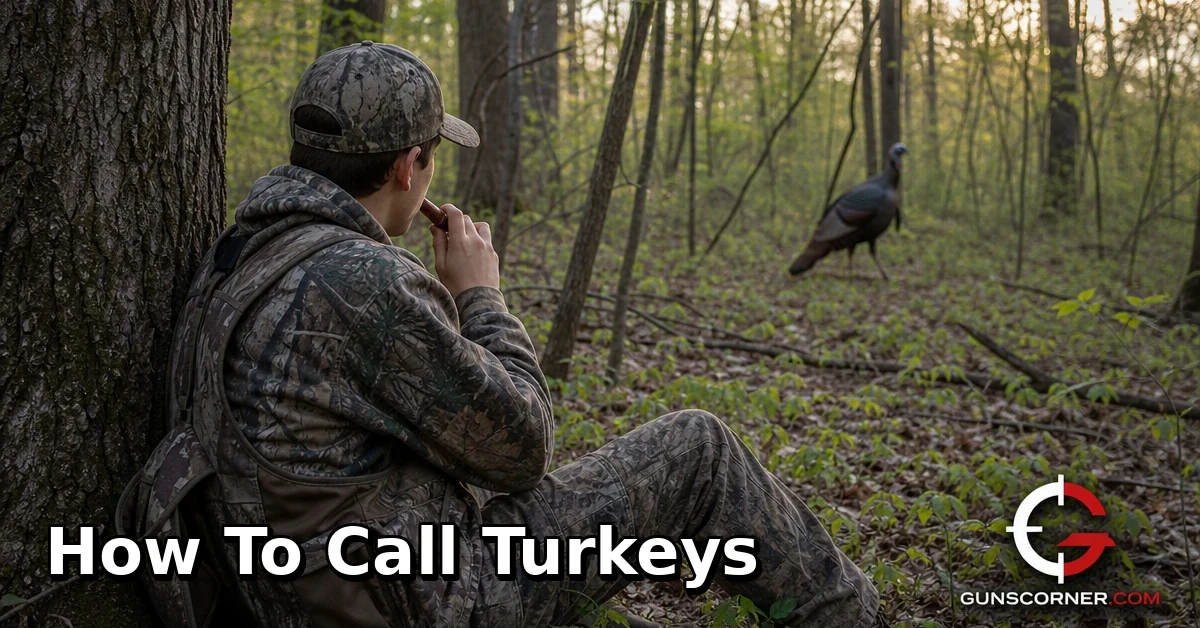

Learning how to call turkeys is less about making the loudest sound and more about choosing a believable call for the situation. This guide explains essential turkey vocalizations, beginner-friendly calls, spring and fall strategies, scouting, safe setups, legal considerations, and ethical shot decisions.
To call turkeys effectively, learn a few basic sounds—especially the yelp, cluck, purr, cut, and cackle—then practice reproducing their rhythm and volume with a call you can operate reliably. Scout legal ground, set up with cover and a safe shooting direction, and call sparingly while interpreting the turkey’s response. Always verify current regulations, identify your target and background, and never approach an unseen turkey sound. Calling can improve your opportunities, but it cannot guarantee that a turkey will approach.
Important Legal and Safety Notice Before You Hunt
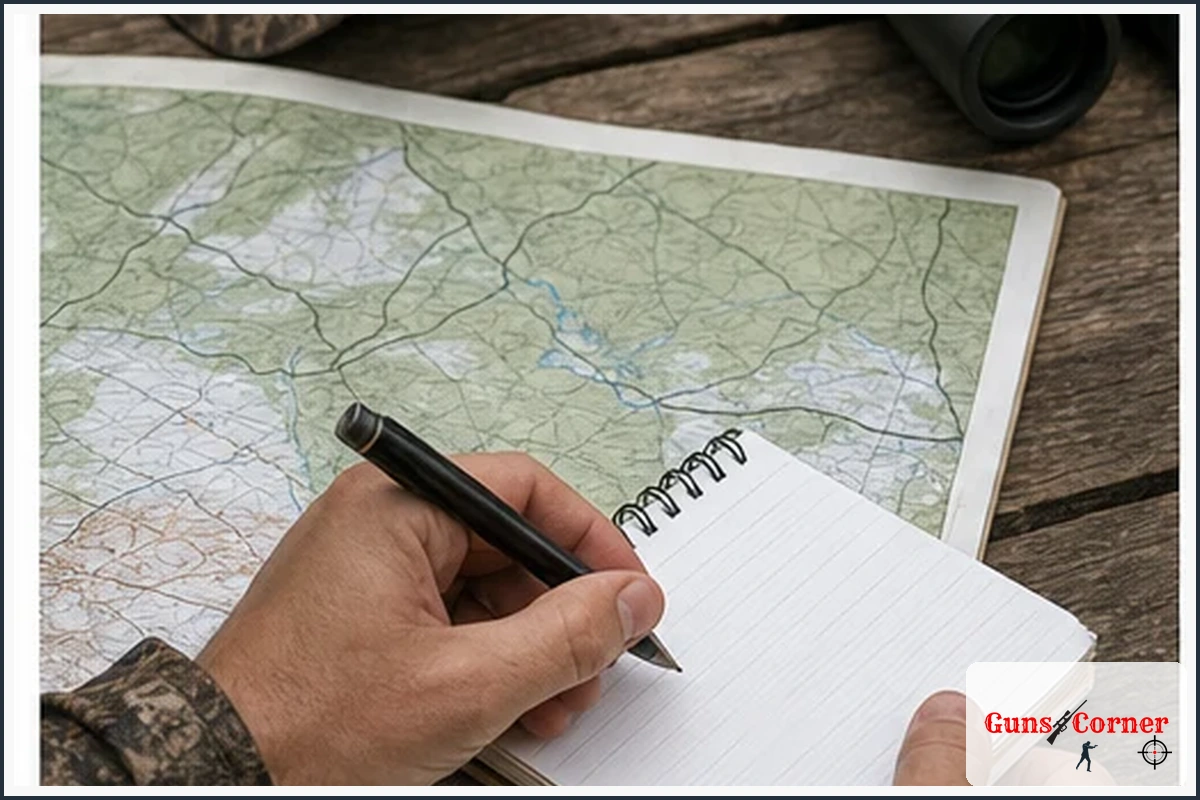
Turkey regulations vary by state, province, wildlife-management unit, season, and land type. Before hunting, check your official wildlife agency for current license and permit requirements, tags, season dates, legal hours, bag limits, equipment rules, call restrictions, reporting requirements, and public-land regulations.
- Carry the required hunting license, permit, and turkey tag.
- Confirm legal seasons, shooting hours, bag limits, and harvest-reporting rules.
- Use only legal firearms, archery equipment, ammunition, and calls.
- Verify public-land boundaries or obtain private-land permission.
- Wear required hunter orange or visibility clothing when traveling or where regulations require it.
- Keep the firearm pointed in a safe direction and identify the complete target and what lies beyond it.
- Plan for weather, navigation, hydration, communication, and emergencies.
- Complete a hunter-education course and hunt with an experienced mentor when possible.
How Turkey Calling Works: Match the Sound to the Situation
What callers are trying to imitate: contact, assembly, breeding, alarm, and contentment sounds
Turkey calls imitate vocalizations used for contact, flock communication, breeding interaction, alarm, and contentment. A yelp commonly serves as a contact-style sound, while clucks and purrs are softer sounds associated with relaxed communication. Cutting is sharper and more excited, and a cackle may be associated with leaving a roost or flying down.
These categories are useful learning tools, not rigid rules. Wild turkeys vary by individual, season, flock, terrain, and social situation. Use the sound that fits what you are observing rather than following a fixed script.
Why a gobbler’s response is not proof that it will approach
A gobble confirms that a turkey heard or noticed something, but it does not prove the bird is committed to your location. It may be moving toward real hens, staying with its flock, waiting for another turkey, or remaining separated by terrain, fences, roads, or private property.
Use a response as information. Listen for direction, distance, changes in timing, and movement clues. Avoid assuming that more calling will solve every problem.
Spring versus fall: different flock and hunting situations
Spring turkey hunting often focuses on locating and communicating with gobblers during the breeding season, subject to local regulations. Fall hunting may involve locating or reassembling scattered flocks, so flock-contact sounds and patient observation can be more useful than automatically repeating spring tactics.
Because seasons and permitted methods vary, confirm your local rules before choosing a calling strategy.
Eastern, Rio Grande, Merriam’s, Gould’s, and Osceola considerations
These commonly recognized wild turkey subspecies occupy different regions and habitats, and local birds can vary in vocal quality, behavior, and response to pressure. Eastern, Rio Grande, Merriam’s, Gould’s, and Osceola turkeys should not be treated as identical in every situation.
Use regional wildlife-agency information and reputable conservation resources such as the National Wild Turkey Federation for background. Local scouting remains more valuable than assuming a subspecies will follow a universal pattern.
Learn the Essential Turkey Sounds
Yelp: the foundational hen-contact call
The yelp is a basic turkey sound to learn because it can function as a contact call in many hunting situations. A yelp is typically a short series of notes rather than one isolated sound. Beginners should focus on consistent rhythm, appropriate volume, and natural pauses instead of trying to sound perfect immediately.
Cluck and purr: soft contentment and contact sounds
Clucks are short, distinct notes. Purrs are softer and more rolling. These sounds are useful when a turkey is close, when visibility is limited, or when loud calling could expose the setup. Because they are quiet, they require patience and a listening-focused approach.
Cutting: excited, sharp attention-getting notes
Cutting uses sharper notes and a more urgent rhythm than ordinary yelping. It may attract attention when a bird is distant or actively vocal, but aggressive calling is not automatically better. If a turkey is already approaching, cutting can be unnecessary or may encourage movement that complicates your setup.
Cackle: leaving-the-roost and fly-down context
A cackle is often associated with a turkey leaving the roost or moving during a transition. It can help imitate a bird in a specific situation, but it should not be used mechanically every morning. First listen to determine whether turkeys are actually roosted nearby and whether calling is legal and appropriate in your area.
Gobble and other vocalizations: when imitation is useful and when it is unnecessary
Gobble calls and other specialized sounds may have uses in some hunting situations, but they are not essential for most beginners. A gobble can also create safety concerns because another hunter may mistake the sound for a real bird or move toward it.
Learn hen-style calls first. Add other sounds only when you understand why you are using them and can do so legally and safely.
How to recognize a believable rhythm, cadence, rasp, and volume
Wild turkeys do not sound identical. A believable call has suitable timing, pauses, volume, and context. Practice listening for the pace of notes and the difference between a nearby soft call and a distant contact call.
Recordings, observation of wild turkeys, hunter-education instruction, and guidance from an experienced mentor can help. Do not chase a supposedly perfect accent if your rhythm and volume are unnatural for the situation.
Choose a Turkey Call You Can Operate Reliably
Box calls: loud, versatile, and approachable for beginners
Box calls are often approachable for beginners because they can produce clear yelps and carry across open terrain. They are useful when a turkey is distant, but they require proper handling and protection from moisture according to the manufacturer’s instructions.
Slate or other pot calls: control over pitch and soft calling
Slate and other pot calls can produce a broad range of sounds, including softer clucks, purrs, and yelps. They require coordination between the striker and calling surface, so practice is important. Keep the calling surface and striker maintained as directed.
Diaphragm calls: hands-free operation with a steeper learning curve
Diaphragm or mouth calls allow hands-free calling, which can reduce visible movement once a turkey is approaching. They often take more practice than box or push-button calls. Never use one while moving, crossing hazards, or handling a firearm in a way that reduces control or awareness.
Push-button calls: simple operation for new hunters and youth hunters
Push-button calls are simple to operate and can help new hunters learn basic rhythm. They may not provide the same range of sounds as other call types, but reliability and confidence are more important than owning many calls.
Call-selection criteria: ease of use, volume range, weather tolerance, maintenance, and concealment
Choose a call based on:
- How easily you can make a consistent sound.
- Whether it provides both quiet and louder calling options.
- How well it works in your expected terrain and weather.
- How it must be cleaned, dried, or maintained.
- Whether you can operate it without excessive movement.
- Whether it fits your legal hunting method and experience level.
Build a practical two-call kit without assuming one call is best for everyone
A practical beginner kit might include one easy-to-operate call for dependable yelps and one call capable of quiet clucks and purrs. The exact combination depends on your skill, terrain, weather, and local hunting conditions.
Two calls are usually more useful than carrying many unfamiliar calls. Learn those calls well before adding equipment.
Practice Turkey Calling Before Hunting
Practice each sound separately before combining sequences
Start with the yelp, then work on clucks and purrs. Add cutting and cackling only after you can produce the basic sounds with consistent timing. Short practice sessions help you focus on one problem at a time.
Use recordings or observed wild turkeys to check cadence rather than chasing a “perfect” accent
Listen to reputable recordings and, where legal and practical, observe wild turkeys without disturbing them. Compare your rhythm, pauses, and volume. The goal is a believable call used in the right context, not an exaggerated performance.
Practice quietly, at hunting volume, and while remaining motionless
Practice both soft and louder calling. More importantly, practice holding still while operating the call. Many missed opportunities result from visible movement rather than an imperfect sound.
Test mouth calls for fit, breathing, gag reflex, and safe operation
If you use a diaphragm call, test its fit and your ability to breathe comfortably. Do not use it while walking through hazards or while your attention is divided. A mouth call is optional; never choose one that compromises safe firearm handling or awareness.
Know when to stop practicing and avoid disturbing roosted or non-target birds
Practice away from active hunting areas when possible. Do not repeatedly call at roosted birds or disturb wildlife simply to test a sound. Follow local restrictions regarding roost areas, electronic devices, and calling methods.
How to Call Turkeys in the Field
Set up first: cover, visibility, safe shooting direction, and likely travel routes
Choose your setup before calling. Sit against stable cover that breaks up your outline while preserving a clear view of the safe shooting lane. Keep the muzzle pointed safely and avoid positions where a turkey could approach from behind you or where a shot would face roads, buildings, livestock, trails, or other hunters.
Use maps, scouting, tracks, droppings, feeding areas, strut zones, terrain funnels, and known travel routes to select legal ground. Never cross unclear property boundaries.
Opening sequence: begin with a restrained locator or hen-style sequence when appropriate
Begin with a restrained call suited to the situation. If you are locating a distant bird, a legal locator method or hen-style sequence may help reveal its position. Avoid calling randomly before understanding the terrain and likely direction of travel.
Responsive gobbler: answer naturally, then reduce volume as the bird closes
When a gobbler responds, answer enough to maintain contact without creating unnecessary noise. As the bird approaches, reduce volume and consider soft clucks, purrs, or silence. Keep watching without making sudden movements.
Silent or distant bird: call sparingly while using tracks, sign, terrain, and known behavior
A silent turkey requires more than repeated calling. Use scouting information, tracks, droppings, feeding sign, terrain, weather, and likely travel routes. Give the bird time to move, and avoid assuming that silence means no turkey is present.
Hung-up gobbler: change position or improve setup before simply increasing volume
A hung-up gobbler may have seen a barrier, lost interest, encountered another turkey, or reached a point where it expects the caller to move. Before calling louder, evaluate your position, wind, cover, terrain, property boundaries, and safe shooting direction.
Only reposition when you can do so safely and legally. Never stalk toward an unseen gobbling sound.
Close bird: use soft clucks, purrs, or silence to prevent exposing movement
When a turkey is close, excessive calling can make it search for the source and detect movement. Soft sounds or silence may be the best choice. Keep your firearm controlled, wait for a clear target, and do not rush a shot.
When aggressive cutting or challenging is reasonable—and when it can be counterproductive
More excited calling may be appropriate when a distant bird is actively responding or when you are trying to gain attention across difficult terrain. It can be counterproductive when the turkey is already approaching, heavily pressured, or accompanied by real hens.
Use the bird’s response—not a fixed rule—to decide whether to change volume, cadence, sound, or position.
Calling from the roost: avoid educating birds and follow local restrictions
Roost calling can reveal a bird’s location, but repeated calling near roosts may disturb birds or cause them to avoid the area. Some jurisdictions regulate shooting hours, access, or activity near roosts. Verify current rules and use restraint.
Calling Tactics for Spring and Fall
Spring: separate breeding-response calling from general flock-contact calling
Spring calling often involves hen-style contact and breeding-context sounds, but the correct approach depends on the bird’s behavior and local hunting pressure. A gobbler responding loudly may still choose a different route, especially if real hens are present.
Fall: locate and reassemble separated birds without assuming spring tactics apply
Fall calling may focus on flock contact and reassembly. If birds scatter, listen for responses and avoid rushing toward them. Use legal calling methods and allow time for birds to regroup naturally.
Calling hens, jakes, and gobblers: identify the response before choosing the next sound
Different turkeys may respond differently, and sound alone may not always reveal age or sex with certainty. Listen for multiple voices, watch movement, and avoid making unsupported assumptions. Choose the next call based on the overall situation.
Adapt to pressure, terrain, wind, rain, and competing real turkey sounds
Wind, rain, thick vegetation, hills, open fields, and hunting pressure all affect how much sound is useful. Real turkeys may also be calling nearby. When natural sounds are strong, calling less can help you avoid sounding artificial.
Call Turkeys Safely and Legally
Confirm the season, legal hours, tag requirements, permitted equipment, and call restrictions for the exact state and wildlife-management unit
Do not rely on advice from another state or a previous season. Check your official wildlife agency for current regulations, including rules concerning electronic calls, baiting, public land, shooting hours, hunter orange, and reporting.
Never stalk a gobbling sound or move toward an unseen caller
A turkey sound may come from another hunter, a bird on private property, or a location that cannot be approached safely. Stay put, identify people before moving, and never imitate or pursue an unseen caller.
Identify the complete target and what lies beyond it before shooting
Positive identification is mandatory. You must know the target is legal game and confirm that the background is safe. Do not shoot toward roads, homes, livestock, vehicles, trails, people, or unclear movement.
Keep hands, firearm muzzle, and shooting lanes controlled when a turkey approaches
Keep the firearm pointed in a safe direction and your finger outside the trigger guard until you have made a legal, ethical decision. Plan your shooting lane before calling and avoid hurried movement when a bird appears.
Use hunter orange or other required visibility measures when traveling, entering or leaving the area, or required by local law
Visibility rules differ by jurisdiction and activity. Carry and wear required visibility clothing, especially when walking to and from a setup or sharing public land with other hunters.
Do not use calls to lure birds toward roads, buildings, or other unsafe locations
If a bird is moving toward an unsafe area, let it go. A legal opportunity is never worth creating danger for people, property, livestock, or other wildlife.
Respect land access, neighboring hunters, roost areas, and non-target wildlife
Obtain permission before hunting private land, respect gates and livestock, verify boundaries with reliable maps, and avoid crowding other hunters. Leave the area clean and minimize disturbance to non-target wildlife.
Common Turkey-Calling Mistakes and Corrections
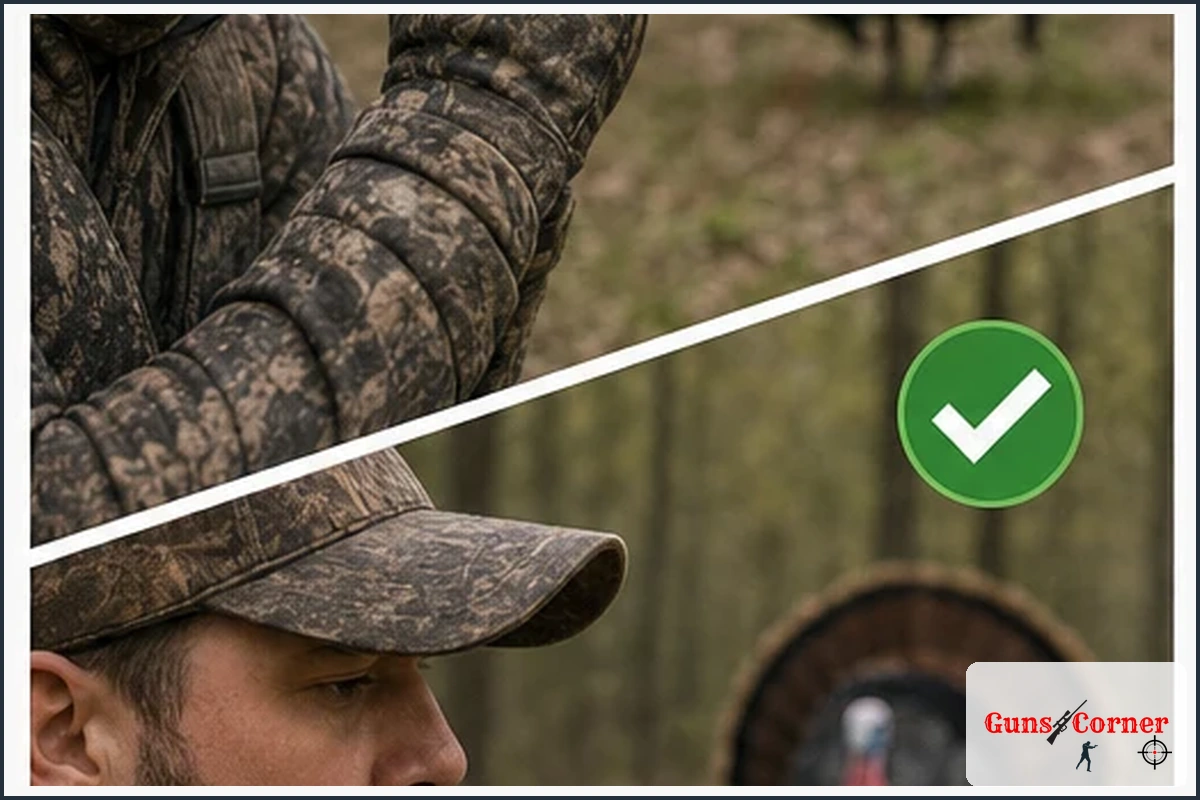
Calling too loudly or too often
Correction: Start with an appropriate volume, then reduce it as the turkey closes. Build in quiet periods and listen for natural responses.
Changing sounds without interpreting the turkey’s response
Correction: Change one variable at a time—volume, cadence, sound, or position—and observe what happens. Randomly cycling through calls makes it difficult to learn.
Moving while calling instead of calling from a prepared setup
Correction: Set up before calling and practice operating your call without exposing movement. Reposition only after confirming that the route is safe, legal, and unlikely to reveal you.
Overusing a locator call or imitating a gobbler without a clear reason
Correction: Use specialized calls only when they serve a clear purpose. Avoid gobble calls when they could confuse or attract another hunter.
Ignoring wind, terrain, cover, and the bird’s actual route
Correction: Treat calling as part of a complete setup. Wind direction, terrain barriers, visibility, and travel routes often matter as much as the sound itself.
Assuming a gobble means the turkey is committed or within shooting range
Correction: Use the gobble to gather information, then wait and watch. Never shoot at sound alone or rush an uncertain opportunity.
A Simple Turkey-Calling Field Plan
Before the hunt: verify rules, map access, select calls, and practice a short sequence
- Check current regulations, licenses, tags, season dates, legal hours, and equipment rules.
- Confirm public-land access or secure private-land permission.
- Scout from legal vantage points and mark boundaries, roads, buildings, water, cover, and likely travel routes.
- Choose one dependable call and one quiet backup call.
- Practice yelps, clucks, purrs, and pauses without overcomplicating the sequence.
- Pack navigation tools, water, first aid, communication equipment, required visibility clothing, and game-care supplies.
At first light: listen, locate, and choose a safe setup before calling
Listen before making repeated calls. Locate birds, identify safe shooting directions, and select cover that allows you to remain still. Do not move toward an unseen sound.
During the encounter: call, observe, wait, and adjust one variable at a time
Use a restrained call, then listen. If the turkey responds, observe its direction and behavior. Adjust only when the evidence suggests a change is needed. Silence is also a legitimate tactic.
After the hunt: record sounds, timing, weather, terrain, and the bird’s response
Keep notes about where birds vocalized, how weather affected sound, which calls worked comfortably, and where your setup created problems. If you harvest a turkey, complete all required tagging and reporting steps and handle the game responsibly.
Recommended Turkey-Calling Gear and Tools to Consider
You do not need a large collection of calls to hunt responsibly. Choose equipment based on local regulations, terrain, weather, hunting method, skill level, and safety needs.
- One dependable box, pot, push-button, or diaphragm call.
- A quiet backup call you can operate confidently.
- Camouflage or natural cover appropriate to the terrain, without compromising visibility or safety.
- Required hunter-orange or visibility clothing.
- Binoculars for observation where useful.
- A map, compass, GPS, or reliable navigation tool.
- Water, snacks, first aid, and emergency communication.
- Gloves, game bags, cooling equipment, and transport supplies if a harvest is possible.
Ethical Hunting and Conservation
Ethical turkey hunting means respecting wildlife, other hunters, landowners, and the law. Take only legal opportunities that are within your practiced ability, and pass on any shot where the target, background, distance, or species identification is uncertain.
- Follow seasons, bag limits, legal hours, and equipment rules.
- Do not trespass or cross private property without permission.
- Avoid calling birds toward roads, homes, livestock, or other hunters.
- Recover and use harvested game responsibly.
- Complete required harvest reporting promptly.
- Leave access areas cleaner than you found them.
- Support conservation through lawful participation and responsible stewardship.
When to Get More Training or Professional Guidance
Seek additional instruction if you have never handled a firearm or bow, have not completed hunter education, are uncertain about local regulations, or do not understand safe shooting lanes and property boundaries.
Useful sources of guidance include official hunter-education courses, state or provincial wildlife agencies, certified instructors, experienced ethical mentors, conservation organizations, and reputable local hunting clubs.
Troubleshooting Common Turkey-Calling Problems
| Problem | Possible Cause | What to Do |
|---|---|---|
| No turkey responds | The bird may be absent, silent, outside hearing range, or unaffected by the call. | Review scouting information, wait quietly, and try a different legal location rather than calling continuously. |
| A turkey responds but does not approach | Terrain, real hens, barriers, pressure, or an unsafe route may be influencing movement. | Study the likely route, remain patient, and consider a safe reposition only when legal and practical. |
| The turkey hangs up | The bird may have reached an obstacle or detected movement. | Stop increasing volume automatically. Improve cover or setup on a future attempt and avoid rushing. |
| The call sounds unnatural | Incorrect rhythm, excessive volume, poor maintenance, or limited practice. | Return to basic yelps and clucks, listen to real turkeys, and check the call according to its instructions. |
| You cannot determine where the sound came from | Terrain, wind, echo, or multiple birds may be confusing direction. | Do not move toward the sound. Stay put, maintain firearm control, and wait for clear identification. |
| Weather disrupts the hunt | Wind, rain, heat, cold, or poor visibility may reduce calling effectiveness and increase risk. | Prioritize shelter, navigation, communication, and personal safety over continuing the hunt. |
After the Hunt: Follow-Up, Gear Care, and Learning
Dry and store calls according to the manufacturer’s instructions. Clean and safely store firearms or archery equipment, inspect navigation and emergency gear, and replace damaged or missing supplies.
Record the date, weather, terrain, turkey sounds, calling sequence, response, and setup. If you harvest a bird, follow tagging, reporting, transport, and meat-care requirements for your jurisdiction. Responsible cooling and timely processing help protect the quality of the harvest.
Final Thoughts
Learning how to call turkeys takes listening, practice, scouting, and restraint. Master a few basic sounds, choose a call you can operate reliably, set up safely, and adjust your calling to the turkey’s behavior rather than following a rigid schedule.
Always verify current regulations, identify your target and background, respect access boundaries, and pass on unsafe or uncertain opportunities. Patient, ethical calling will make you a better turkey hunter even when a bird does not come within range.
Frequently Asked Questions About Calling Turkeys
What is the easiest turkey call for a beginner?
Push-button and box calls are often approachable because they can produce useful sounds without the learning curve of a diaphragm call. The best choice is the call you can operate consistently, quietly when needed, and safely from your setup.
How often should you call a turkey?
There is no universal schedule. Call according to the bird’s response, terrain, wind, hunting pressure, and season. Calling less and listening more is often better than repeating a sequence continuously.
Should you call more when a turkey is gobbling?
Not necessarily. A gobble provides information, but increasing calling may be unnecessary or counterproductive. Answer naturally, observe the bird’s direction, and reduce volume as it approaches.
How do you call a turkey that will not come closer?
First consider barriers, real hens, wind, terrain, pressure, and your setup. Changing position safely or improving concealment may help more than calling louder. Never stalk toward an unseen turkey sound.
Can you call turkeys in the fall?
Yes, where fall turkey hunting is legal, but the situation may differ from spring. Fall calling often involves flock contact or reassembly, so use scouting and observed behavior rather than assuming spring tactics apply.
How close should a turkey be before you stop calling?
When a turkey is close enough that additional calling could reveal movement, switch to very soft sounds or remain silent. Keep your firearm controlled and wait for a clear, legal, ethical opportunity.
Is it safe to use a gobble call while hunting?
It can create confusion because another hunter may mistake the sound for a real turkey or move toward it. Check local rules, avoid using it where it could create a conflict, and never move toward an unseen caller.
Can calling bring a turkey across a property boundary or road?
A turkey may move unpredictably, but you must not trespass, shoot across unsafe areas, or lure wildlife into an unsafe shooting location. Know the boundary and background before considering any shot.