
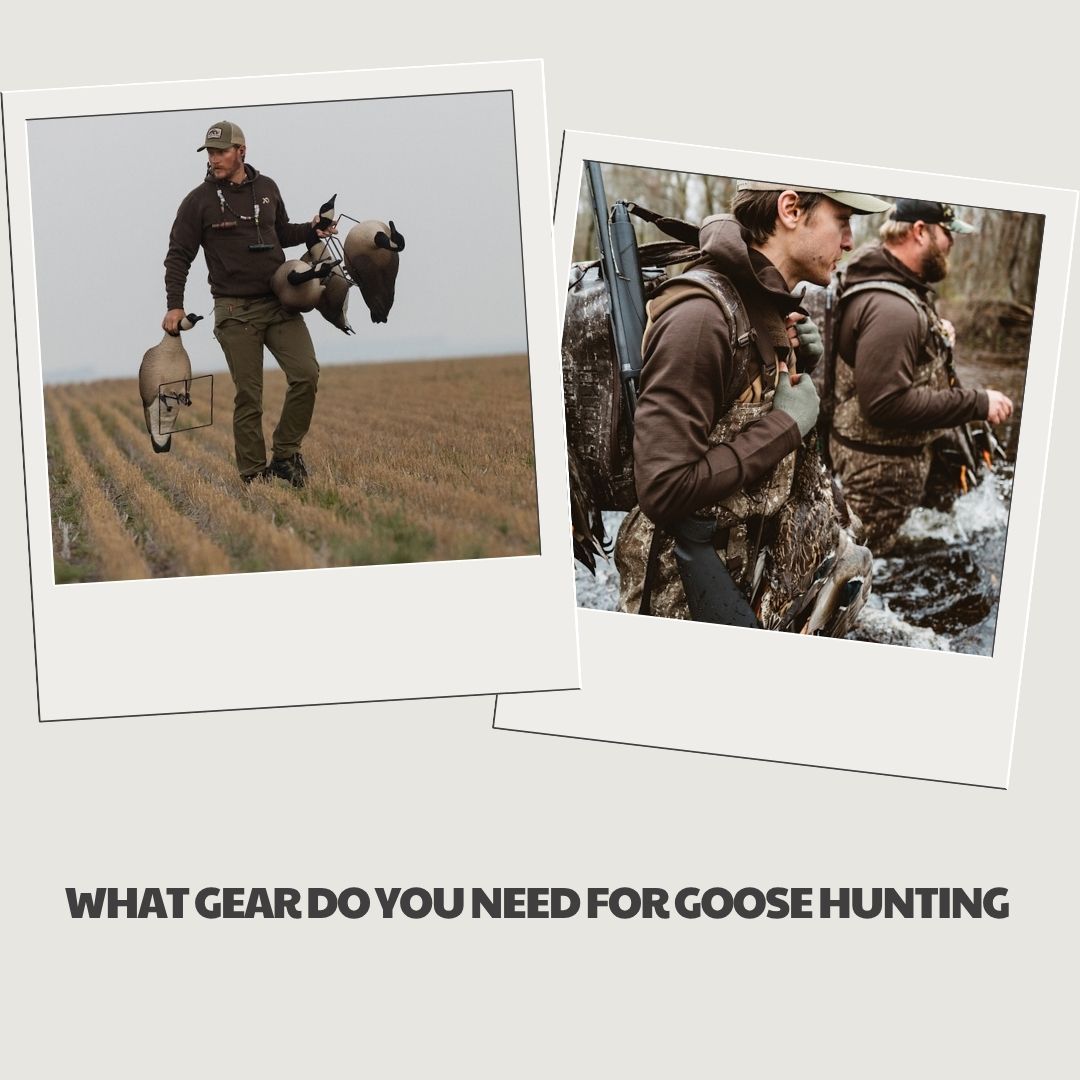

Quick Answer
At minimum, you need the required hunting license, migratory-bird validations and stamps; hunter-education proof when required; a lawful shotgun you can handle safely; approved nontoxic shotshells compatible with the gun and choke; eye and hearing protection; concealment; warm, weatherproof layers; navigation and communication tools; a small first-aid kit; and game-recovery supplies. Decoys, a goose call, a blind, flags, waders, a boat, and a trained retrieving dog may be valuable, but their necessity depends on whether you hunt fields, shorelines, marshes, or open water. Verify the current federal, state, tribal, landowner, and property-specific rules before packing.
Goose Hunting Gear at a Glance
| Gear category | Typical items | Status | What to verify |
|---|---|---|---|
| Documents | License, HIP certification, stamps, permits, ID | Legally required as applicable | Species, zone, age exemptions, land rules |
| Firearm safety | Legal shotgun, case, eye and hearing protection | Essential | Capacity, action, transport and possession law |
| Ammunition | Approved nontoxic shotshells | Required for waterfowl | Gauge, chamber, choke, shot material, shell limits |
| Concealment | Blind or natural cover, face covering, gloves | Usually important | Land permission and blind restrictions |
| Attraction | Decoys, call, flag | Useful, not always required | Electronic-call and decoy restrictions |
| Weather | Layering system, waterproof shell, boots | Essential | Forecast, wind chill, ice and heat |
| Navigation | Map, compass, GPS/phone, headlamp | Essential | Boundaries, closed areas, offline coverage |
| Recovery | Gloves, game strap, bags, cooler | Essential | Tagging, transport and food-safety rules |
| Water safety | Proper PFD, waders, boat safety kit | Essential near/on water | Coast Guard and state requirements |
Important Safety and Legal Notice
Geese are migratory game birds governed by a combination of federal frameworks and state or tribal regulations. The U.S. Fish and Wildlife Service waterfowl information explains common federal requirements, including state licensing, the Federal Duck Stamp for hunters who are required to possess it, approved nontoxic shot, and the general three-shell shotgun capacity restriction. Exceptions can apply during certain authorized light-goose conservation seasons, but never assume an exception is active where you hunt.
- Read the current state migratory game bird regulations, not last year’s summary.
- Check species identification, zones, dates, daily bag and possession limits, and legal shooting hours.
- Confirm HIP registration, federal and state stamp requirements, and whether stamps must be signed or carried in a specified form.
- Read the rules for the exact refuge, wildlife area, lease, farm, or tribal land. Some properties add permits, reservations, check-in procedures, shell limits, blind assignments, or restricted access times.
- Use only approved nontoxic shot when hunting waterfowl and do not carry prohibited lead shells in circumstances where possession is unlawful.
- Positively identify the bird, know what lies beyond it, and keep the muzzle controlled. Never fire at sound, movement, birds on an unsafe horizon, or low birds near people, roads, buildings, livestock, dogs, or equipment.
What Gear Do You Need for Goose Hunting?
1. Licenses, Stamps, HIP, and Written Permission
Your first “gear” is the documentation that makes the hunt lawful. Depending on your age, location, and hunt, this may include a state hunting license, hunter-education card, Harvest Information Program certification, Federal Duck Stamp, state migratory-waterfowl stamp, area permit, reservation confirmation, and photo ID. Youth, senior, military, tribal, apprentice, and disability rules vary.
For private land, carry clear landowner permission and understand property boundaries, vehicle routes, livestock concerns, crop restrictions, and recovery arrangements. Permission to hunt one parcel does not grant permission to enter a neighboring property to retrieve a bird.
2. A Lawful, Familiar Shotgun
A shotgun is the conventional firearm for goose hunting, but no single gauge, action, or chamber length is universally best. Choose a lawful shotgun that fits you, cycles the selected nontoxic load reliably, and can be handled safely in heavy clothing. Fit and practice matter more than maximum shell length.
Confirm the chamber marking on the barrel, the ammunition headstamp and box, the choke’s compatibility with the shot material, and the manufacturer’s instructions. A longer shell must never be fired in a shorter chamber. Many waterfowl seasons generally limit a shotgun to three shells total unless a specific exception applies; use a compliant plug when required and verify capacity before entering the field.
Carry the unloaded firearm in an appropriate case during transport as law and safe practice require. A simple cleaning cloth and small manufacturer-approved maintenance kit can help after wet or muddy conditions. Do not perform improvised repairs in the blind.
3. Approved Nontoxic Shotshells
Waterfowl hunters in the United States must use approved nontoxic shot. Steel is common and economical; other approved materials may offer different density, cost, patterning, recoil, and choke considerations. The lawful and effective choice depends on the exact gun, choke, goose species, realistic distance, and local rules.
Pattern the actual load and choke on paper at realistic distances before hunting. Look for an even distribution in the vital area rather than chasing a marketing claim. If patterns are sparse or inconsistent, change one variable at a time and remain within your proven ability. Do not mix lead upland loads into the same blind bag.
Carry ammunition in its original or clearly labeled packaging inside a dry container. Some public properties impose a daily shell-possession limit, so “bring extra” is not always legal.
4. Eye and Hearing Protection
Quality hearing protection is essential around shotguns, especially when several hunters fire from a compact blind. Electronic hearing protection can reduce damaging impulse noise while allowing conversation and ambient sounds, but it must fit properly and be tested before the hunt. Eye protection helps with debris, actions cycling, wind, vegetation, and fragments. Choose lenses suitable for low light and avoid tints that impair identification.
5. Concealment That Matches the Location
Geese have strong vision and often inspect a setup from a distance. Concealment can be a layout blind, A-frame blind, pit, boat blind, low-profile backrest, natural cover, or simply disciplined positioning. Match colors and texture to the actual field or shoreline rather than relying on a generic camouflage pattern.
Cover exposed faces and hands, reduce shine, and hide vehicles and gear outside the birds’ likely view. Brush blinds with material that is legal to collect and resembles the surrounding cover. Avoid cutting live vegetation or digging without permission. Layout-blind users should practice opening the doors, sitting up, shouldering an unloaded shotgun, and maintaining a safe muzzle before hunting with partners.
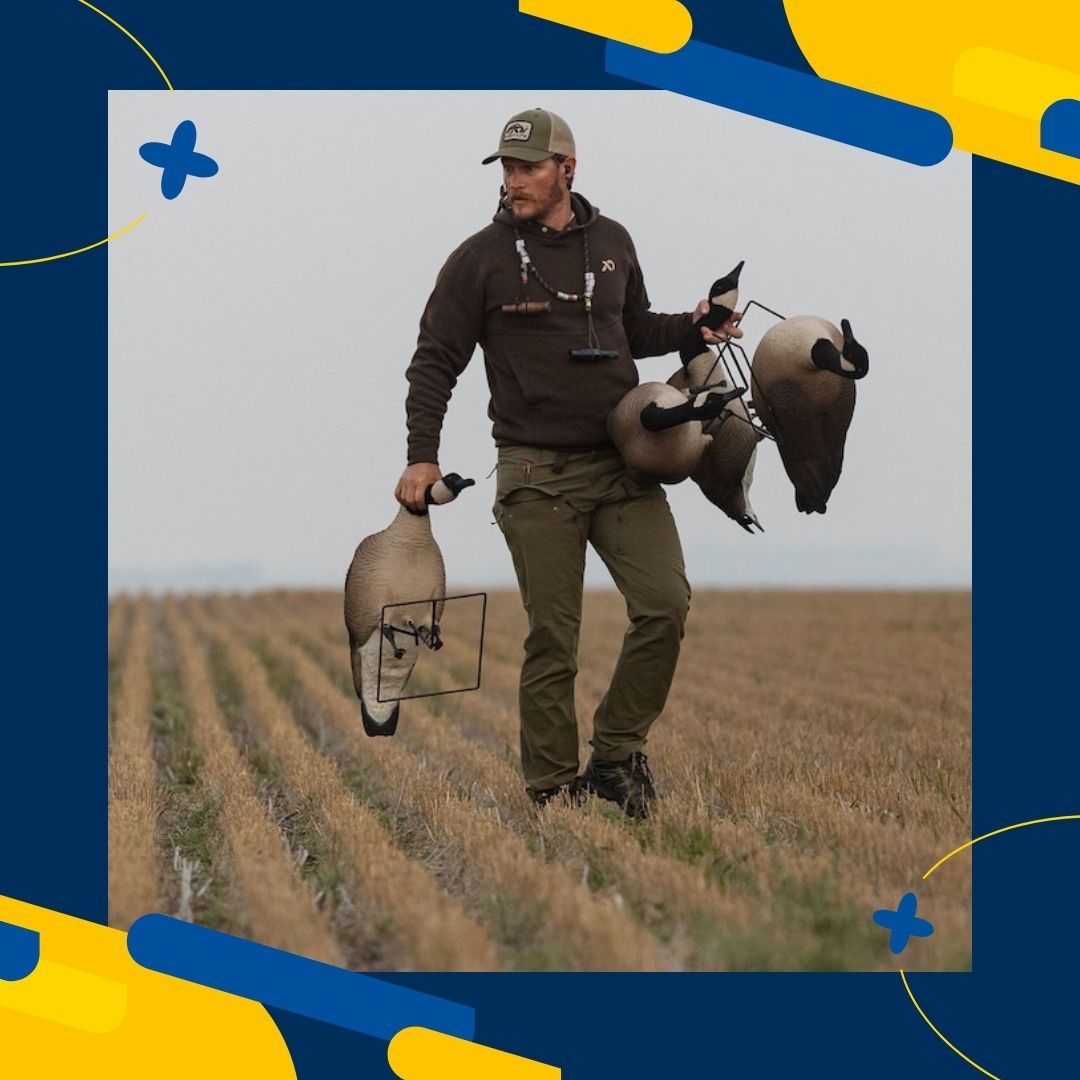
6. Goose Decoys
Decoys help create confidence and direct approaching birds toward a safe, planned shooting zone. Full-body decoys look realistic but occupy substantial cargo space. Shells stack more efficiently. Silhouettes are light and useful for walk-in hunts, although their appearance changes with viewing angle. Floaters are designed for water.
Beginners do not need hundreds. A smaller spread placed where geese already want to feed or rest can outperform a large spread in the wrong location. Match the species and posture you observe, leave a clear landing area, and position hunters so shots remain safe if birds approach differently than expected. Bring stakes, anchors, lines, spare hardware, decoy bags, and gloves appropriate for cold setup work.
7. A Goose Call and Practice
A call is useful but optional. Short-reed Canada goose calls can offer a broad vocabulary but take practice; flute-style calls are often easier for beginners. Snow goose and specklebelly calls sound and operate differently. Choose the call for the species you can legally identify and hunt.
Practice basic notes at home and learn when silence is better. Excessive or poorly timed calling may cause pressured birds to avoid a spread. Recorded or electronically amplified calls are generally prohibited during regular migratory-bird hunting, with limited exceptions in certain light-goose conservation orders. Verify the current regulation rather than assuming a spring hunt permits electronics.
8. Flag or Motion Device
A black goose flag can attract distant Canada geese by imitating wing movement. Use it deliberately and stop when birds are close enough to see unnatural movement. Other motion devices may be regulated, especially motorized or electronic equipment, so confirm legality. A flag is an aid, not a substitute for scouting, concealment, or safe shot selection.
9. Layered, Weatherproof Clothing
Goose seasons can involve hot early-season fields, freezing wind, rain, snow, and long periods of inactivity. Use a moisture-managing base layer, an insulating midlayer, and a windproof or waterproof outer shell suited to the forecast. Avoid cotton as the primary cold-weather layer because it retains moisture.
- Warm hat plus a brimmed cap for glare
- Water-resistant gloves that still allow safe trigger-finger control
- Spare dry gloves and socks in a sealed bag
- Insulated, waterproof boots with room for circulation
- Neck gaiter or face covering that does not obstruct vision
- Required hunter orange during overlapping seasons, if applicable
Test mounting and operating the shotgun while wearing the complete outfit. Bulky sleeves, drawcords, face masks, and gloves must not enter the trigger guard or obstruct controls.
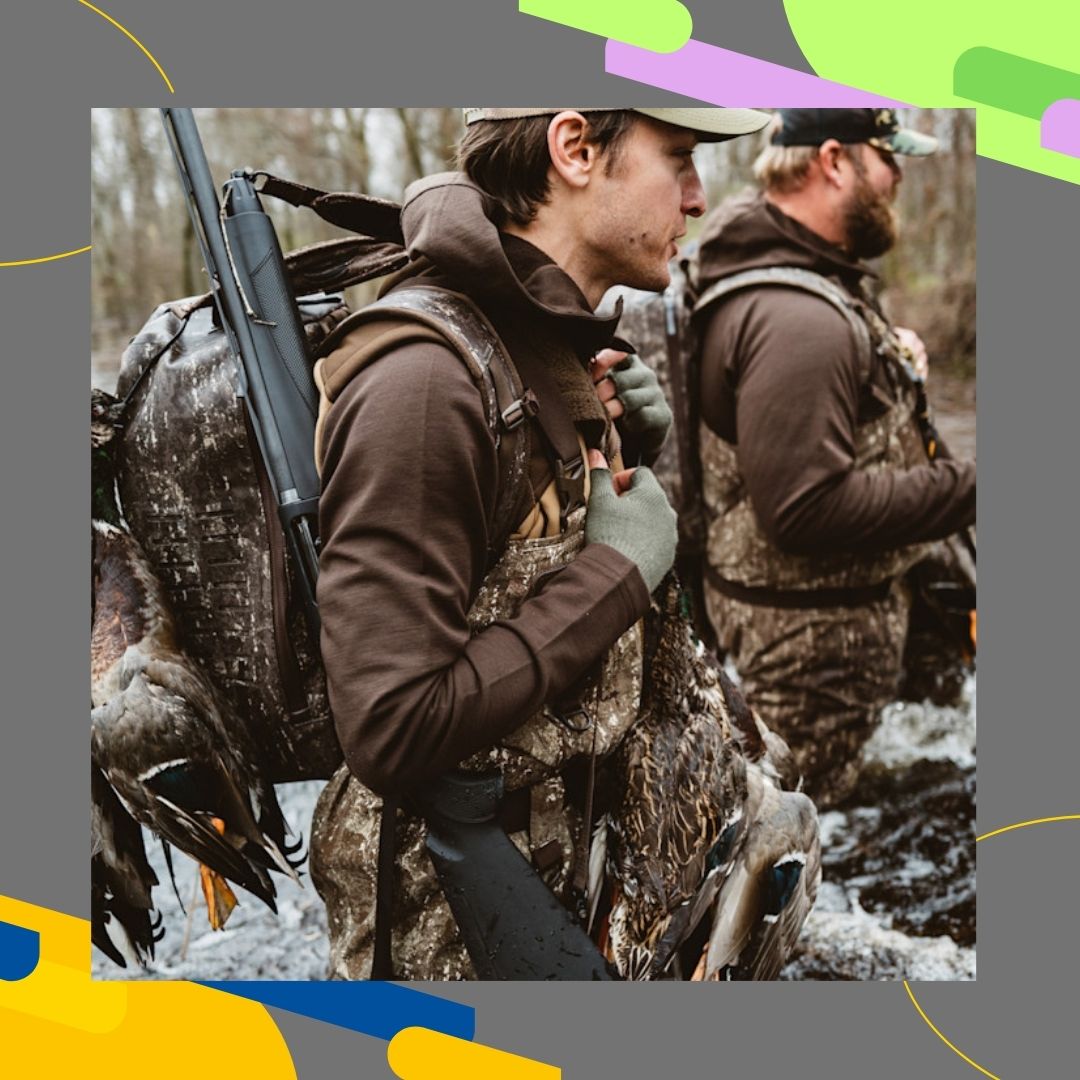
10. Waders and Water Safety Equipment
Waders are useful only when the hunt requires shallow-water access. They are not flotation devices and do not make deep, current-filled, icy, or unknown water safe. Use a properly fitted personal flotation device whenever conditions, vessel rules, or prudent judgment call for one. A wading staff, cleated footwear appropriate for the bottom, dry bag, change of clothes, and conservative route add protection.
Never wade alone into unfamiliar water in darkness. Check depth, current, bottom firmness, tides, cold exposure, and weather. If a bird falls beyond safe retrieval range, do not risk a life to recover it; seek a safer method and follow applicable recovery rules.
11. Navigation, Lighting, and Communication
Goose hunters often travel before daylight across uniform fields, levees, marsh edges, or frozen ground. Carry an offline map, compass, charged phone or GPS, and a headlamp with spare power. Mark legal parking, boundaries, the blind, hazards, and the return route before dark. Do not depend on cellular service.
Tell a reliable person where you will be, who is going, vehicle information, launch or access point, and when to expect your return. A whistle and satellite communicator may be appropriate in remote areas. Keep emergency numbers and landowner contact information accessible.
12. First Aid and Emergency Supplies
A compact first-aid kit should address common cuts, blisters, minor burns, eye irritation, and cold exposure while supporting—but not replacing—professional care. Add personal medication, emergency contacts, a space blanket, fire-starting method where lawful and safe, water, high-energy food, and hand warmers. Hunters should know how to use every item and consider a recognized first-aid course.
13. Bird Recovery and Meat-Care Gear
Responsible hunting includes a plan to retrieve every downed bird promptly. Useful items include a game strap, waterproof gloves, marking tape used only where legal and removed afterward, a headlamp, tracking reference point, and cooler with ice or frozen packs. A trained retriever can be valuable, but the dog needs conditioning, obedience, flotation where appropriate, visible identification, first-aid supplies, water, and protection from cold or heat.
Keep birds clean and cool, follow tagging and evidence-of-sex or species requirements, and comply with transport and possession rules. Do not pile warm birds in a sealed container. If meat has an abnormal odor, color, contamination, or uncertain temperature history, seek authoritative food-safety guidance rather than guessing.
Gear by Goose Hunting Style
| Hunt style | Most useful additions | Main risks or checks |
|---|---|---|
| Dry agricultural field | Layout/A-frame blind, field decoys, flag, decoy bags or cart | Land permission, livestock, roads, field damage, safe horizon |
| Shoreline or marsh edge | Floaters, anchors, waterproof boots/waders, retrieval pole | Water depth, mud, tides, ice, property boundaries |
| Boat hunt | Required PFDs, navigation lights, throwable device, anchor, bilge equipment | Capacity, weather, cold-water immersion, boating and firearm laws |
| Walk-in public land | Silhouette/shell decoys, backpack, sled or cart, offline map | Shell limit, entry time, assigned areas, pack weight |
| Pass shooting | Range discipline, minimal concealment, binoculars | Safe backstop, species ID, realistic range, property lines |
| Light-goose conservation hunt | Species-specific decoys/calls and logistics | Special-order dates, zone and method exceptions |
A Budget Goose Hunting Setup for Beginners
You do not need the most expensive equipment to hunt responsibly. Choose gear based on the species, terrain, weather, local regulations, fit, safety, reliability, maintenance requirements, and your actual experience.
The least expensive safe entry is often to accompany an experienced, lawful hunter or book a reputable guide who provides blinds and decoys. Bring your licenses, approved ammunition, fitted clothing, protective equipment, food, water, and personal safety gear. This lets you learn setup and field etiquette before purchasing a spread.
For an independent walk-in field hunt, begin with a small set of used silhouettes or shells, a simple legal call, good concealment, and a pack or sled. Spend money first on fit, training, reliable weather protection, and ammunition you have patterned. Add full bodies, a specialized blind, trailer, electronics, and premium optics only when a real need appears.
How to Pack Your Blind Bag
- Licenses, stamps, permits, identification, and waterproof regulation summary
- Only the lawful number and type of nontoxic shells
- Eye and hearing protection
- Headlamp and spare batteries
- Phone/GPS, offline map, compass, and power bank
- First-aid kit, personal medication, whistle, emergency blanket
- Water, food, sunscreen, and insect repellent as conditions require
- Spare dry gloves and socks
- Goose call, lanyard, simple repair parts, and multitool used responsibly
- Game strap, disposable or washable gloves, and bags for trash
Keep ammunition separated from liquids and loose metal objects. Use waterproof compartments and label small items. Weigh the completed bag and remove duplicated conveniences that make a long walk less safe.
Pre-Hunt Preparation Checklist
- Download and read current regulations from the state wildlife agency and the specific property.
- Confirm species, dates, zones, legal hours, bag limits, stamps, permits, check-in, firearm capacity, ammunition, calls, decoys, and retrieval rules.
- Secure written land permission and map boundaries.
- Complete hunter education and range practice; pattern the actual nontoxic load and choke.
- Inspect the unloaded shotgun according to the manual and verify the plug when required.
- Scout from lawful locations without disturbing birds or trespassing.
- Check wind, precipitation, temperature, visibility, ice, tides, and road conditions.
- Plan safe shooting lanes with every hunting partner and discuss commands before loading.
- Inspect blinds, decoys, stakes, anchors, waders, PFDs, boat equipment, dog gear, and communications.
- Leave a trip plan and define a turnaround time.
Safe Field Procedure
Unload firearms while setting decoys, brushing blinds, crossing obstacles, entering a vehicle or boat, and handling a dog. Keep actions open when practical and maintain muzzle control even when a firearm is unloaded. In a group blind, assign each hunter a safe shooting zone. Nobody should swing through another person, dog, road, building, or unknown background.
Call the shot only when birds are positively identified, within the group’s proven range, and positioned for a safe attempt. If a bird is wounded, mark its fall immediately and organize recovery without creating a new hazard. Count birds carefully and stop before reaching the applicable limit.
Common Beginner Mistakes
- Buying gear before scouting: Location and bird use usually matter more than spread size.
- Using last year’s regulations: Migratory-bird frameworks and property rules can change annually.
- Bringing the wrong shells: Confirm approved nontoxic material, chamber compatibility, choke approval, and property shell limits.
- Skipping patterning: A choke label does not show how a specific load performs in your shotgun.
- Poor blind concealment: Shadows, faces, shiny objects, and vehicles can expose an otherwise good setup.
- Overcalling: Calls should respond to bird behavior, not fill every quiet moment.
- Ignoring wind direction: Geese generally prefer to land into the wind, but terrain and behavior can change the approach.
- Wearing unsafe gloves: Bulky material near the trigger guard can create a serious handling problem.
- Underestimating water and cold: A short retrieval can become an emergency in mud, current, ice, or wind.
- No recovery plan: Ethical responsibility continues after the shot.
What Not to Do
- Do not shoot at a bird you cannot positively identify.
- Do not fire toward people, buildings, roads, vehicles, livestock, dogs, or an unsafe horizon.
- Do not rely on the mechanical safety instead of muzzle and trigger discipline.
- Do not load until you are legally positioned and the group is ready.
- Do not use lead shot for waterfowl or carry prohibited ammunition.
- Do not assume electronic calls, unplugged shotguns, or special decoys are lawful because another state allows them.
- Do not trespass to set decoys or recover a bird.
- Do not take shots beyond your proven pattern and shooting ability.
- Do not enter unsafe water, thin ice, or severe weather to save equipment or retrieve game.
- Do not leave hulls, zip ties, food wrappers, blind material, or decoy parts in the field.
Printable-Style Goose Hunting Checklist
Documents and Legal
- Hunting license
- HIP certification
- Federal Duck Stamp and state stamp when required
- Hunter-education proof
- Area permit/reservation
- Written land permission
- Current regulations and identification
Firearm and Safety
- Unloaded, cased, lawful shotgun
- Required magazine plug
- Approved nontoxic shotshells
- Eye protection
- Hearing protection
- First-aid kit
- Communication and navigation
Hunting Setup
- Blind or concealment
- Decoys, stakes/anchors and bags
- Goose call
- Flag if lawful
- Headlamp
- Binoculars
- Seat or pad
Clothing and Conditions
- Base, insulation and shell layers
- Waterproof boots
- Hat and face covering
- Safe-fitting gloves
- Spare socks/gloves
- Waders and PFD when appropriate
- Food and water
Recovery and Cleanup
- Game strap
- Recovery gloves
- Cooler and ice
- Required tags or reporting tools
- Trash bags
- Dog safety kit if applicable
FAQs
1. What gear do you need for goose hunting as a beginner?
Start with required documents, a lawful fitted shotgun, approved nontoxic ammunition, eye and hearing protection, concealment, weatherproof clothing, navigation, communication, first aid, and recovery supplies. Borrow or share decoys before buying a large spread.
2. Do you need decoys to hunt geese?
No. Pass shooting and some jump-shooting situations do not use decoys, where lawful. Decoys are highly useful for bringing geese toward a controlled landing area in field and water setups.
3. How many goose decoys should a beginner buy?
There is no universal number. Begin with a portable spread you can deploy well and place it where scouted birds already want to be. Species, hunting pressure, habitat, visibility, and transport capacity matter.
4. Are full-body goose decoys better than shells?
Full bodies offer a three-dimensional profile, while shells are lighter and stackable. The practical choice depends on realism needs, wind, distance carried, vehicle space, budget, and local bird behavior.
5. Do you need a goose call?
No, but a call can help finish or redirect birds when used appropriately. Concealment, scouting, safe placement, and species identification remain more important than complicated calling.
6. What goose call is easiest for beginners?
Many beginners find flute-style Canada goose calls easier to produce basic notes on than short-reed calls. Choose the call for the target species and learn from a qualified instructor or reliable educational source.
7. Are electronic goose calls legal?
They are generally prohibited for regular migratory-bird hunting under federal rules, with limited authorized exceptions during certain light-goose conservation seasons. Check the current federal, state, and property rules.
8. What shotgun is best for goose hunting?
No shotgun is best for everyone. A lawful shotgun that fits, functions reliably with approved nontoxic loads, and produces an effective pattern with manageable recoil is the better choice.
9. Is a 12-gauge required for geese?
No. Legal gauges vary, and capable hunters use more than one gauge. Ammunition compatibility, pattern quality, realistic distance, shooter skill, and local law determine suitability.
10. Do I need 3.5-inch shells for goose hunting?
No. Longer shells are not automatically more ethical or effective and may increase recoil. Use only shells permitted by the chamber marking and select a load you have patterned and can shoot accurately.
11. What shot size should I use for geese?
It depends on the approved shot material, goose size, load, choke, distance, gun pattern, and local rules. Consult the ammunition and firearm manufacturers, then pattern the exact combination.
12. Can I use lead shot for goose hunting?
No for waterfowl hunting in the United States. Use only shot types approved as nontoxic and comply with any stricter possession rules on the property.
13. What choke should I use for goose hunting?
No choke designation works best in every gun. Confirm that the choke is approved for the shot material and shell, then choose based on actual pattern-board results at ethical distances.
14. How many shells can a goose shotgun hold?
Federal rules generally limit migratory-waterfowl shotguns to three shells total unless a specific authorized exception applies. State or property rules may be stricter. Verify before hunting.
15. Do goose hunters need a Federal Duck Stamp?
Most waterfowl hunters age 16 or older need one, subject to the current rules and exemptions. Hunters also commonly need state licensing, HIP certification, and possibly a state stamp.
16. What is HIP certification?
The Harvest Information Program collects migratory-bird harvest information. Registration procedures vary by state, so complete the current state process and carry evidence when required.
17. Do I need hunter education?
Requirements depend on age, jurisdiction, license type, and exemptions. Even where not mandatory, a recognized hunter-education course is strongly recommended.
18. Do I need a blind for goose hunting?
Not always, but geese readily see exposed hunters. A blind or carefully chosen natural concealment helps control movement and organize safe shooting lanes.
19. What is a layout blind?
It is a low-profile field blind in which a hunter reclines until birds approach. Users must practice safe entry, exit, door operation, muzzle control, and coordinated shooting before a live hunt.
20. What should I wear for field goose hunting?
Wear layers suited to the forecast, waterproof boots, gloves that permit safe firearm control, and concealment matching the field. Carry spare dry items and any hunter orange required during overlapping seasons.
21. Do I need waders for goose hunting?
Only for hunts involving safe shallow-water access. Waders are not flotation and should not encourage entry into unknown, deep, icy, tidal, or fast-moving water.
22. Should I wear a life jacket while goose hunting?
Wear a properly fitted PFD whenever boating and whenever water conditions make immersion possible. Follow boating laws and use a design compatible with cold-weather clothing.
23. Can I goose hunt from a boat?
Where legal, yes, but firearm discharge, motor shutdown, vessel position, navigation lights, access, and species rules may apply. Check both boating and hunting regulations.
24. Is a dog necessary for goose hunting?
No. A well-trained retriever can improve recovery, but a poorly prepared dog creates risks. Plan a lawful manual or boat-assisted recovery method when hunting without a dog.
25. What gear does a goose-hunting dog need?
Typically identification, water, food as appropriate, a first-aid kit, paw protection when needed, an insulating vest suited to conditions, and a properly fitted canine PFD around boats or difficult water.
26. Do I need binoculars?
They are useful for scouting and identification, but never use a firearm optic as a substitute for binoculars when observing people, vehicles, or unknown objects.
27. What should be in a goose-hunting blind bag?
Carry documents, approved shells within any property limit, protective equipment, light, navigation, communication, first aid, water, food, spare dry clothing, recovery items, and only useful calling or repair tools.
28. How do I keep ammunition dry?
Use original boxes inside a dry, closable container and keep them away from loose liquids. Inspect wet or damaged ammunition according to manufacturer guidance; do not attempt to dry or modify questionable shells.
29. What time should I set up?
Arrive early enough to park, walk in, set gear, and confirm safe lanes before legal shooting time, but obey property entry-time restrictions. Never begin shooting before the official time.
30. How do I choose a decoy setup?
Use scouting, wind, cover, safe shooting direction, sun, terrain, and bird behavior. Leave an open landing zone but expect geese to approach from an unplanned direction.
31. Do goose decoys need motion?
Not necessarily. Natural wind movement or a lawful flag can add visibility. Verify rules for motorized or electronic devices and avoid unnatural excessive motion.
32. How important is camouflage?
Very important in open terrain, but matching texture, hiding shadows and shine, controlling movement, and concealing vehicles can matter more than a specific printed pattern.
33. Can I hunt geese on public land?
Yes where the property is open and the season is active. Expect site-specific permits, reservations, check-in, blind, access, shell, parking, and retrieval rules.
34. Can I retrieve a goose on neighboring private property?
Not without permission unless local law expressly provides otherwise. Contact the landowner or appropriate authority and do not cross a boundary based on assumption.
35. How do I identify goose species?
Study size, head and bill pattern, body color, voice, flock behavior, and range before hunting. Identification must be positive before the shot because species-specific limits and closures may apply.
36. What do I do with a wounded goose?
Mark the fall, pursue promptly using a lawful and safe method, and follow local dispatch and retrieval rules. Do not enter unsafe water or trespass.
37. How should harvested geese be stored?
Keep birds clean and cool promptly, allow heat to escape, and follow tagging, transport, evidence, possession, and food-safety requirements. Use a clean cooler with adequate ice or frozen packs.
38. How much gear is too much?
If weight delays setup, increases fatigue, blocks safe firearm handling, overloads a boat, or makes extraction difficult, reduce it. Pack essentials first and assign shared group items.
39. What should I do if weather worsens?
Stop early when visibility, wind, lightning, cold, heat, ice, roads, or water conditions exceed the group’s plan and ability. No bird or decoy is worth an emergency.
40. What is the most important goose hunting gear?
The most important “gear” is sound judgment supported by legal documentation, training, a safe firearm setup, appropriate clothing, communication, and a recovery plan. Decoys and calls cannot compensate for missing fundamentals.
Final Answer
So, what gear do you need for goose hunting? Pack legal documents, a lawful and patterned shotgun with approved nontoxic ammunition, eye and hearing protection, effective concealment, weatherproof layers, reliable footwear, navigation, communication, first aid, and bird-recovery and cooling supplies. Add decoys, a species-appropriate call, a blind, a flag, waders, boat equipment, or a trained dog only when the hunt style truly requires them.
Before every trip, check the current state wildlife agency regulations and the exact property’s rules. Practice safe firearm handling and species identification, agree on shooting lanes, stay within proven range, recover birds responsibly, and leave the hunting area cleaner than you found it.
Read more: