
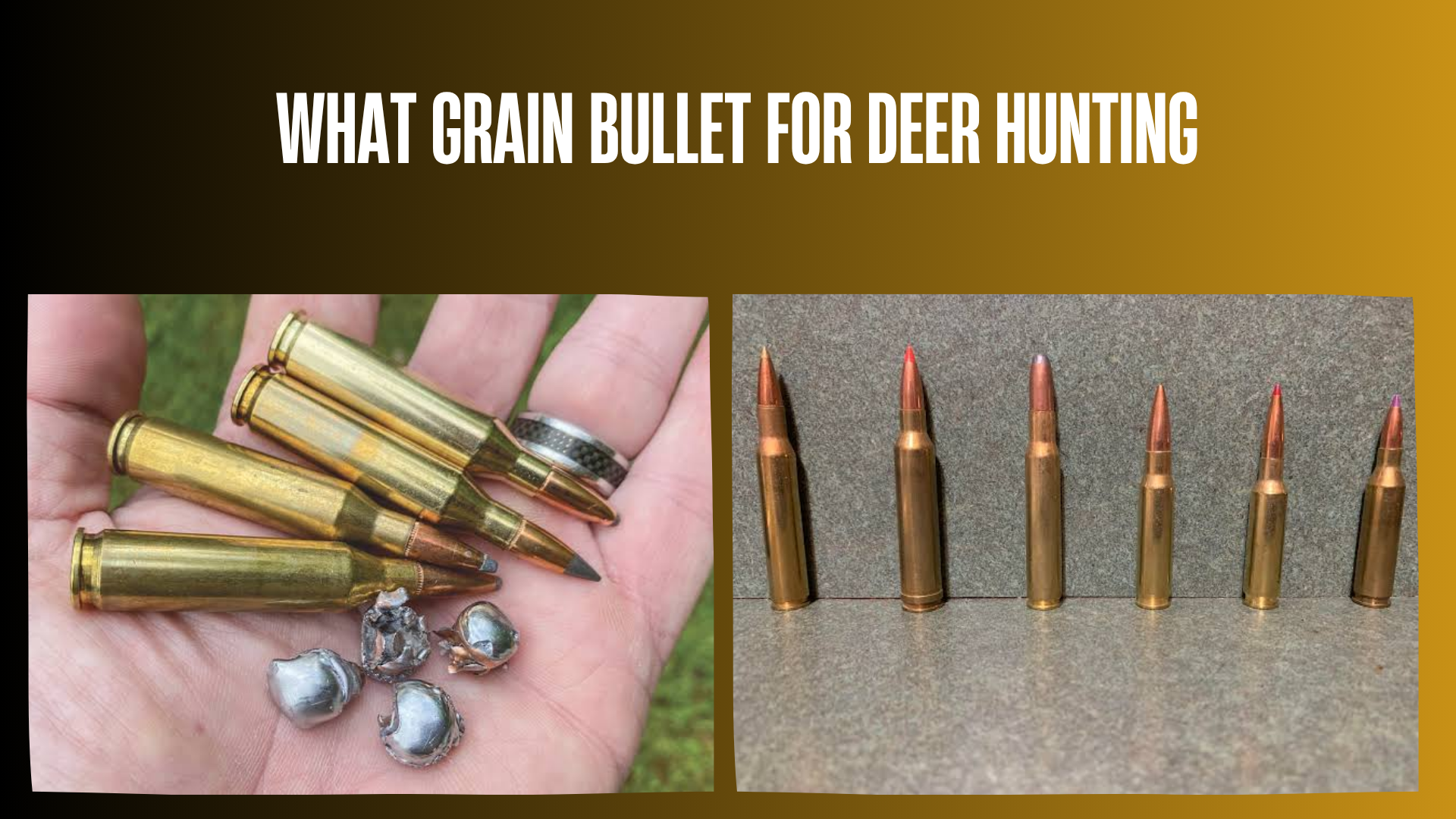

Common Deer-Hunting Bullet Weights by Caliber
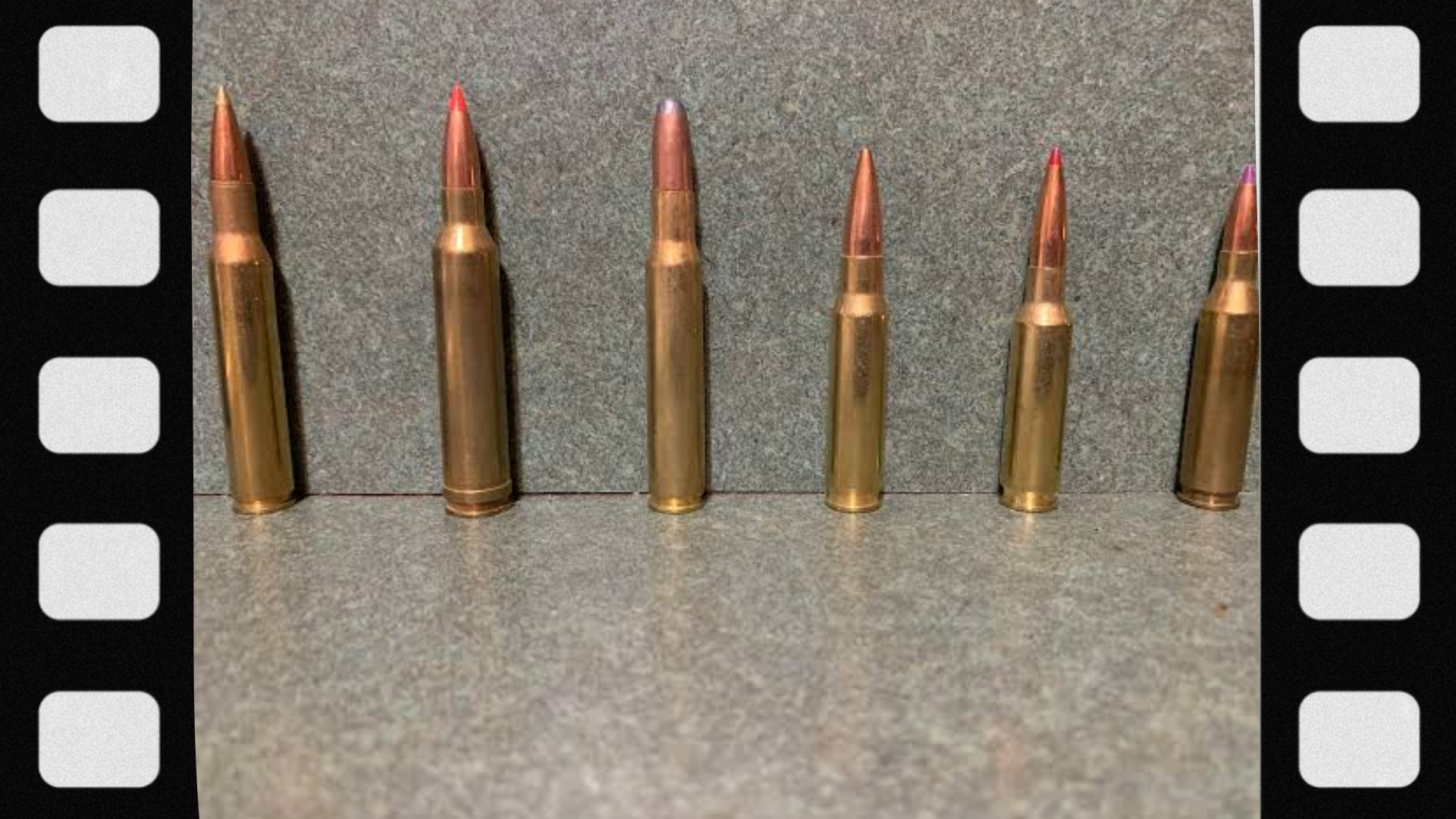
| Cartridge | Common Deer-Bullet Weights | Practical Starting Choice | Important Considerations |
|---|---|---|---|
| .223 Remington | 62–77 grains | Heavier, controlled-expansion hunting bullet | Not legal for deer everywhere; bullet construction and conservative shot selection are critical |
| .243 Winchester | 90–105 grains | 95 or 100 grains | Low recoil; avoid light varmint bullets that are not designed for deer |
| 6mm Creedmoor | 95–115 grains | 103–108 grains | Confirm the bullet is intended for hunting rather than target use |
| .25-06 Remington | 100–120 grains | 110 or 115 grains | Bullet construction becomes especially important at close-range, high-impact velocities |
| 6.5 Creedmoor | 120–143 grains | 129, 130, or 140 grains | Match expansion requirements to the expected impact distance |
| .270 Winchester | 130–150 grains | 130 or 140 grains | Both conventional and controlled-expansion hunting bullets are widely available |
| 7mm-08 Remington | 120–150 grains | 139 or 140 grains | A balanced range for recoil, trajectory, and deer-sized game |
| 7mm Remington Magnum | 139–175 grains | 150 or 160 grains | Use construction suited to the cartridge’s potentially high impact velocity |
| .30-30 Winchester | 150–170 grains | 150 or 170 grains | Use a projectile compatible with the firearm and magazine design |
| .308 Winchester | 150–180 grains | 150 or 165 grains | Both weights are established deer choices; choose the load your rifle groups best |
| .30-06 Springfield | 150–180 grains | 150 or 165 grains | Heavier bullets are available but are not automatically better for deer |
| .300 Winchester Magnum | 150–180 grains | 165 or 180 grains | Recoil and close-range impact velocity require careful load selection and practice |
| .350 Legend | 150–180 grains | 160 or 180 grains | Check straight-wall cartridge rules and the manufacturer’s intended use |
| .450 Bushmaster | 250–300 grains | A manufacturer-designated expanding hunting load | Expect substantial recoil and a more curved trajectory than many bottleneck cartridges |
These are common factory-load ranges, not universal legal minimums or guarantees of performance. Individual ammunition lines may offer weights outside these ranges. Always follow the firearm and ammunition manufacturers’ instructions.
Important Safety and Legal Notice
Deer-hunting ammunition rules vary by state, province, wildlife management unit, season, firearm type, and public-land jurisdiction. Some areas establish minimum caliber, cartridge, case-length, bullet-type, or energy requirements. Others prohibit certain projectiles or require certified nonlead ammunition.
For example, the California Department of Fish and Wildlife requires nonlead ammunition when taking wildlife with a firearm anywhere in California. That rule should not be assumed to apply everywhere, but it demonstrates why hunters must read the current regulations for their specific location.
Before hunting, verify the current regulation booklet, emergency orders, property rules, and ammunition restrictions through the appropriate wildlife or land-management agency. Official regulations override general online guidance.
What Does “Grain” Mean in Ammunition?
A grain is a unit of weight. One grain equals 1/7,000 of a pound. When a box is labeled “150 grain,” that number normally describes the weight of the projectile—not the amount of gunpowder in the cartridge.
Two cartridges can fire bullets of the same weight while producing very different velocities, trajectories, recoil levels, and terminal performance. Conversely, two bullets with identical grain weights can behave differently because one is a conventional lead-core soft point and the other is a bonded, partitioned, or monolithic copper bullet.
Bullet Weight Is Only Part of the Answer
Bullet construction
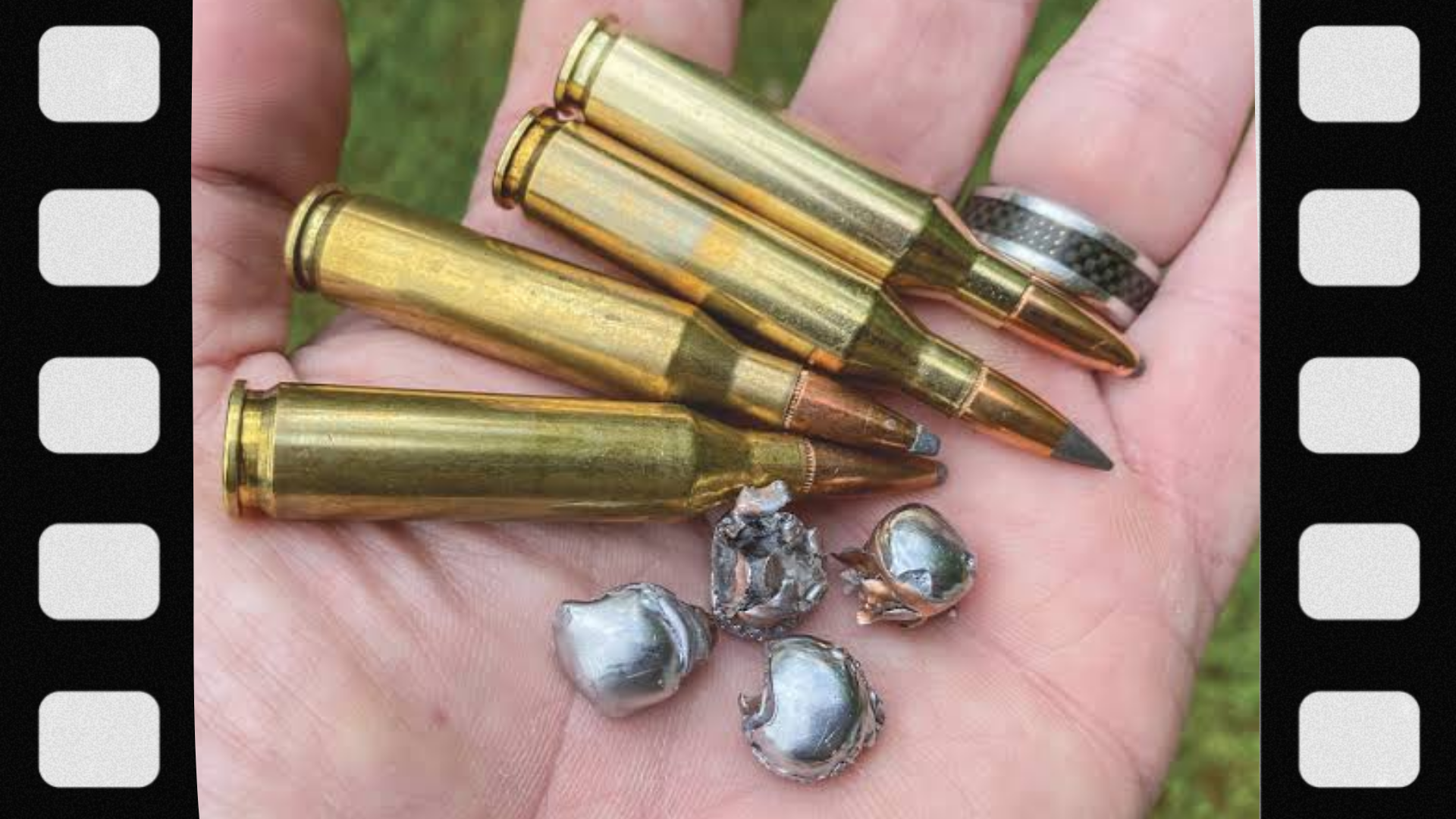
For deer, use an expanding bullet specifically identified by its manufacturer as suitable for deer-sized or medium game. Common designs include soft-point, tipped, bonded-core, partitioned, and monolithic copper bullets.
- Conventional cup-and-core bullets: Often expand readily and work well at ordinary deer-hunting velocities when used within their design limits.
- Bonded bullets: Bond the core to the jacket to help retain mass and support penetration.
- Partition-style bullets: Use an internal structure intended to preserve a rear section while the front expands.
- Monolithic copper bullets: Commonly retain substantial mass and may be lighter than lead-core bullets of similar length. They still require sufficient impact velocity to expand as designed.
- Target and varmint bullets: Should not be assumed suitable merely because their weight resembles that of a hunting bullet.
Accuracy from your rifle
Every rifle can show preferences among ammunition brands, bullet designs, and weights. A precisely placed 150-grain hunting bullet is generally more useful than a heavier projectile that groups poorly or produces more recoil than the hunter can control.
Changing bullet weight or ammunition type can shift the point of impact. Reconfirm the rifle’s zero whenever you change loads, even if the caliber and advertised velocity appear similar.
Expected hunting distance
A projectile must arrive with enough velocity to expand according to the manufacturer’s design. At longer distances, velocity falls. At very close range, a conventional bullet fired from a high-velocity cartridge may encounter more stress on impact.
Consult the ammunition manufacturer’s published trajectory and expansion guidance. Establish a personal maximum range based on verified field-position accuracy, not solely on a ballistic chart.
Recoil and shooter proficiency
Heavier bullets can increase recoil when other load characteristics are similar, although total recoil also depends on powder charge, muzzle velocity, firearm weight, stock fit, and muzzle devices. Excessive recoil can encourage flinching and reduce practical accuracy.
A moderate-recoil load that allows calm, consistent practice is often the better ethical choice.
Deer size and shot angle
Whitetails, mule deer, blacktails, and other deer vary in size. Bullet construction and penetration become increasingly important with larger animals, closer impact velocities, and more demanding shot angles.
Whenever possible, wait for a broadside or slightly quartering-away presentation that provides a clear path to the heart-lung area. Avoid marginal angles and never use a heavier bullet as justification for a poor shot.
How to Choose the Right Grain Bullet for Deer Hunting
- Read the barrel marking and owner’s manual. Use only the exact cartridge designation approved for the firearm.
- Check current hunting regulations. Confirm caliber, projectile, magazine, nonlead, firearm-season, and property-specific restrictions.
- Choose actual hunting ammunition. Look for a manufacturer-stated application such as deer, medium game, or big game.
- Begin near the middle of the common weight range. Examples include 100 grains in .243 Winchester, 130 grains in .270 Winchester, or 150–165 grains in .308 Winchester.
- Compare construction, not just weight. Consider the expected distance, velocity, deer size, and likely shot presentations.
- Test more than one suitable load. Fire controlled groups from a stable position and retain the load your rifle handles accurately and reliably.
- Confirm zero from realistic positions. Practice sitting, kneeling, supported standing, or from the rest you will legally and safely use in the field.
- Set a personal range limit. Take only shots you can place accurately under actual hunting conditions.
Lead-Core Versus Copper Bullet Weight
Copper is less dense than lead. Consequently, an all-copper bullet may be longer than a lead-core bullet of the same caliber and weight. A lighter copper bullet can sometimes provide penetration comparable to a heavier conventional bullet because it may retain more of its original mass, but performance depends on the specific design and impact velocity.
Do not automatically substitute a copper bullet with the same grain weight and expect identical trajectory, pressure, point of impact, or terminal behavior. Use factory ammunition approved for your firearm, or follow established published load data if you are a qualified handloader. Never improvise loading data.
Examples for Popular Deer Cartridges
.243 Winchester: 90–105 grains
A 95- or 100-grain expanding hunting bullet is a practical starting point for many .243 Winchester deer rifles. Lighter projectiles may be designed for varmints and can behave very differently on deer. Check the label and manufacturer’s stated game application.
6.5 Creedmoor: 120–143 grains
Common deer choices include 120-, 127-, 129-, 130-, 140-, and 143-grain hunting bullets. A 129- or 130-grain load can offer moderate recoil and useful velocity, while 140-class bullets are also popular. Construction and reliable expansion at the anticipated distance matter more than a small difference in weight.
.270 Winchester: 130–150 grains
The 130-grain hunting bullet is a familiar .270 Winchester deer choice, while 140- and 150-grain designs can provide other combinations of trajectory and penetration. Select according to accuracy, construction, and expected conditions rather than assuming the heaviest option is necessary.
.308 Winchester: 150–180 grains
For deer alone, 150- and 165-grain expanding bullets are common starting points. A 180-grain load can also work, but it may produce more recoil and a different trajectory. It is not automatically more effective on deer if the lighter load is accurate and appropriately constructed.
.30-06 Springfield: 150–180 grains
The .30-06 handles a wide range of bullet weights. A 150- or 165-grain deer load gives many hunters an effective balance of recoil, trajectory, and penetration. A 180-grain bullet may make sense when one legal load must also serve for larger game, provided it shoots accurately and the hunter handles the recoil well.
.30-30 Winchester: 150 or 170 grains
Both weights are traditional deer options. The firearm’s magazine design matters: ammunition used in a tubular magazine must have a projectile profile approved for that application. Follow the rifle and ammunition manufacturers’ instructions exactly.
Four Firearm Safety Rules
Bullet selection never replaces safe firearm handling. Apply these principles during practice, transport, loading, hunting, and unloading:
- Treat every firearm as if it is loaded.
- Keep the muzzle pointed in a safe direction.
- Keep your finger outside the trigger guard until ready to shoot.
- Be certain of the target and what is beyond it.
Match the cartridge designation on the ammunition box and cartridge headstamp exactly to the marking on the firearm. The Hunter Ed ammunition-matching guide explains why similarly named cartridges are not necessarily interchangeable.
Use eye and hearing protection at the range, keep ammunition in its original labeled packaging, and follow the firearm manufacturer’s loading and unloading procedure. A mechanical safety is a useful device, but it does not make unsafe handling acceptable.
Common Bullet-Selection Mistakes
- Selecting by grain weight alone: Confirm that the projectile is designed to expand on deer-sized game.
- Using a light varmint bullet: Some light bullets are built for rapid fragmentation rather than the penetration expected from a deer bullet.
- Using match ammunition without verifying its purpose: Accuracy-oriented target bullets are not automatically hunting bullets.
- Assuming heavier always means better: Added recoil and a different trajectory may reduce real-world accuracy.
- Copying another hunter’s load: A load that performs well in one rifle may group differently in another.
- Changing loads without checking zero: Different bullets can strike in substantially different places.
- Ignoring impact velocity: Expansion depends partly on the bullet’s remaining velocity at the target.
- Relying only on muzzle energy: Energy figures do not describe accuracy, construction, expansion, penetration, or shot placement.
- Overestimating practical range: A cartridge’s potential range may exceed the hunter’s proven field accuracy.
- Failing to check local law: A capable load may still be prohibited in a particular jurisdiction or season.
What Not to Do
- Do not fire ammunition that does not exactly match the firearm’s marked chambering.
- Do not use a bullet merely because its package or appearance resembles a hunting load.
- Do not mix cartridges or carry loose, unidentified ammunition.
- Do not shoot at sound, color, brush movement, or an animal you cannot positively identify.
- Do not fire without knowing what is behind and beyond the deer.
- Do not take running, obstructed, excessively distant, or otherwise low-percentage shots.
- Do not assume a particular caliber or bullet weight is legal nationwide.
- Do not trespass while hunting or recovering an animal.
- Do not allow equipment claims to replace practice, judgment, or hunter education.
Range-Test Checklist
- Verify the exact cartridge designation before loading.
- Inspect the firearm and ammunition according to manufacturer instructions.
- Use a safe, established range with an adequate backstop.
- Wear eye and hearing protection.
- Fire groups with each candidate hunting load.
- Allow the barrel to cool when necessary for a fair comparison.
- Record group size, point of impact, recoil, and any functioning issues.
- Choose only reliable ammunition that produces repeatable practical accuracy.
- Zero with the exact ammunition you will carry while hunting.
- Confirm the zero shortly before the season.
- Practice from realistic field positions at known distances.
Ethical Field Use and Game Recovery
Before taking a shot, positively identify the species and confirm that the animal is legal under the applicable license or tag. Ensure there is a safe backstop and no person, building, road, vehicle, livestock, or other protected target in the bullet’s path.
Choose a high-percentage shot within your demonstrated accuracy limit. After firing, observe the deer’s reaction, mark where it stood, and make every reasonable legal effort to recover it. Follow local rules governing tracking dogs, nighttime recovery, property access, and the carrying of firearms during recovery. Obtain landowner permission rather than trespassing.
New hunters should complete a recognized hunter education course. The U.S. Fish and Wildlife Service Hunter Education Program supports state and territorial instruction in firearm safety, hunting ethics, wildlife conservation, game laws, and outdoor skills.
FAQs
1. Is a 100-grain bullet enough for deer?
A properly constructed 100-grain hunting bullet can be suitable in cartridges such as the .243 Winchester. It must be legal, accurate from the rifle, and used within the bullet manufacturer’s performance limits.
2. Is a 150-grain bullet good for deer?
Yes. A 150-grain expanding hunting bullet is a common deer choice in cartridges including the .308 Winchester, .30-06 Springfield, .30-30 Winchester, and some magnum cartridges. Its behavior differs among those cartridges because velocity and construction differ.
3. Is a 165-grain bullet good for deer?
A 165-grain hunting bullet is a practical choice for many .308 Winchester and .30-06 rifles. It often provides a useful balance of trajectory and penetration, but accuracy and manageable recoil should decide between suitable loads.
4. Is a 180-grain bullet too heavy for deer?
No, but it may be more bullet than necessary for deer in some cartridges. It can produce additional recoil or a more curved trajectory without providing a meaningful advantage if a 150- or 165-grain load already performs accurately.
5. What grain .243 bullet should I use for deer?
Begin with a 95- or 100-grain expanding bullet explicitly intended for deer-sized game. Some lighter .243 bullets are varmint designs and should not be treated as interchangeable with deer bullets.
6. What grain 6.5 Creedmoor bullet is best for deer?
Common choices range from approximately 120 to 143 grains. Loads around 129, 130, or 140 grains are sensible starting points, provided the bullet is designed for hunting and expands at the expected impact velocity.
7. What grain .270 bullet should I use for deer?
A 130-grain expanding hunting bullet is a common starting choice. Suitable 140- and 150-grain loads can also work well when they are accurate and matched to the expected range and shot conditions.
8. What grain 7mm-08 bullet is good for deer?
Deer loads commonly use bullets from about 120 to 150 grains. A 139- or 140-grain hunting bullet is a balanced place to begin testing.
9. What grain .308 bullet should I use for deer?
Try 150- and 165-grain expanding hunting loads first. Choose the one that functions reliably, groups consistently, and produces recoil you can manage from field positions.
10. What grain .30-06 bullet should I use for deer?
A 150- or 165-grain hunting bullet is suitable for many deer applications. A 180-grain load can also be used, especially when selected for broader big-game use, but it is not automatically superior.
11. What grain .30-30 bullet should I use for deer?
Both 150- and 170-grain hunting loads are common. Use ammunition approved for your particular rifle, especially when the firearm has a tubular magazine.
12. Can a .223 be used for deer hunting?
That depends on local law. Where legal, use a robust controlled-expansion or monolithic hunting bullet designated for deer, stay within conservative limits, and require precise shot placement. Some jurisdictions prohibit .22-caliber centerfire cartridges for deer.
13. Is a heavier bullet more lethal?
Not automatically. Terminal performance depends on construction, impact velocity, penetration, expansion, anatomy, and placement. A heavier bullet cannot compensate for an inaccurate or poorly selected shot.
14. Do heavier bullets penetrate more deeply?
They sometimes do, but weight alone cannot predict penetration. Diameter, construction, retained mass, impact velocity, and the tissue or bone encountered all affect the result.
15. Do lighter bullets shoot flatter?
A lighter bullet may start faster, but trajectory also depends on aerodynamic efficiency and retained velocity. Compare manufacturer data for the exact loads and confirm the trajectory at a safe range.
16. Are copper bullets better for deer?
Copper hunting bullets can provide reliable penetration and substantial weight retention. They are not automatically best for every rifle or distance because they must still stabilize properly and reach the manufacturer’s required impact velocity for expansion.
17. Should a copper bullet be lighter than a lead-core bullet?
It often can be. Copper bullets are longer for a given weight and may retain more mass after impact, so manufacturers frequently offer them in somewhat lighter weights. Follow the manufacturer’s cartridge-specific recommendation.
18. Can I use target bullets for deer hunting?
Do not assume so. Use a projectile whose manufacturer specifically identifies it as appropriate for hunting deer-sized game. Some target bullets are not designed to expand or penetrate predictably on animals.
19. Can I use varmint bullets for deer?
Generally, a purpose-built deer bullet is the responsible choice. Varmint bullets may be designed for extremely rapid expansion or fragmentation and may not provide the penetration expected for deer.
20. Are hollow-point bullets good for deer?
The term “hollow point” alone does not identify the intended application. Some are hunting projectiles, while others are target designs. Check the manufacturer’s stated purpose and performance information.
21. Are soft-point bullets good for deer?
Many traditional soft-point bullets are designed for deer and have a long record of practical use. Select the correct caliber, weight, and velocity range, and verify accuracy in your rifle.
22. What is a bonded hunting bullet?
A bonded bullet attaches the lead core to the jacket to reduce separation and support retained mass. It may be useful when deeper penetration or better integrity at higher impact velocities is desired.
23. What is a controlled-expansion bullet?
It is a hunting projectile engineered to expand while limiting excessive breakup. The exact method may involve bonding, a partition, a solid shank, a tapered jacket, or monolithic construction.
24. Does bullet grain affect recoil?
It can. Within the same cartridge, heavier bullets are often associated with more recoil, but velocity, powder charge, rifle weight, stock fit, and other factors also affect felt recoil.
25. Does bullet grain affect accuracy?
Yes, but not in a universally predictable direction. Barrel twist, bullet length, ammunition consistency, rifle condition, and shooter technique all matter. Test suitable hunting loads rather than assuming one weight will be most accurate.
26. Does barrel twist rate affect deer-bullet choice?
Twist rate affects bullet stability, which relates more closely to projectile length and shape than weight alone. Consult the firearm and bullet manufacturers when considering an unusually long or heavy projectile.
27. Must I re-zero after changing bullet weight?
Yes. A different weight, design, velocity, or brand can shift the point of impact. Confirm the zero with the exact hunting load before carrying it in the field.
28. How many ammunition types should I test?
Testing two or three legal, purpose-built hunting loads is often enough to identify a reliable option. More testing may help with a particularly selective rifle, but safe practice and repeatability matter more than endless comparison.
29. How accurate should a deer rifle be?
It should keep every carefully fired shot inside the vital-zone target you use at your maximum hunting distance. Evaluate this from realistic field positions, not only from a benchrest.
30. How far can a deer bullet travel?
A rifle bullet can travel far beyond the intended target and remain dangerous. Never fire without a safe backstop, and do not use the visible deer as the backstop.
31. Is muzzle energy the best way to choose a deer load?
No. It is one piece of ballistic information, not a complete measure of hunting performance. Construction, impact velocity, expansion, penetration, accuracy, shot placement, and legality are also essential.
32. What bullet should a beginner deer hunter use?
A beginner should choose a moderate-recoil cartridge and a manufacturer-designated deer load that the rifle shoots accurately. Hunter education, supervised practice, firearm fit, and disciplined shot selection are more important than chasing maximum power.
33. Should mule deer use a heavier bullet than whitetails?
Not necessarily. Mule deer can be large, but habitat, distance, shot angle, construction, and accuracy matter more than species name alone. A suitable deer bullet in the normal range for the cartridge can serve both species.
34. Are deer-bullet requirements the same in every state?
No. States and individual hunting areas may regulate caliber, cartridge type, projectile material, magazine capacity, season weapons, or other factors differently. Check the current official rules for the exact hunt.
35. Where is nonlead ammunition required?
Requirements vary and can change. California requires nonlead ammunition for taking wildlife with a firearm statewide, while other jurisdictions may impose rules on particular lands or species. Consult the current wildlife-agency regulations.
36. How soon before deer season should I choose a load?
Choose early enough to obtain several boxes from the same product line, test accuracy, confirm zero, and practice from field positions. Waiting until the last day can leave insufficient time to correct equipment or availability problems.
37. Can one deer load also be used for elk?
Possibly, but the bullet must be suitable for the larger animal, legal for both hunts, and capable of adequate expansion and penetration at the expected velocity. Do not assume every lightly constructed deer load is appropriate for elk.
38. Does ammunition brand matter?
Brand matters less than verified compatibility, dependable manufacturing, appropriate bullet construction, and repeatable accuracy from the individual rifle. Different rifles may prefer different factory loads.
39. Can old ammunition be used for deer hunting?
Do not use ammunition showing corrosion, damage, contamination, loose bullets, or other deterioration. Store cartridges according to manufacturer guidance and have questionable ammunition evaluated by a qualified professional.
40. What is the most important factor after choosing a legal deer bullet?
Consistent, responsible shot placement is the central factor. Practice with the exact load, wait for a clear high-percentage opportunity, and stay inside your demonstrated ability.
Final Answer
So, what grain bullet for deer hunting should you choose? Use a purpose-built expanding hunting bullet within the normal range for your cartridge: approximately 90–105 grains for .243 Winchester, 120–143 grains for 6.5 Creedmoor, 130–150 grains for .270 Winchester, and 150–180 grains for .308 Winchester or .30-06 Springfield. Mid-range choices such as a 100-grain .243, 130-grain .270, or 150- to 165-grain .308 are sensible starting points.
The final decision should be based on local law, manufacturer guidance, bullet construction, reliable expansion at the anticipated distance, accuracy from your rifle, and manageable recoil. Verify your zero, observe the four firearm safety rules, limit shots to your proven ability, and choose high-percentage shot opportunities that support a humane harvest and responsible recovery.
Read more: