
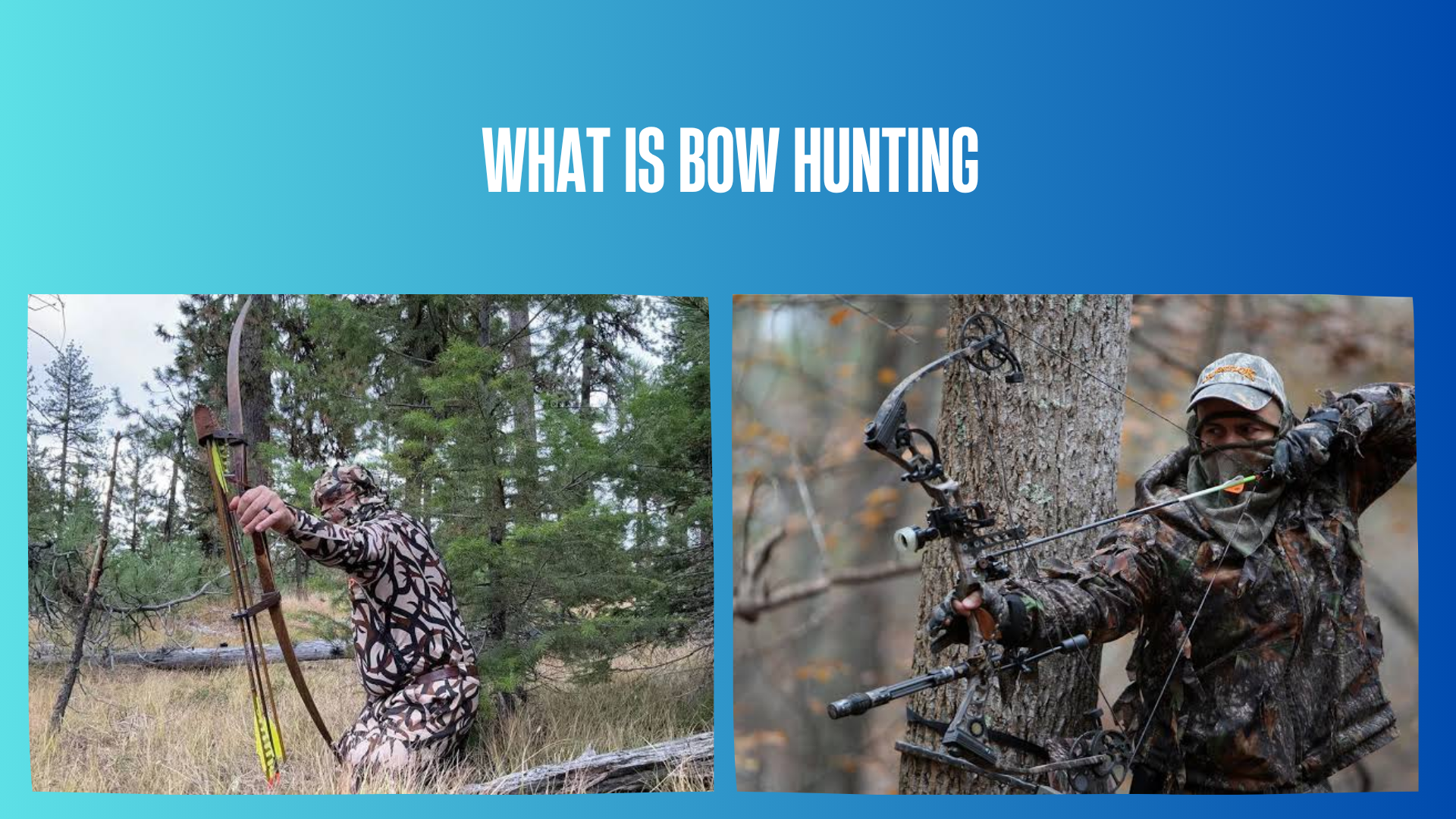

If you have watched someone quietly wait beside a game trail with a bow, you may have wondered: what is bow hunting, and how is it different from hunting with a rifle? The short answer involves more than swapping one piece of equipment for another. Bowhunting combines archery, knowledge of wildlife, legal preparation, close-range decision-making, and a commitment to responsible game recovery.
This guide explains the equipment, common methods, realistic challenges, and first steps for new hunters in the United States. Specific rules depend on your state, species, hunting area, and season; the general guidance below cannot replace your current wildlife agency regulations.
Quick Answer: What Is Bow Hunting?
Bow hunting, also written bowhunting, is the practice of hunting legally designated game animals with a bow and arrow. Hunters may use a compound bow, recurve bow, or longbow; crossbows also fall under archery hunting in many contexts, although their legal classification varies. Bowhunters typically rely on closer encounters than firearm hunters, along with practiced archery skills, wildlife knowledge, and careful shot selection. A responsible bowhunter completes required education, obtains the appropriate licenses and permits, follows local equipment rules, and declines any shot that is not safe or humane. Your best first step is to learn the rules where you plan to hunt and begin supervised target-archery practice.
What Makes Bowhunting Different?
Bowhunting is often described as a short-range hunting method. The bow stores energy as it is drawn; releasing the string transfers that energy to an arrow. Unlike a firearm, a hand-drawn bow has no gunpowder-driven projectile. That does not make the arrow harmless: an arrow can travel well beyond an appropriate hunting distance and can seriously injure a person or animal.
The distinctive part of bowhunting is getting close enough to evaluate an animal and make a controlled decision under field conditions. A hunter may spend hours studying a trail, watching the wind, or waiting for a suitable opportunity, then decide not to shoot because the angle, background, visibility, or animal behavior is wrong. That restraint is a core hunting skill, not a failed hunt.
| Question | Bowhunting in practice |
|---|---|
| What is used? | A suitable legal bow, matched arrows, and hunting-appropriate points such as approved broadheads for big game. |
| What is the typical approach? | Careful observation, concealment, scouting, and relatively close-range encounters. |
| What skills matter? | Safe archery, consistent form, judging distance, identifying game, recognizing good shot opportunities, and recovery planning. |
| Where can it happen? | On land where the hunter has legal access and the relevant species and archery equipment are permitted. |
| What determines a responsible shot? | The hunter’s proven accuracy, animal position, unobstructed path, safe background, suitable equipment, and legal conditions. |
| Can anyone start immediately? | No. Hunter education, bowhunter education, licenses, permits, age rules, or supervised participation may apply. |
How Does Bow Hunting Work From Start to Finish?
The process begins long before anyone draws a bow on an animal. The stages below show what a responsible hunt actually involves.
- Understand the rules: identify the species, open season, legal method, property-access rules, tagging and reporting duties, and relevant license or education requirements.
- Learn archery and establish a safe setup: work with an instructor or qualified archery shop to select a properly fitted bow, compatible arrows, and a safe shooting routine.
- Practice and confirm accuracy: develop repeatable form on a safe range, then practice realistic field positions and verify that hunting points fly as intended.
- Study the intended game: learn positive species identification, common habitat, movement patterns, the animal’s anatomy, and humane shot limitations.
- Scout where access is legal: observe the area without disturbing wildlife unnecessarily; confirm boundaries, entrances, and an emergency route.
- Hunt with patience: wait or move slowly depending on the method, continually reassessing wind, visibility, other people, and changing conditions.
- Make a deliberate decision: release an arrow only when the animal, shot angle, background, and distance all fit your demonstrated ability. Otherwise, let the opportunity pass.
- Follow through responsibly: observe the animal, use a careful and lawful recovery process if an arrow is released, complete required tagging or reporting, and care for harvested meat promptly.
There is no guarantee that a legal outing ends with a harvest. Observing wildlife, learning a location, and returning home safely are worthwhile outcomes.
Types of Bows Used for Hunting
Different bows ask different things of the archer. None is automatically the best for every beginner, and local rules can affect which one may be used.
| Bow type | How it works | Beginner consideration | Legal reminder |
|---|---|---|---|
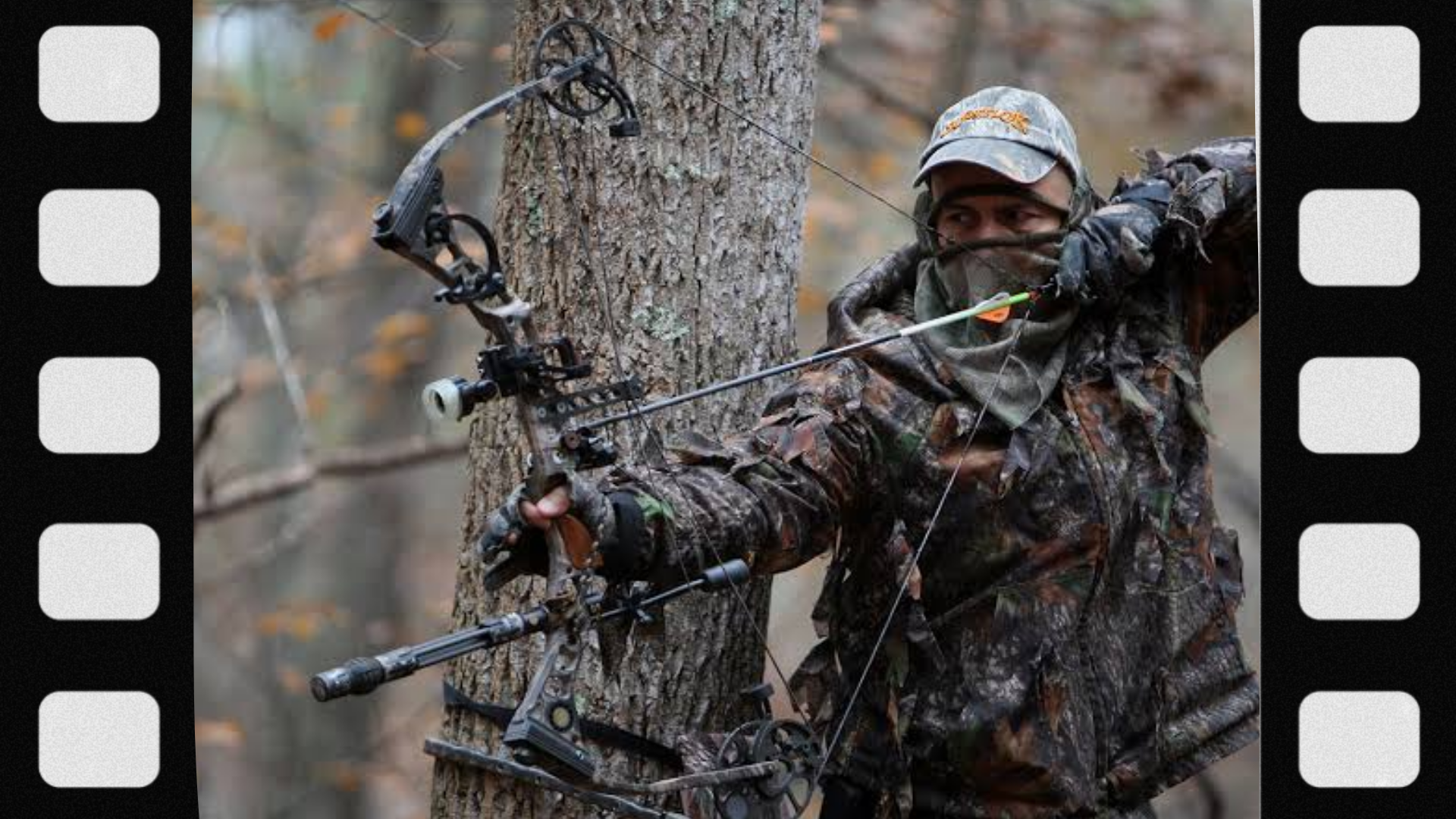
| Compound bow | Uses cams or pulleys to change the draw-force curve, often reducing the weight held at full draw. | Adjustability and accessories can help with a consistent fit, but tuning and maintenance matter. | Confirm allowed draw weight, equipment specifications, and applicable archery-season rules. |
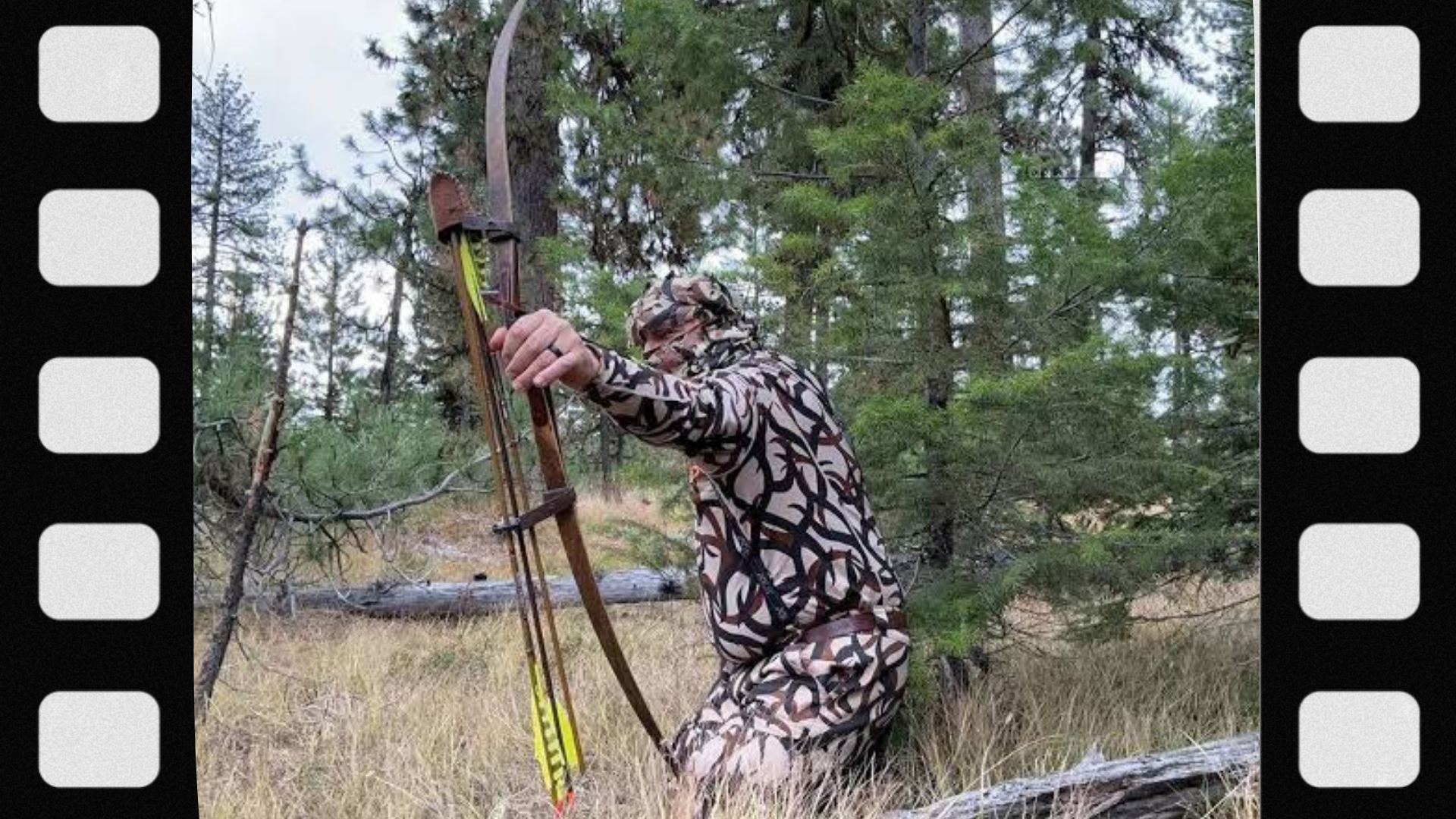
| Recurve bow | Curved limb tips store and release energy when the archer draws the string. | Requires practice to maintain consistent form while holding draw weight. | Check whether the bow and chosen arrowhead meet local requirements. |
| Longbow | A traditional, comparatively simple bow with long limbs. | Appeals to traditional-archery enthusiasts; consistency usually requires sustained practice. | Traditional equipment is not exempt from season or hunting regulations. |
| Crossbow | A bow assembly mounted on a stock-like frame; the string can be held in a cocked position by a mechanical mechanism. | Requires model-specific cocking, handling, and safe unloading knowledge. Never assume it is inherently safer. | Some jurisdictions treat crossbows differently from hand-drawn bows, including licensing and season restrictions. |
Fit matters more than marketing: draw length, manageable draw weight, hand dominance, arrow compatibility, and access to qualified instruction affect your experience far more than a headline speed claim. Test options under supervision rather than choosing a bow solely because it looks powerful.
What Do Draw Weight, Draw Length, and Arrow Spine Mean?
Draw weight is the force needed to draw the bow at a specified point. It should be manageable without straining, twisting, or losing control. Some places set minimum legal hunting requirements, but there is no single minimum that applies everywhere.
Draw length is a measurement related to how far the string is drawn. A bow that does not fit the archer can undermine repeatability and comfort. Arrow spine describes a shaft’s stiffness or resistance to bending; arrows must be matched to the bow and the shooter’s setup. Use the bow and arrow manufacturers’ instructions or guidance from a qualified technician, especially when changing draw settings or arrow components.
What Is a Broadhead?
A broadhead is a hunting arrowhead with cutting blades. Fixed-blade and mechanical designs are common categories, but their suitability depends on compatibility, legal rules, and verified flight from the individual setup. They are extremely sharp: keep broadheads covered in a proper quiver, handle them with appropriate tools, and never leave exposed hunting arrows where another person could touch them. Standard field points used for ordinary target practice should not be assumed to be legal or appropriate for big-game hunting.
What Animals Can You Bow Hunt?
Depending on the location and season, bowhunters may pursue white-tailed or mule deer, elk, wild turkey, certain small-game species, and other legally huntable wildlife. Some jurisdictions also provide opportunities for species such as black bear or wild hog. Species eligibility changes with location and season; a legal deer setup or permit does not automatically authorize hunting a different animal.
Deer are a familiar example in U.S. discussions because they illustrate the importance of scouting, careful distance judgment, and the ability to pass on poor opportunities. Hunting birds or small game can involve different rules, arrow points, recovery expectations, and habitat. Check the specific species regulation rather than treating every form of archery hunting as interchangeable.
Bowfishing is another related activity that uses specialized arrows and line-retrieval equipment. It is governed by its own fishing and wildlife rules in many places and should not be confused with ordinary land-based bowhunting.
How Far Can a Bowhunter Responsibly Shoot?
There is no universal ethical bowhunting distance. Bowhunter education materials describe bows as short-range hunting tools, but a number such as 20, 30, or 40 yards is not a blanket permission to shoot. A person may be consistent on a calm range and much less consistent with heavy clothing, uneven ground, an awkward posture, wind, or an alert animal.
Set a personal limit from repeatedly demonstrated accuracy with your hunting equipment in comparable conditions, and be willing to shorten it. Also consider whether the animal may move before the arrow reaches it. An arrow’s possible flight distance is much farther than its sensible hunting distance, so a safe background remains essential even for a close encounter.
For a new hunter, the useful question is not “How far can this bow shoot?” but “At what distance can I make the correct decision and shoot reliably, with a safe backstop and a clear, unobstructed opportunity?”
How Do Bowhunters Find and Approach Game?
Ground Blinds and Patient Waiting
A ground blind gives the hunter a concealed position from which to observe a potential travel route or feeding area. It is often a practical way to learn patience without taking on the additional hazards of an elevated stand. The hunter still needs a safe field of fire, a known background, legal access, and room to handle the bow without hitting the blind.
Still-Hunting and Spot-and-Stalk
Still-hunting means moving slowly and stopping frequently to scan for animals. Spot-and-stalk begins by locating an animal and then considering whether a careful approach is possible without causing unnecessary disturbance or crossing a property boundary. Terrain, wind, habitat, and the animal’s response can make either approach unsuitable on a given day.
Elevated Stands
Some bowhunters wait in tree stands, but height introduces a significant fall risk. Use a correctly fitted full-body fall-arrest system, remain attached as directed during ascent, use, and descent, inspect the equipment, follow all manufacturer limits, and raise or lower the unloaded bow with a haul line rather than carrying it while climbing. A ground blind can be a sensible alternative for hunters who have not received elevated-stand training.
Essential Bowhunting Gear: What You Need and What You Can Skip
You do not need the most expensive equipment to hunt responsibly. Choose gear based on the species, terrain, weather, local regulations, fit, safety, reliability, maintenance requirements, and your actual experience.
| Item | Purpose | Priority | What to check |
|---|---|---|---|
| Legal bow and matched arrows | Primary hunting equipment | Essential | Safe fit, condition, arrow spine, manufacturer guidance, local specifications |
| Species-appropriate, legal arrow points | Meets hunting requirements for intended game | Essential when required | Regulations, fit, condition, secure covered storage |
| Hunting license, tags, required education proof | Legal authorization and compliance | Required where applicable | Current rules, species, land unit, residency, reporting instructions |
| Safe quiver and protective bow case | Protects people and equipment during carrying or transport | Essential safety gear | Blade coverage, secure arrow retention, travel suitability |
| Weather-appropriate clothing and footwear | Comfort and prevention of exposure problems | Essential field preparation | Temperature, precipitation, traction, required visibility clothing |
| Communication, navigation, water, and first aid | Supports emergency planning and return travel | Essential field preparation | Coverage gaps, offline maps, route, expected return time |
| Full-body harness and lifeline | Fall protection in an elevated stand | Essential if hunting from a stand | Manufacturer instructions, fit, inspection, proper attachment |
| Rangefinder or bow sight | Helps with distance assessment or aiming | Useful, setup-dependent | Practice, accuracy, battery needs where relevant |
| Binoculars | Observing and identifying wildlife without drawing a bow | Useful | Clarity, durability, carrying comfort |
| Blind, trail camera, or extra accessories | Convenience for specific hunting methods | Optional | Property permission, local rules, usefulness to the chosen method |
Accessories never substitute for practice. A reliable basic setup and sound judgment are more important than collecting every gadget advertised to hunters.
Archery Practice Is Not the Same as Being Ready to Hunt
Target archery teaches mechanics. Bowhunting also requires judgment about animals and changing surroundings. Before hunting, a beginner should be able to inspect equipment, load and handle arrows safely, repeat a shooting routine without losing control, and identify circumstances in which no shot should be attempted.
At an approved range, start with safe instruction and appropriate practice targets. Build consistent form before increasing distance. Once competent, practice with the clothing and shooting positions you might use in the field, using only range-approved equipment and target arrangements. Confirm that your intended hunting-point setup is properly tuned and accurate at a suitable, safe facility; a change in arrow or broadhead configuration can change impact and flight.
Do not dry-fire a bow: releasing its string without the correct arrow can damage equipment or injure the shooter. With a crossbow, follow the exact manufacturer’s cocking and uncocking procedures; never improvise a method to unload it.
Safe and Ethical Shot Selection
Experienced bowhunters make decisions based on more than seeing an animal within range. A high-percentage opportunity depends on a positively identified legal animal, unobstructed arrow path, favorable angle, reliable distance estimate, stable shooting position, and known safe background.
Bowhunter education programs commonly identify broadside and quartering-away presentations as more favorable opportunities for properly trained hunters of big game. Head-on, rear-facing, heavily obstructed, or otherwise marginal shots should be declined. The appropriate shot also depends on species anatomy and the hunter’s training; this overview is not a substitute for an in-person bowhunter course.
Never shoot at movement, sound, or an unidentified silhouette. Know what is in front of the animal, immediately behind it, and beyond it. If the animal is alert, moving unpredictably, partly concealed, or positioned against an unsafe skyline, do not release an arrow. The ethical choice is often to wait or go home without taking a shot.
Every released arrow also creates a responsibility to make reasonable, lawful efforts to locate and recover the animal. Careful observation, preserving evidence, respecting property boundaries, and getting experienced assistance when needed are more responsible than rushing after an uncertain hit.
Is Bow Hunting Legal? Licenses, Seasons, and Crossbow Rules
Bowhunting is legal for specified game and in specified places, but there is no single U.S. bowhunting rulebook. Requirements can vary by state, wildlife management unit, species, hunting season, land ownership, age, disability accommodation, and equipment type. Being allowed to shoot a bow at a supervised range does not authorize hunting with it.
Before an outing, check the current regulations published by the wildlife agency for the exact place you plan to hunt. Confirm all of the following:
- Whether the species is open to archery hunting on your intended dates and land unit.
- Whether a general hunting license, an archery privilege, special tag, drawing, or access permit is necessary.
- Whether hunter education and a separate bowhunter education course are required for your situation.
- Which bow types, arrowheads, draw specifications, or other equipment are legal.
- Whether a crossbow is treated differently from a hand-drawn bow for that season or license.
- Which harvest limits, reporting requirements, transport rules, visibility clothing rules, and property restrictions apply.
Current rules can differ even across nearby states. For example, New York’s Department of Environmental Conservation explains its bowhunter education requirements, while Florida’s Fish and Wildlife Conservation Commission describes separate considerations for archery and crossbow permits, including wildlife management areas. These examples explain why you must check; neither state’s guidance is a national rule.
Regulatory information reviewed October 15, 2026. Rules, emergency orders, season dates, and permits can change after publication. Recheck your agency’s current season guide immediately before hunting. If you use public land, confirm any additional access rules with the managing agency; if you use private land, obtain the required landowner permission. Never assume an injured animal gives you the right to trespass.
Bowhunting Safety Checklist Before Leaving Home
- Inspect bow limbs, strings, cables, arrows, and accessories for wear or damage; get questionable equipment checked professionally.
- Keep arrows in a quiver that fully shields broadhead blades, and transport the bow as the manufacturer recommends.
- Take required licenses and documentation, and verify property boundaries and permitted access.
- Tell a trusted person where you will be, your planned route, and when you expect to return.
- Check weather, daylight, terrain, water, first aid, navigation, and communication options.
- Use a safe direction and backstop whenever handling or shooting an arrow; only nock one when it is safe.
- Follow local blaze-orange or other visibility rules, including any overlap with firearm seasons.
- For elevated hunting, inspect the stand, use an appropriate full-body harness and lifeline, and raise the bow separately.
- Be prepared to end the hunt if visibility, weather, fatigue, equipment damage, or another hazard makes continuing unsafe.
Why Do People Choose Bowhunting?
Some people value the close observation of wildlife and the patience required to hunt with limited range. Others enjoy learning traditional archery, spending time outdoors, developing fieldcraft, participating in lawful wildlife management, or obtaining game meat. These reasons vary by person, and responsible hunters can pursue them without treating a harvest as the only measure of success.
There are real limitations. Bowhunting demands regular practice, may offer fewer appropriate opportunities, and introduces risks from sharp arrows, changing field conditions, and sometimes elevated stands. Hunting with a bow is also not automatically humane simply because it is quieter; humane outcomes depend on equipment, shot choice, competence, recovery, and restraint.
Seven Beginner Mistakes Worth Avoiding
- Buying more draw weight than you can control: prioritize fit, safe form, and any legal minimum over a challenging number.
- Assuming target-range accuracy transfers unchanged to the woods: build field-relevant competence and keep a conservative personal limit.
- Using unmatched arrows or unverified broadhead flight: have the setup checked and practice appropriately before hunting.
- Assuming crossbows have the same rules as other bows: confirm the exact category, license, and season for your jurisdiction.
- Relying only on a phone or app: prepare for signal loss, battery failure, bad weather, and navigation mistakes.
- Using a tree stand without proper fall protection: obtain training, inspect equipment, and follow the full-body harness and lifeline procedures.
- Taking a shot just because the animal is close: choose the safe, legal, high-percentage opportunity—or choose not to shoot.
Your First Bowhunting Season: A Practical Learning Path
Start with education, not a gear shopping spree. Contact your state wildlife agency about hunter education and bowhunter-specific requirements. Find an archery instructor or supervised club where you can test equipment, learn safe range habits, and ask questions about fit.
Next, practice consistently until you understand your equipment and can demonstrate dependable accuracy without straining. Learn about your intended game from a reputable education course and study your local regulations. Seek an experienced, law-abiding mentor if possible; observing a hunt without taking a shot can be a useful first experience.
For the first outing, choose a place you may legally enter, a simple access route, manageable terrain, favorable weather, and a conservative plan. A ground-level position may be more appropriate than an elevated stand. Bring a recovery plan and emergency contact information, and remain willing to end the day without a harvest. Make notes afterward about conditions, what you observed, and what you should practice next.
Frequently Asked Questions About Bow Hunting
1. Is bow hunting the same as archery?
No. Archery is the broader activity of shooting bows and arrows, commonly at inanimate targets. Bowhunting is a hunting activity involving wildlife, permits, ethical decisions, and game-recovery responsibilities.
2. Is bowhunting the same as crossbow hunting?
Crossbows are a form of archery equipment, but many hunters and regulators distinguish crossbow hunting from hunting with a hand-drawn bow. Check your local legal classification and permitted season.
3. Is bow hunting legal in the United States?
Yes, for designated wildlife and under jurisdiction-specific regulations. Legality depends on the state, hunting unit, season, species, equipment, and licensing requirements—not merely ownership of a bow.
4. Do you need a license to bow hunt?
Generally, hunting requires appropriate licensing, with possible additional privileges, tags, or permits. Exemptions and specific documents vary, so verify with your state wildlife agency.
5. Do you need a bowhunter education course?
Some jurisdictions or hunting situations require bowhunter education in addition to general hunter education. Even where optional, a state-recognized course is valuable for safety, equipment, ethics, and shot judgment.
6. Can beginners learn bowhunting?
Yes. Start with safe, supervised archery instruction, learn the law and animal identification, and build skills over time. A first hunt can be an educational observation outing without releasing an arrow.
7. Is bowhunting harder than rifle hunting?
Bowhunting generally creates a more demanding close-range encounter and requires highly consistent archery skills. Difficulty also depends on terrain, species, hunter experience, and conditions; neither method removes the need for safety and ethics.
8. Which bow type is easiest for a beginner?
A well-fitted, manageable bow with qualified instruction is a better starting point than any universally named type. Adjustable compound bows suit some learners; others prefer recurve archery. Try equipment safely before deciding.
9. What is a compound bow?
A compound bow uses a cam or pulley system that changes draw force as the string moves. Its settings and components need correct adjustment and periodic inspection.
10. Can you hunt with a recurve or longbow?
Where regulations allow, yes. Traditional equipment demands consistent form, appropriate matching of arrows, and an especially realistic understanding of the archer’s range limitations.
11. What draw weight is required for hunting?
There is no single universal requirement. Some jurisdictions specify minimums for particular species or equipment, while safe personal control remains important. Check the current legal requirement and the manufacturer’s specifications.
12. How do you know whether a bow fits?
Assess manageable draw weight, suitable draw length, comfortable grip, and controlled repeatable form with a qualified instructor or technician. A bow that forces strain or awkward movement may be a poor fit.
13. How far can a hunting bow shoot?
An arrow can travel much farther than an appropriate hunting shot. Responsible distance depends on proven accuracy, conditions, the animal, and a safe background; do not confuse maximum travel with ethical range.
14. Can a beginner bowhunt at 40 yards?
No distance is automatically appropriate for a beginner. Only consider a hunting opportunity inside a conservatively established personal limit, with reliable accuracy, a suitable angle, and a safe backstop.
15. What arrows do bowhunters use?
Hunters use arrows matched to their bow’s setup and the intended purpose. Shaft spine, length, weight, nocks, and points must be compatible according to manufacturer guidance and applicable regulations.
16. Are broadheads necessary?
Many big-game regulations require suitable broadheads. The exact legal type and dimensions can vary. Confirm the law, the intended species, and compatibility before an outing.
17. Are fixed-blade and mechanical broadheads identical?
No. Fixed-blade heads expose their cutting edges in a fixed configuration, while many mechanical heads deploy blades during use. Match any design to your setup and local rules rather than assuming the two fly or function identically.
18. Can you bowhunt deer?
Yes, where deer archery hunting is permitted, during the legal season, and with appropriate licenses and equipment. Deer-specific identification, anatomy, recovery, and tagging education is important.
19. Can you bowhunt turkeys or small game?
Often, but legal species, seasons, equipment and arrow-point rules differ. Research the specific game category, not just general deer-hunting guidance.
20. Can you bowhunt on public land?
Some public lands allow archery hunting, but access, designated zones, season closures, permits and managing-agency rules vary. Confirm the precise parcel and current regulations before entering.
21. Can you practice bowhunting in your backyard?
Target practice and hunting are different activities. Local ordinances and safety requirements may restrict even backyard archery. Use an approved range with a proper backstop when in doubt; do not assume property ownership permits hunting.
22. Is bowhunting allowed at night?
That depends on the species and jurisdiction. Many game-hunting activities have specific legal hours; never assume nighttime archery is lawful or safe simply because a bow is quiet.
23. Does a bow make noise?
Yes. Drawing, releasing, equipment vibration, and the arrow can all produce sound. An animal may react before impact, one reason to stay conservative with distance and opportunity selection.
24. Can a bow be dangerous without an arrow?
Yes. A damaged or improperly handled bow can injure someone, and releasing the string without a suitable arrow—dry-firing—can cause serious damage and injury.
25. Should a new bowhunter use a tree stand?
Not necessarily. Elevated hunting adds fall hazards and requires proper equipment and training. A legal ground blind or ground-level hunt may offer a simpler way to learn.
26. What is a safe shot angle for bowhunting?
Bowhunter education often presents broadside and quartering-away positions as higher-percentage opportunities for big-game hunters. Species anatomy, obstructions, movement, and the hunter’s skill still determine whether a shot should be declined.
27. What should you do if an animal moves before the shot?
Do not force an uncertain release. Maintain safe control of the bow, reassess the angle and background, and be prepared to let the animal move away.
28. What if an animal is wounded and leaves the property?
Follow applicable tracking and recovery laws. Do not trespass. Preserve observations and seek the landowner’s permission or appropriate local assistance rather than pursuing recklessly.
29. Is camouflaged clothing required for bowhunting?
Not universally. Concealment clothing is a choice, but some hunting situations require conspicuous garments such as hunter orange or pink. Safety and legal visibility rules take precedence over camouflage.
30. How often should bowhunters practice?
Often enough to maintain consistent, controlled shooting and recognize skill limitations. The schedule varies by experience, physical condition, and equipment; quality instruction matters more than an arbitrary number of arrows.
31. Can you bowhunt without a sight?
Traditional archery may be practiced without a mechanical sight, where legal. Shooting without one does not reduce the need for reliable accuracy, safe range practices, and an appropriate personal hunting limit.
32. Are bowhunting seasons always longer than firearm seasons?
No universal rule guarantees that. Some jurisdictions offer separate archery periods, but exact dates and opportunities depend on the species and local regulations.
33. Is bowhunting more humane than firearm hunting?
Neither method is automatically humane. Outcomes depend on legal and suitable equipment, proficiency, disciplined shot selection, and prompt responsible recovery of wounded game.
34. What is a good first goal for a new bowhunter?
Complete required education, handle the bow safely, develop repeatable target accuracy, identify wildlife correctly, and understand when not to shoot. A harvest is not necessary to make a first outing meaningful.
35. Where can I learn to bowhunt responsibly?
Start with your state wildlife agency’s hunter education program, a recognized bowhunter education course, a supervised archery club, and an experienced legal hunting mentor. The National Bowhunter Education Foundation study guide is a helpful study resource, but check your agency for courses that actually satisfy its certification requirements.
Official Bowhunter Education and Regulatory Resources
For rules and safety information, use official agency pages and recognized hunter education resources rather than relying on old forum posts or generalized season charts.
- National Bowhunter Education Foundation study guide — bow equipment, safety, methods, shot choice, and responsible hunting principles.
- Bowhunter education: archery safety — safe directions, backgrounds, and dry-fire hazards.
- Bowhunter education: effective shot selection — choosing appropriate opportunities and declining marginal angles.
- Wisconsin DNR: tree stand safety — full-body harnesses, lifelines, equipment checks, and safe climbing.
- New York DEC: hunter education and certifications — an example of jurisdiction-specific bowhunter education requirements.
- Florida FWC: deer hunting rules FAQs — an example of season-specific and crossbow permit requirements.
Final Answer: What Is Bow Hunting?
What is bow hunting? It is the regulated pursuit of game animals with a bow and arrow, supported by archery skill, knowledge of wildlife, patience, and careful ethical decisions. It may involve a compound bow, recurve, longbow, or a crossbow where allowed, but the method does not become safe or humane simply because the weapon is quiet or the encounter is close.
For a first-time hunter, the best foundation is straightforward: check current local regulations, complete required education, choose equipment you can control, practice with qualified instruction, and make safety and responsible recovery non-negotiable. The ability to pass up a doubtful shot is one of the most important skills a bowhunter can develop.