
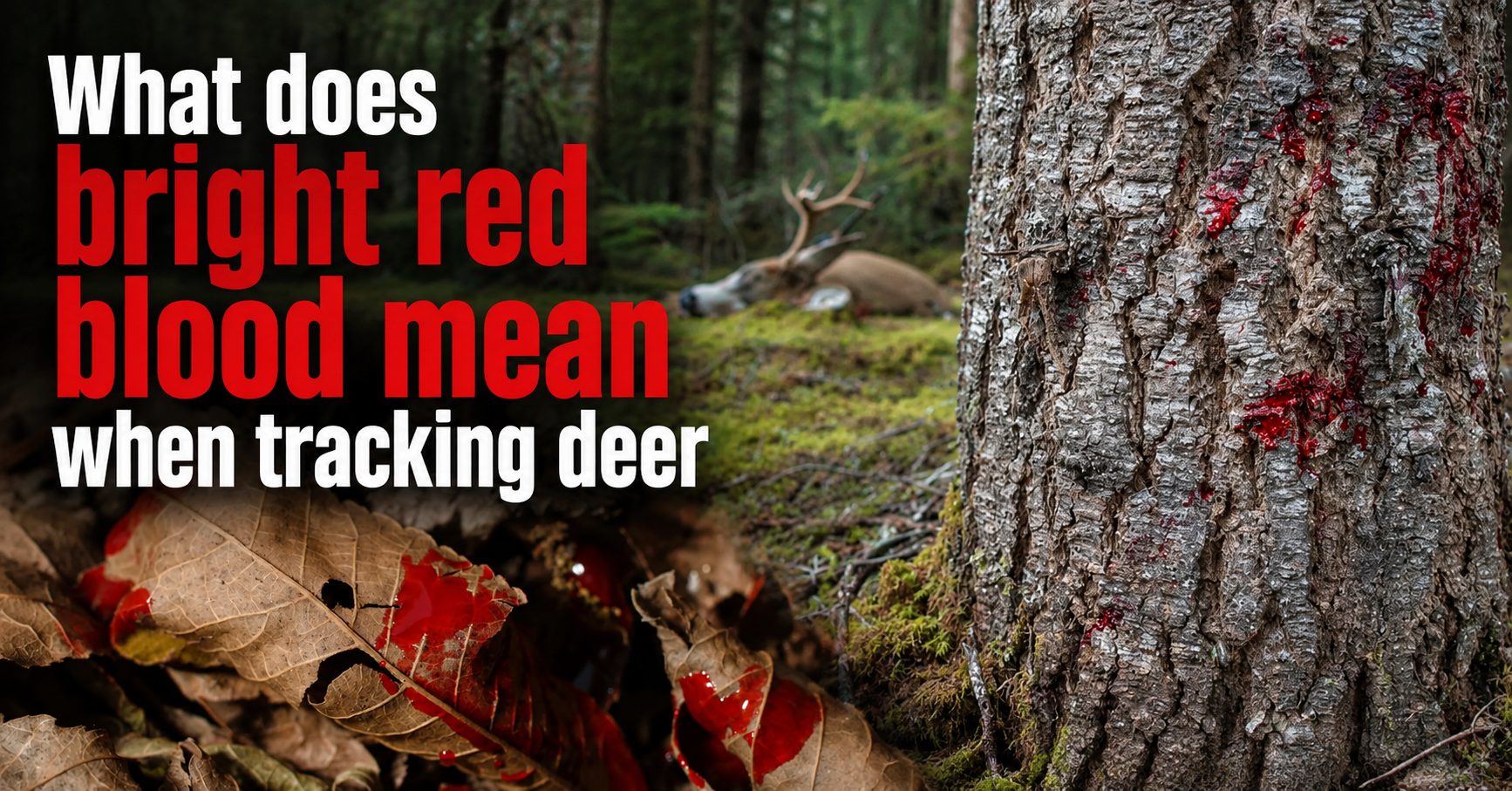

Bright red blood while tracking a deer indicates fresh, oxygen-rich bleeding, but it does not identify the wound by itself. It may come from the lungs, heart, a major artery, or a superficial muscle or leg wound. The volume, bubbles, spray pattern, blood height, hair, tracks, shot angle, and deer’s reaction are all needed to interpret the hit responsibly.
A heavy, continuing trail of bright red blood can be encouraging, especially when accompanied by froth or a clear chest-cavity shot. Scattered bright drops that disappear quickly may represent a nonfatal muscle wound. Avoid rushing the trail based only on color.
Quick Answer
Bright red blood can indicate arterial bleeding or oxygenated blood from the heart or lungs, but muscle wounds can look just as bright. Frothy or bubbly pink-red blood is more consistent with a lung hit, while a heavy spraying trail may suggest a major blood vessel. Sparse drops that decrease rapidly may come from muscle, brisket, or leg tissue. Evaluate the complete pattern before deciding when and how to track.
Bright Red Blood at a Glance
| Blood sign | Possible meaning | Important caution |
|---|---|---|
| Bright red with bubbles or foam | Possible lung involvement | Bubbles are useful evidence but do not guarantee a double-lung hit. |
| Heavy bright red spray | Possible artery, heart, or major vessel | Confirm the trail continues; some muscle wounds bleed heavily at first. |
| Steady bright red blood on both sides of the trail | Possible pass-through chest wound | Shot angle and blood height still matter. |
| Small bright drops that fade quickly | Possible superficial muscle, brisket, or leg wound | Contacting a legal tracking-dog team early may improve recovery chances. |
| Bright blood mixed with white hair | Possible low body, brisket, or lower-leg hit | Hair color varies by season and body location. |
| Bright blood followed by a bed | The deer stopped and may be wounded nearby | Do not automatically push beyond the bed if the deer was recently disturbed. |
Why Bright Red Blood Is Not a Certain Lung-Hit Sign
Fresh blood from arteries and well-oxygenated tissues tends to appear bright red. That includes blood associated with the lungs and major vessels, but it can also include blood from muscles and lower-leg injuries.
The National Bowhunter Education Foundation’s blood-sign guidance identifies bright red blood with arterial bleeding and frothy blood with possible lung involvement. These clues are starting points rather than a complete diagnosis of shot placement.
Light conditions also affect perception. Blood can appear different under a headlamp, flashlight, colored leaves, wet vegetation, snow, or fading daylight. As blood dries, it becomes darker and browner.
How to Read the Complete Blood Trail
Look for Bubbles or Froth
Small bubbles or pink-red foam can indicate that blood mixed with air from respiratory tissue. This supports a possible lung hit, particularly when the observed impact was through the chest and the trail remains strong.
However, bubbles can also be introduced when blood strikes vegetation or is disturbed. Do not use one bubbly drop as the only evidence.
Evaluate the Amount of Blood
A large, continuing volume is generally more promising than isolated drops. Important patterns include:
- Blood sprayed across vegetation
- Blood on both sides of the deer’s path
- A continuous line rather than widely spaced drops
- Increasing blood volume
- Large pools where the deer stopped or bedded
A heavy trail can still decline if the wound becomes plugged with hair, fat, tissue, or clotted blood. Conversely, a muscle wound may bleed heavily near the impact site and then stop.
Note the Height of the Blood
Blood low on grass and leaves may come from a low exit wound, lower leg, or blood running down the body. Blood higher on brush may come from an entrance wound or be sprayed during movement.
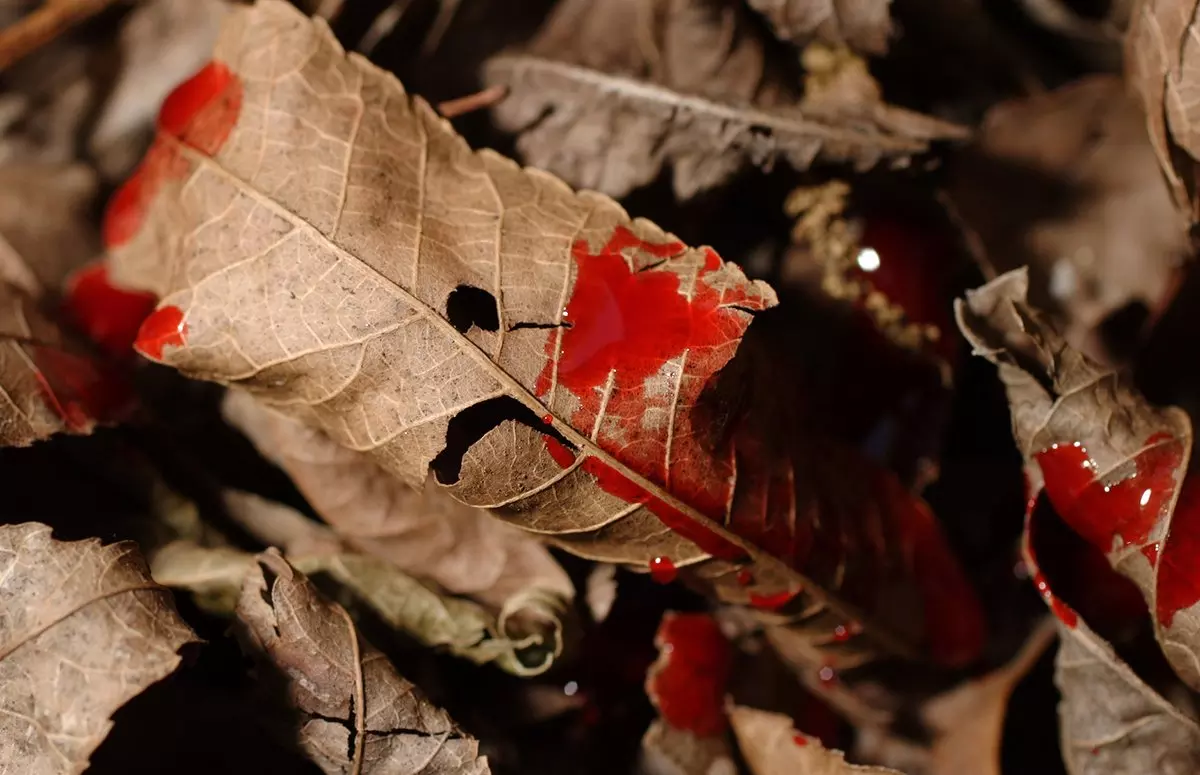
Record whether blood appears consistently on one side or both sides. This may help reconstruct the wound path, but terrain and the deer’s movement can redistribute blood.
Examine Hair Carefully
| Hair appearance | Possible body area | Limitations |
|---|---|---|
| Short, brown body hair | Side, shoulder, or upper torso | Color and length vary by season. |
| Long, coarse, dark hair | Back, neck, or upper body | May be difficult to identify in low light. |
| White or pale hair | Belly, brisket, inner leg, or underside | Does not reveal the exact wound depth. |
| Hair with skin or bone fragments | Possible impact near bone | Bone alone does not prove a fatal wound. |
Consider the Shot Angle
A broadside, quartering-away, quartering-toward, elevated, or steep downhill shot produces a different internal path. The location where the projectile entered is not necessarily where it exited.
Reconstruct the line from the hunter’s position through the deer. Mark where the deer stood and where it was last seen before examining the trail.
Recall the Deer’s Reaction
A deer’s response can provide additional context:
- A hard kick or mule kick is often associated with chest-area hits but is not definitive.
- A hunched posture and slow departure may occur with abdominal injury.
- A leg carried abnormally may suggest a limb or shoulder injury.
- A low, fast run can occur after several different wound types.
- A deer that stops, looks back, or walks away may still be seriously wounded.
Behavior varies with individual deer, hunting pressure, terrain, and the nature of the impact. Never classify the hit from reaction alone.
What Different Blood Colors and Materials May Mean
| Sign | Common interpretation | Tracking implication |
|---|---|---|
| Bright red blood | Artery, heart, lung, or muscle bleeding | Use volume, bubbles, shot location, and trail consistency to narrow the possibilities. |
| Pink or red frothy blood | Possible lung hit | A short waiting period may be appropriate when other chest-hit signs agree. |
| Dark red or maroon blood | Possible liver or venous bleeding | Backing out for several hours may reduce the risk of pushing the deer. |
| Brown or green material with odor | Possible stomach or intestinal hit | Back out and allow substantially more time before continuing. |
| Watery blood | May reflect dilution, intestinal fluid, rain, or environmental moisture | Do not assign a wound type from this sign alone. |
| Fat, bone, or tissue | Provides clues about the wound path | Consider hair, impact location, and the entire trail. |
How Long Should You Wait Before Tracking?
There is no universal waiting period based only on bright red blood. The appropriate delay depends on the suspected wound, hunting method, weather, temperature, predators, property boundaries, and local recovery rules.
Massachusetts hunter-education material on big-game recovery teaches a general baseline of at least 30 minutes after a firearm shot and approximately one hour after an archery shot. That baseline should be adjusted when the evidence suggests a liver, stomach, intestinal, or uncertain hit.
| Suspected hit | General tracking approach | Reason |
|---|---|---|
| Clearly observed heart or double-lung hit | Many hunters wait approximately 30–60 minutes unless they watched the deer fall. | A short pause reduces the chance of disturbing a deer that has not yet expired. |
| Possible liver hit | Back out and allow several hours; commonly suggested recovery windows are longer than for chest hits. | Following too quickly can push the deer from an early bed. |
| Possible stomach or intestinal hit | Wait substantially longer and consider contacting an experienced tracker immediately. | These deer may travel far when disturbed but often bed if left alone. |
| Possible muscle or leg wound | Do not assume the deer will remain nearby. Obtain legal tracking-dog assistance early when available. | The visible trail may become sparse even though recovery remains possible. |
| Uncertain hit | Mark the evidence, leave quietly, and get experienced help before contaminating the trail. | Waiting preserves options while the sign is evaluated. |
Weather can complicate timing. Heavy rain or snow may erase sign, while warm temperatures can affect meat quality. Do not use weather pressure as a reason to charge immediately into an uncertain trail. Instead, contact an experienced tracker or wildlife officer for situation-specific guidance.
What to Do Immediately After the Shot
- Watch the deer carefully. Note its direction, gait, reaction, and last visible location.
- Mark the exact impact location. Choose a tree, rock, or other fixed reference instead of relying on memory.
- Mark where the deer disappeared. This creates a line of travel.
- Stay quiet. Avoid unnecessary movement, talking, or walking through the impact site.
- Record the time. Waiting periods are easier to manage accurately when the shot time is known.
- Unload or secure equipment as required. Maintain muzzle control and follow all firearm or bow safety rules.
- Approach the impact site carefully after the chosen wait. Look for hair, tracks, blood, disturbed soil, tissue, and the arrow when applicable.
- Mark each confirmed sign. Use removable tape, tissue, or GPS waypoints where legal, and retrieve markers afterward.
How to Follow a Bright Red Blood Trail
Move Slowly and Protect the Sign
Keep trackers to one or two people when possible. One person should study the trail while the other looks ahead for the deer, tracks, beds, and the next blood sign. Avoid stepping directly on blood or tracks.
Look Ahead Instead of Only Down
Pause frequently and scan forward. A wounded deer may be bedded nearby. Advancing with your eyes fixed on the ground increases the chance of pushing it before you notice it.
Mark the Last Confirmed Blood
Never move far beyond the last confirmed sign without marking it. Return to that point if the next spots are uncertain. A line through several markers may reveal the deer’s direction.
Check Natural Travel Routes
Wounded deer may use familiar trails, head downhill, seek dense cover, or move toward water, but none of these behaviors is guaranteed. Follow physical evidence rather than relying on a single tracking saying.
Search in Expanding Arcs
When blood disappears, inspect tracks, overturned leaves, broken vegetation, and nearby cover from the last confirmed sign. Avoid sending a large group in random directions because this can erase the original trail.
When to Back Out
Stop and leave the area quietly when:
- You find a fresh bed without the deer.
- The blood suggests a liver or abdominal hit.
- The trail becomes unclear soon after the impact site.
- You hear or see the deer move ahead of you.
- Several people are beginning to contaminate the track.
- You realize the deer may cross property you cannot legally enter.
- You need a legal tracking dog or more experienced assistance.
- Conditions have become unsafe because of darkness, weather, terrain, or fatigue.
Mark the last confirmed location before leaving. Give any tracking-dog handler an undisturbed trail whenever possible.
Using a Tracking Dog
A trained tracking dog can follow scent when visible blood is minimal or absent. Contact a handler early, particularly after an uncertain, muscle, leg, liver, or abdominal hit.
Tracking-dog laws vary significantly. Some jurisdictions require the dog to remain leashed, restrict weapons during after-hours recovery, require landowner consent, or impose licensing and reporting conditions. Verify current rules with the appropriate wildlife agency before beginning.
Property Boundaries and Recovery Laws
A wounded deer crossing onto private land does not automatically give a hunter permission to follow. Contact the landowner and obtain consent before entering. If access is refused or the owner cannot be reached, contact a conservation officer or wildlife agency rather than trespassing.
Also verify:
- Whether after-hours tracking is permitted
- Whether a firearm or bow may be carried during recovery
- Whether a wounded animal may be legally dispatched
- Whether artificial lights may be used
- Whether tracking dogs are permitted
- Tagging and reporting requirements
- Public-land access and vehicle restrictions
Official regulations override general tracking advice.
Safety During the Recovery
- Tell someone where you are going and when you expect to return.
- Carry navigation, communication, lighting, weather protection, and basic first-aid equipment.
- Wear required hunter orange or other high-visibility clothing.
- Maintain safe firearm or bow handling throughout the search.
- Identify the animal positively before taking any legally permitted follow-up action.
- Never fire toward roads, buildings, vehicles, people, livestock, or an uncertain background.
- Approach a downed deer cautiously from behind while watching for breathing, blinking, or movement.
- Do not attempt a dangerous crossing, climb, or recovery in severe weather or hazardous terrain.
Common Blood-Tracking Mistakes
- Assuming bright red blood guarantees a lung hit: Muscle and leg wounds can produce the same color.
- Following immediately: A rushed track can push a wounded deer from its first bed.
- Waiting too long after a clearly nonfatal moving wound: Early contact with a tracking-dog handler may preserve recovery options.
- Ignoring shot angle: Entry location alone does not reveal the complete internal path.
- Bringing too many people: A crowd can erase blood, tracks, and scent.
- Failing to mark last blood: This makes an organized restart difficult.
- Searching only for blood: Tracks, hair, beds, disturbed leaves, and broken vegetation can continue the trail.
- Using color alone: Lighting, moisture, vegetation, and drying change the appearance of blood.
- Crossing property lines without permission: Recovery obligations do not cancel trespass laws.
- Giving up when blood stops: A plugged wound may leave little visible blood even when the deer is recoverable.
Final Answer
Bright red blood when tracking deer means fresh, oxygen-rich bleeding, but it can come from the lungs, heart, an artery, muscle, brisket, or leg. Bright frothy blood, a heavy continuing trail, and evidence of a chest-cavity path make a vital hit more likely. Sparse drops that quickly disappear may indicate a superficial or nonfatal wound. Read the entire trail, wait according to the suspected hit, mark every sign, and seek legal tracking-dog assistance when the evidence is uncertain.
FAQs
1. Does bright red blood always mean a lung shot?
No. Lung blood may be bright red, but so can blood from arteries, muscles, the brisket, or a leg wound.
2. What does bright red blood with bubbles mean?
Bright red or pink blood with small bubbles can indicate lung involvement. Confirm it with the shot location, blood volume, trail pattern, and other evidence.
3. What does bright red blood without bubbles mean?
It may come from an artery, heart, muscle, or leg injury. The amount and pattern are more informative than color alone.
4. Does spraying blood mean an artery was hit?
A repeated spray pattern may indicate pressurized arterial bleeding or a major vessel, but movement and impact with vegetation can also spread blood.
5. Can a muscle hit produce a lot of blood?
Yes. Some muscle wounds bleed heavily near the impact site and then decline quickly as the wound clots or becomes plugged.
6. Why did a good blood trail suddenly stop?
Hair, fat, tissue, clotting, or a high entrance wound may reduce external bleeding. The deer may also have changed direction or entered different vegetation.
7. What color is lung blood on a deer?
It is commonly described as pink or bright red and may contain bubbles or foam. Not every lung trail looks identical.
8. What color is heart blood?
Heart or major-vessel blood may appear bright red to deep crimson and can produce a heavy trail. Color alone cannot distinguish it reliably from muscle bleeding.
9. What color is liver blood?
Liver blood is often described as dark red or maroon. A suspected liver hit generally calls for a longer wait than a clear heart-lung hit.
10. What does brown or green material in the blood mean?
It may indicate stomach or intestinal contents. Back out, avoid pushing the deer, and consider contacting an experienced tracker.
11. How long should I wait after seeing bright red blood?
Do not choose a wait from color alone. A clear heart-lung hit may justify approximately 30–60 minutes, while uncertain, liver, or abdominal hits generally require more time.
12. Should I track immediately if the blood trail is heavy?
Usually it is still wise to pause unless you watched the deer fall and remain down. A short wait reduces the chance of pushing a mortally wounded deer.
13. What if I find a fresh deer bed with bright blood?
If the deer is not there, mark the bed and consider backing out. Continuing immediately may push it farther and make recovery more difficult.
14. How do I identify the point of impact?
Use a fixed landmark chosen from the shooting position. Look for tracks, cut hair, blood, disturbed leaves, an arrow, or a projectile impact without trampling the area.
15. Does white hair mean a low hit?
White or pale hair often comes from the belly, brisket, underside, or inner leg, but seasonal coats and body location create variation.
16. What does blood on both sides of the trail mean?
It may indicate entrance and exit wounds or blood running across the body. A pass-through chest hit is possible, but the overall evidence is still needed.
17. Can a deer survive a bright red blood trail?
Yes. A superficial muscle or leg wound can produce bright blood and may not be fatal. Conversely, a heavy arterial or chest trail may indicate a rapidly fatal injury.
18. How far can a wounded deer travel?
Distance varies with wound location, whether the deer is disturbed, terrain, hunting pressure, and individual response. Avoid using a fixed distance as proof of shot placement.
19. Should I grid-search after losing blood?
First return to the last confirmed sign and examine tracks and likely travel routes. Begin an organized search only after protecting the original trail and considering a tracking dog.
20. When should I call a tracking dog?
Call early when the hit is uncertain, the blood fades rapidly, the deer was pushed, or the evidence suggests muscle, leg, liver, or abdominal injury.
21. Can I use any dog to track a deer?
Legal requirements vary, and an untrained dog may contaminate the trail. Use a trained tracking team and verify licensing, leash, land-access, and after-hours rules.
22. Can I follow a wounded deer onto private property?
Not without permission unless local law specifically provides otherwise. Contact the landowner or a conservation officer before crossing the boundary.
23. Is tracking after dark legal?
It depends on local regulations. Rules may address artificial lights, weapons, dogs, legal shooting hours, and dispatching wounded game.
24. Can rain wash away a blood trail?
Yes. Rain can dilute or remove visible blood, although tracks and disturbed vegetation may remain. Contact an experienced tracker rather than rushing blindly.
25. How can I see blood better at night?
Use a dependable white light and examine vegetation from several angles. Blood may look darker under artificial light, so rely on shape, texture, tracks, and pattern as well as color.
26. Should I use hydrogen peroxide to identify blood?
Hydrogen peroxide can react with substances other than blood and may contaminate scent needed by a tracking dog. Visual confirmation and preserving the trail are generally better priorities.
27. What should I do when the deer is found alive?
Keep a safe distance, maintain positive identification and a safe background, and follow local regulations for dispatching wounded game. Do not take an unsafe or illegal shot.
28. When should I stop tracking?
Stop temporarily when darkness, weather, terrain, fatigue, property access, or uncertainty makes the search unsafe or likely to damage the trail. Mark the location and resume legally with appropriate help.
Read more: