
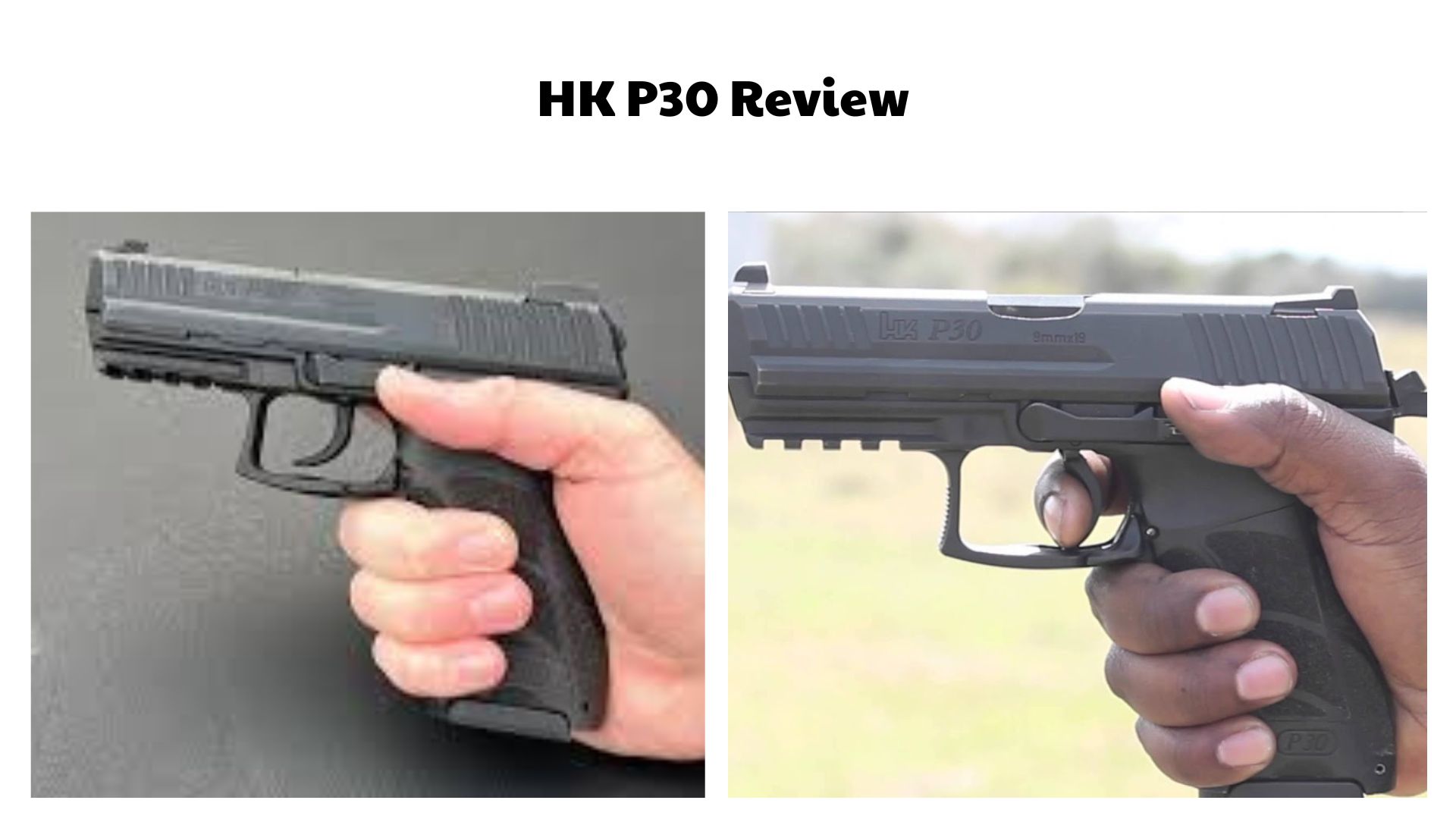

The Heckler & Koch P30 is widely regarded as one of the most ergonomically advanced polymer-framed, hammer-fired duty pistols ever produced. Designed for law enforcement, concealed carry, and professional security use, it represents a refined evolution of Heckler & Koch’s duty handgun philosophy.
Unlike many modern striker-fired competitors, the P30 focuses heavily on user comfort and adaptability. Its standout feature is an exceptionally modular grip system that allows shooters to tailor the firearm to their hand size and shooting style.
In today’s duty pistol market, it competes directly with platforms such as Glock, SIG Sauer, and Walther, yet it consistently stands out for one defining characteristic: it is often described as “one of the most ergonomic pistols ever made.”
History and Development of the HK P30 Series
Evolution from USP Platform
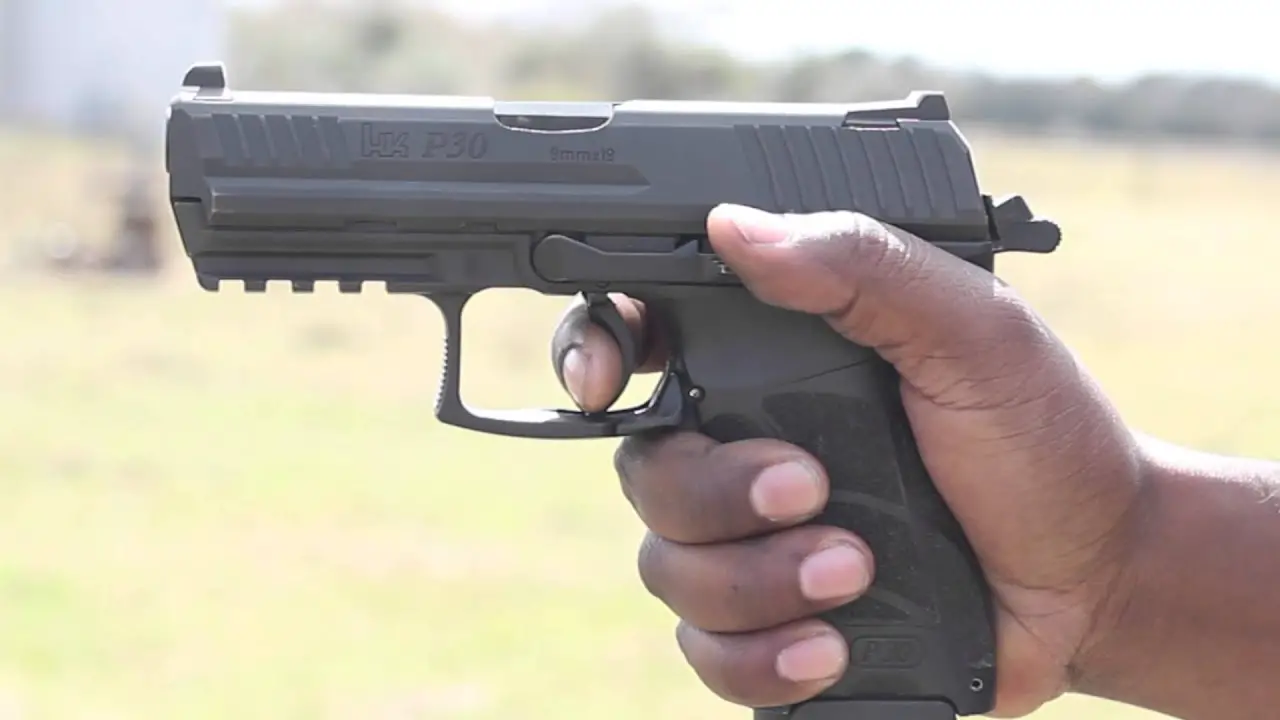
The HK P30 was developed as a modern evolution of the earlier Heckler & Koch USP series. While the USP platform was already known for durability and reliability, it lacked the ergonomic refinement that modern users demanded.
Introduced in the mid-2000s, the P30 marked a new generation of duty pistols focused on improving handling, grip comfort, and modularity while maintaining HK’s reputation for rugged reliability.
This transition reflected a broader industry shift toward more user-centric firearm design, particularly for law enforcement and defensive applications.
Design Philosophy
The HK P30 was built primarily for police and security agencies that required a dependable sidearm capable of performing in high-stress environments.
Its design philosophy centers on three core principles: reliability under harsh conditions, superior control during firing, and adaptability to different users.
A major emphasis was placed on customization, especially in grip configuration and control layout, allowing agencies and individual users to tailor the pistol to their operational needs.
HK P30 Design Overview – Why Ergonomics Stand Out
Modular Grip System
One of the defining features of the HK P30 is its highly modular grip system. The pistol includes interchangeable side panels and backstraps, allowing users to adjust grip thickness and contour.
This system provides multiple configuration options to accommodate different hand sizes and preferences, making it one of the most adaptable grip designs in its class.
In the duty pistol category, this level of ergonomic customization is widely considered industry-leading and remains one of the P30’s strongest selling points.
Frame and Build Quality
The HK P30 uses a high-strength polymer frame combined with reinforced internal structural components. This hybrid design ensures both reduced weight and long-term durability.
Inside the frame, HK integrates a rigid internal structure designed to handle high round counts and sustained duty use without compromising performance.
The result is a firearm built to military and law enforcement standards, capable of long service life under demanding conditions.
Control Layout
The control layout of the HK P30 is designed for accessibility and ambidextrous use. It includes an ambidextrous slide stop lever, allowing operation from either side of the pistol.
The magazine release is reversible depending on variant configuration, making it suitable for both right- and left-handed shooters.
Overall, the control design reflects HK’s commitment to usability in professional environments where speed and adaptability are critical.
HK P30 Operating System and Trigger Variants
DA/SA and LEM Trigger Systems
The HK P30 is available in multiple trigger configurations, including traditional double-action/single-action (DA/SA) and the Law Enforcement Modification (LEM) system.
The DA/SA version provides a long initial double-action pull followed by lighter single-action shots. In contrast, the LEM system offers a consistent trigger pull while maintaining internal hammer safety characteristics.
This flexibility allows agencies and users to select a trigger system that best matches their training doctrine and operational preference.
Trigger Characteristics in Real Use
In real-world use, the HK P30 trigger system receives mixed feedback from shooters. The double-action pull is typically described as long and deliberate, requiring more initial effort compared to striker-fired pistols.
The break is often described as smooth but somewhat “mushy,” lacking the crispness found in higher-end competition triggers.
Additionally, the reset distance is generally longer than modern striker-fired platforms, which can affect rapid follow-up shooting speed for some users.
Shooting Performance and Range Experience
Recoil and Control
The HK P30 delivers a relatively low recoil impulse for a polymer-framed duty pistol. Thanks to its well-balanced weight distribution and ergonomic grip design, the pistol remains controllable even during rapid fire sequences.
In practical shooting conditions, its recoil characteristics are often compared to the Glock 19, with many shooters noting a similarly stable and predictable shooting experience.
Interestingly, even the compact variants of the P30 tend to behave like larger duty pistols in terms of recoil control, giving shooters a more stable feel than expected for their size.
Accuracy Performance
The HK P30 is known for strong combat-level accuracy, making it highly effective for defensive and duty applications. Its consistent mechanical performance and well-designed grip geometry contribute to repeatable shot placement.
A major factor in its accuracy potential is the ergonomic grip system, which naturally aligns the shooter’s hand with the bore axis, improving control and consistency.
With proper training, shooter proficiency tends to improve significantly, as users become more familiar with its trigger system and handling characteristics.
Trigger Performance in Practice
In real-world use, the P30 trigger system receives mixed feedback. Some shooters appreciate its safety-oriented design, while others criticize its lack of refinement compared to modern striker-fired pistols.
Despite this, many users report that with sufficient training and familiarity, they are able to achieve very accurate and consistent shooting results.
However, it is generally not considered a “competition-grade” trigger system, as it prioritizes safety and duty reliability over ultra-crisp performance.
HK P30 Variants Explained
HK P30 (Full-Size)
The full-size HK P30 is a duty-oriented pistol comparable in size to the Glock 17. It is designed to offer an optimal balance of accuracy, recoil control, and magazine capacity.
This variant is often considered the standard configuration for professional use, providing the best overall performance for duty and defensive applications.
HK P30SK (Subcompact)
The HK P30SK is the subcompact version of the platform, designed specifically for concealed carry and personal defense use. It features a shorter barrel and reduced grip length for improved concealability.
Despite its smaller size, it maintains impressive recoil control, often feeling similar to larger pistols when fired.
Because of its balance between size and shootability, it is frequently described as a “carry + duty hybrid” option.
HK P30L (Long Slide)
The HK P30L features an extended barrel and slide assembly, which increases sight radius and enhances practical accuracy.
This version is particularly favored for duty use and range shooting, where precision and stability are prioritized over compactness.
HK P30 Pros and Cons
Key Advantages
The HK P30 is widely recognized for its industry-leading ergonomics and highly customizable grip system, which allows shooters to tailor the pistol to their hand size and preference.
It is also known for extremely reliable duty-grade construction, making it suitable for long-term professional use in demanding environments.
Additional strengths include strong recoil control, stable shootability, and the availability of multiple trigger system configurations.
Main Drawbacks
One of the most common criticisms of the HK P30 is its trigger feel, which many shooters consider less refined than competing modern pistols.
It also tends to be more expensive than Glock platforms, which may limit its appeal for budget-conscious buyers.
Another drawback is its relatively limited aftermarket support compared to more widely adopted duty pistols.
Finally, the DA/SA and LEM trigger systems introduce a learning curve that may require additional training and familiarity.
Real-World User Opinions and Reviews
In real-world user feedback, the HK P30 is highly praised for its ergonomics and overall comfort, with many shooters considering it one of the best-handling polymer pistols available.
Reliability is consistently rated extremely high, with the platform performing well over long-term use in both training and defensive scenarios.
However, common criticisms focus on trigger feel and reset characteristics, which some users find less refined than competing models.
There is also a notable divide between users who prefer the LEM system and those who favor traditional DA/SA operation, reflecting personal preference in trigger behavior.
Overall, many shooters describe the HK P30 as a “shootable but underappreciated duty gun,” valued more for its ergonomics and reliability than its trigger performance.
HK P30 vs Competitors
vs Glock 19 / Glock 17
When compared to the Glock 19 and Glock 17, Glock pistols generally have the advantage in weight, simplicity, and overall aftermarket support. Their striker-fired design is easier to maintain, widely supported, and heavily customized across the industry.
The HK P30, on the other hand, focuses heavily on ergonomics and grip customization. Its modular grip system allows a more tailored fit to the shooter’s hand, which many users find more comfortable during extended shooting sessions.
vs SIG Sauer P320 / P226
The SIG Sauer P320 and P226 platforms are known for their smooth triggers and strong modular or traditional duty design. The P320, in particular, offers a highly modular system that allows easy caliber and frame changes.
In comparison, the HK P30 delivers a more traditional, robust duty feel with a hammer-fired system. While it may not match SIG’s trigger refinement or modular flexibility, it is often praised for its rugged construction and ergonomic control.
vs Walther PDP
The Walther PDP is widely recognized for its excellent out-of-the-box trigger performance, often considered one of the best in the striker-fired category. It also offers modern optics-ready features and strong ergonomics.
The HK P30 competes by offering superior long-term durability and a highly adaptable grip system. While its trigger is less refined, its build quality and ergonomic customization provide a different kind of long-term value.
Who Should Buy the HK P30?
The HK P30 is best suited for shooters who prioritize ergonomics and grip comfort above all else. Its modular grip system makes it especially appealing for those who struggle to find a comfortable fit with standard pistol designs.
It is also an excellent choice for law enforcement or duty users who value reliability, durability, and consistent performance under demanding conditions.
For concealed carriers, the P30 and P30SK variants can work well, but they are best suited for users who are willing to train with DA/SA or LEM trigger systems.
However, it is not ideal for shooters who prioritize extremely light triggers or those who want extensive aftermarket customization options.
Final Verdict – Is the HK P30 Worth It in 2026?
The HK P30 remains one of the most ergonomically refined duty pistols ever designed, with a reputation built on comfort, reliability, and long-term durability.
It performs extremely well across a wide range of roles, from duty use to concealed carry and training environments, making it a versatile platform even by modern standards.
However, its trigger system and limited aftermarket support prevent it from fully competing with newer striker-fired platforms in terms of modern features and customization.
The final takeaway is clear: it is “not the most modern, but one of the most comfortable duty pistols ever made,” and it continues to earn respect among shooters who value ergonomics and reliability over trend-driven design.
HK P30 FAQ – 50+ Detailed Questions and Answers
1. What is the HK P30 designed for?
The HK P30 is designed as a modern duty pistol for law enforcement, security professionals, and civilian self-defense users. It focuses on reliability, ergonomics, and adaptability in high-stress environments while maintaining Heckler & Koch’s reputation for durability.
2. Is the HK P30 a good concealed carry pistol?
Yes, especially in its compact variants like the P30SK. While the full-size model is less suited for concealment, the smaller versions balance concealability with excellent shootability and recoil control.
3. How reliable is the HK P30?
The HK P30 is widely regarded as extremely reliable. It is built to military and law enforcement standards, capable of functioning under harsh conditions such as dirt, moisture, and extended firing cycles with minimal issues.
4. What makes the HK P30 different from Glock pistols?
The biggest difference is ergonomics and trigger system. The HK P30 uses a hammer-fired DA/SA or LEM system with a highly modular grip, while Glock pistols are striker-fired, simpler, and lighter with more aftermarket support.
5. Is the HK P30 striker-fired?
No, the HK P30 is a hammer-fired pistol. It uses either a traditional DA/SA system or HK’s LEM (Law Enforcement Modification) system depending on the variant.
6. What is the LEM trigger system?
The LEM system is a unique HK trigger design that provides a consistent trigger pull while keeping internal safety features. It blends characteristics of double-action and single-action systems for duty reliability.
7. Is the HK P30 good for beginners?
It can be used by beginners, but the DA/SA or LEM trigger system introduces a learning curve. Beginners may need more training compared to striker-fired pistols like Glock or M&P.
8. How accurate is the HK P30?
The HK P30 is highly accurate for a duty pistol. Its ergonomic grip and consistent mechanical design allow shooters to achieve strong combat-level accuracy with proper training.
9. What calibers does the HK P30 come in?
It is commonly available in 9×19mm and .40 S&W depending on the model and region. The 9mm version is the most popular due to lower recoil and higher capacity.
10. What is the magazine capacity?
Capacity varies by variant, but full-size models typically hold around 15–17 rounds in 9mm configuration. Compact versions hold fewer rounds due to reduced size.
11. Is the HK P30 expensive?
Yes, it is generally more expensive than Glock or Smith & Wesson pistols. The higher cost reflects its German manufacturing quality and advanced ergonomic design.
12. Why is the HK P30 so ergonomic?
Its modular grip system allows users to change side panels and backstraps. This enables a highly customizable fit that improves comfort, recoil control, and shooting consistency.
13. Does the HK P30 have good recoil control?
Yes, recoil control is one of its strengths. The grip angle, weight distribution, and low bore axis design help reduce muzzle rise during firing.
14. Is the HK P30 used by police?
Yes, it has been adopted by various law enforcement agencies worldwide. Its reliability and ergonomics make it suitable for duty use, although adoption varies by country.
15. What is the difference between P30, P30L, and P30SK?
The P30 is the full-size model, the P30L has a longer slide for improved accuracy, and the P30SK is the subcompact version designed for concealed carry.
16. Is the HK P30 good for home defense?
Yes, it is a strong home defense option due to its reliability, accuracy, and controllability. Full-size versions are especially suitable for this role.
17. How does the trigger feel?
The trigger is functional but not highly refined. It is often described as smooth but somewhat long and heavy in DA mode, depending on configuration.
18. Does the HK P30 have a safety?
Some variants include a manual safety, while others rely on internal safety mechanisms. The availability depends on the specific model configuration.
19. Is the HK P30 good for tactical use?
Yes, it is designed for tactical and duty environments. Its reliability and ergonomics make it suitable for professional use, although its trigger system requires training.
20. Is it better than Glock 19?
It depends on priorities. Glock 19 is lighter and simpler with better aftermarket support, while HK P30 offers superior ergonomics and grip customization.
21. Is the HK P30 good for competition shooting?
Not ideal. While accurate, its trigger and limited aftermarket support make it less suitable for competitive shooting compared to dedicated competition pistols.
22. Is the HK P30 durable?
Yes, it is extremely durable and built for long-term use in harsh environments. Its internal structure is designed for high round counts and duty reliability.
23. Does it require a break-in period?
Some users report slight smoothing of the trigger and slide action after initial use, but it functions reliably out of the box.
24. Is the HK P30 heavy?
It is moderately heavy compared to striker-fired pistols due to its hammer-fired system and robust construction, but this weight helps control recoil.
25. Is the HK P30 good for left-handed shooters?
Yes, it features ambidextrous controls and reversible magazine release options, making it suitable for left-handed users.
26. Is the HK P30 better than the SIG P320?
The HK P30 and SIG P320 take very different approaches. The P320 is striker-fired, modular, and easier to customize, while the HK P30 is hammer-fired and emphasizes durability and ergonomics. The P320 generally wins in modularity and trigger consistency, but the P30 is often preferred for its grip comfort and long-term mechanical robustness.
27. Is the HK P30 better than the Walther PDP?
The Walther PDP is widely praised for its excellent factory trigger and modern optics-ready design. The HK P30, however, offers superior grip customization and a more traditional duty-grade hammer-fired system. The PDP is more modern in shooting feel, while the P30 is more focused on ergonomics and reliability over time.
28. Does the HK P30 rust easily?
No, the HK P30 is highly resistant to corrosion thanks to its polymer frame and quality metal finishing. However, like all firearms, it still requires proper cleaning and lubrication, especially after exposure to moisture or sweat.
29. What holsters are compatible with the HK P30?
The HK P30 requires holsters specifically molded for its frame, especially for full-size and SK variants. Both Kydex and leather holsters are available, with many duty and concealed carry options designed for its unique dimensions.
30. Is the HK P30 optics-ready?
Standard HK P30 models are not typically optics-ready from the factory. However, some newer or specialized variants may support optic mounting through slides or aftermarket modifications.
31. How long does the HK P30 last?
With proper maintenance, the HK P30 can last tens of thousands of rounds. Its reinforced internal structure and HK’s manufacturing standards make it suitable for long-term duty or professional use.
32. Is the HK P30 good for beginners with training?
Yes, but it requires training. Beginners can learn it effectively, but the DA/SA or LEM trigger systems demand more familiarity compared to simpler striker-fired pistols.
33. What is the HK P30SK used for?
The P30SK is designed for concealed carry and personal defense. It provides a compact form factor while maintaining HK’s signature ergonomics and reliability.
34. Is the HK P30 hard to maintain?
No, maintenance is relatively straightforward. It disassembles easily for cleaning, and its design is built for durability with minimal maintenance complexity.
35. Does the HK P30 have aftermarket support?
Compared to Glock or SIG platforms, aftermarket support is limited. There are fewer options for triggers, slides, and customization parts.
36. Is the HK P30 worth buying in 2026?
Yes, for users who prioritize ergonomics, reliability, and duty-grade construction. However, those seeking modern modularity or extensive customization may prefer newer striker-fired platforms.
37. Why do people love HK P30 ergonomics?
The grip system is highly adjustable with interchangeable side panels and backstraps. This allows shooters to achieve a personalized fit that improves comfort and control significantly.
38. Is the HK P30 good for duty carry?
Yes, it was designed specifically for law enforcement and duty use. Its durability, safety systems, and reliability make it well-suited for professional environments.
39. What is the HK P30L best used for?
The P30L is best used for duty and range shooting where accuracy and sight radius are prioritized. Its longer slide improves stability and precision.
40. Does the HK P30 jam often?
No, it is known for excellent reliability. When properly maintained and used with quality ammunition, malfunctions are rare.
41. Is the HK P30 outdated?
It is not outdated in terms of reliability or ergonomics, but it lacks some modern features like widespread optics integration and advanced modular systems found in newer pistols.
42. How does the HK P30 compare to modern pistols?
Modern striker-fired pistols may offer better triggers, lighter weight, and more customization. However, the HK P30 remains competitive in durability, ergonomics, and build quality.
43. Is the HK P30 still in production?
Yes, the HK P30 series is still in production, though availability may vary depending on region and specific variants.
44. What is the HK P30 resale value?
Resale value is moderate to strong depending on condition. While not as collectible as rare firearms, it maintains stable value due to HK’s reputation.
45. Is the HK P30 good for concealed carry training?
Yes, especially the P30SK model. It is often used for training due to its balance of concealability and realistic duty-style handling.
46. Does the HK P30 have a good trigger for defensive use?
Yes, although not refined, it is considered safe and consistent for defensive applications. Its longer pull can help prevent accidental discharges under stress.
47. Is the HK P30 better than Glock for ergonomics?
Many shooters believe the HK P30 is better in ergonomics due to its customizable grip system, while Glock prioritizes simplicity over comfort customization.
48. Can the HK P30 be used for concealed carry daily?
Yes, especially the P30SK model. The full-size version is less practical for daily concealed carry due to size and weight.
49. Is the HK P30 good for home defense?
Yes, it is highly effective for home defense due to its reliability, accuracy, and ease of control under stress.
50. Does the HK P30 have a steep learning curve?
Yes, mainly because of its DA/SA or LEM trigger systems. With training, however, most users adapt quickly and perform very well.
51. Is the HK P30 good for high round count training?
Yes, it is designed for high round counts and performs well under long-term training conditions with proper maintenance.
52. What is the biggest weakness of the HK P30?
Its main weaknesses are the less refined trigger system and limited aftermarket ecosystem compared to more popular platforms.
53. Is the HK P30 a good investment firearm?
It can hold value well due to HK’s reputation, but it is not typically considered a high-growth investment firearm like rare collectible pistols.
54. Why is the HK P30 considered underappreciated?
It is often overshadowed by Glock and SIG platforms despite offering excellent ergonomics and reliability, leading many shooters to overlook its strengths.
55. What is the final takeaway for the HK P30?
The HK P30 is best understood as a highly ergonomic, durable, and reliable duty pistol that excels in comfort and control, even if it lacks the modern refinement and customization ecosystem of newer competitors.
Read more: