
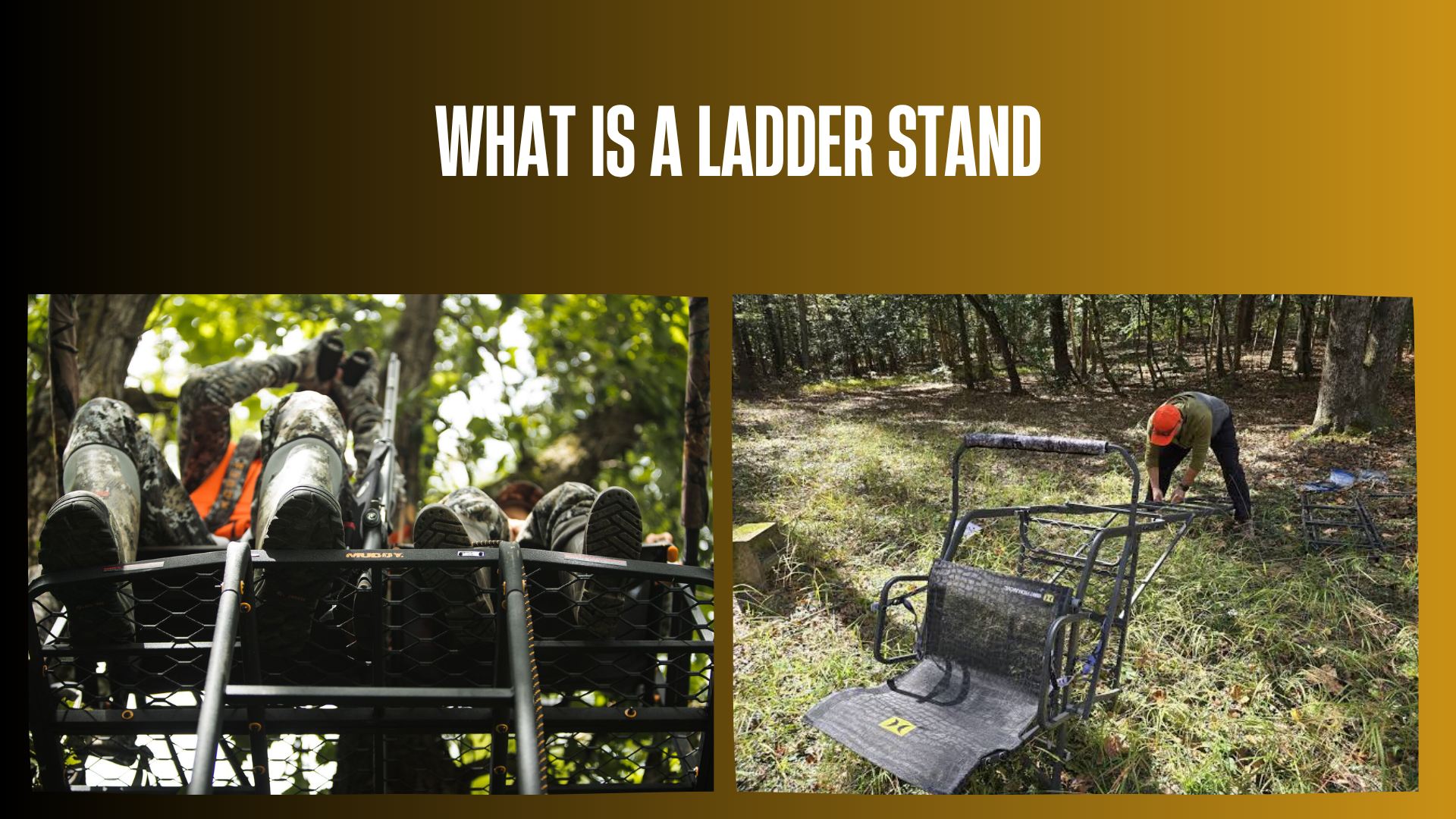

A ladder stand is a hunting seat and platform with an attached ladder, usually secured to a tree. Hunters use it to watch an area from above ground level. If you are asking “what is a ladder stand?” before choosing your first hunting setup, the important considerations are how it is supported, how you reach the platform, and how you remain protected from a fall.
Quick Answer
A ladder stand is a type of elevated hunting stand that combines a seat, foot platform, and ladder into one assembled structure. The ladder rests on the ground, while the upper assembly attaches to a suitable tree using the manufacturer’s specified components. Models may accommodate one person or, when expressly designed for it, two people. The attached ladder does not eliminate fall risk: use the correct full-body fall-arrest system and remain connected throughout climbing, transitions, and occupancy. Before installation, read the exact model’s manual and verify the rules for the property.
Important Safety and Land-Use Notice
This guide explains the equipment category; it is not a substitute for installation instructions or hands-on training. The stand, harness, and climbing-safety equipment each have their own requirements.
Use a properly fitted full-body harness with a compatible connection system, including an appropriate lifeline for climbing. The Wisconsin DNR’s tree-stand safety guidance emphasizes continuous connection, three points of contact, and hauling equipment separately.
Installation permission, removal deadlines, identification requirements, and tree-damage restrictions vary by property and jurisdiction. Check the current wildlife-agency regulations and the rules issued by the land manager. Official requirements override general online guidance.
What Is a Ladder Stand Made Of?
Most ladder stands use a metal frame with several interconnected parts. The precise arrangement varies, but these are the components a beginner will commonly encounter:
| Component | Purpose | What to Verify |
|---|---|---|
| Ladder sections and rungs | Provide access from the ground | Correct section arrangement and specified connecting hardware |
| Foot platform | Supports the occupant’s feet and permitted standing positions | Dimensions, condition, and allowed use |
| Seat and backrest | Provide seating during the hunt | Attachment, material condition, and occupancy limits |
| Tree-contact assembly | Positions the upper stand against the tree | Compatible tree size and shape |
| Straps, braces, and stabilizing components | Secure and stabilize the assembled stand | Exact placement and installation sequence in the manual |
| Shooting rail, if supplied | Provides a rest where the design permits | Approved use; it does not replace fall protection |
For a concrete example, the manufacturer’s description of the Millennium L225 double ladder stand identifies a steel structure, platform, seat, tree brace, and adjustable shooting rail. Those features illustrate the category; they are not specifications shared by every ladder stand.
How a Ladder Stand Works
The ladder provides the route to a raised seat and platform. Unlike a freestanding tower, a conventional ladder tree stand depends on its specified connection to a suitable tree as well as proper support at ground level.
The assembled stand is positioned, stabilized, and secured according to its manual before normal use. Installation and removal are separate tasks from climbing an already secured stand, and each requires the manufacturer’s procedures.
Do not treat a ladder stand as an ordinary ladder leaned against a tree. The braces, fasteners, straps, and installation sequence are part of the complete system. A stand that appears to stay upright is not necessarily ready to climb.
Manufacturers publish model-specific directions because assemblies differ. Use the manual matching your model and revision; for example, Millennium’s official manual library lists separate instructions for its different stands and safety equipment.
Why Hunters Use Ladder Stands
An elevated viewing position
Looking from above can improve visibility over some low vegetation. The benefit depends on the terrain and surrounding cover: a higher seat does not automatically provide a clearer view or a safe shooting opportunity.
A repeatable setup
A ladder stand can suit a location a hunter intends to revisit, provided leaving it installed is permitted by both the manufacturer and land manager. It avoids transporting and assembling a different elevated setup for every visit.
Seating options
Some models offer a backrest, a larger platform, or two-person seating. These features may suit longer observation periods or hunting with a mentor, but actual comfort depends on the dimensions and the user.
Access that some hunters prefer
An attached ladder can feel more familiar than separate climbing aids. However, familiarity is not proof that it is safer for a particular person. Grip strength, balance, mobility, clothing, weather, and the transition onto the platform still matter.
Elevation does not make a hunter invisible, remove scent, or guarantee success. It also does not replace positive target identification, a safe backstop, or sound judgment.
Ladder Stand vs. Other Hunting Setups
| Setup | How It Is Accessed or Supported | Main Practical Difference |
|---|---|---|
| Ladder stand | Attached ladder and tree-secured upper assembly | Often bulky to relocate; useful for repeated visits to an approved location |
| Hang-on stand | Platform and seat attached to a tree; separate climbing aids | Requires a separate access system and careful transition onto the platform |
| Climbing stand | Purpose-built sections moved up a compatible tree | Designed to ascend with the user; tree suitability is restrictive |
| Tower or tripod stand | Purpose-built support legs and access system | May not require a tree, but needs its own stabilization and fall-protection arrangements |
| Ground blind | Positioned at ground level | Avoids elevated access, while providing a different view and enclosure |
A ladder stand is a type of tree stand, not an alternative to the entire tree-stand category. It also is not necessarily a blind: many models are open platforms without an enclosure.
Choosing a Ladder Stand: What Actually Matters
Occupant count and total load
Check the manufacturer’s permitted number of occupants and every applicable load limit. Include clothing, packs, and equipment when calculating the load. A two-person rating does not mean each occupant can weigh the stated total capacity.
Harnesses and connection equipment have their own limits and fit requirements. A stand’s capacity does not establish the capacity of every accessory used with it.
Platform height and access
Check what the advertised height measures. A product’s stated height may refer to a particular point, such as the shooting rail, rather than the floor platform.
Choose a setup you can use within the instructions. Do not add ladder sections or change the configuration unless the manufacturer explicitly permits it.
Tree and ground compatibility
The manual should specify acceptable tree dimensions and other installation requirements. A tree must be suitable in condition as well as size. Ground conditions must support the ladder as intended.
If the site requires improvised blocks, makeshift supports, or an unapproved attachment arrangement, choose another site or another hunting method.
Transport, storage, and help
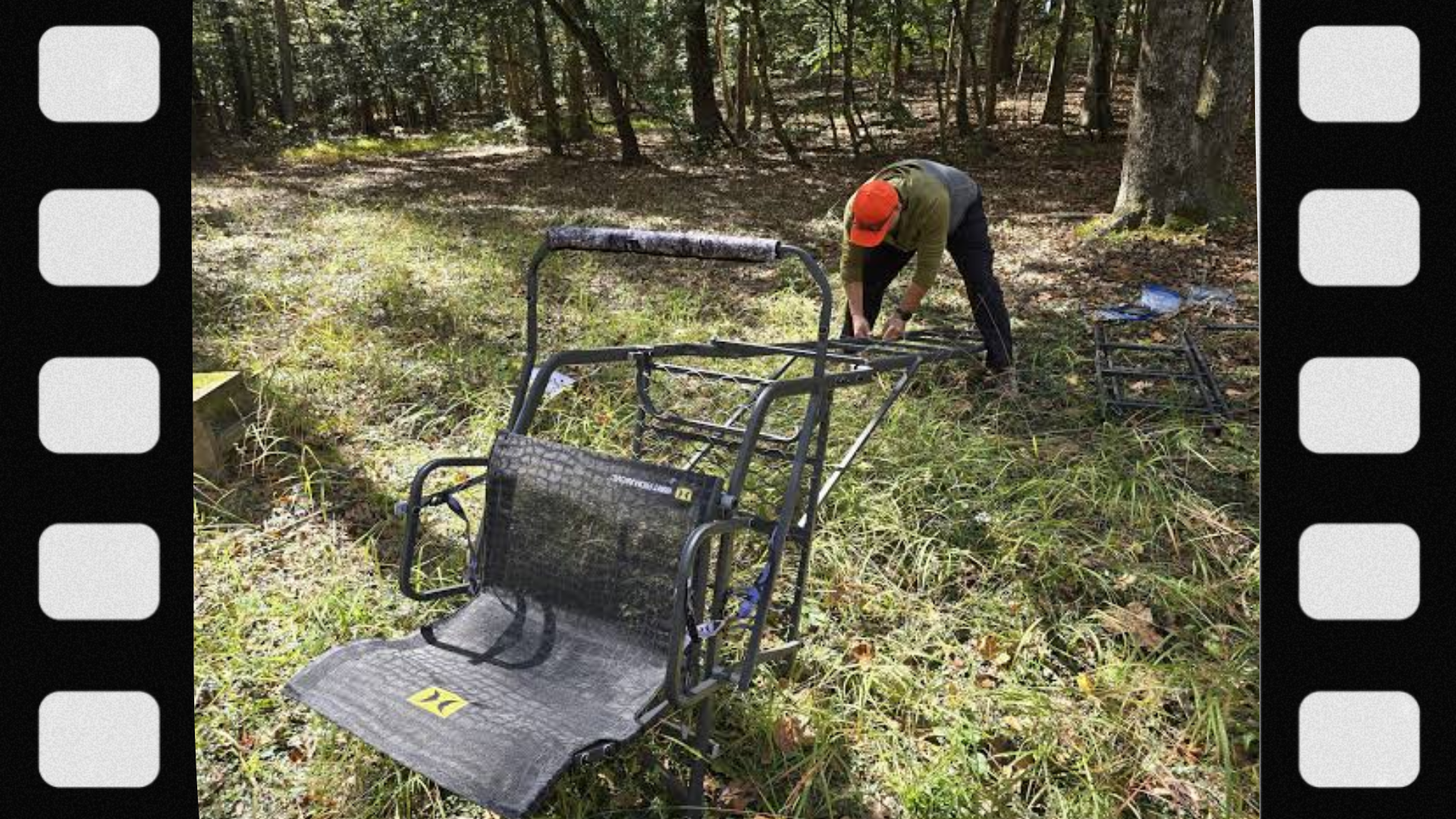
Consider the whole process: moving the components, assembling them, installing the stand with the required helpers, inspecting it, and taking it down. A model that looks appealing in a photograph may be impractical for a long walk or a location you change frequently.
Documentation and replacement parts
Choose identifiable equipment with readable labels, available instructions, and manufacturer support. Before buying used, establish the exact model, condition, completeness, and recall status through the manufacturer and the CPSC recall database in the United States.
You do not need the most expensive stand. Prioritize a suitable design, clear instructions, reliable condition, and the ability to use and maintain it correctly.
The Safety System Matters as Much as the Stand
Stay connected before leaving the ground
Put on and adjust the full-body harness at ground level. Use compatible equipment as instructed to remain connected during the climb, the transition, and the hunt. A harness sitting in your pack—or worn without attachment—cannot arrest a fall.
The Tree Stand Safety Awareness Foundation emphasizes inspecting equipment, practicing at ground level, connecting before climbing, and sharing your location.
Treat initial installation as a separate safety problem
A lifeline that has not yet been installed does not protect the first climb. Follow the stand manufacturer’s installation and fall-protection procedure, including its helper requirements. If you cannot complete that procedure while protected, do not improvise an unprotected climb.
Keep your hands available for climbing
Maintain three points of contact: two hands and one foot, or two feet and one hand. Use a separate haul line for equipment rather than carrying a firearm or bow while climbing.
Verify that the firearm is unloaded before raising or lowering it. Keep its muzzle directed away from people and never attach a haul line to the trigger or trigger guard. Follow the bow or crossbow manufacturer’s instructions for safe handling and hauling.
Plan for a fall before the hunt
Carry communication equipment where you can reach it while suspended, not only in a hanging backpack. Share your exact location and expected return time. Understand the harness manufacturer’s suspension-relief and recovery instructions before use.
If a fall leaves you suspended, call for emergency help promptly and follow your trained recovery procedure. Do not disconnect while hanging or rely on an improvised escape method.
Firearm and Archery Safety on the Platform
The four firearm-safety principles still apply at elevation:
- Treat every firearm as if it is loaded.
- Keep the muzzle pointed in a safe direction.
- Keep your finger outside the trigger guard until ready to shoot.
- Be certain of the target and what is beyond it.
These principles are reinforced in the New York DEC hunter education guidance. A mechanical safety does not replace safe handling.
An elevated position does not automatically create a safe backstop. Consider roads, buildings, other hunters, livestock, and the complete path beyond the animal. Decline any shot that requires unsafe leaning, compromised balance, or shooting beyond your demonstrated ability.
For archery, confirm adequate clearance for the bow, limbs, string, and arrow within the stand’s permitted use. Never dry-fire a bow or crossbow. Practice equipment handling in a controlled setting before hunting.
Inspection, Weather, and Stopping Rules
Before each use, assess the stand, attachments, climbing equipment, tree, and ground conditions. Follow the inspection and replacement schedules in the relevant manuals rather than assuming last season’s setup is still sound.
Do not use a stand with missing hardware, damaged straps, cracked welds, bent sections, significant corrosion, unstable footing, or unexplained movement. Contact the manufacturer about approved repairs or replacement; tightening random parts is not a substitute for identifying the problem.
Stop or postpone elevated hunting when ice, strong wind, lightning, poor visibility, fatigue, dizziness, or other conditions prevent safe use. Ground-level hunting may be an appropriate alternative when the location and conditions permit it.
Avoid these common mistakes:
- Using a rail or seat belt as a substitute for a full-body fall-arrest system.
- Mixing ladder sections or structural parts from different models.
- Assuming extra straps make an unapproved setup acceptable.
- Climbing an unfamiliar stand found in the woods.
- Adding an enclosure or accessory that the manufacturer has not approved.
- Leaving equipment outdoors beyond its permitted use or inspection requirements.
Check Permission Before Choosing the Tree
For private land, obtain permission for both hunting and installing the stand. Discuss access, tree protection, removal, and any restrictions imposed by the owner.
For public land, identify the agency managing the exact parcel. Check its current rules for stand placement, unattended equipment, identification labels, installation and removal dates, and attachments that may damage trees. Do not assume statewide hunting permission authorizes every stand installation.
Complete applicable hunter education, obtain the necessary licenses and tags, respect boundaries, and plan for lawful game recovery. Stand ownership does not itself give you exclusive rights to the surrounding hunting area.
FAQs
1. Is a ladder stand the same as a tree stand?
A ladder stand is one type of tree stand. The broader category also includes hang-on and climbing stands.
2. Does a ladder stand need a tree?
A conventional ladder tree stand does. Freestanding towers and tripods are different designs. Never use a tree-dependent stand without its required tree attachment.
3. Is a ladder stand a hunting blind?
Not necessarily. Most have an open seat and platform. Some accept an approved concealment accessory, but an enclosure is not what defines the stand.
4. Is a ladder stand safer than a climbing stand?
There is no universal safety ranking that applies to every user and setup. Both require appropriate equipment, training, inspection, and continuous fall protection.
5. Do you need a harness if the stand has a rail?
Yes. A shooting rail does not replace a properly attached full-body fall-arrest system.
6. Can one person install a ladder stand?
Follow the exact manual’s helper requirements. Do not attempt solo installation when the manufacturer requires assistance, even if a video shows someone doing it.
7. How tall should a ladder stand be?
There is no single correct height. Choose a manufactured configuration appropriate for the site and your ability to use it safely; extra height does not guarantee better hunting.
8. How much weight can a ladder stand hold?
Use the rating on that model’s label and manual. Include all occupants and gear, and check separate limits for harnesses and accessories.
9. Can two people use a one-person stand?
No. Staying below a weight limit does not override the stand’s occupancy restriction.
10. Can a child hunt from a two-person ladder stand?
Only when the stand instructions, harness fit and limits, supervision arrangements, and applicable hunting rules all permit it. A two-person seat alone does not establish suitability for a child.
11. Are ladder stands suitable for bowhunting?
Some are. Confirm that the design allows safe movement and clearance without leaning beyond the platform or altering required components.
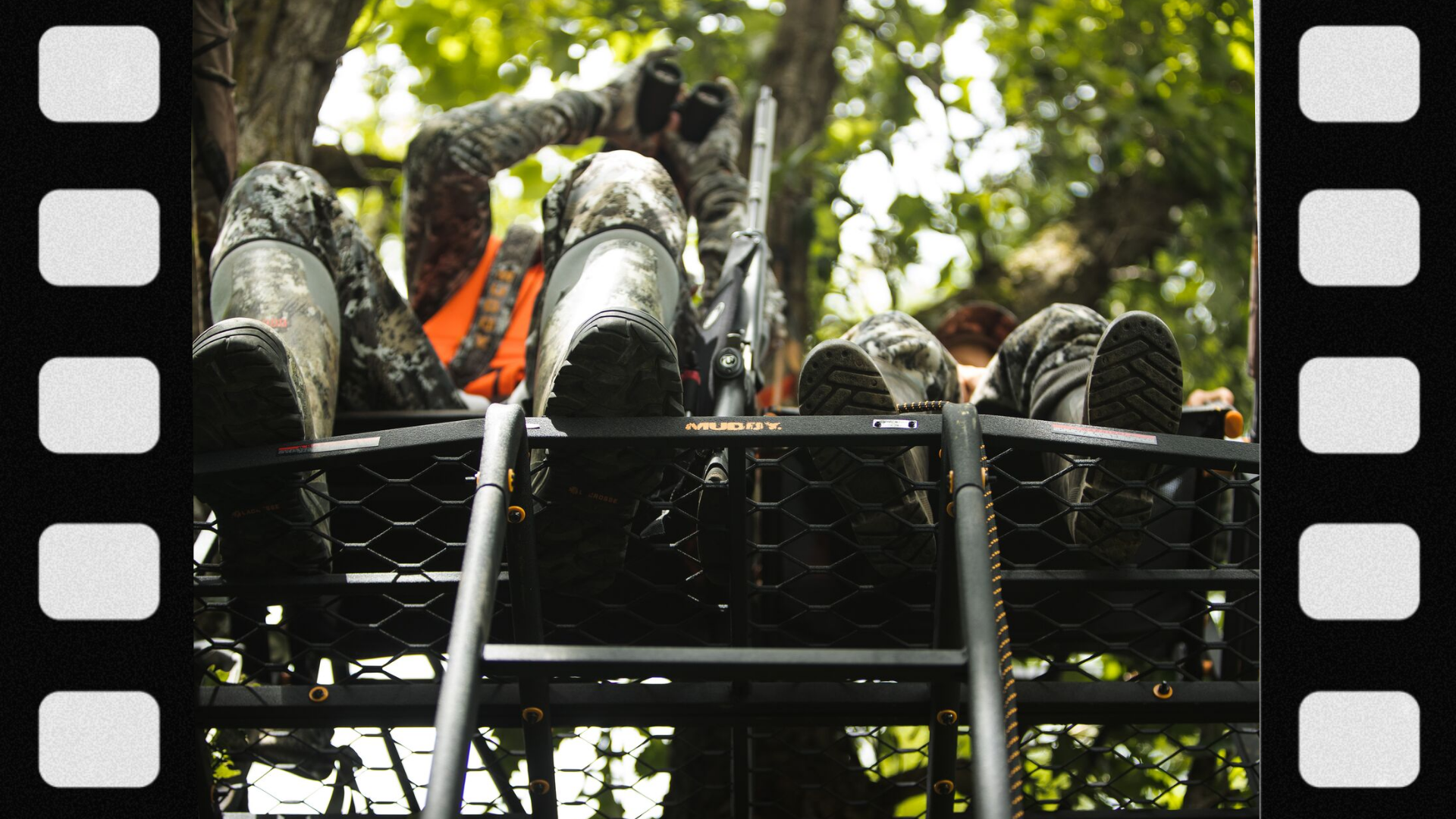
12. Can you sleep in a ladder stand?
Do not plan to sleep in an elevated hunting stand. If you become too tired to remain alert, end the sit and descend safely.
13. Can you leave a ladder stand up all year?
Do not assume so. Follow manufacturer instructions and property rules. Outdoor exposure does not remove the need for inspection, maintenance, or scheduled replacement.
14. How often should stand straps be replaced?
Follow the manufacturer’s replacement schedule and remove damaged components from service sooner. There is no universal interval for every strap and storage condition.
15. Can you use a household ladder instead?
A household ladder is not a substitute for a purpose-built hunting stand. Do not improvise a seat or platform at its top.
16. What if the stand shifts or squeaks?
Unexplained movement or noise warrants inspection. Stop use and determine the cause through the manual or manufacturer rather than hiding the symptom with padding or improvised fixes.
17. Is a ladder stand good for mobile hunting?
It may be less convenient than a setup designed for frequent relocation. Evaluate its actual packed dimensions, weight, assembly needs, and the distance you must carry it.
18. Can deer notice a ladder stand?
Yes. Elevation does not prevent animals from detecting a hunter or equipment. Avoid treating any stand style as a guarantee of concealment.
19. Can you add a roof or camouflage wrap?
Use only accessories permitted for the exact model. Added material can change wind exposure, load, visibility, and access to safety equipment.
20. What if the manual is missing?
Find the model identification and request the correct instructions from the manufacturer. Do not assemble or climb it using directions for a similar-looking stand.
21. Is a used ladder stand worth buying?
It may be, if its identity, history, condition, completeness, and recall status can be established. Missing labels or uncertain structural condition are reasons to choose another option.
22. What is a good alternative for someone uncomfortable with heights?
A suitable ground blind or ground-level hunting position avoids climbing. Choose based on safe access, visibility, local rules, and personal comfort.
Final Answer
What is a ladder stand? It is an elevated hunting seat and platform reached by an attached ladder, normally secured to a suitable tree. It can work well for repeated hunts from an approved location, but it requires correct installation, inspection, and continuous fall protection. Choose a model you can use within its instructions, complete hunter education, verify local rules, and keep every hunting decision within safe and ethical limits.
Read more: