
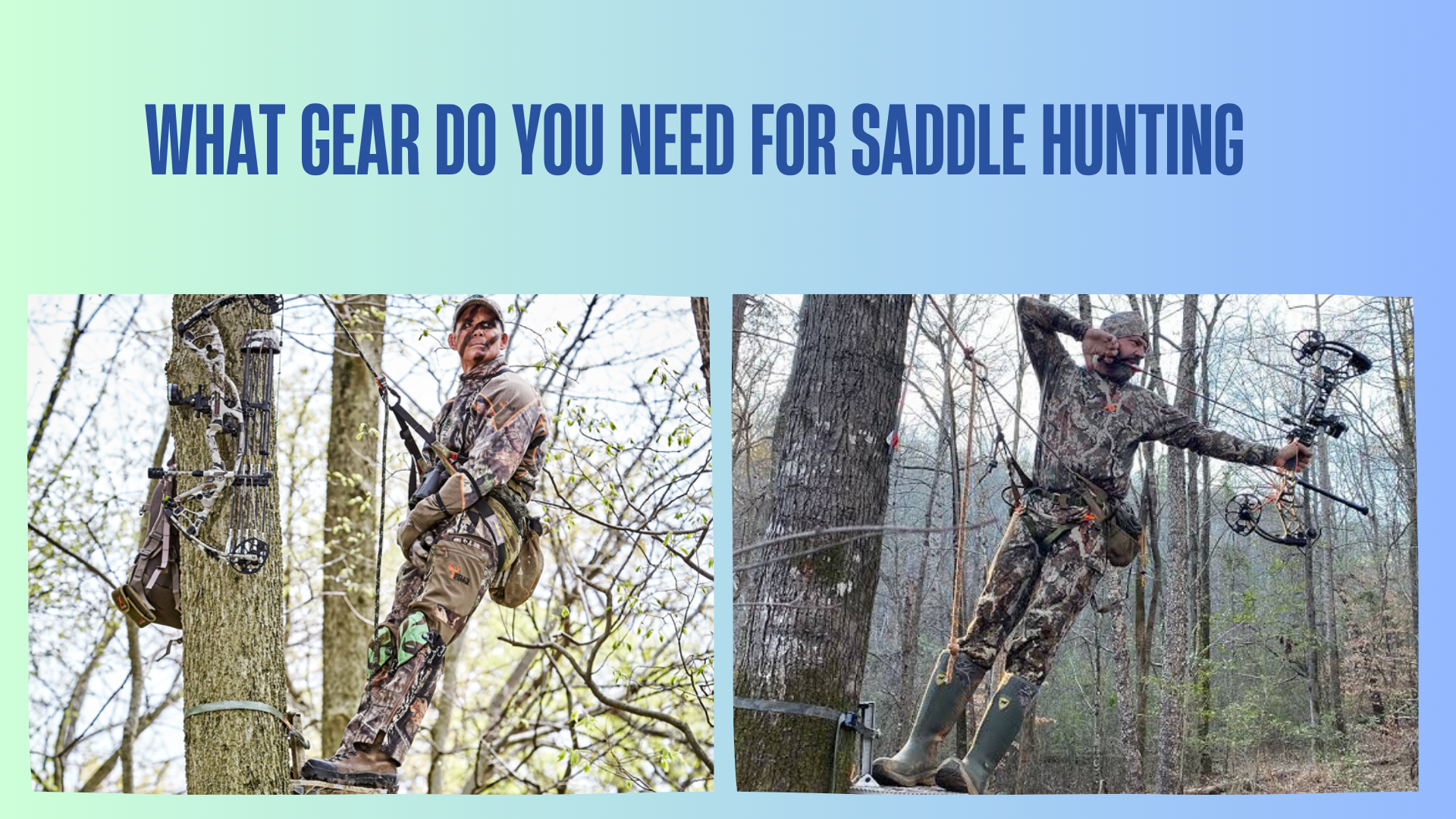

If you are wondering what gear do you need for saddle hunting, the basic system consists of a properly fitted hunting saddle, bridge, tree tether, lineman’s belt, approved connectors, a manufacturer-compatible climbing method, and a platform or ring of steps. You also need a haul line, suspension-relief device, navigation equipment, communication, weather-appropriate clothing, and your normal legal hunting equipment.
Saddle hunting can provide a mobile alternative to a conventional tree stand, but it is still elevated hunting. A fall can cause serious or fatal injury. Every component must be designed, rated, inspected, and used as part of a compatible system. Beginners should complete hunter education and saddle-specific instruction before leaving the ground.
Quick Answer
The essential saddle hunting equipment includes a commercially manufactured hunting saddle, integrated or approved bridge, tree tether, lineman’s belt, locking carabiners or connectors specified by the manufacturer, climbing sticks or another approved climbing system, and a stable platform or ring of steps. Add a haul line, suspension-relief device, equipment hanger, pack, navigation tools, communication device, first-aid kit, and weather protection.
Do not build a climbing or life-support system by copying an online photo. Buy equipment from reputable manufacturers, follow every manual, observe the lowest weight rating in the complete system, and practice close to the ground with qualified supervision.
Essential Saddle Hunting Gear at a Glance
| Item | Purpose | Priority | What to Check |
|---|---|---|---|
| Hunting saddle | Supports the hunter while positioned at the tree | Essential | Fit, condition, intended use, and manufacturer rating |
| Bridge | Connects the saddle to the tether system | Essential | Compatibility, wear, adjustment, and approved attachment points |
| Tree tether | Connects the saddle system to the tree | Essential | Diameter, condition, connector compatibility, and manufacturer instructions |
| Lineman’s belt | Supports positioning while climbing and installing equipment | Essential for applicable climbing methods | Adjustment, compatibility, slack, and correct use |
| Approved connectors | Join compatible life-support components | Essential | Locking function, orientation, rating, and damage |
| Climbing method | Provides access to hunting height | Essential | Manufacturer rating, tree compatibility, legality, and training |
| Platform or ring of steps | Supports the feet at hunting height | Essential | Installation, traction, rating, and movement |
| Suspension-relief device | Helps reduce suspension-trauma risk after a fall | Essential safety item | Immediate accessibility and manufacturer instructions |
| Haul line | Raises and lowers unloaded hunting equipment | Essential | Length, knots or attachments, and equipment security |
| Helmet | Helps protect against head impacts and falling objects | Strongly recommended | Fit, certification, condition, and manufacturer guidance |
| Equipment hanger | Keeps legal hunting equipment organized | Useful | Public-land rules, capacity, and tree protection |
| Knee pads | Improve comfort against the tree | Optional | Fit, circulation, noise, and mobility |
| Phone or communicator | Emergency communication | Essential | Charge, coverage, protection, and accessibility |
| Map and compass | Navigation and property awareness | Essential | Offline availability and user competence |
| First-aid kit | Addresses minor injuries while help is arranged | Essential | Training, personal needs, and emergency plan |
Critical Saddle Hunting Safety Notice
Most serious elevated-hunting falls occur while climbing into or descending from a hunting position. Stay connected to an appropriate safety system whenever your feet are off the ground. Keep slack to the minimum allowed by the equipment manufacturer, maintain three points of contact when the climbing method requires it, and never climb while carrying a loaded firearm or loose hunting equipment.
A hunting saddle should be used only as its manufacturer directs. Do not automatically assume that it serves the same function as a conventional full-body fall-arrest harness. The Saddle Hunting Essentials safety guidance warns hunters not to treat a saddle as a conventional full-body fall-arrest system and emphasizes closed connectors, minimal rope slack, equipment inspection, and suitable living trees.
According to general Hunter-Ed elevated-hunting guidance, an appropriate fall-arrest system may include a full-body harness, lineman’s-style belt, tree strap, tether, and suspension-relief device. Follow the instructions that apply to your exact saddle and climbing configuration. If different manufacturers’ components are combined, obtain confirmation that they are compatible.
What Gear Do You Need for Saddle Hunting?
1. Properly Fitted Hunting Saddle
The saddle is the body-support component of the system. It should be commercially manufactured for hunting, correctly sized, and used only within its instructions and rated capacity. A saddle that is too large may not remain properly positioned, while one that is too small can create pressure, discomfort, and restricted movement.
Examine the webbing, stitching, adjustment points, loops, belt, and load-bearing areas before every use. Do not climb with a saddle that has cuts, burns, chemical contamination, missing labels, damaged stitching, or a history of an uncontrolled fall unless the manufacturer has inspected and approved it.
2. Manufacturer-Approved Bridge
The bridge connects the saddle to the tether connection and allows the hunter to position around the tree. Some saddles include a fixed or adjustable bridge; others permit only specific replacement configurations.
Do not substitute general utility rope or alter bridge attachment points without written manufacturer authorization. Inspect the bridge for abrasion, glazing, discoloration, contamination, or deformation.
3. Tree Tether
The tree tether anchors the saddle system to a suitable tree. It must be compatible with the saddle, friction hitch or mechanical device, and connectors. Rope diameter, construction, condition, and termination all matter.
A tether should be positioned and adjusted according to the manufacturer’s instructions. Excess slack can increase fall distance and force. Never disconnect the primary attachment at elevation unless the approved procedure maintains continuous protection through another appropriate connection.
4. Lineman’s Belt or Lineman’s Rope
A lineman’s belt helps support the hunter while installing or removing climbing equipment. It is not permission to lean carelessly or work beneath loose components. Keep it correctly positioned and adjusted as directed while moving.
Branches and other obstacles can complicate continuous attachment. Beginners should learn the manufacturer-approved method for managing these transitions under qualified supervision at ground level. Do not improvise a transfer procedure while elevated.
5. Approved Locking Connectors
Use only carabiners or other connectors specified for the saddle system. General-purpose keychain clips, hardware-store connectors, and decorative carabiners are not life-support equipment.
Before loading a connector, confirm that it is properly oriented, completely closed, and locked. Retire any connector showing cracks, sharp edges, corrosion, malfunctioning gates, substantial wear, or damage from a fall.
6. Compatible Friction Hitch or Mechanical Adjustment Device
A manufacturer-approved friction hitch or mechanical rope device allows tether and lineman’s-belt adjustment. Its compatibility depends on the rope’s diameter, construction, condition, and the device manufacturer’s specifications.
Do not assume that a device functioning on one rope is safe on another. Learn how the adjustment system engages, how it can be released, and what backups are required before leaving the ground.
7. Climbing Sticks or Another Approved Climbing System
Climbing sticks are a common access method because they can be transported into the field and attached to an appropriate tree. Other methods exist, but each requires separate equipment, training, and compatibility checks.
Follow the climbing-system manufacturer’s installation sequence, spacing guidance, tree restrictions, weight limit, and attachment requirements. Do not climb homemade steps, screw-in hardware where prohibited, damaged straps, or equipment installed by an unknown person.
8. Saddle Platform
A saddle platform provides a stable surface for the hunter’s feet and supports controlled body positioning. It must be installed on a tree that meets the platform manufacturer’s requirements.
Inspect the platform body, post, attachment strap, fasteners, traction surface, and moving parts. If it shifts, bends, cracks, or cannot be installed securely, descend and correct the problem rather than continuing to hunt.
9. Ring of Steps
A ring of steps is an alternative or supplement to a conventional platform when the system manufacturer permits it. It can provide foot positions around the tree, but it does not eliminate the need for a secure tether and compatible saddle.
Check public-land rules before using any step that penetrates or damages bark. Many properties restrict screw-in steps or other tree-altering equipment.
10. Suspension-Relief Device
A suspension-relief strap or comparable approved device must remain immediately accessible while the hunter is suspended. It may help support the feet, promote leg movement, and reduce the danger of prolonged motionless suspension while rescue or self-recovery is attempted.
Do not store it where it becomes unreachable after a fall. Learn its correct use before hunting and develop a manufacturer-compatible descent or rescue plan.
11. Haul Line
A haul line allows the hunter to raise and lower an unloaded firearm, bow, crossbow, or pack after reaching a stable, secured position. This keeps the hands available for climbing and prevents loose equipment from interfering with the ascent.
Keep the firearm unloaded and pointed in a safe direction while hauling it. Never tie the line around the trigger or trigger guard. Follow the firearm, bow, or crossbow manufacturer’s handling instructions.
12. Climbing or Safety Helmet
A properly fitted helmet can help reduce injury from an impact with the tree, a fall-related swing, or equipment dropped by a hunting partner. It is especially worth considering while learning or hunting near loose branches.
Use a helmet designed and certified for an appropriate climbing or fall-related application. Inspect it according to its manual and replace it after significant impact or when required by the manufacturer.
13. Saddle Pouches
Pouches keep the tether, lineman’s belt, and small accessories separated and accessible. Good organization reduces the temptation to hold loose gear while climbing.
Avoid overloading the saddle with unnecessary equipment. Confirm that attached pouches do not obstruct load-bearing loops, connectors, bridge movement, or the saddle’s fit.
14. Equipment Hanger
An equipment strap or legal hanger keeps a bow, pack, calls, binoculars, and other lightweight items within reach. Check the manufacturer’s capacity and make sure the hanger cannot be confused with or connected to a life-support component.
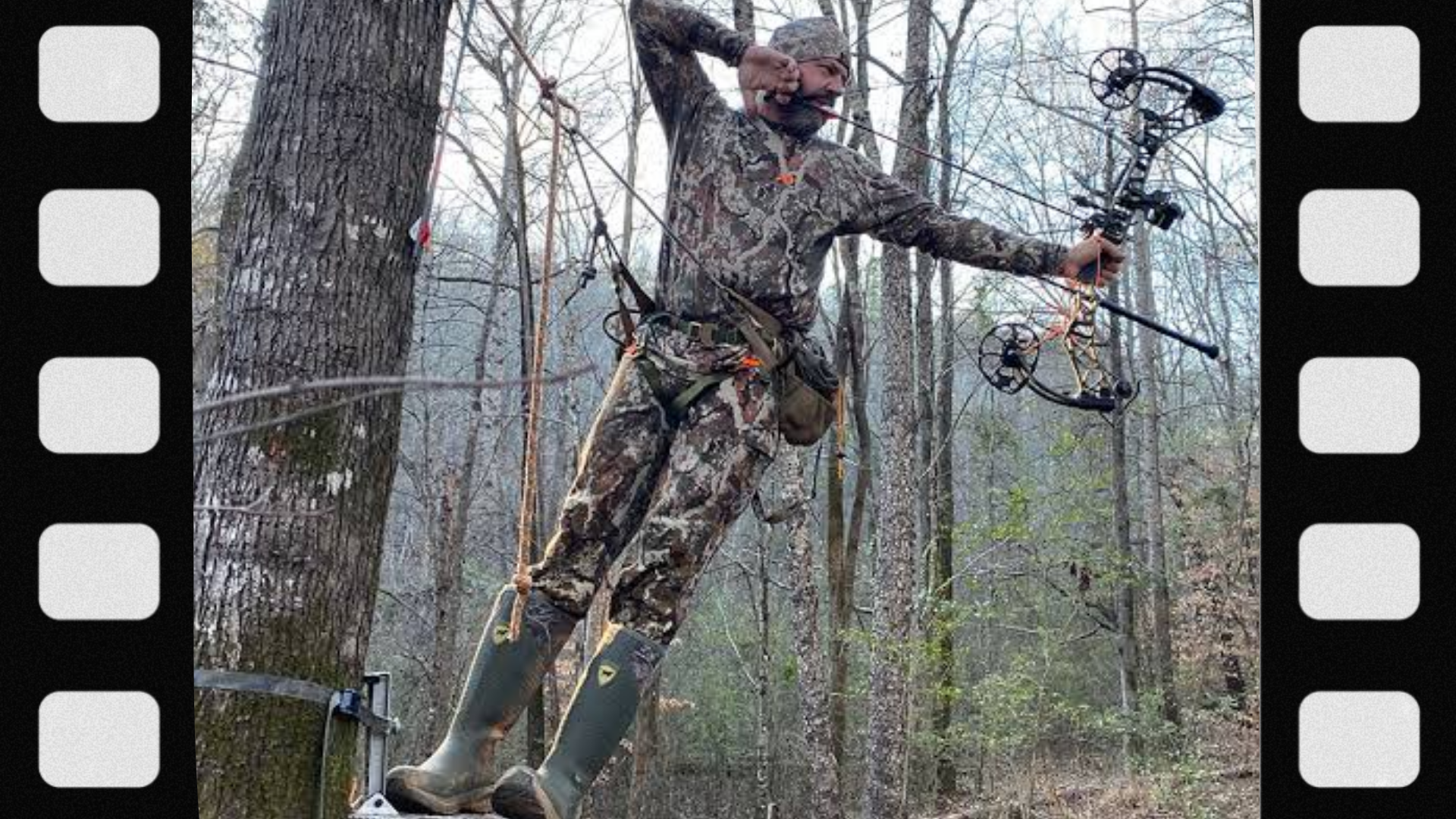
Verify public-land restrictions on screw-in hooks and tree damage. Use only legal, non-damaging systems where required.
15. Bow, Firearm, or Crossbow Holder
A suitable holder keeps the hunting implement secure while the hunter waits. It should not contact the trigger, interfere with the mechanical safety, point a firearm toward the hunter, or create a tripping or entanglement hazard.
Keep fingers outside the trigger guard and follow the four universal firearm safety rules. A mechanical safety never makes unsafe positioning acceptable.
16. Knee Pads or Tree Cushion
Knee pads or a legal tree cushion can improve comfort when resting the knees against the trunk. Better comfort may reduce unnecessary shifting, but padding is not a safety connection.
Choose equipment that stays in place without restricting circulation. Practice with it before hunting to identify squeaks, snagging, and pressure points.
17. Suitable Hunting Pack
A saddle-hunting pack should securely carry the climbing system, platform, layers, water, first aid, and legal hunting accessories. The load should remain balanced and should not catch on brush or prevent safe movement.
Pack weight counts toward the load placed on parts of the elevated system. Compare your dressed body weight plus relevant equipment with every applicable manufacturer rating.
18. Headlamp and Backup Light
Many saddle hunters enter or leave the woods in darkness. Carry a hands-free headlamp, a separate backup flashlight, and spare power. Test them before leaving the vehicle.
Artificial-light rules vary by jurisdiction and species. A light used for navigation may be regulated differently from a light used to locate or illuminate wildlife.
19. Offline Map, Compass, and Phone
Mark the vehicle, property boundaries, access route, and hunting location. Download maps before entering areas with poor cellular coverage and carry an independent compass.
Keep the phone secured against dropping and weather. A phone should support—not replace—navigation skills and an emergency plan.
20. Emergency Communication Device
A satellite communicator or personal locator beacon can be valuable in remote areas without cellular coverage. Store it where it remains reachable if you fall or become immobilized.
Register, charge, and test the device as its manufacturer directs. Make sure an emergency contact understands your hunting location and overdue procedure.
21. First-Aid Kit
Carry supplies for bleeding, cuts, blisters, sprains, and personal medical needs. Consider the additional consequences of an elevated fall, but do not allow the kit to create false confidence.
First-aid and emergency-response training are essential. Serious falls, head injuries, breathing problems, loss of consciousness, severe bleeding, or suspected spinal injuries require emergency medical assistance.
22. Weather-Appropriate Clothing
Use a moisture-managing base layer, insulation suited to the temperature, and weather protection as needed. Saddle hunters may produce heat while hiking and climbing but cool quickly once stationary.
Avoid clothing with loose cords or unsecured parts that can catch in ropes, steps, branches, or connectors. Confirm that layers do not interfere with the saddle’s fit.
23. Required High-Visibility Clothing
Hunter-orange requirements depend on the jurisdiction, season, species, and weapon. Check the current regulation booklet for the required color, area, and placement.
High-visibility material may also help other hunters identify your position during overlapping firearms seasons. Do not assume elevation makes you visible or protects you from an unsafe shot.
24. Water and Food
Carry enough water for the approach, setup, hunt, and return. Dehydration, low energy, overheating, and fatigue can impair judgment and coordination during descent.
Keep food and bottles secured so they cannot fall. Pack out all waste and follow applicable rules concerning wildlife attractants.
25. Legal Hunting Equipment and Documents
Carry the required license, permits, tags, identification, and land-access documents. The bow, firearm, crossbow, ammunition, arrows, and broadheads must comply with the season and local law.
Verify weapon restrictions, hunter-orange rules, legal shooting hours, baiting rules, tagging requirements, public-land equipment rules, and any prohibition on damaging trees. Official regulations override general online guidance.
Understanding the Complete Saddle System
A saddle should not be evaluated as an isolated piece of fabric. The hunter depends on a system of interconnected components. A highly rated saddle cannot compensate for an incompatible connector, damaged rope, poorly installed platform, unsuitable tree, or untrained climbing method.
| System Stage | Primary Equipment | Main Risk to Manage |
|---|---|---|
| Approach | Pack, map, lighting, communication | Fatigue, navigation errors, and poor weather |
| Climbing | Saddle, lineman’s belt, climbing system, helmet | Falling while installing or moving between steps |
| Transition | Tether, bridge, connectors, platform | Excess slack or loss of continuous protection |
| Hunting | Tethered saddle, platform, equipment hanger | Shifting equipment, unsafe positioning, and fatigue |
| Descent | Tether, lineman’s belt, climbing system, light | Fatigue, darkness, haste, and missed steps |
| Emergency | Suspension relief, communication, rescue plan | Prolonged suspension or inability to descend |
How to Choose a Saddle Hunting Setup
Start With Fit
Use the saddle manufacturer’s size chart and fitting instructions. Try the saddle at ground level while wearing your expected hunting layers. It should remain correctly positioned without severe pressure, numbness, or restricted circulation.
Compare the Total Hunting Weight
Ratings may apply to different components in different ways. Account for your body, clothing, pack, hunting equipment, and any load supported by the system. The lowest applicable rating or limitation controls the complete setup.
Use Compatible Components
Rope diameter, friction hitches, ascenders, connectors, saddles, and bridges must be mutually compatible. Never assume that matching dimensions alone establish compatibility. Obtain confirmation from the manufacturers when combining systems.
Choose One Climbing Method
Beginners benefit from learning one approved method thoroughly instead of purchasing several advanced systems. Climbing sticks are common, but no method is automatically safest for every hunter, tree, or physical ability.
Consider the Whole Route
A lightweight setup does not help if it is difficult to pack securely or unsafe for the selected trees. Consider walking distance, terrain, vegetation, tree species, weather, setup time, physical ability, and the need to carry harvested game.
Climbing Methods and Their Considerations
| Method | Potential Advantage | Important Limitation | Beginner Guidance |
|---|---|---|---|
| Climbing sticks | Common and relatively straightforward | Bulk, weight, and installation requirements | Use manufacturer training and ground-level practice |
| Single-stick system | Can reduce carried equipment | Requires repeated transitions and advanced rope management | Not a shortcut for inexperienced climbers |
| Rope-based ascent | May reduce contact with repeated steps | Requires specialized equipment and technical training | Learn from a qualified instructor |
| Tree steps | Compact in some configurations | May damage trees or violate property rules | Check land regulations and manufacturer limits |
| Preset climbing route | May simplify repeat access | Weathering, inspection, theft, and public-land restrictions | Never trust equipment merely because it was left in place |
This comparison is not a substitute for hands-on instruction. Do not attempt an unfamiliar climbing method at hunting height based solely on written or video directions.
How to Inspect Saddle Hunting Equipment
Inspect Before Every Climb
- Look for cuts, fraying, glazing, burns, chemical contamination, and discoloration.
- Check load-bearing stitching for loose, cut, or pulled threads.
- Confirm that buckles, gates, and locking mechanisms operate fully.
- Inspect ropes along their entire accessible length.
- Check sticks, platforms, steps, straps, cables, and fasteners for cracks or deformation.
- Confirm that labels and inspection information remain readable.
- Remove equipment from service if its condition is uncertain.
Inspect After a Fall or Shock Load
A fall, hard swing, dropped component, or uncontrolled loading can damage equipment without leaving an obvious mark. Isolate affected items and contact the manufacturer. Do not resume hunting merely because the system appears normal.
Store Equipment Correctly
Keep saddle equipment clean, dry, and protected from chemicals, sunlight, rodents, sharp objects, extreme heat, and moisture. Do not leave life-support equipment outdoors between hunts unless the manufacturer explicitly permits it.
Beginner Ground-Level Practice Plan
- Read every manual for the saddle, ropes, connectors, climbing method, and platform.
- Complete hunter education and saddle-specific safety instruction.
- Have an experienced and competent person inspect the complete system.
- Practice fitting and adjusting the saddle with both light and cold-weather clothing.
- Learn equipment organization without leaving the ground.
- Practice maintaining approved connections only at the lowest safe training height.
- Rehearse equipment hauling with an unloaded hunting implement.
- Practice reaching the suspension-relief device.
- Learn the manufacturer-approved emergency descent procedure.
- Practice shooting positions close to the ground with an appropriate backstop.
- Increase height only after demonstrating controlled, repeatable use.
- Never use a live hunt as the first complete test of the system.
Four Firearm Safety Rules for Saddle Hunters
- Treat every firearm as if it is loaded.
- Keep the muzzle pointed in a safe direction.
- Keep your finger outside the trigger guard until ready to shoot.
- Be certain of the target and what is beyond it.
Unload the firearm before using a haul line. Keep the muzzle pointed away from yourself and others, and never attach the haul line to the trigger or trigger guard. Follow the manufacturer’s manual and applicable law concerning loading at elevation.
Archery equipment also requires disciplined handling. Use a haul line, protect broadheads, control the bow or crossbow throughout the process, and never dry-fire archery equipment.
Pre-Hunt Saddle Safety Checklist
- Confirm that the season, license, weapon, property, and equipment are legal.
- Check public-land restrictions on screw-in steps and tree damage.
- Review the weather, wind, and emergency conditions.
- Tell a responsible person where you are going and when you will return.
- Inspect the saddle, bridge, tether, lineman’s belt, ropes, and stitching.
- Check every connector and adjustment device.
- Inspect climbing sticks, straps, platform, fasteners, and traction surfaces.
- Verify total system weight limits.
- Pack a reachable suspension-relief device.
- Test the haul line, phone, headlamp, backup light, and communicator.
- Download offline maps and mark the vehicle.
- Select only a healthy tree compatible with the complete system.
Common Saddle Hunting Mistakes
Buying Components Before Choosing a System
Purchasing ropes, connectors, or mechanical devices separately can create compatibility problems. Choose a documented system first and confirm every addition with the relevant manufacturer.
Practicing for the First Time at Hunting Height
Installation and rope adjustment should become controlled and repeatable close to the ground before the hunter climbs higher.
Allowing Excess Slack
Excess slack can increase fall distance and impact force. Adjust the system as its manufacturer directs throughout the climb and hunt.
Skipping Equipment Inspection
Small cuts, damaged stitching, contaminated ropes, worn straps, or malfunctioning connectors can compromise the system. Inspection is required before every use.
Climbing an Unsuitable Tree
Dead, damaged, rotting, leaning, storm-weakened, or undersized trees may fail or prevent secure equipment installation. Choose only trees that meet every component manufacturer’s requirements.
Carrying Equipment While Climbing
Loose bows, firearms, packs, or accessories interfere with balance and hand placement. Secure them below and raise them using an appropriate haul line after reaching a stable position.
Ignoring Total Load
The hunter’s body weight is not the only load. Clothing, boots, pack, hunting equipment, and supported accessories may affect compliance with equipment ratings.
Using Too Many Unfamiliar Modifications
Aiders, advanced climbing methods, replacement bridges, and mechanical ascenders may change the system’s operation. Add equipment only after confirming compatibility and receiving appropriate instruction.
What Not to Do While Saddle Hunting
- Do not climb a dead, damaged, rotting, or unsuitable tree.
- Do not use homemade life-support equipment.
- Do not use utility rope, keychain clips, or unrated hardware.
- Do not exceed any component’s weight or use limitation.
- Do not combine components without confirming compatibility.
- Do not leave connectors open or unlocked while loaded.
- Do not allow unnecessary slack in the safety system.
- Do not disconnect at elevation without an approved continuous-protection procedure.
- Do not climb with a loaded firearm or exposed broadhead.
- Do not pull equipment up by a firearm’s trigger or trigger guard.
- Do not stand on branches as improvised steps or platforms.
- Do not use screw-in equipment where it is prohibited.
- Do not trust permanently installed equipment without inspecting it.
- Do not continue climbing in lightning, high winds, ice, poor visibility, or severe fatigue.
- Do not hunt alone without sharing a location and return plan.
- Do not continue using equipment after a fall until the manufacturer clears or replaces it.
Printable Saddle Hunting Gear Checklist
Life-Support System
- Properly fitted hunting saddle
- Approved bridge
- Tree tether
- Lineman’s belt
- Approved locking connectors
- Compatible adjustment devices or friction hitches
- Suspension-relief device
- Manufacturer manuals
Climbing and Positioning
- Approved climbing sticks or climbing system
- Platform or legal ring of steps
- Manufacturer-approved attachment straps
- Helmet
- Haul line
- Knee pads or tree cushion
Hunting Accessories
- Legal bow, firearm, or crossbow
- Compatible ammunition, arrows, or bolts
- Protected broadheads where applicable
- Equipment hanger
- Binoculars
- Rangefinder if useful
- Calls and other legal accessories
Navigation and Emergency Equipment
- Charged phone
- Satellite communicator or locator beacon where appropriate
- Offline map
- Compass
- Headlamp
- Backup flashlight
- Spare batteries or power bank
- First-aid kit
- Emergency whistle
Documents and Personal Equipment
- Hunting license
- Required permits and tags
- Hunter-education documentation
- Landowner permission
- Current regulations
- Weather-appropriate layers
- Required high-visibility clothing
- Water and food
- Emergency contact plan
FAQs
1. What is saddle hunting?
Saddle hunting is an elevated hunting method in which a hunter uses a purpose-built saddle connected to a suitable tree and stands or rests on an approved platform or set of steps.
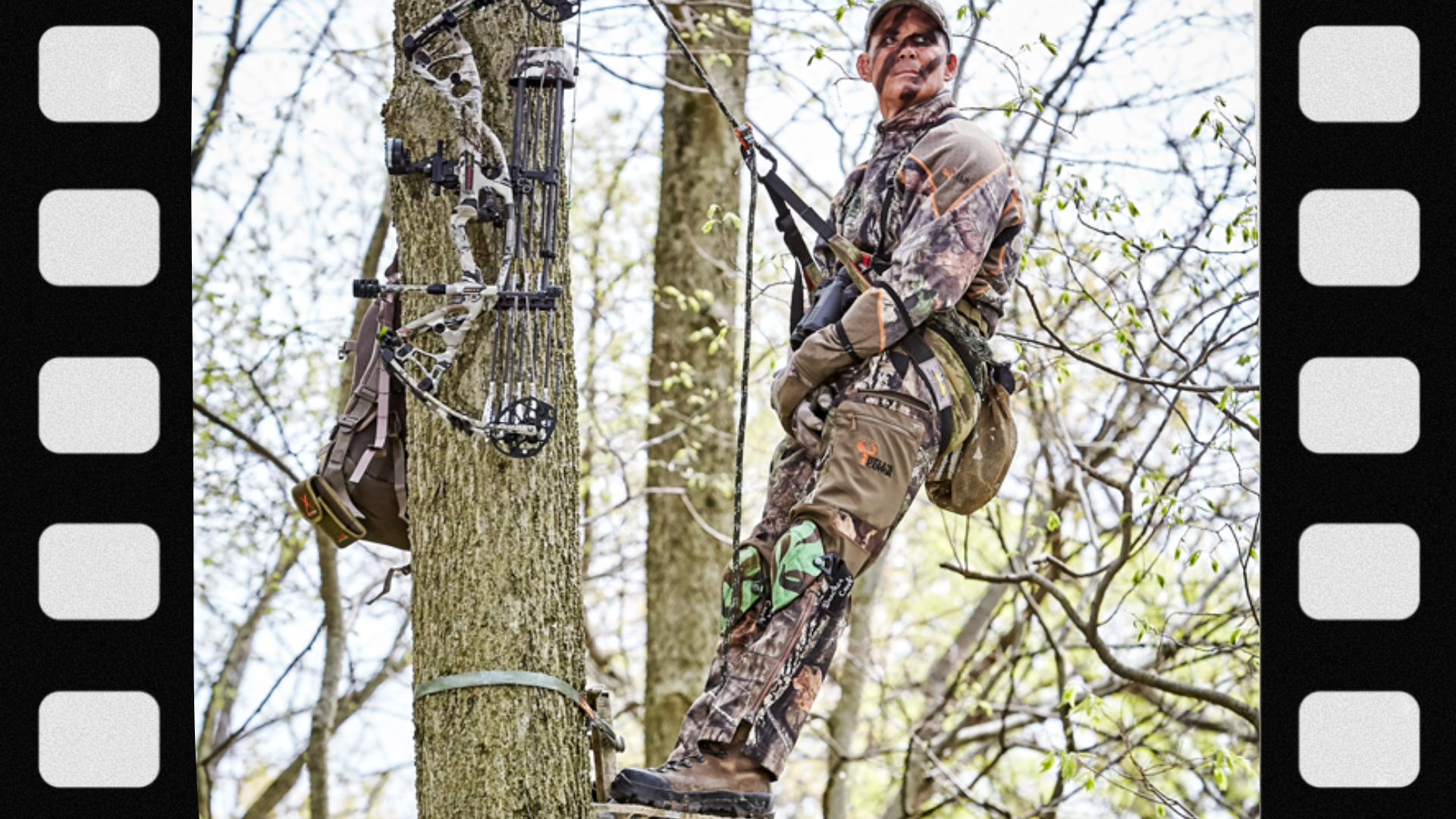
2. What gear do you need for saddle hunting as a beginner?
A beginner needs a compatible saddle system, tether, lineman’s belt, approved connectors, climbing method, platform, suspension-relief device, haul line, helmet, communication, navigation, and formal instruction.
3. Is a saddle all you need for saddle hunting?
No. The saddle is only one part of the system. Safe use also depends on compatible ropes, connectors, climbing equipment, foot support, emergency gear, and training.
4. Do you need a platform for saddle hunting?
You need an approved way to support and position your feet. Most hunters use a saddle platform or a manufacturer-compatible ring of steps.
5. Do you need climbing sticks?
You need an approved climbing method, but it does not have to be climbing sticks. Alternative methods require their own equipment, compatibility checks, and specialized instruction.
6. What is a saddle bridge?
The bridge is a load-bearing part of the saddle system that connects the saddle’s designated attachment areas to the tether connection.
7. What is a tree tether?
A tree tether is a manufacturer-approved rope or strap system that connects the saddle setup to a suitable tree.
8. What is a lineman’s belt used for?
It helps support positioning while the hunter installs or removes climbing equipment. It must be adjusted and used exactly as the manufacturer directs.
9. Is a lineman’s belt the same as a tether?
No. Although some components may appear similar, they serve different functions and may have different configurations. Follow the product documentation.
10. Is a hunting saddle a full-body safety harness?
Do not assume that it is. Saddle-specific safety guidance warns against treating a hunting saddle as a conventional full-body fall-arrest harness. Use each system only as documented.
11. Should saddle hunters use a helmet?
A suitable helmet is strongly recommended because it can help protect against head impacts, swinging into the tree, and falling objects.
12. What is suspension trauma?
Suspension trauma is a dangerous condition associated with remaining motionless while suspended. Hunters need an accessible relief device, an emergency descent plan, and a way to summon help.
13. Do you need a suspension-relief strap?
Yes, an approved and immediately accessible suspension-relief device is an important part of elevated-hunting emergency preparation.
14. How high should a beginner saddle hunt?
There is no universally safe hunting height. Beginners should first train at the lowest practical height under supervision and increase height only after demonstrating competent equipment use.
15. Can you teach yourself saddle hunting from videos?
Videos can supplement learning, but they should not replace manufacturer instruction, formal safety education, ground-level practice, and qualified supervision.
16. Is saddle hunting safer than a tree stand?
No elevated method is automatically safe. Risk depends on equipment condition, system compatibility, continuous protection, training, tree selection, behavior, and emergency planning.
17. How much does saddle hunting gear weigh?
Weight varies substantially by saddle, platform, climbing method, pack, and accessories. Verify current manufacturer specifications instead of relying on generalized figures.
18. Does pack weight count toward the system limit?
Any load supported by the system may matter. Follow each manufacturer’s definition and compare the fully equipped hunting load with the lowest relevant rating.
19. Can you use rock-climbing equipment for saddle hunting?
Do not assume compatibility merely because equipment is rated for another activity. Use only components approved for the intended system and configuration.
20. Can you make your own saddle or tether?
Homemade life-support equipment is not recommended. Manufacturing safe load-bearing systems requires specialized materials, engineering, construction, inspection, and traceability.
21. Can you replace the saddle bridge?
Only replace or modify a bridge according to the saddle manufacturer’s written instructions and approved specifications.
22. Can different saddle brands be mixed?
Some components may be compatible, but this must be confirmed. Mixing brands without documentation can create conflicts involving rope diameter, connectors, ratings, and intended use.
23. How often should saddle gear be inspected?
Inspect it before every use, after any unusual loading or damage, and according to the manufacturer’s periodic inspection and retirement schedule.
24. When should a saddle or rope be replaced?
Replace equipment when required by its age or service-life limit, after disqualifying damage or a fall, or whenever its history and condition cannot be verified.
25. Can saddle equipment be left in the tree?
Leaving equipment outdoors may expose it to weather, ultraviolet light, animals, theft, and undetected damage. It may also violate land rules. Follow manufacturer storage guidance.
26. What trees are suitable for saddle hunting?
Use only healthy, living trees that meet the diameter, shape, bark, and other requirements of every system component. Avoid damaged, dead, rotting, or unstable trees.
27. Can you saddle hunt from a leaning tree?
A lean can affect installation, balance, platform loading, and climbing difficulty. Use only trees permitted by the equipment manufacturers and within your training.
28. Can saddle hunters use screw-in steps on public land?
Rules differ by agency and property. Many public areas prohibit devices that damage trees, so check the current site-specific regulations.
29. What should you do if the platform moves?
Remain connected, stop hunting, and follow the manufacturer-approved procedure to descend safely. Do not attempt an improvised elevated repair.
30. Should you climb with your bow or firearm?
No. Keep both hands available for the approved climbing process and raise unloaded, secured hunting equipment with a haul line after reaching a stable position.
31. Can you pull up a loaded firearm?
No. The firearm should be unloaded, secured, pointed in a safe direction, and attached without contacting the trigger or trigger guard.
32. Can you shoot a bow from a saddle?
Yes, where archery hunting is legal, but shooting positions and angles differ from ground practice. Train close to the ground with a safe backstop before hunting.
33. Can you use a crossbow from a saddle?
It may be possible if the equipment, season, and position are legal and manageable. Practice safe hauling, positioning, and shooting without creating entanglement.
34. Do saddle hunters need hunter orange?
Requirements vary by jurisdiction, season, and weapon. Check the current wildlife-agency rules for the exact garment specifications.
35. Do you need a haul line?
Yes. A haul line keeps weapons and packs out of the climbing process and allows the hunter to maintain proper contact and equipment control.
36. Are knee pads necessary?
No, but they can improve comfort when resting against the tree. They must fit without restricting circulation or interfering with climbing.
37. What should be carried in a saddle hunting pack?
Carry the compatible saddle system, climbing equipment, platform, lighting, navigation, communication, first aid, water, weather layers, documents, and legal hunting equipment.
38. Should you saddle hunt alone?
Beginners should train with a competent partner. Anyone hunting alone should share a detailed location and return plan and carry a reachable emergency communicator.
39. What should you do after a fall?
Call for help, use the approved relief and recovery procedure if able, and seek medical evaluation when appropriate. Remove loaded equipment from service and contact its manufacturer.
40. Where can beginners learn saddle hunting safety?
Begin with a state-approved hunter-education course, the equipment manufacturers’ manuals, and a dedicated course such as the Saddle Hunting Essentials Course.
Final Answer
In summary, what gear do you need for saddle hunting? You need a correctly fitted hunting saddle, compatible bridge, tree tether, lineman’s belt, approved locking connectors, a manufacturer-rated climbing method, platform or ring of steps, suspension-relief device, and haul line. Add a helmet, navigation, communication, lighting, first aid, weather protection, legal documents, and appropriate hunting equipment.
The safest setup is not necessarily the lightest, most expensive, or most technically advanced. It is a documented and compatible system that you have learned to inspect and operate under qualified supervision. Practice close to the ground, remain appropriately connected whenever your feet leave the ground, minimize allowable slack, use only suitable living trees, and stop when weather, equipment condition, fatigue, or uncertainty makes climbing unsafe.
Read more:
- What Gear Do You Need for Small Game Hunting? 9 Essentials
- Best Lightweight Hunting Belts: 7 Options Compared