
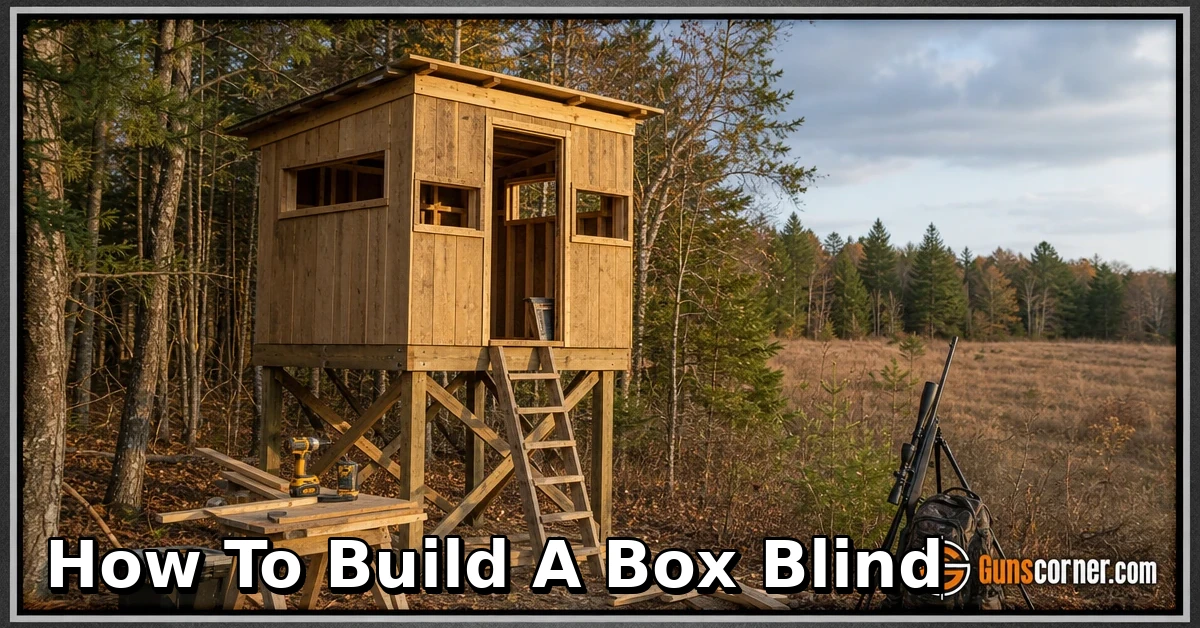

Learning how to build a box blind can improve concealment, comfort, and observation during deer and other legal game hunts. A well-designed blind should be sturdy, weather-resistant, quiet to use, safe for firearm or bowhunting, and placed only where hunting is legal. This guide explains planning, materials, construction, placement, maintenance, and responsible use for beginners.
To build a box blind, choose a legal and well-drained location, design a stable floor and weatherproof structure, install safe shooting windows, and secure the blind against wind. Scout first so the blind does not disrupt game movement, and confirm all land-access, weapon, season, and visibility requirements before hunting. Keep shooting lanes controlled, identify your target and what lies beyond it, and use the blind only within your practiced and ethical range.
Important Legal and Safety Notice Before You Build

Blind construction and hunting rules vary by state, province, county, land type, and wildlife species. Before building or placing a box blind, check your official wildlife agency and land manager for current requirements.
- Confirm hunting licenses, permits, tags, seasons, legal hours, and bag limits.
- Verify whether permanent or temporary blinds are allowed on the property.
- Check public-land rules, private-land permission, boundary lines, and removal deadlines.
- Follow weapon, ammunition, archery, and required visibility-clothing regulations.
- Never aim toward roads, homes, livestock, trails, vehicles, or occupied buildings.
- Identify the target and what is beyond it before taking a shot.
- Use safe access routes, weather planning, communication, hydration, and first aid.
- Use a full-body harness when entering or using an elevated blind or platform.
What Makes a Good Hunting Box Blind?
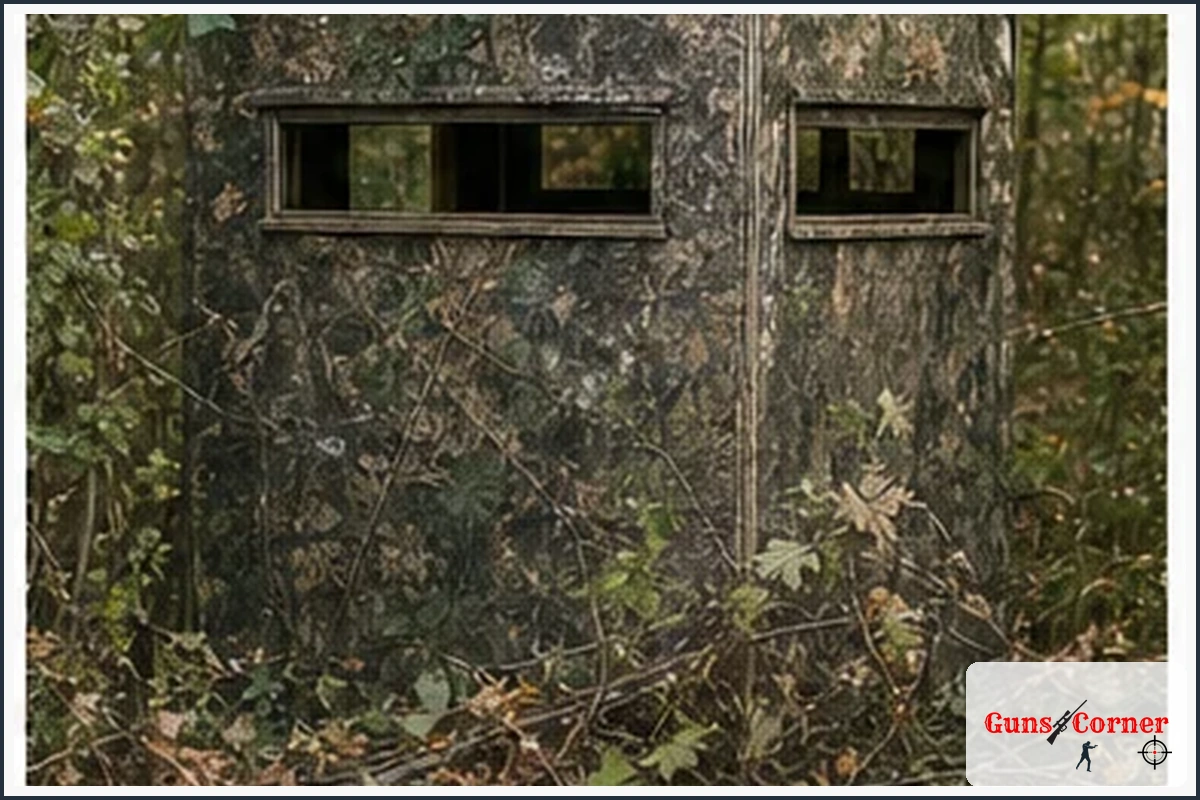
A useful box blind balances concealment, visibility, stability, weather protection, and safe shooting angles. It does not need to be elaborate. A simple structure built carefully from durable materials can be more valuable than an expensive blind placed in the wrong location.
- Stable: The floor, supports, and roof should remain secure in expected weather.
- Quiet: Windows, doors, seats, and shooting rests should not rattle.
- Dry: The roof should shed rain, and the floor should stay above standing water.
- Well ventilated: Small vents reduce condensation without creating excessive openings.
- Practical: The blind should allow safe entry, comfortable sitting, and controlled shooting positions.
- Low-impact: Placement should avoid damaging habitat or blocking normal animal movement.
Planning the Blind Before Construction
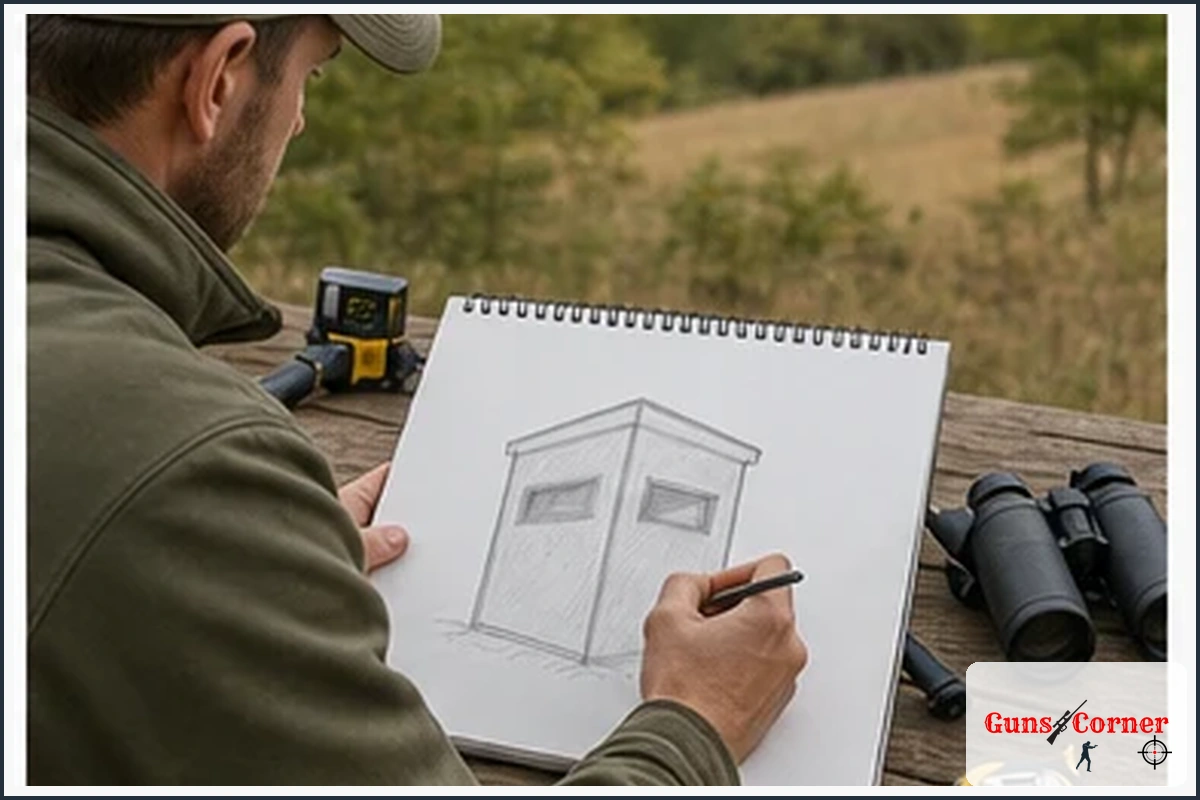
Choose the Hunting Method First
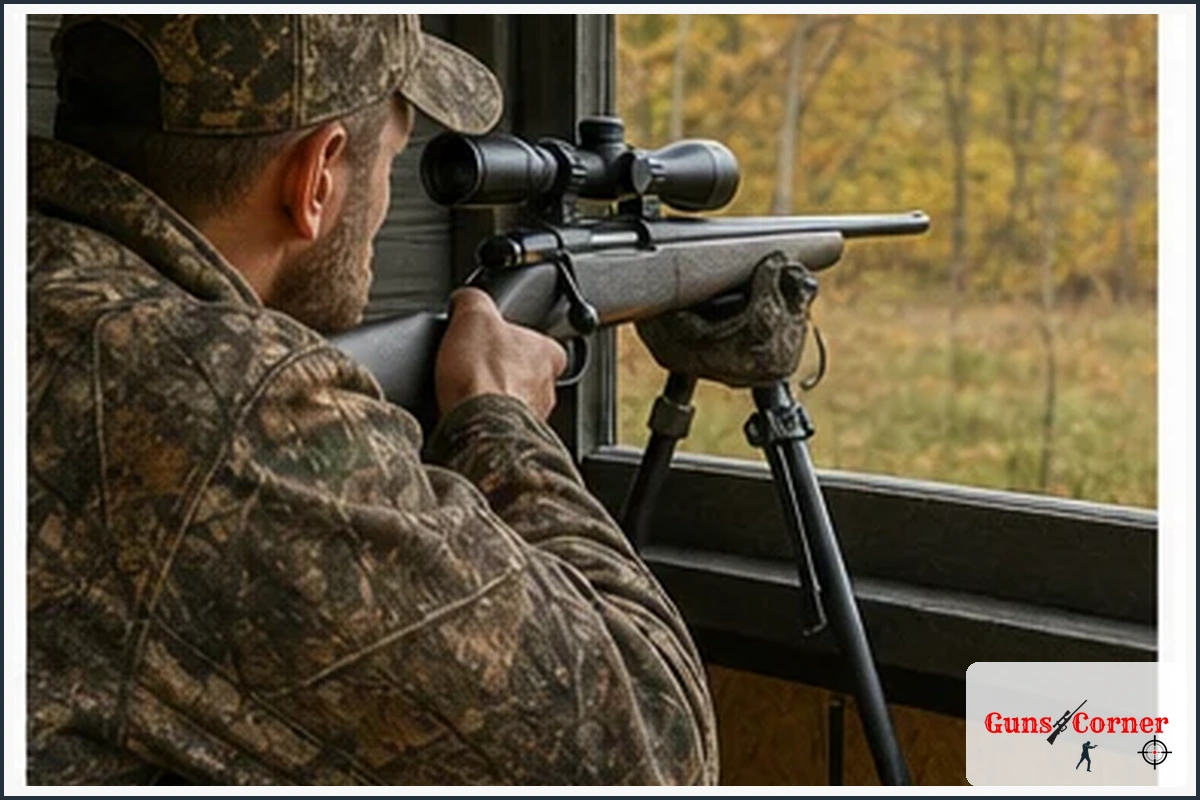
Design the blind around the legal weapon and hunting style. A firearm hunter may need wider, carefully controlled shooting windows and a solid rest. A bowhunter needs enough room to draw safely, turn without hitting the walls, and maintain a clear angle for an ethical shot. Never design a blind around a shot distance beyond your practiced ability.
Decide Between Ground-Level and Elevated Construction
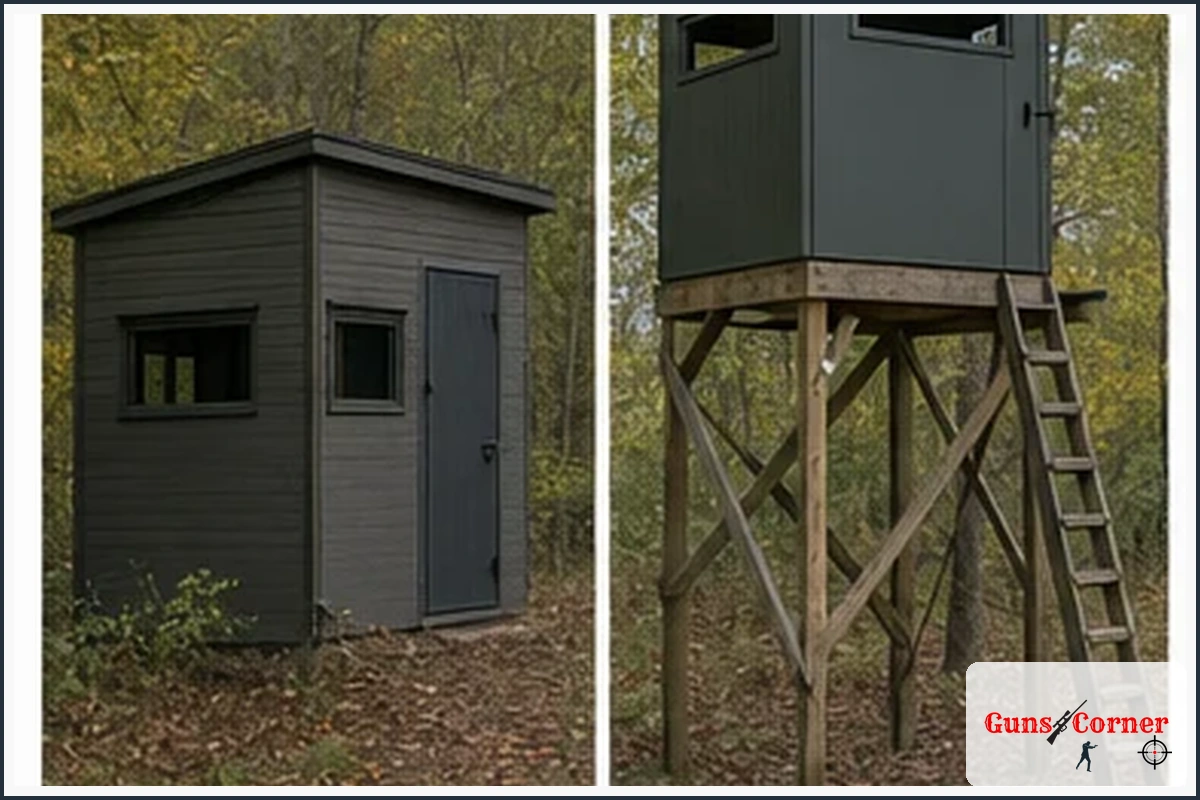
A ground-level blind is generally simpler to build and access. It may be easier to keep stable and safer for beginners. An elevated blind can improve visibility and help with concealment, but it adds fall, ladder, wind, and structural risks. If you build above ground level, use engineered supports, secure stairs or a ladder, handrails where appropriate, and a full-body fall-arrest harness.
Estimate the Size
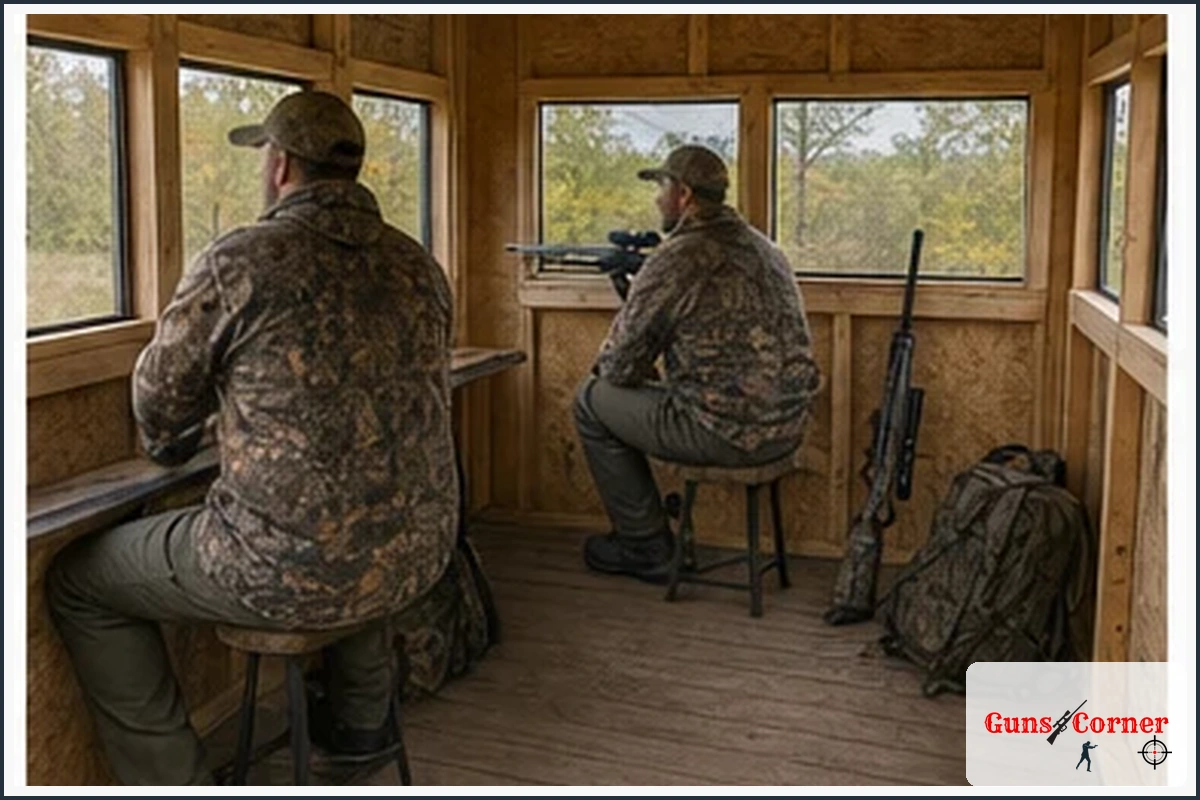
Make the blind large enough for the expected number of hunters and equipment without making it unnecessarily bulky. Allow room for seats, a safe shooting position, a door that opens quietly, and enough clearance for an unloaded firearm or bow to be handled safely.
Plan Windows Carefully
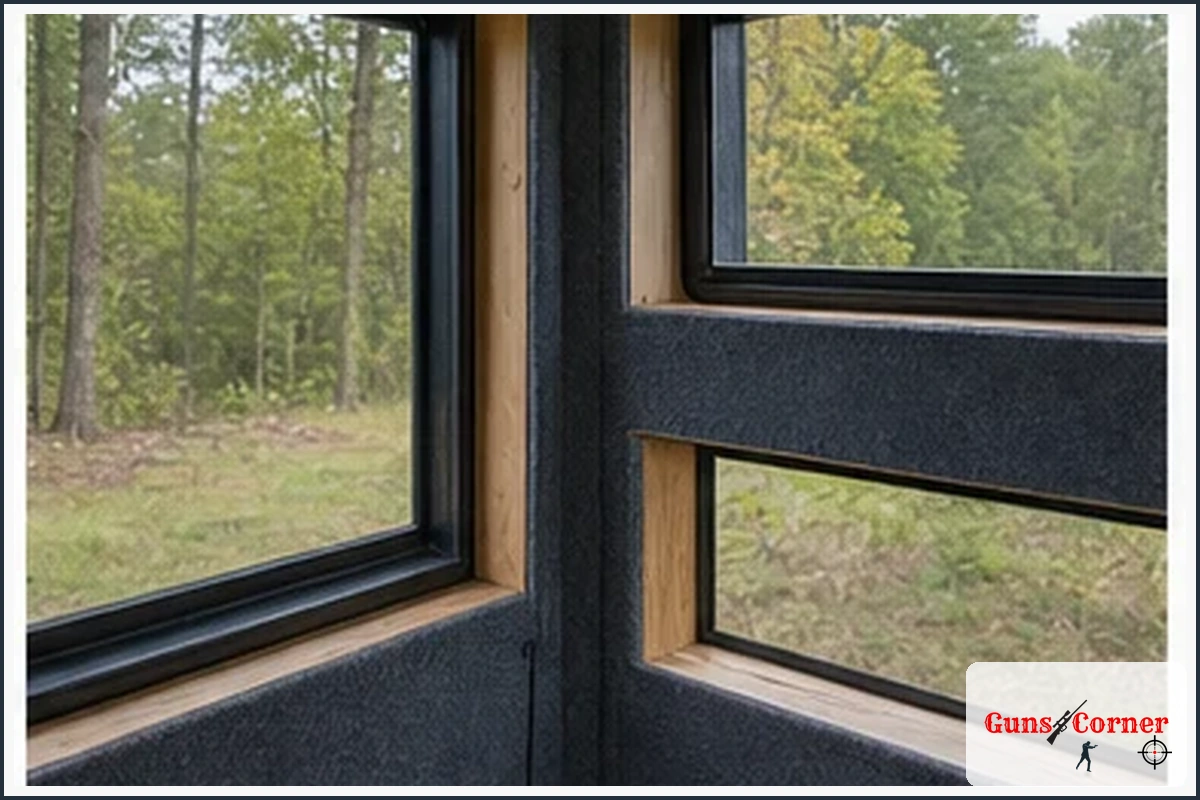
Windows should provide useful observation and controlled shooting angles without creating unnecessary openings. Lower window openings can help conceal movement, while adjustable covers can reduce glare and weather exposure. Every window should be positioned so a hunter can maintain muzzle or bow control and see the background before acting.
Materials and Tools to Consider
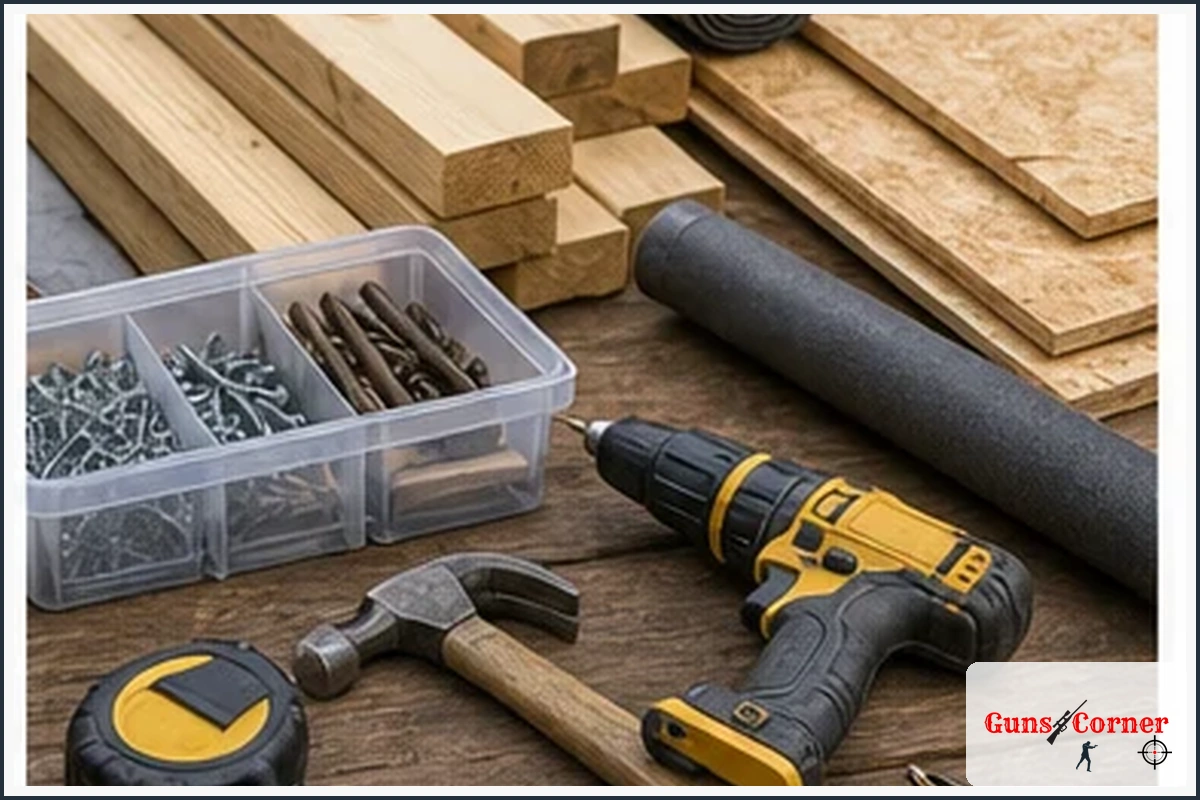
Use materials suitable for your climate, terrain, and local rules. Inspect all lumber, fasteners, roofing, and supports before use. Avoid materials that are visibly rotten, cracked, warped, or structurally weakened.
- Weather-resistant framing lumber or another approved structural material
- Exterior-grade wall panels or siding
- Roof sheathing and durable roofing material
- Exterior screws, bolts, brackets, and suitable hardware
- Hinges, latches, window covers, and door hardware
- Flooring material rated for outdoor conditions
- Preservative or exterior coating appropriate for the material
- Level, tape measure, square, drill, saw, clamps, and safety glasses
- Gloves, hearing protection, dust protection, and sturdy footwear
- Anchoring hardware appropriate for the soil and structure
How to Build a Box Blind Step by Step
Step 1: Scout the Area Before Building
Do not begin with construction. First, scout the property and identify legal access, boundaries, drainage, prevailing wind, animal sign, and likely travel routes. Look for tracks, trails, feeding areas, bedding cover, water, rubs, scrapes, and crossings. Avoid placing the blind directly in the middle of a frequently used trail.
Step 2: Confirm Permission and Regulations
Obtain written permission when appropriate on private land and verify whether the landowner wants the blind removed after the season. On public land, check whether structures are allowed, whether they must be marked, and when they must be removed. Never place a blind across a boundary or rely on an uncertain map line.
Step 3: Mark the Footprint
Mark the corners on firm, well-drained ground. Avoid low areas that collect water, unstable slopes, dead trees that could fall, and locations that force hunters to cross active game trails. Consider the walking route, parking access, emergency exit, and how the blind will be transported to the site.
Step 4: Build or Prepare a Level Base
A level base improves safety and prevents doors and windows from binding. For a ground blind, use a stable platform or properly prepared supports that keep the floor off wet soil. For an elevated blind, use supports designed for the total structure, occupants, equipment, wind, and expected environmental conditions.
Step 5: Assemble the Floor Frame
Construct the floor frame square and reinforce it against twisting. Check the diagonals or use a framing square before fastening permanently. Install flooring securely so it does not flex, squeak, or create gaps that allow water inside.
Step 6: Frame the Walls
Build the wall sections on a level surface when possible. Include framing around the door, windows, and roof connection. Brace the walls temporarily while raising them, then fasten them together with appropriate exterior hardware. Do not rely on thin wall panels to provide the main structural strength.
Step 7: Install the Roof
Use a roof with enough overhang to direct water away from the walls and door. Seal vulnerable joints and make sure the roof is fastened for local wind conditions. A roof that leaks can damage the structure, equipment, and hunting gear while creating noise through dripping water.
Step 8: Add Doors and Window Covers
Install a door that opens smoothly without scraping the frame. Add quiet latches and test them from inside and outside. Window covers should be easy to adjust without sudden movement. Pad or secure hardware that might rattle in wind.
Step 9: Seal, Protect, and Camouflage the Exterior
Apply an appropriate exterior coating or sealant to vulnerable surfaces. Use natural, non-reflective colors that fit the surrounding habitat. Avoid excessive camouflage material that can catch wind, shed debris, or violate land-management rules. Do not use materials that create a strong odor immediately before hunting.
Step 10: Install Seating and Shooting Rests
Use stable seating that does not squeak or shift. A shooting rest can improve control, but it must not force the weapon into an unsafe direction. Bowhunters should have enough room to draw and turn. Firearm users should be able to keep the muzzle pointed in a safe direction while entering, exiting, and repositioning.
Step 11: Anchor and Inspect the Blind
Secure the blind against expected wind and weather. Inspect the base, wall connections, roof, door, windows, ladder, platform, and anchors. Test for movement, loose hardware, sharp edges, leaks, and unstable steps. Reinspect after severe weather.
Step 12: Test the Blind Before Hunting
Visit during daylight and sit in every hunting position. Check visibility, glare, wind exposure, entry noise, scent flow, and the background behind every possible shooting lane. Make sure the structure does not encourage an unsafe shot or leave blind spots near the entrance.
Choosing the Best Location
The best blind location is not simply the place with the most animal sign. It should combine legal access, safe shooting angles, favorable wind, practical entry, concealment, and minimal disturbance.
- Place the blind where prevailing winds carry human scent away from expected animal movement.
- Keep shooting lanes short enough for your practiced ability and local terrain.
- Use natural cover to break up the blind’s outline.
- Avoid blocking a trail, feeding area, water source, or livestock route.
- Keep the sun and glare in mind when choosing window directions.
- Plan an entry route that does not cross the most active game trail.
- Leave safe space between the blind and roads, buildings, property lines, and other hunters.
How to Use a Box Blind Safely While Hunting
Enter and Exit Carefully
Unload or safely control your firearm according to manufacturer and hunter-education guidance before entering or leaving. Keep bows restrained and arrows safely managed. Close the door quietly, and avoid climbing with loose equipment in your hands.
Control Muzzle and Bow Direction
Firearms should remain pointed in a safe direction, with the action handled according to your training and manufacturer instructions. Never rest a loaded firearm where it can fall or be swept across another person. Archers should keep arrows nocked only when legally permitted and when a safe shot is immediately possible.
Identify the Target and Background
Window openings can limit visibility, especially in low light. Do not shoot at movement, sound, or an unclear shape. Confirm the animal, species, legality, and what lies beyond it. Do not shoot toward homes, roads, trails, livestock, vehicles, or other hunters.
Keep the Blind Quiet
Organize equipment before the hunt. Use soft cases or padding on noisy surfaces, avoid unnecessary movement, and test every latch and seat beforehand. Small adjustments made during daylight are easier than trying to solve problems after animals are nearby.
Best Time, Place, and Conditions for Using a Box Blind
Animal movement depends on species, season, weather, hunting pressure, food, water, and habitat. A box blind can help you remain concealed for longer periods, but it does not replace scouting or careful wind management.
Moderate weather may make long sits more comfortable, while strong wind, heavy rain, lightning, extreme heat, or poor visibility can create safety problems. Leave the blind when conditions become unsafe, and make sure someone knows your planned location and return time.
Helpful Tips for Better Results
- Build the blind well before the season so wildlife can become accustomed to its presence.
- Use a map and compass or GPS to confirm boundaries and emergency routes.
- Keep the interior uncluttered so equipment does not interfere with safe weapon handling.
- Use binoculars to observe animals before making a decision.
- Practice entering, sitting, turning, and using your shooting position before hunting.
- Check the wind at the blind and along the access route.
- Use a small notebook to record wind, weather, animal sign, and movement patterns.
- Bring water, a first aid kit, communication equipment, and weather-appropriate clothing.
- Use required hunter-orange or other visibility clothing when local rules require it.
- Keep a recovery and meat-care plan ready before the hunt begins.
Common Mistakes to Avoid
- Building before confirming land permission or structure rules.
- Placing the blind directly on an active trail.
- Ignoring wind direction and entry-route scent.
- Using weak supports, inadequate anchors, or damaged materials.
- Making shooting windows too large or too low for safe use.
- Leaving sharp edges, loose screws, or noisy hardware exposed.
- Failing to inspect an elevated blind after storms.
- Creating shooting lanes toward roads, homes, livestock, or unclear backgrounds.
- Taking shots beyond the hunter’s practiced range.
- Leaving a blind on public or private land when removal is required.
- Assuming a blind makes scent, movement, or poor scouting unimportant.
Troubleshooting Common Box Blind Problems
| Problem | Possible Cause | What to Do |
|---|---|---|
| The blind rocks in the wind | Weak supports, poor anchoring, or uneven ground | Stop using it until the base and anchors are inspected and reinforced safely. |
| Animals avoid the area | Recent disturbance, poor placement, scent, or excessive activity | Reduce visits, check wind and access routes, and allow the area to settle. |
| The door or windows squeak | Loose hardware, friction, or weather-related movement | Repair and test the hardware during daylight before hunting. |
| Rain enters the blind | Roof gaps, poor flashing, or damaged sealant | Repair the roof and dry the interior before storing equipment inside. |
| Visibility is poor | Glare, vegetation, incorrect window height, or low light | Adjust covers or trim vegetation only where legal and without damaging habitat. |
| The entry route crosses game movement | Insufficient scouting or a poorly chosen access path | Use a quieter legal route that minimizes scent and disturbance. |
| You are unsure whether the blind is legal | Changing land or wildlife regulations | Contact the official wildlife agency or land manager before using it. |
| An elevated blind feels unsafe | Damaged ladder, missing railing, loose platform, or severe weather | Do not enter it. Repair it properly or seek qualified structural assistance. |
Ethical Hunting and Conservation
A box blind is a hunting aid, not a substitute for judgment. Ethical hunters follow seasons and limits, respect landowners and other outdoor users, and pass on shots that are unsafe, uncertain, or beyond their ability.
Use legal equipment, practice before the season, minimize disturbance, and make every reasonable effort to recover and responsibly use legal game. Remove trash and construction debris, avoid damaging vegetation, and support conservation through licenses and responsible participation.
When to Get More Training or Professional Guidance
Seek additional help if you have never safely handled a firearm or bow, are unfamiliar with elevated structures, do not understand local regulations, or are uncertain about property boundaries. Hunter education courses, certified instructors, experienced ethical mentors, wildlife agencies, and reputable conservation organizations can provide valuable instruction.
For elevated blinds, obtain qualified assistance when the platform, supports, anchoring, or fall protection are beyond your construction experience. Structural failure can cause serious injury even when the blind appears stable.
After the Hunt: Maintenance and Learning
- Inspect the roof, walls, floor, anchors, ladder, windows, and door after severe weather.
- Remove trash, food, spent packaging, and temporary materials as required.
- Dry wet clothing and equipment before storing them.
- Record weather, wind, animal sign, movement, and access observations.
- Complete required harvest reporting and tagging promptly.
- Follow responsible cooling, transport, and meat-care practices.
- Repair small problems before they become safety hazards.
- Remove the blind when required by the landowner or land manager.
Recommended Hunting Gear and Tools to Consider
You do not need expensive equipment to build or use a box blind responsibly. Choose supplies based on local weather, terrain, legal requirements, hunting method, safety needs, and budget.
- Weather-resistant construction materials and exterior hardware
- Level, square, measuring tools, drill, saw, clamps, and safety glasses
- Navigation tools such as a map, compass, GPS, or hunting app
- Binoculars for observation
- Required visibility clothing
- First aid kit, water, snacks, and emergency communication
- Quiet seating, equipment padding, and weather protection
- Gloves, game bags, cooler, and meat-care supplies when relevant
- Full-body harness and appropriate fall-protection equipment for elevated blinds
Final Thoughts
Knowing how to build a box blind involves more than assembling walls and a roof. Scout first, confirm access and regulations, build for stability and weather, create controlled shooting positions, and test the blind before hunting. With careful preparation, patience, practice, and respect for wildlife, a box blind can support safer and more comfortable hunting without guaranteeing success.
Frequently Asked Questions
What is a box blind?
A box blind is an enclosed hunting structure with walls, a roof, windows, and a door. It provides concealment and protection from weather while allowing controlled observation and shooting positions.
Is it legal to build a box blind anywhere?
No. Laws vary by location and land type. Check the official wildlife agency and land manager for structure, access, marking, placement, and removal rules.
Do I need permission to build a box blind on private land?
Yes. Obtain clear permission from the landowner before construction and discuss location, materials, maintenance, hunting dates, and removal expectations.
Can I build a box blind on public land?
Only where public-land rules allow it. Some areas restrict permanent structures, require identification, or require removal by a specific date.
Should a box blind be on the ground or elevated?
Ground blinds are usually simpler and easier to access. Elevated blinds may improve visibility but require stronger construction, safe access, fall protection, and more frequent inspection.
What is the best size for a box blind?
The best size depends on the number of hunters, equipment, hunting method, and available space. Build only as large as needed for safe movement and comfortable observation.
How high should an elevated box blind be?
There is no universal height. Choose a height that fits the terrain and provides safe visibility without creating unnecessary fall or structural risks. Follow local rules and use qualified help when needed.
What materials are best for a box blind?
Use durable, weather-resistant structural materials and exterior-rated fasteners. The materials should match local weather, expected wind, moisture, and the weight of occupants and equipment.
Should I use treated lumber?
Use materials appropriate for outdoor exposure and follow manufacturer guidance for handling and finishing. Keep construction materials from creating unsafe contact surfaces or strong odors before hunting.
How do I make a box blind weatherproof?
Use a properly overhung roof, seal vulnerable joints, protect exposed surfaces, and inspect seams after rain and severe weather. Keep the floor above standing water.
How do I keep a box blind quiet?
Secure loose hardware, use quiet latches, pad contact points, and test seats and windows before hunting. Repair squeaks during daylight rather than in the field.
Where should I place a box blind?
Place it near legal, well-used animal movement while keeping safe shooting angles, favorable wind, practical access, and adequate distance from roads, homes, livestock, and boundaries.
Should a box blind be placed directly on a game trail?
Usually not. Position it near movement rather than blocking the trail, and plan entry and exit routes that minimize disturbance.
How important is wind direction?
Wind direction is very important because it affects scent and noise. Choose a setup and access route that carry human scent away from expected animal movement when possible.
How long should I leave a new blind before hunting?
There is no guaranteed waiting period. Place it early when possible, reduce unnecessary visits, and allow local wildlife to adjust while continuing to monitor sign legally and responsibly.
Can I hunt deer from a box blind?
In many areas, hunters use box blinds for deer, but species, season, weapon, blind, and land rules vary. Confirm current local regulations before hunting.
Can I bowhunt from a box blind?
Yes where legal, but the blind must provide enough room to draw, turn, and make a controlled shot. Practice from the actual blind and remain within your effective range.
Can I firearm hunt from a box blind?
Only where legal and safe. Control the muzzle, identify the target and background, use legal ammunition, and never shoot toward people, roads, buildings, livestock, or unclear movement.
Do I need hunter education before using a box blind?
Complete any legally required hunter education course. Even where it is not mandatory, formal training is strongly recommended for beginners.
Should I use hunter orange around a box blind?
Follow local visibility requirements. Depending on the season and hunting method, required hunter orange or other visibility clothing may apply.
Is a shooting rest necessary?
A stable rest can improve control, but it is not required. Any rest should support safe weapon handling and should not force the muzzle or bow toward an unsafe direction.
How should I enter an elevated box blind?
Use a stable ladder or stair system, maintain three points of contact where appropriate, secure equipment, and use a full-body harness. Do not climb during dangerous weather.
Can I leave a firearm loaded inside a box blind?
Follow local law, manufacturer instructions, and hunter-education guidance. Keep the firearm pointed safely and handle loading, unloading, and storage with deliberate caution.
How can I reduce scent around a box blind?
Control scent through clean clothing, careful access routes, wind awareness, and limited disturbance. Scent control does not replace safe placement or scouting.
Why are animals avoiding my box blind?
Possible causes include recent disturbance, poor wind, excessive visits, a blind placed too close to movement, or changes in food and cover. Review scouting information and reduce unnecessary activity.
How far should a box blind be from a game trail?
There is no universal distance. Choose a position that provides safe, ethical, practiced shooting opportunities without blocking movement or creating an unsafe background.
What should I do if the blind becomes unstable?
Stop using it immediately. Inspect the base, supports, anchors, and fasteners, and repair it before anyone enters. Seek qualified assistance when structural safety is uncertain.
What should I do if a storm damages the blind?
Do not enter until it has been inspected in daylight. Check for roof damage, shifted supports, loose ladders, flooding, and fallen trees.
How do I prevent condensation inside a box blind?
Use modest ventilation, avoid bringing in wet gear when possible, and dry the interior after use. Do not create openings that compromise safety, weather protection, or concealment.
Can I use a box blind on public land during multiple seasons?
Only if the land manager and current regulations allow it. Seasonal structure and removal rules may differ from hunting rules.
Do box blinds guarantee hunting success?
No. Success depends on legal access, scouting, weather, animal behavior, hunting pressure, skill, patience, and ethical decision-making.
What should I bring when hunting from a box blind?
Bring legal hunting equipment, appropriate clothing, navigation tools, water, food, first aid, communication equipment, optics, and supplies for responsible game care when relevant.
How do I choose safe shooting lanes?
Choose lanes with a clear view, a safe background, legal distances, and a practiced range. Never create a lane toward roads, homes, livestock, trails, or occupied areas.
Should I trim vegetation around the blind?
Only where legal and necessary. Avoid excessive habitat disturbance, and never clear vegetation in a way that creates unsafe visibility or damages protected areas.
What should I do after harvesting game?
Follow local tagging, reporting, transport, cooling, and meat-care rules. Recover the animal responsibly, avoid waste, and complete all required legal steps.
When should I remove a box blind?
Remove it whenever the landowner, land manager, or local regulations require. Do not leave construction waste or damage the site.
Should I hunt alone from a box blind?
Beginners should consider hunting with an experienced mentor. If hunting alone, share your location, route, expected return time, and emergency plan with a reliable person.
What if I am unsure whether a shot is ethical?
Do not shoot. Wait for a clear, legal, safe opportunity within your practiced ability. Passing on an uncertain shot is responsible hunting.
Where can I learn more about safe box blind construction?
Consult your official wildlife agency, hunter education program, land manager, and qualified construction or structural professional for location-specific guidance.