

Quick Answer
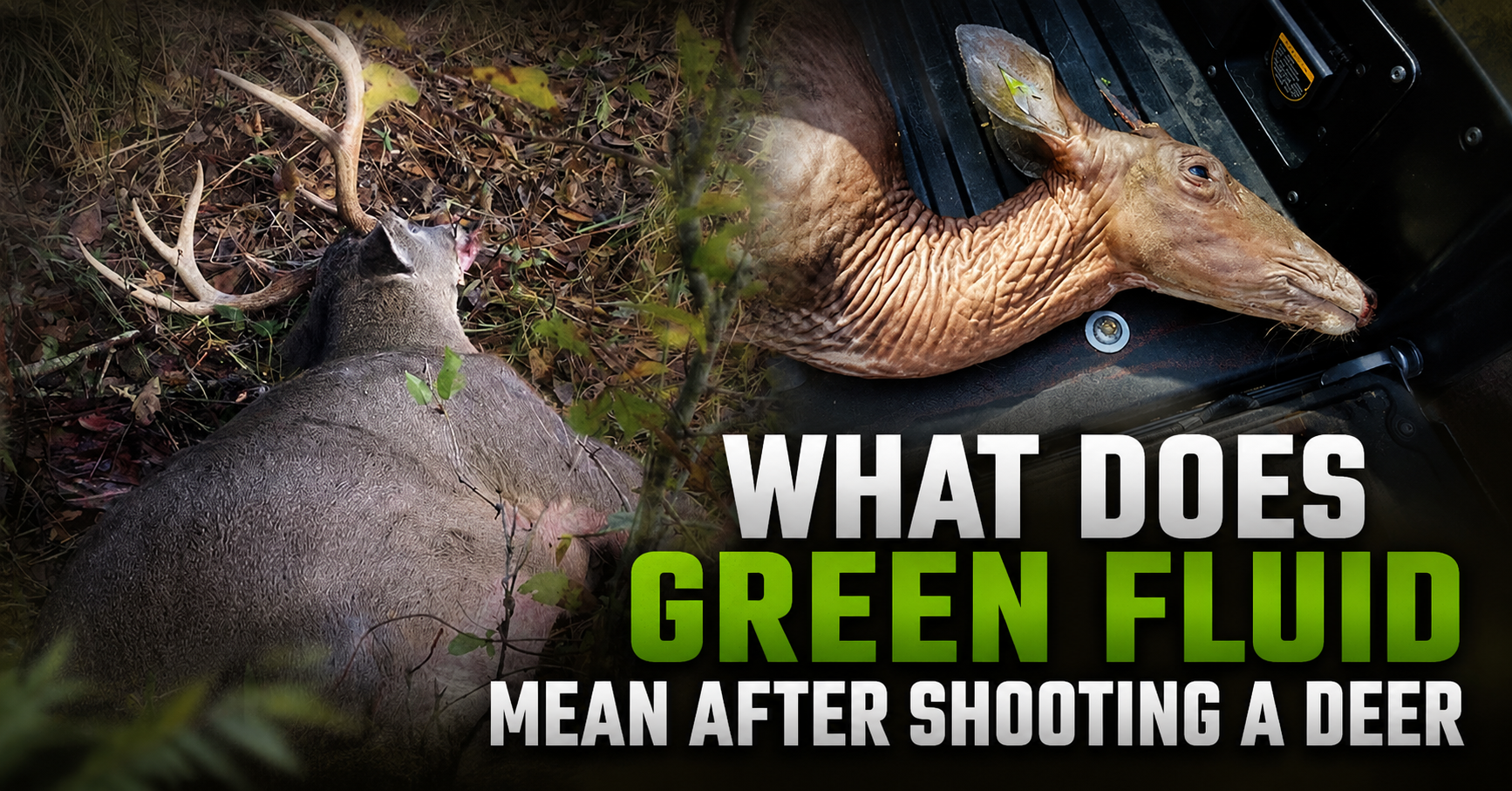
Green fluid on an arrow, bolt, at the impact site, or along a deer’s trail most often means the projectile contacted the stomach, rumen, or intestines—a gut hit. Green or brown plant matter and a sour, manure-like odor make that interpretation more likely, but color alone cannot identify the exact organ or wound path. Mark the important locations, avoid pressing the trail, and quietly back out. For a suspected bow or crossbow gut hit, National Bowhunter Education guidance says to wait at least six hours before following; conditions and qualified local advice may justify waiting longer.
What Does Green Fluid Mean After Shooting a Deer? The Detailed Answer
A deer’s rumen and other digestive organs contain partly digested vegetation and fluid. When an arrow, bolt, bullet, or fragment crosses the abdominal cavity, that material may appear on the recovered projectile, hair, leaves, or ground. It can look green, olive, yellow-green, brown-green, or muddy and may contain small pieces of plant material.
This sign is commonly called “stomach matter” or “gut material.” It is not normal blood. It indicates caution because abdominal hits usually require more time than a well-placed heart or lung hit. It does not prove one precise organ was struck: shot angle, the deer’s body position, penetration, and a path through multiple tissues can produce mixed evidence.
Do not automatically call every green smear a gut hit. Wet vegetation, algae, leaf pigment, mud, broadhead lubricant, or debris picked up after a pass-through can create a green mark. Evaluate the full group of clues before deciding.
How to Read Green Fluid and Other Tracking Signs
| Observed sign | Possible meaning | Responsible next step |
|---|---|---|
| Green or brown fluid with chewed plant material | Stomach or rumen contents; a gut hit is likely | Mark the location, avoid walking the trail, and back out |
| Thin greenish, yellowish, or clear fluid with a foul odor | Possible intestinal or other digestive-fluid contact | Treat as a suspected abdominal hit and allow substantial time |
| Dark red blood without digestive matter | Possible liver or venous blood, but not conclusive | Use location, volume, hair, and the deer’s reaction together |
| Pink or red blood with many small bubbles | Possible lung hit | Wait appropriately, then follow carefully while preserving sign |
| Bright red blood without bubbles | Possible arterial, muscle, or other tissue hit | Do not diagnose from color alone; reassess all evidence |
| Green smear only on the outside of an arrow or broadhead | Digestive matter or simple contact with vegetation | Check smell, texture, shot angle, hair, and impact-site evidence |
No single color guarantees a wound location. Blood can mix with water, soil, leaves, fat, stomach contents, and hair. Artificial light also changes how colors appear. Treat the table as a field clue, not a laboratory diagnosis.
Signs That Strengthen the Gut-Hit Assessment
- Odor: A sour, fermented, fecal, or manure-like smell strongly supports digestive-organ contact.
- Texture: Green-brown pulp, grass fragments, grain, leaves, or other partially digested food often comes from the rumen or stomach.
- Blood trail: The initial sign may be watery, sparse, dark, or mixed with digestive material rather than a steady blood trail.
- Hair: Coarse or longer belly-area hair may support a low abdominal hit, although coat color and length vary by season and body location.
- Body reaction: A deer may hunch, walk away slowly, stop, or stand with its head low. These reactions are useful observations, not proof.
- Shot geometry: Reconstructing the entrance, exit, elevation, and angle may show that the path crossed behind the diaphragm.
A deer can be angled even when it looks broadside. A quartering animal, steep tree-stand shot, deflection, or poor penetration may produce a wound path different from the point that appeared to be aimed at. Record what actually happened instead of forcing the evidence to fit the shot you hoped for.
What to Do Immediately After Finding Green Fluid
- Stop and stay quiet. Do not continue down the trail just to find more sign. A bumped deer may leave its first bed and travel much farther.
- Mark three locations. Save the shooting position, where the deer stood at the shot, and the last place you saw it. Use a GPS pin, map, photo, or biodegradable marker where allowed.
- Record the event. Note the exact time, shot angle, distance, deer orientation, direction of travel, body reaction, and last sound heard.
- Inspect without contaminating. Photograph visible material and note its odor and texture. Do not handle a bloody broadhead or sharp projectile with bare hands.
- Back out along a low-impact route. Avoid the likely travel corridor and do not trample blood, tracks, beds, or scent that a tracking dog may need.
- Wait appropriately. National Bowhunter Education guidance recommends at least six hours for a suspected gut hit with a skimpy trail. Do not shorten the wait merely because darkness, rain, or snow is approaching.
- Arrange help early. Contact an experienced recovery team or legal tracking-dog handler before many people disturb the area. Verify local laws and property access first.
How Long Should You Wait Before Tracking?
For a suspected bow or crossbow gut hit, the clearest general benchmark is at least six hours. The National Bowhunter Education safety course specifically advises waiting six hours or more when an arrow shows gut-hit evidence and the trail is skimpy. That recommendation is meant to reduce the chance of pushing a wounded deer out of a bed.
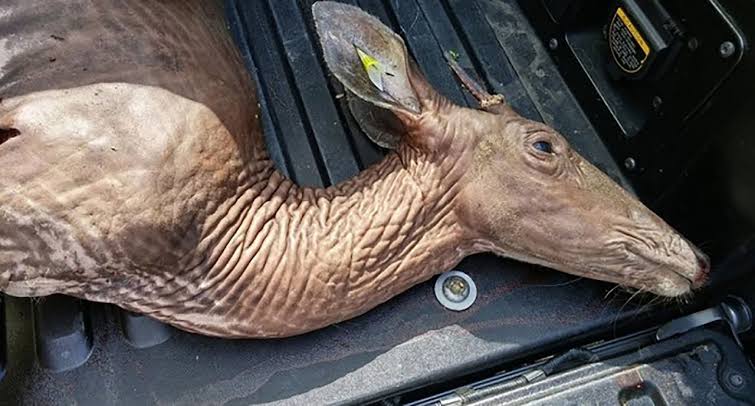
Six hours is a minimum guideline, not a promise that every deer will be ready to recover at that time. Shot angle, penetration, organ damage, deer behavior, temperature, terrain, and professional tracking advice all matter. If you are uncertain, call an experienced tracker or conservation officer for location-specific guidance.
Do not blindly apply a short heart-or-lung waiting period to green digestive sign. Conversely, do not assume every poor hit should be handled the same way; a leg, muscle, or superficial wound can produce a very different recovery decision. The observed evidence should guide the plan.
How to Follow the Trail Without Destroying Evidence
- Begin at the confirmed point of impact, not where you guess the deer entered cover.
- Have one tracker work beside the trail while another watches ahead and marks the last confirmed sign.
- Move slowly enough to identify tracks, kicked leaves, broken vegetation, beds, hair, and tiny droplets.
- Mark each confirmed clue so the direction of travel becomes visible.
- Never advance beyond the last confirmed sign without carefully checking an arc ahead and to both sides.
- If you find a warm bed, fresh material, or a deer lying with its head up, withdraw quietly and allow more time.
- Keep the group small. Unnecessary foot traffic destroys blood and scent.
The National Bowhunter Education trailing guide recommends preserving sign, marking blood, and walking alongside rather than directly on the trail. If the sign stops, return to the last confirmed clue instead of wandering forward.
What If There Is Green Fluid but No Blood Trail?
A gut-hit deer may leave very little external blood, especially when there is no exit wound or the wound is plugged by tissue. Lack of blood does not erase the green-fluid evidence. After the appropriate wait, look for the deer’s specific tracks, scuffed soil, displaced leaves, broken stems, beds, and the easiest routes toward thick cover or seclusion.
Do not perform a broad grid search before considering a tracking dog. A legal, trained dog may work from scent that people cannot see, but its job becomes harder after several searchers contaminate the route. Contact a handler early and follow any instructions about leaving the impact area undisturbed.
Rain, Snow, Heat, Darkness, and Predator Pressure
Weather creates a genuine tradeoff, but rushing a likely gut-hit deer can make recovery less likely. National Bowhunter Education guidance says to maintain the six-hour-or-more wait even when rain, snow, or darkness threatens the visible trail. Before leaving, save precise map pins and photographs and note the deer’s line of travel.
Warm weather also increases meat-safety concerns, while steep ground, water, ice, fog, and darkness can increase danger to people. There is no universal rule that resolves every combination. Contact a conservation officer, experienced tracker, or local game processor when the choice is unclear. Do not enter unsafe terrain or violate shooting-hour, access, or weapon-possession laws in an attempt to beat weather or predators.
Tracking Dogs, Property Lines, and Local Law
Rules for leashed tracking dogs differ widely. Some jurisdictions allow them with detailed conditions; others restrict the handler, weapon possession, hours, leash use, or land access. Check the current wildlife-agency regulation before calling a team. A handler’s experience does not create permission to cross property lines.
If the trail reaches land where you lack permission, stop at the boundary and contact the landowner. If access cannot be resolved, call the local conservation officer or game warden. Never trespass to recover a deer. Responsible hunters make every reasonable legal recovery effort.
Safe Approach to a Recovered Deer
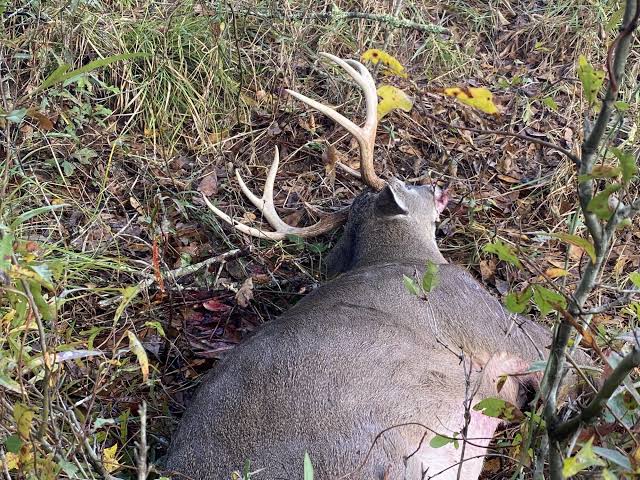
Approach from behind the animal when practical and watch for breathing, eye movement, and head position. Keep clear of antlers and hooves. If the deer is still alive, withdraw if necessary and make only a safe, legal, humane decision within your demonstrated ability. Never shoot at movement you cannot positively identify, through brush without a clear path, toward a road or building, or without a safe backstop.
When carrying a firearm during a lawful recovery, keep the muzzle in a safe direction, keep your finger outside the trigger guard until ready to shoot, treat every firearm as loaded, and be certain of the target and what lies beyond it. Follow local rules for legal shooting hours and weapon possession.
Is the Venison Safe After a Gut Hit?
A gut hit does not automatically make the entire deer unsafe, but it raises the risk of contamination and spoilage. Digestive contents can carry bacteria onto meat and equipment, and delayed recovery may keep the carcass warm. Safety depends on the extent of contamination, elapsed time, ambient temperature, carcass condition, airflow, and how quickly clean meat is cooled.
Field-care priorities
- Tag or report the deer as required before moving or processing it.
- Wear disposable gloves and avoid spreading intestinal contents with hands, sleeves, knives, or drag ropes.
- Use clean tools. Clean and sanitize a contaminated knife before it touches uncontaminated meat; a separate clean knife is even better.
- Remove the digestive tract carefully without puncturing it further.
- Trim and discard visibly contaminated, bloodshot, damaged, or questionable tissue generously. Do not assume a quick rinse makes contaminated meat safe.
- Keep the carcass clean, allow heat to escape, and cool the meat promptly according to official extension or wildlife-agency guidance.
- Keep dirt, hair, leaves, insects, grass, and snow away from exposed meat.
North Dakota State University Extension’s deer and elk handling guide emphasizes clean tools, prompt field dressing and cooling, removal of foreign material and bloodshot areas, and avoiding grass or snow as cleaning materials.
If contamination is extensive, the carcass remained warm for an uncertain period, or the meat has a sour or putrid odor, slime, unusual gas, or other spoilage signs, do not taste it to test safety. Ask a qualified game processor, extension food-safety specialist, or wildlife agency for case-specific guidance. When safety cannot be established, discard the affected meat. Cooking is not a remedy for spoilage or poor temperature control.
Common Recovery Mistakes to Avoid
- Following immediately: Green digestive matter calls for patience, not a quick pursuit.
- Retrieving the arrow too soon: Walking to it may already put pressure on a nearby bedded deer.
- Relying only on blood color: Odor, texture, hair, shot angle, tracks, and behavior matter too.
- Assuming green always means bile: Color alone cannot identify the exact digestive fluid or organ.
- Grid-searching with a large group: Excessive traffic can erase sign and compromise a dog track.
- Crossing a boundary without permission: Recovery responsibility does not cancel property law.
- Taking an unsafe finishing shot: Positive identification, a clear path, and a safe backstop remain mandatory.
- Keeping questionable meat: A harvest should never take priority over food safety.
How to Reduce the Chance of a Gut Hit
The best recovery plan begins before the shot. Study deer anatomy from several angles, practice from realistic field positions, confirm equipment setup, and set a personal maximum distance based on repeatable accuracy rather than hope. Favor clear broadside or suitable quartering-away opportunities that expose the chest cavity, and pass on steep, obstructed, moving, low-light, head-on, rear-end, or otherwise marginal shots.
Wait for the near leg and shoulder to create a clear path to the vital area. Account for elevation and the exit path, not just the entry point. If the shot does not meet legal, safe, and humane standards, do not take it. Passing a poor opportunity is a successful ethical decision.
Final Answer
What does green fluid mean after shooting a deer? It usually means the projectile contacted the stomach, rumen, intestines, or other digestive contents, so the hit should be treated as a likely gut shot. Confirm the assessment with odor, texture, shot angle, hair, and trail evidence; mark the scene; avoid pushing the deer; and, for a suspected bow or crossbow gut hit, wait at least six hours before trailing unless qualified local guidance directs otherwise. Use a legal tracking dog or experienced tracker when helpful, respect every property boundary, follow current wildlife rules, and handle recovered meat as potentially contaminated until it has been properly inspected, trimmed, cooled, and deemed safe.
FAQs
1. Does green fluid always mean a gut shot?
No. It strongly suggests digestive-organ contact when paired with plant matter or a foul odor, but an arrow can pick up green vegetation after exiting. Use several clues rather than one color.
2. What does green fluid on an arrow mean?
Green, foul-smelling fluid or green-brown food particles on an arrow usually indicate contact with the stomach, rumen, or intestines. Avoid walking farther to inspect the trail; mark the area and back out.
3. Is green fluid necessarily bile?
No. Hunters often use “bile” loosely, but color alone cannot identify a particular fluid or organ. The safer field conclusion is digestive material and a likely abdominal hit.
4. What do green chunks on an arrow indicate?
Green or brown chunks resembling chewed leaves, grass, or grain are consistent with rumen or stomach contents and make a gut hit more likely.
5. What does a gut-hit deer smell like?
Digestive material often has a sour, fermented, manure-like, or fecal odor. Avoid putting your face close to a sharp or contaminated projectile; a cautious waft from a safe distance is enough.
6. How long should I wait after seeing green fluid?
For a suspected bow or crossbow gut hit, National Bowhunter Education guidance says at least six hours. Depending on evidence and conditions, an experienced local tracker may recommend longer.
7. Is the waiting time the same for a rifle and a bow?
Not necessarily. Wound mechanisms and evidence differ, but green digestive matter still calls for caution. Base the decision on the full sign, animal reaction, local hunter-education guidance, and qualified tracking advice—not weapon type alone.
8. Should I track sooner if rain is coming?
Not merely to save visible blood. Official bowhunter education guidance still advises the substantial wait for a gut hit even when rain or snow threatens the trail, because pushing the deer can make recovery harder.
9. Should predator pressure make me follow immediately?
Predator risk is a consideration, but it does not remove the risk of pushing a wounded deer. Record the location, contact a tracker, and seek local conservation-officer advice when conditions create a difficult tradeoff.
10. Why is there green fluid but very little blood?
An abdominal wound may bleed mostly internally, lack an exit, or become plugged by tissue. Digestive contents can be the clearest early sign even when external blood is sparse.
11. Does a hunched deer confirm a gut hit?
No. A hunched posture, slow walk, or head-low stance can support the assessment, but behavior alone cannot confirm wound location.
12. What if I see dark blood mixed with green matter?
The projectile may have crossed more than one tissue or organ. Treat the digestive matter as an important caution sign and avoid assuming the dark blood makes it a quick liver recovery.
13. What does clear or watery fluid mean?
Clear or watery fluid can come from digestive structures, body fluids, rain, dew, or wet vegetation. Greenish color, foul odor, plant particles, and shot geometry make an intestinal or stomach hit more likely.
14. Can a gut-shot deer survive?
Some poorly hit deer survive, while others die after a prolonged interval. A hunter cannot know the outcome immediately, which is why patient, legal, persistent recovery effort is required.
15. How far can a gut-shot deer travel?
There is no reliable fixed distance. A deer left undisturbed may bed relatively near the initial route, while a deer pushed by people can travel much farther.
16. Is it legal to track a deer at night?
It depends on local law. Rules may distinguish tracking from hunting and may regulate lights, weapons, vehicles, shooting hours, dogs, or public-land access. Check the current wildlife-agency regulations.
17. Should I call a tracking dog?
A trained tracking dog can be especially useful when blood is sparse. Call early, verify the service is legal, and minimize foot traffic so the scent trail remains as intact as possible.
18. Can a tracking dog cross onto neighboring property?
Not without lawful access. Obtain landowner permission and comply with local tracking-dog rules. Contact a conservation officer if the boundary situation cannot be resolved.
19. Should I grid-search when the blood disappears?
Return to the last confirmed sign first. A small, controlled search may be appropriate later, but premature grid-searching can destroy evidence and contaminate a route that a dog could follow.
20. What should I do if I find the deer alive?
Keep a safe distance and make only a legal, humane decision. Any shot requires positive identification, a clear path, a safe backstop, lawful shooting conditions, and accuracy within your proven ability.
21. Is meat from a gut-shot deer safe to eat?
It may be, but not automatically. The extent of contamination, time, temperature, carcass condition, and cooling all matter. Remove contaminated tissue generously and seek expert advice when safety is uncertain.
22. Can I wash gut contents off the meat?
Cleaning can remove visible debris, but washing alone does not guarantee safety and can spread contamination. Trim affected tissue, use clean tools, cool promptly, and follow official extension or wildlife-agency guidance.
23. What are warning signs that venison has spoiled?
Sour or putrid odor, slime, abnormal gas, extensive discoloration with other spoilage signs, and an uncertain warm holding period are serious concerns. Do not taste questionable meat to test it.
24. Will thorough cooking make contaminated venison safe?
Proper cooking reduces many microbial hazards, but it does not reverse spoilage, poor temperature control, or every hazard caused by contamination. Unsafe or questionable meat should be discarded.
25. How can I avoid another gut hit?
Study three-dimensional anatomy, practice realistic angles, know your effective range, wait for a clear broadside or suitable quartering-away presentation, and pass shots that are obstructed, rushed, steep, or uncertain.
26. Does green fluid mean the deer was hit too far back?
Often, but not always. A steep or quartering shot can enter closer to the chest and still exit through the abdomen. Reconstruct the complete wound path rather than judging the entry point alone.
27. Should I retrieve my arrow before backing out?
Not if reaching it requires advancing toward the deer’s trail or likely bed. National Bowhunter Education guidance advises that when a gut hit is suspected, you should not follow merely to recover the arrow.
Read more: