

What food attracts deer depends less on a single “magic” bait and more on what is fresh, digestible, abundant, and familiar in the local habitat. White-tailed deer commonly seek tender broadleaf plants and browse in spring and summer, fruits and nuts from late summer into fall, energy-rich crops where available, and woody twigs, buds, and evergreen browse during winter.
This guide is for hunters, landowners, wildlife watchers, and beginners trying to understand deer feeding behavior responsibly. It focuses mainly on white-tailed deer in North America; mule deer and other cervids share some foods but can favor different shrubs and habitats. Region, weather, annual mast production, crop stage, hunting pressure, and local law can all change what deer use on a particular day.
Quick Answer: What Food Attracts Deer?
Acorns are often a major fall draw where oaks produce a good mast crop, while tender forbs, clover, browse, soybeans, and other green growth are commonly attractive during spring and summer. Persimmons, wild grapes, blackberries, crabapples, cereal grains, standing corn, and crop residue can also draw deer when locally available. In winter, natural woody browse may matter more than a pile of grain because a deer’s rumen adapts gradually to its seasonal diet. Never place food, minerals, or attractants until you confirm current baiting and feeding rules for the state, wildlife unit, property type, season, and CWD zone.
Seasonal Deer Food at a Glance
| Season | Foods Commonly Used | Why Deer Shift Toward Them | What to Scout | Important Limitation |
|---|---|---|---|---|
| Early spring | New forbs, clover, tender browse, emerging grasses | Fresh growth is palatable and easier to digest than dormant vegetation | Sunny edges, disturbed ground, field margins, recent regrowth | Green-up timing varies with elevation, latitude, and rainfall |
| Late spring and summer | Forbs, leafy browse, legumes, soybeans, soft mast as it ripens | Growing deer and lactating does benefit from high-quality green forage | Young crop edges, openings, logging cuts, native plant diversity | Mature grasses and heat-stressed plants may become less palatable |
| Late summer | Persimmons, grapes, berries, mushrooms, remaining green forage | Ripe fruit and short-lived food sources become locally abundant | Fruit-bearing edges, moist hollows, isolated green patches | Ripening dates and fruit crops can differ sharply each year |
| Fall | Acorns, other hard mast, soft mast, soybeans, corn, cereal grains | Energy-rich foods help deer build reserves before winter | Fresh mast drop, productive oak pockets, harvested and standing crops | Acorn production is uneven among trees, stands, and years |
| Winter | Woody twigs and buds, evergreen browse, residual mast, winter grains where present | Availability narrows and rumen microbes adapt to fibrous seasonal forage | Protected cover near browse, south-facing edges, trails between bedding and food | Suddenly introducing grain or fruit can harm winter-adapted deer |
Important Legal, Disease, and Ethical Notice
Legal information checked August 24, 2026: there is no nationwide U.S. rule that makes deer baiting or supplemental feeding legal everywhere. Rules can differ by state, county, wildlife management unit, public or private land, season, species, and chronic wasting disease management zone. Some jurisdictions prohibit hunting over bait, some prohibit feeding, some regulate both, and others distinguish a normal agricultural practice or established food plot from feed carried to a hunting location.
Before placing corn, fruit, salt, minerals, blocks, liquid attractants, or manufactured feed, read the current regulation booklet and any emergency orders from the responsible wildlife agency. Recheck immediately before hunting because disease detections can trigger new restrictions. The U.S. Fish and Wildlife Service provides links to state hunting-license authorities, but the controlling source is the agency and land manager responsible for the exact property.
Artificial feed sites concentrate animals. That can increase contact with saliva, urine, feces, contaminated soil, and shared feed. Agencies may restrict feeding to reduce disease transmission, human-wildlife conflict, road collisions, and habitat damage. USDA Wildlife Services advises the public not to feed wildlife. A legal practice is not automatically the best biological choice. Whenever possible, use natural habitat and lawful food-plot management instead of creating a concentrated pile.
What Food Attracts Deer Most by Season and Habitat?
Deer are selective browsers rather than animals that live mainly on mature grass. They sample many plants and shift among leaves, growing tips, forbs, fruits, nuts, fungi, crops, and woody stems according to quality and availability. Oklahoma State University Extension notes that woody browse is important through much of the year, forbs receive heavy use in spring and early summer, and hard mast becomes important in fall and winter when available.
The following 15 categories are reliable foods to recognize while scouting. They are not a universal ranking. A heavily producing oak may dominate one property in October while a green crop, native forb patch, or fruiting edge is more important a few miles away.
1. Acorns
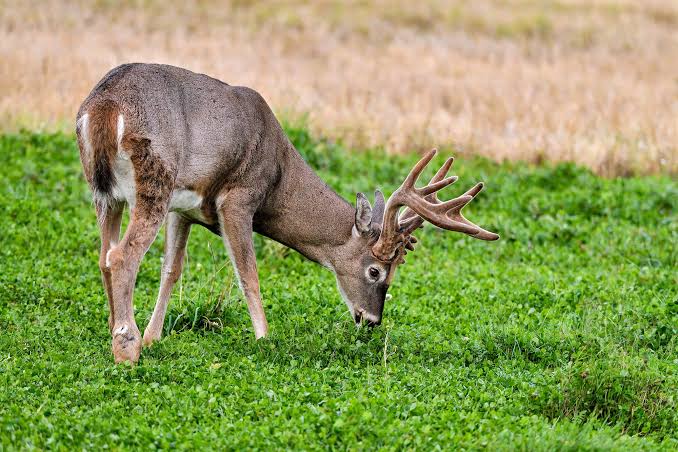
Acorns are among the most influential fall foods across much of white-tailed deer range. When a productive oak begins dropping fresh mast, deer may alter travel patterns to use that pocket. Look for fresh caps and shells, tracks, droppings, and browsed vegetation beneath producing trees rather than assuming every oak flat is active.
Mast crops are irregular. One tree, ridge, or oak species may produce while another does not, and abundant mast can spread deer across a large area instead of concentrating them. Acorns provide a seasonal opportunity, not a year-round management plan.
2. Tender Woody Browse
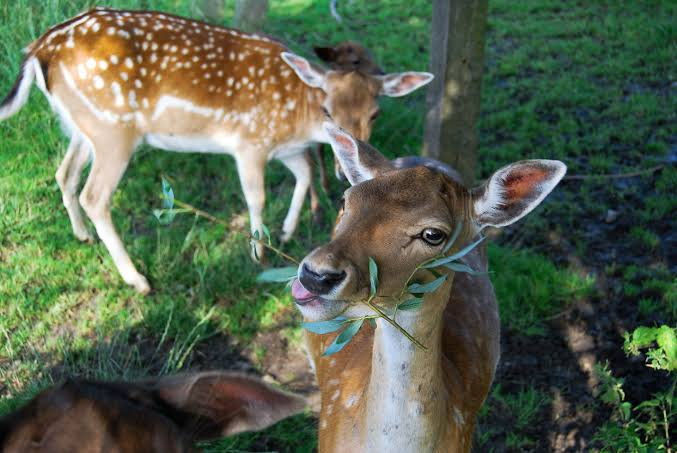
Browse means leaves, growing tips, twigs, and buds from shrubs and trees. It is a fundamental part of the deer diet, especially when herbaceous growth is unavailable. Young regrowth at forest edges, timber harvests, storm openings, and early-successional cover can offer both food and security.
Local plant preference matters. A browse species heavily used in one region may be uncommon or less preferred elsewhere. Learn to identify native plants with help from a local extension office or wildlife biologist rather than relying on a national plant list.
3. Greenbrier and Other Evergreen Browse
Greenbrier can remain useful when many plants are dormant, particularly in parts of the East and South. Other evergreen or semi-evergreen shrubs fill a similar role elsewhere. Browsed tips, clipped ends, and trails through dense cover can indicate use.
Do not damage sensitive plant communities simply to expose a feeding area. Habitat improvement should follow a written plan suited to the site, invasive-species concerns, and land-management rules.
4. Native Forbs
Forbs are broadleaf herbaceous plants rather than grasses. Tender native forbs can be highly attractive during spring and early summer, and diverse openings often provide better deer forage than a uniform stand of mature grass. Examples differ by region and may include ragweed, partridge pea, beggar’s lice, and other broadleaf plants.
The Mississippi State University Extension guide to native deer forage emphasizes that forbs and leafy browse make up much of the diet even though acorns and fruits receive more attention. Correct plant identification is important because some plants used by deer can be toxic to people or livestock.
5. Clover
Clover can provide attractive green forage from spring into fall when soil fertility, moisture, grazing pressure, and variety are suitable. It is common in established fields, rights-of-way, pastures, and managed food plots. Deer may favor tender regrowth over older, stemmy material.
A successful clover plot requires more than scattering seed. Soil testing, pH correction, seed selection, weed control, planting timing, and landowner permission matter. Planting dates are regional, so follow a local extension recommendation.
6. Alfalfa and Other Legumes
Alfalfa, cowpeas, and other legumes can be strong warm-season forage where they grow well. Agricultural fields may draw deer to new leaves and regrowth, while managed wildlife plots can fill gaps in native forage.
Do not enter or hunt agricultural land without permission. Crop damage is a serious landowner concern, and a field edge is not an invitation to trespass. Follow access rules, maintain safe shooting directions, and avoid damaging crops or equipment.
7. Soybeans
Deer often browse soybean leaves during the growing season and may use pods or harvest residue later. The crop can be especially noticeable during periods when nearby native forage becomes less palatable.
Use changes with crop stage, harvest, surrounding food, and pressure. A soybean field that attracts regular summer use may become less important after leaf drop or harvest, while an unharvested section may remain influential.
8. Cereal Grains
Oats, wheat, and rye can offer tender cool-season growth in agricultural fields or lawful food plots. Fresh shoots may be attractive during fall green-up and again after winter dormancy where climate permits.
Do not confuse a planted field with permission to hunt it. Also distinguish normal farming and an established food plot from grain transported and concentrated near a stand; regulations may treat those situations differently.
9. Corn and Crop Residue
Standing corn, waste grain after normal harvest, and other agricultural residue can attract deer because they provide concentrated energy and cover. Corn is highly visible in popular hunting advice, but it should not be treated as the universal answer to what food attracts deer.
Dumping corn for deer is different from scouting a normal crop field. It may be illegal, can unnaturally concentrate animals, and can cause digestive harm when winter-adapted deer suddenly consume large amounts. The Pennsylvania Game Commission identifies sudden grain access as a cause of rumen acidosis in wild ruminants.
10. Persimmons
Ripe persimmons can create a short, intense feeding opportunity in regions where the trees grow. A productive tree near secure cover may receive repeated visits until the fruit is gone.
Check the ground for fresh fruit, tracks, and droppings. Because the window is brief and production varies, confirm current activity instead of relying on last year’s pattern.
11. Apples, Crabapples, and Pears
Fallen orchard fruit and wild crabapples or pears can attract deer in late summer and fall. Old homesteads, abandoned orchards, and woodland edges sometimes hold productive trees that are easy to overlook.
Fruit deliberately carried into the woods may qualify as bait. Feeding apples in winter can also create a sudden high-carbohydrate diet change. Observe naturally fallen fruit from a distance, respect private property, and do not assume “natural food” is legal to relocate.
12. Wild Grapes, Blackberries, and Other Soft Mast
Soft mast means fleshy fruits and berries. Wild grapes, blackberries, plums, and similar fruits can become locally important as they ripen. Their availability often overlaps dense edges, vines, and brushy cover where deer feel secure.
Soft mast spoils or disappears quickly. Scout the actual ripening period and look for multiple signs of deer use rather than judging only by fruit abundance.
13. Beechnuts, Chestnuts, and Other Hard Mast
Acorns are the best-known hard mast, but beechnuts and other locally available nuts can also influence feeding. Hard-mast importance depends on tree distribution, annual production, competition from other wildlife, and whether snow or leaf litter limits access.
Correct tree identification helps a hunter map food more accurately. A forester, extension specialist, or reliable regional field guide can help distinguish similar trees.
14. Mushrooms, Fungi, and Lichens
Deer eat mushrooms and other fungi when moisture and temperature produce them. Lichens can matter in some northern or western winter habitats. These foods are less predictable than a crop field or established browse line but add diversity to the diet.
Never eat a wild mushroom merely because deer have browsed it. Deer tolerance does not establish human safety, and mushroom identification should be left to qualified experts.
15. Brassicas and Chicory
Managed plots may include turnips, radishes, kale-type brassicas, or chicory. Deer acceptance depends on local familiarity, weather, plant maturity, surrounding forage, soil conditions, and browsing pressure. A newly planted species may not receive immediate use.
Food plots are habitat projects, not guarantees. Follow local agronomic guidance, use legal seed and herbicide practices, protect waterways, and obtain every necessary landowner or land-manager approval.
Why Deer Food Preferences Change
Plant Quality Changes With Growth Stage
Young leaves and shoots are generally more digestible than mature, fibrous stems. A field can remain green while becoming less useful to deer. Regrowth after mowing, grazing, rain, or disturbance may draw renewed attention, although land management must avoid fawning periods, erosion, invasive plants, and legal restrictions.
Availability Can Override Preference
Deer cannot eat a preferred food that is absent. During a poor acorn year, browse, crops, or soft mast may receive more use. During a heavy mast year, deer may spend more time under the canopy and less time in visible fields.
The Rumen Adjusts Gradually
Deer are ruminants. Microorganisms in the rumen help digest seasonal forage, and that microbial community adjusts over time. A sudden switch from fibrous winter browse to large quantities of grain or fruit can cause severe digestive disruption. This is one reason official agencies commonly discourage the public from feeding deer.
Security and Human Pressure Matter
A nutritious food source in an exposed or heavily disturbed place may receive mostly nighttime use. Deer may choose a lower-quality source closer to secure bedding cover, use a different access route, or leave after repeated disturbance. Food explains part of a pattern; cover, wind, access, weather, and hunting pressure explain the rest.
Individual, Regional, and Species Differences Matter
Local plant communities differ, and deer learn seasonal resources within their home ranges. White-tailed deer in agricultural country encounter different foods from mule deer in shrub-steppe or mountain winter range. Treat broad diet lists as scouting hypotheses that must be verified on the ground.
How to Scout Food Sources Without Creating a Bait Site
- Map habitat edges. Mark transitions between mature timber, young regrowth, fields, wetlands, orchards, and dense cover.
- Identify current foods. Look for producing oaks, ripe fruit, tender forbs, browsed twigs, active crop stages, and new growth.
- Confirm use. Tracks, fresh droppings, clipped stems, opened mast, trails, and legal trail-camera observations are stronger evidence than food alone.
- Check timing. Revisit short-lived foods such as fruit and mushrooms. A source can change within days.
- Read the approach. Determine how deer travel between food and secure cover without crossing property lines or unsafe shooting areas.
- Limit disturbance. Observe from a distance, use favorable wind, and avoid repeatedly walking through bedding cover.
- Verify legality. Confirm access, trail-camera rules, baiting definitions, season rules, and land-manager restrictions before hunting.
Natural Forage, Food Plots, and Bait Are Not the Same
| Food Situation | What It Means | Potential Benefit | Main Concern | What to Verify |
|---|---|---|---|---|
| Natural forage | Native or established plants growing without feed being placed | Supports normal browsing and dispersed movement | Production can be seasonal and inconsistent | Plant identification, access, habitat-management rules |
| Normal agriculture | Crops grown and harvested through accepted farming practices | Can provide substantial seasonal food | Private-property access, machinery, crop damage, changing harvest schedule | Written permission and the jurisdiction’s bait definition |
| Food plot | A planted forage area managed for wildlife | Can supplement habitat during a forage gap | Cost, soil needs, poor establishment, overuse, legal limits | Land-manager approval and applicable planting rules |
| Supplemental feeding | Food intentionally provided to wildlife | May draw deer to a specific point | Disease, digestion, habituation, conflict, and possible prohibition | Feeding law, CWD rules, local ordinances |
| Hunting over bait | Using placed food or qualifying attractants to aid a hunt | May concentrate deer where lawful | Illegal in many places or under specific conditions | Exact definition, placement, timing, removal period, land type, and season |
Foods and Practices to Avoid
- Do not dump grain or fruit for winter deer. Sudden carbohydrate access can cause rumen acidosis even when an animal appears healthy.
- Do not use bread, candy, sweetened scraps, pet food, or processed human food. These are not balanced wildlife diets and can create litter, dependency, and conflict.
- Do not use moldy grain. Spoiled feed can expose wildlife to additional health risks.
- Do not assume salt or mineral products are exempt. Blocks, powders, liquids, and products containing flavor or grain may fall under attractant or bait rules.
- Do not feed near roads, homes, livestock, or property boundaries. Concentrating deer can increase collisions, conflict, crop damage, and unsafe hunting situations.
- Do not move an agricultural crop into a pile and call it normal farming. Legal definitions may treat concentrated or reintroduced crops as bait.
- Do not trespass to reach a feeding location or recover game. Obtain permission and contact the appropriate authority when boundaries create a recovery problem.
- Do not shoot at sound, brush movement, or an unidentified animal. Positively identify the deer, confirm legality, and know what lies beyond the target.
Common Mistakes When Reading Deer Feeding Sign
Mistaking Available Food for Preferred Food
A large field or oak stand looks promising, but size does not prove current use. Inspect the actual plants and mast crop, then look for fresh deer sign.
Relying on Last Year’s Pattern
Fruit and mast production change annually. Crop rotation, timber work, drought, flooding, and hunting pressure can move feeding activity. Re-scout each season.
Ignoring the Route to Cover
Food may be abundant while daylight access feels unsafe to deer. Study nearby bedding cover, terrain, wind, human entry routes, and alternative feeding pockets.
Calling Corn a Complete Deer Diet
Corn supplies energy but does not provide the diversity of browse, forbs, and other forage in a natural diet. Artificial concentration also creates disease and digestive concerns.
Assuming a Food Plot Guarantees Daylight Activity
A plot can improve habitat without guaranteeing a hunting opportunity. Poor access and repeated disturbance may shift use after dark. Manage expectations and evaluate the whole property.
Checking Baiting Law Only Once
Emergency CWD orders, county designations, land rules, and season changes can alter legality. Save the current official regulation and check again immediately before the hunt.
A Better Habitat-First Approach
For landowners, the durable way to make a property useful to deer is to improve habitat rather than maintain a feed pile. Diverse native forbs, young woody growth, mast-producing trees, soft-mast shrubs, usable cover, and water distributed across the landscape support more natural movement and reduce extreme concentration.
Before cutting, burning, spraying, planting, or fertilizing, consult a wildlife biologist, forester, or cooperative extension professional. A site-specific plan should account for soil, invasive species, erosion, timber goals, pollinators, neighboring farms, carrying capacity, and local regulations. Habitat work must stay within manufacturer instructions and applicable pesticide, fire, water-quality, and land-use rules.
Final Answer: What Food Attracts Deer?
What food attracts deer most reliably is the food that is naturally available, seasonally palatable, close to secure cover, and familiar to the local herd. Acorns can dominate fall use; tender forbs, clover, browse, legumes, and soybeans commonly matter in spring and summer; persimmons, apples, grapes, and berries create brief soft-mast opportunities; and woody browse becomes increasingly important in winter.
Use those patterns to scout existing habitat rather than assuming a corn pile is the answer. Artificial feeding can harm deer, concentrate disease, create conflict, and violate baiting or feeding rules. Confirm the current regulation for the exact location, protect property boundaries, practice positive target identification, and favor habitat management and fair-chase decisions over a promised “instant” attractant.
FAQs
1. What food attracts deer the most?
There is no universal winner. Acorns can be the strongest fall food in oak country, while tender forbs, browse, clover, soybeans, fruits, or winter twigs may lead in another season or habitat.
2. Do deer prefer corn or acorns?
Deer may eat both, but fresh acorns are a natural fall food and can redirect movement when the mast crop is strong. Corn availability, harvest stage, previous exposure, and local habitat determine how the two compare.
3. Do apples attract deer?
Naturally fallen apples and crabapples can attract deer when ripe. Carrying apples to a hunting location may legally count as bait, and feeding large quantities to winter-adapted deer can cause digestive harm.
4. What do deer eat in spring?
Spring diets commonly include emerging forbs, clover, new leaves, tender woody tips, and young grasses. The timing follows local green-up, which changes with temperature, rainfall, elevation, and latitude.
5. What do deer eat in summer?
Deer often use leafy browse, native forbs, legumes, soybeans, vines, and soft mast as it ripens. Mature grasses usually become less attractive as they turn fibrous.
6. What do deer eat in fall?
Acorns and other hard mast, persimmons, grapes, apples, soybeans, corn, cereal grains, and remaining green forage can all matter. The actual leader depends on production and location.
7. What do deer eat in winter?
Woody twigs, buds, evergreen browse, residual mast, and locally available winter greens form much of the diet. Their digestive system gradually adapts to this fibrous forage.
8. Does peanut butter attract deer?
Strong-smelling processed foods may interest wildlife, but peanut butter is not a responsible or nutritionally appropriate deer-management tool. Its use can qualify as bait and can attract non-target animals, so do not use it without explicit official approval.
9. Are salt and mineral blocks considered food?
They are attractants rather than normal forage, but legal definitions vary. Some jurisdictions regulate or prohibit salts, minerals, flavored blocks, and products containing grain or sweeteners in the same way as bait.
10. Is it legal to feed deer on private property?
Not everywhere. State rules, county ordinances, CWD zones, and nuisance-wildlife provisions may restrict feeding even on private land. Check the current wildlife-agency and local rules.
11. Is hunting over a food plot the same as baiting?
Many regulations distinguish established agricultural or wildlife plantings from food transported and placed at a hunt site, but definitions vary. Read the exact rule for the jurisdiction and property.
12. Can I hunt near a normal crop field?
Only with lawful access and subject to all season and method rules. Normal agriculture may be treated differently from bait, but moving, piling, or reintroducing crops can change the legal analysis.
13. Why do deer suddenly stop visiting a food source?
The food may be depleted or less palatable, another source may have become available, harvest may have changed the field, wind or weather may have shifted, or human pressure may have altered travel.
14. Why are deer using a field only at night?
Disturbance, exposed access, hunting pressure, nearby cover, weather, and individual behavior can shift use after dark. Improve observation and access discipline rather than assuming the food has failed.
15. Do deer eat grass?
They eat some grasses, especially tender young growth, but white-tailed deer are primarily selective browsers and make extensive use of forbs, woody plants, fruits, nuts, and crops.
16. Do deer eat mushrooms?
Yes, deer consume fungi when available. Mushroom growth can be brief and moisture-dependent, so it is a supplemental clue rather than a dependable seasonal anchor.
17. Are white oak acorns always better than red oak acorns?
Deer preferences can differ with tannins, freshness, availability, prior use, and competing foods. Scout which individual trees are producing and which nuts are actually being consumed instead of relying only on oak-group labels.
18. What is browse?
Browse is the leaves, shoots, twigs, and buds of woody shrubs and trees. It is a core part of the deer diet and becomes especially important when green herbaceous forage is scarce.
19. What are forbs?
Forbs are broadleaf herbaceous plants rather than grasses, sedges, or woody plants. Many tender native forbs provide attractive spring and summer forage.
20. Can suddenly feeding corn kill deer?
Large sudden access to grain can cause rumen acidosis, sometimes called grain overload or corn toxicity. This risk is especially serious when winter rumen microbes are adapted to fibrous browse.
21. Does feeding deer spread chronic wasting disease?
Feed sites can unnaturally congregate deer and increase contact with bodily fluids, shared feed, and contaminated ground. Disease-management concerns are a major reason agencies restrict feeding and baiting.
22. How can I help deer without feeding them?
Protect and improve native habitat, maintain diverse age classes of vegetation, support natural browse and mast, and manage deer numbers within the habitat’s carrying capacity. Use a wildlife biologist or extension plan.
23. How do I know whether deer are actively feeding in an area?
Look for fresh tracks, droppings, clipped stems, opened mast, fruit disturbance, trails, and repeated legal trail-camera observations. One sign alone is less reliable than several agreeing clues.
24. Will one food attract every deer on a property?
No. Age, sex, social behavior, security, home range, weather, pressure, and individual experience all affect use. Food availability shapes movement but does not control every deer.
25. Where should I verify deer baiting rules?
Use the current regulation booklet, emergency orders, and CWD pages from the state wildlife agency, then check the land manager and any county or municipal rules. Call the agency when definitions remain unclear.
Read more: