
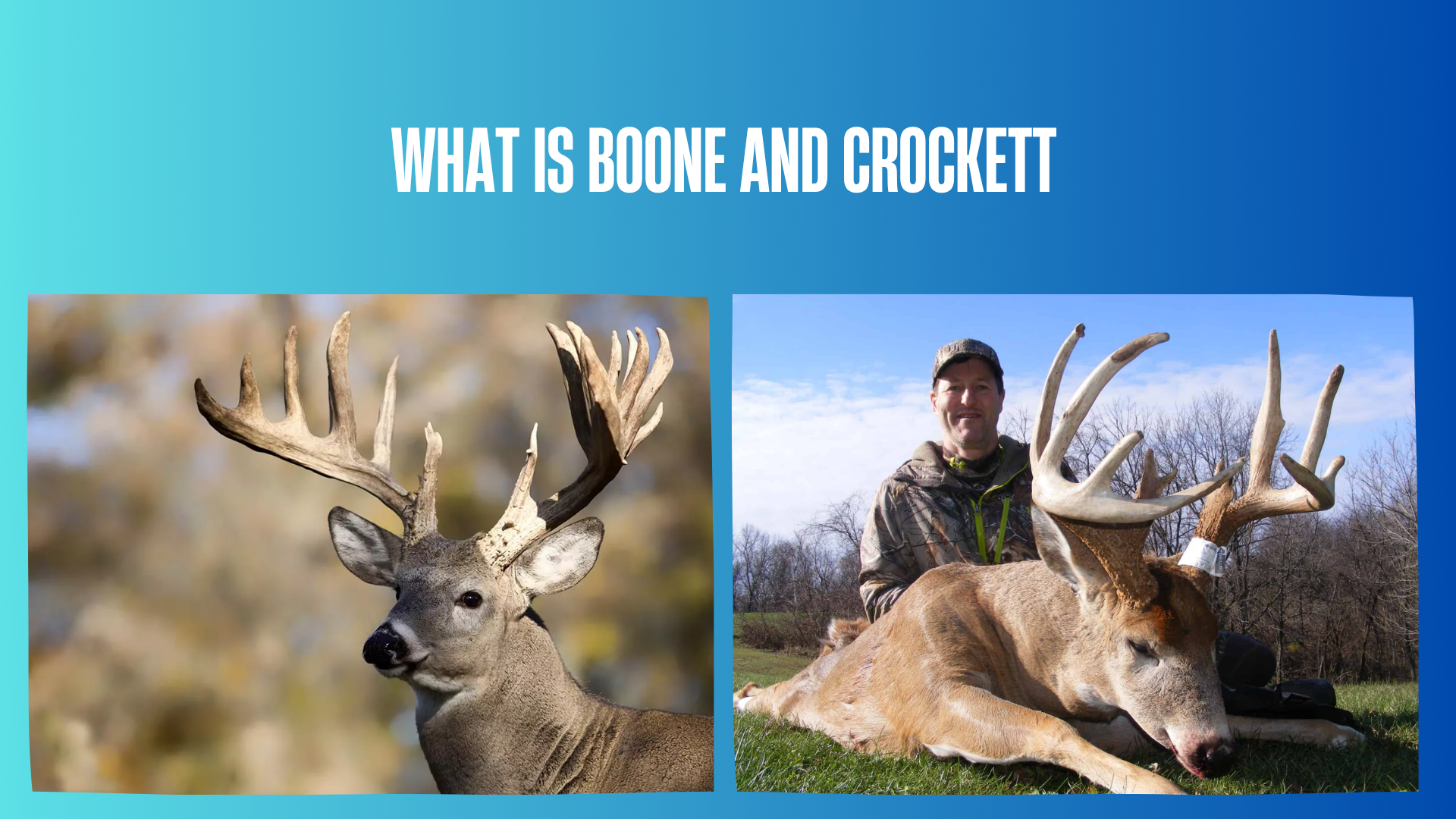

When a hunter says a buck is a “Boone and Crockett deer” or a bull elk “scores 375,” that number is not a weight, an age, or a count of antler points. It refers to a standardized trophy-measurement system associated with one of North America’s oldest conservation organizations. Knowing the distinction between an estimated score and an accepted record-book entry helps you make sense of both hunting stories and official records.
Quick Answer: What Is Boone and Crockett?
Boone and Crockett usually means the Boone and Crockett Club (B&C), a North American wildlife-conservation organization founded in 1887 by Theodore Roosevelt, George Bird Grinnell, and fellow conservation-minded hunters. In hunting conversations, the name also refers to the Club’s standardized system for measuring big-game antlers, horns, and certain skulls, and to its official records program. A B&C score is a numerical measurement of a particular trophy—not a judgment of the hunter’s skill or the worth of the animal. To become an official B&C record-book trophy, an eligible specimen must meet the appropriate minimum score and be accepted through the Club’s entry and verification process.
The Club is equally known for promoting fair chase, wildlife habitat protection, conservation education, and responsible, lawful hunting. Its official organization overview explains this broader mission.
Boone and Crockett at a Glance
| Term | What it means | What beginners should remember |
|---|---|---|
| Boone and Crockett Club | Wildlife conservation, hunting ethics, and big-game records organization established in 1887. | It is more than a trophy-ranking service. |
| B&C scoring system | A set of category-specific rules for measuring North American big-game trophies. | Different species require different measurements. |
| Gross score | Measurement total before the applicable deductions used to calculate a final category score. | A gross score is not the official ranking score. |
| Net or final score | The score used for records ranking after the relevant scoring rules are applied. | For many antlered categories, asymmetry affects the result. |
| Green score | An estimate made before the required drying period ends. | It is unofficial and may change. |
| Awards minimum | The lower entry threshold for certain species and categories. | It can qualify a trophy for the Awards program, subject to acceptance. |
| All-time minimum | The threshold for the Club’s all-time records book. | It is often, but not always, higher than the Awards minimum. |
| Fair chase | An ethical framework for lawful hunting without an improper advantage. | Legality alone does not settle every ethical question. |
Who Founded Boone and Crockett, and Why Does the Name Sound Familiar?
Theodore Roosevelt and George Bird Grinnell helped establish the Boone and Crockett Club in 1887, when commercial market hunting, habitat destruction, and weak wildlife protections had contributed to serious declines in many North American game populations. The founders wanted wildlife and wild places protected for future generations.
Daniel Boone and Davy Crockett did not found the Club. The organization was named in honor of those two famous American frontiersmen, who symbolized outdoor skill and the nation’s frontier history. The Club’s own article, Why the Club Is Named after Daniel Boone and Davy Crockett, explains the naming decision.
From its early conservation work, the Club went on to support protected public lands, stronger wildlife laws, science-based management, and the development of an ethical hunting tradition. Its records are one part of that mission rather than the organization’s entire purpose.
What Does the Boone and Crockett Club Actually Do?
Conserves wildlife and habitat
The Club supports conservation policy, research, habitat stewardship, and the long-term management of native North American big game. Its historical members were involved in efforts that helped establish or protect major public lands and develop significant wildlife-conservation laws.
Promotes ethical hunting
B&C has long championed fair chase: hunting that is lawful, sporting, and conducted without an improper advantage over a free-ranging wild animal. The principle encourages restraint, respect for wildlife, and accountability even when technology or local law leaves a choice to the hunter.
Maintains big-game records
Its records program documents notable antler, horn, and skull measurements and stores information relevant to wildlife management. These are records of individual specimens, not a census of every animal in a population. The first Club records book appeared in 1932, while the modern standardized scoring framework was developed in 1950.
Educates hunters and future conservationists
The Club also publishes educational material on game species, fair chase, field judging, conservation history, and records scoring. These resources can help new hunters understand the connection between a lawful harvest and responsible wildlife management.
How Does Boone and Crockett Scoring Work?
The Boone and Crockett scoring system uses repeatable physical measurements to compare trophies within the correct species and scoring category. For deer and elk, the dimensions of the antlers matter much more than simply counting the points.
What is measured on a deer rack?
- Main beam length: how long each main antler beam measures along its prescribed route.
- Normal point length: lengths of qualifying tines, measured according to the correct score chart.
- Inside spread credit: the usable distance between the main beams, subject to the Club’s spread-credit limit.
- Mass: circumference at four designated locations on each antler for deer and elk.
- Abnormal points and side-to-side differences: handled under the rules for the trophy’s typical or non-typical category.
Not every spread measurement increases the score. For example, the Club records greatest spread and tip-to-tip spread as descriptive data, but those figures are not separately added to the final score. Inside spread credit is also limited so it cannot exceed the longer main beam length. See the Club’s Records Program FAQ and whitetail field-judging guide.
What about bears, mountain lions, sheep, and other species?
The system is not one formula applied to every animal. Bear and cougar trophies, for example, are evaluated using specified skull dimensions rather than antler measurements. Horned animals have their own prescribed measurements and score charts. Always use the Club’s species-specific official score charts instead of treating a whitetail worksheet as universal.
Why do B&C scores include fractions such as 170 4/8?
Antler measurements are commonly recorded in inches and eighths of an inch. A whitetail listed at 170 4/8 has a final score equivalent to 170.5 inches under the relevant scoring rules. A figure such as 170 4/8 is a measurement total, not a claim that the rack has 170 antler tips.
Gross Score vs. Net Score vs. Green Score
These three terms explain many apparent disagreements about the size of a trophy.
| Score | Meaning | Can it establish an official B&C record? |
|---|---|---|
| Gross | The score before final category deductions, using the Club’s measurement convention. | No. Gross alone does not establish a ranking. |
| Net / final | The figure after applying the relevant rules and deductions for the selected category. | It is the records-ranking figure once accepted and verified. |
| Green | A preliminary measurement taken before the 60-day drying requirement. | No. It is only an estimate. |
| Official measurer’s entry score | A qualified post-drying measurement submitted for records review. | Not by itself; the Club must still accept and, where required, verify it. |
Illustrative example: Imagine a typical whitetail with a gross score of 178 4/8 inches, no abnormal points, and 9 inches of applicable side-to-side deductions. Its calculated typical net score would be 169 4/8 inches. That would exceed the current typical-whitetail Awards threshold of 160, but it would fall short of the All-time threshold of 170. This is a teaching example, not a real entry or an official score chart.
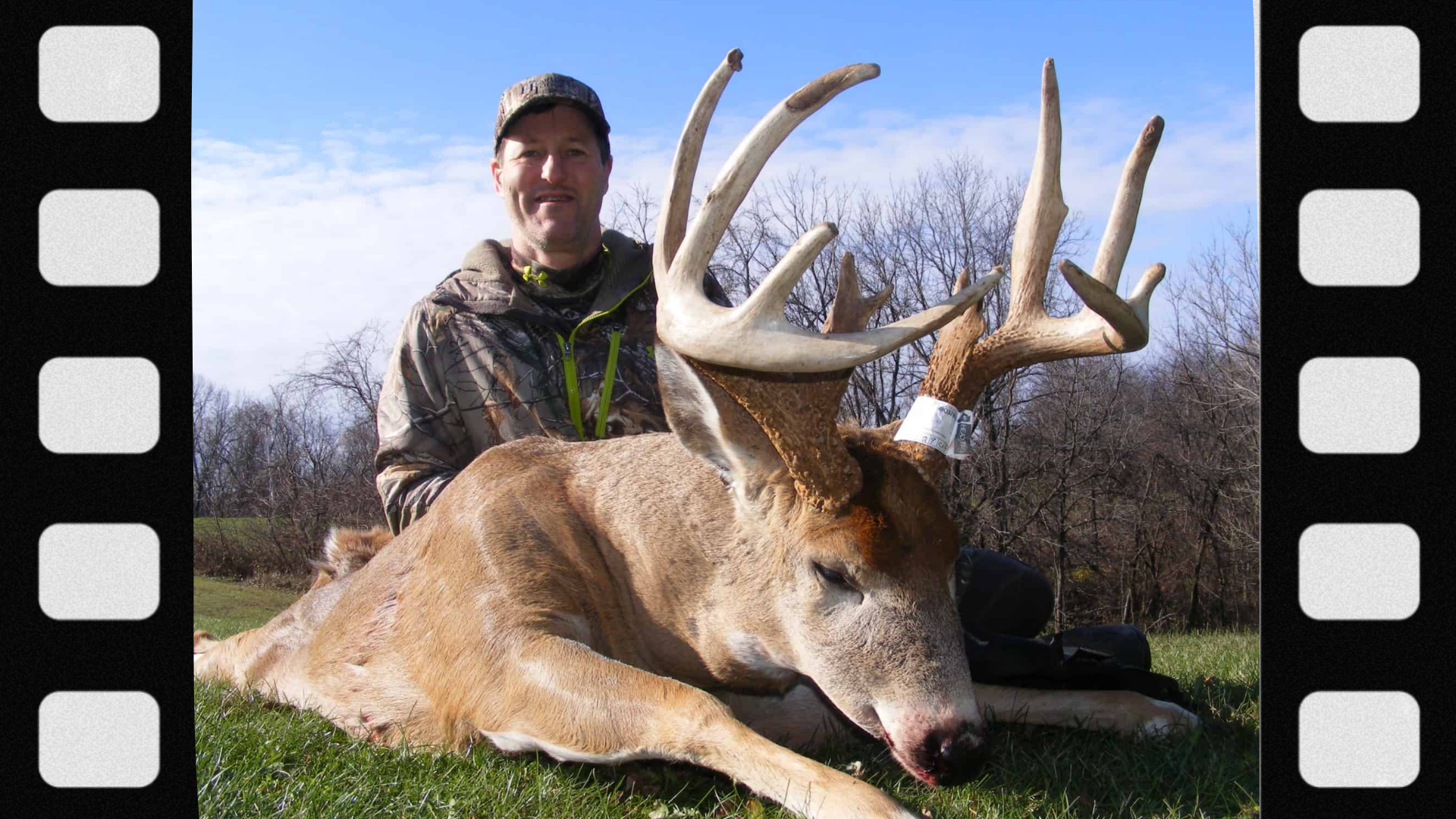
For a non-typical entry, abnormal-point treatment differs from a typical entry; do not assume its final score is calculated by simply subtracting every unusual tine. The Club’s records policies define gross, green, entry, and final scores and the relevant distinctions.
What Is a Boone and Crockett Record-Book Buck?
A “record-book buck” is a trophy that meets the correct category’s minimum score and satisfies the Club’s submission, eligibility, and acceptance requirements. A hunter may call a deer a “Booner” or a “B&C buck” in casual conversation, but an estimated high score is not the same thing as an officially accepted Boone and Crockett trophy.
Different animals—and different typical or non-typical classes—have different qualifying minimums. There are also two book levels: Awards and All-time. The following figures come from the Club’s published minimum entry score table, checked October 2026.
| Species and category | Awards minimum | All-time minimum |
|---|---|---|
| Whitetail deer, typical | 160 | 170 |
| Whitetail deer, non-typical | 185 | 195 |
| Mule deer, typical | 180 | 190 |
| Mule deer, non-typical | 215 | 230 |
| American elk, typical | 360 | 375 |
| American elk, non-typical | 385 | 385 |
| Pronghorn | 80 | 82 |
Important: These are B&C records-program minimums, not hunting regulations or legal minimum antler sizes. Geographic varieties such as Coues’ whitetail, Roosevelt’s elk, and Tule elk have separate categories and numbers. The standards and eligibility decisions should always be confirmed against the current Club guidance.
Is a 160-inch whitetail a Boone and Crockett buck?
A typical whitetail with an accepted final score of 160 can meet the Awards minimum, assuming all other requirements are satisfied. It does not meet the typical-whitetail All-time minimum of 170. A 160-inch gross estimate, by itself, proves neither of those things.
Are typical and non-typical racks treated the same?
No. Typical categories recognize the species’ characteristic antler pattern, with scoring rules that account for differences between sides. Non-typical categories account for qualifying abnormal antler growth under separate calculations. A large non-typical rack cannot be fairly compared with a typical rack simply by quoting one number without identifying the category.
How to Get a Deer, Elk, or Other Trophy Officially Scored
A careful field estimate can tell you whether contacting an official measurer is worthwhile, but official recognition requires a separate process.
- Confirm the species and likely category. Identify whether the trophy belongs on a typical, non-typical, or other category-specific score chart.
- Handle the trophy responsibly. Follow applicable possession, tagging, transport, and salvage rules. Avoid altering antlers, horns, or skulls to change their dimensions.
- Allow the mandatory drying period. B&C requires at least 60 days of room-temperature air drying before official measurement; the timing has additional provisions for previously frozen or processed specimens.
- Find an official measurer. Use the Club’s Official Measurer Locator, not just a self-scoring app or an unofficial estimate.
- Have the trophy measured correctly. A B&C Official Measurer completes and signs the appropriate score chart. According to Club policy, official measurers volunteer their scoring service without a measurement fee, although incidental expenses may be reimbursed.
- Collect entry paperwork and photographs. Requirements can include the signed score chart, photographs from specified angles, the applicable affidavit and hunt-information sheet, and copies of hunting licenses or tags. A found specimen has its own documentation requirements.
- Submit for Club review. The Club determines whether the trophy qualifies and may require further verification. A potential world’s record requires additional judges-panel confirmation.
The Club’s complete trophy entry requirements list the forms, photo angles, and submission procedure. The page also notes a 2026 processing-fee waiver for entries received on or after January 1, 2026; check the live requirements before you submit, because administrative charges and promotions can change.
Why the 60-Day Drying Rule Matters
Antlers, horns, and skulls can change dimensions as they dry. Without a common waiting period, newly collected and long-dried trophies would not be compared on the same basis. The 60-day rule is therefore part of score consistency—not simply an administrative delay.
A score estimated the week of the hunt is often called a green score. It may be useful for personal records, but it should not be advertised as an official Boone and Crockett score. The Club also prohibits attempts to interfere artificially with the normal drying process in order to preserve an advantage.
What Does Fair Chase Mean in Boone and Crockett Hunting?
Fair chase describes the ethical, sporting, and lawful pursuit of free-ranging wild animals without giving the hunter an improper advantage. It is central to the Club’s identity and relevant to whether a hunter-taken trophy can be entered into its records program. See the Club’s Principles of Fair Chase.
For a new hunter, that principle translates into practical choices: positively identify the animal, respect seasonal and property rules, pursue only animals you are legally entitled to hunt, stay within your demonstrated ability, and prioritize a humane outcome over a score.
- Keep firearms pointed in a safe direction and treat every firearm as loaded.
- Keep your finger outside the trigger guard until ready to shoot, and know your target and what lies beyond it.
- Respect property boundaries and obtain permission where required.
- Verify species, season, license, tag, and equipment rules with the appropriate wildlife authority.
- Avoid methods that are unlawful or incompatible with B&C entry rules; a method permitted locally is not automatically eligible for the Club’s records program.
- Make every reasonable, safe, and lawful effort to recover game and use the meat responsibly.
Club records eligibility and local hunting law are separate questions. For example, its policies expressly exclude trophies obtained with the aid of drone scouting, even though technology rules differ among jurisdictions. Do not assume that the ability to enter a trophy determines whether a particular hunting method is legal. Check both the B&C rules and the wildlife agency responsible for the area being hunted.
Boone and Crockett vs. Pope and Young: What Is the Difference?
Boone and Crockett and the Pope and Young Club are often mentioned together because both maintain North American big-game records and use closely related scoring methods. The main distinction for a beginner is the method of take.
| Question | Boone and Crockett Club | Pope and Young Club |
|---|---|---|
| Main records focus | Qualifying native North American big-game trophies, regardless of eligible lawful hunting weapon; also certain found trophies. | Qualifying big-game trophies taken using archery equipment that meets its rules. |
| Measurement approach | Species-specific B&C scoring. | Closely aligned B&C-style scoring procedures. |
| Entry thresholds | Club-specific Awards and All-time requirements. | Its own entry requirements, which may differ. |
| Hunting ethics | Fair chase emphasized. | Fair chase emphasized. |
A bow-harvested elk or deer can potentially qualify for Boone and Crockett if the entry meets B&C requirements; Boone and Crockett is not a rifle-only record book. The clubs collaborated on a joint scoring manual, How to Score North American Big Game. Always check the specific club’s entry rules before assuming a single scoring session guarantees eligibility in both records programs.
Common Misunderstandings About B&C Scores
- “Biggest spread wins.” Spread is one factor for many antlered categories, not the whole score; some displayed spread measurements do not count toward the final total.
- “An eight-point buck has an eight-point B&C score.” Antler-point count and measured scoring points are different concepts.
- “Gross and net are interchangeable.” They answer different questions, and the records use the accepted final score.
- “Any 170-inch rack is automatically a world record.” A category threshold is not a world-record declaration, and estimated scores are not accepted entries.
- “A trophy score tells you the animal’s exact age.” Rack dimensions reflect multiple biological and environmental factors and cannot independently establish exact age.
- “Boone and Crockett exists only to reward large animals.” Its broader mission involves conservation, fair chase, records-based education, and responsible wildlife management.
- “The largest rack always represents the most successful hunt.” Safe decisions, lawful conduct, fieldcraft, conservation, and responsible use of game remain more important than a numerical score.
Why These Records Matter to Wildlife Conservation
Long-running, standardized records make it possible to document notable specimens across species, locations, and decades. When interpreted alongside population surveys, habitat information, harvest data, and other research, the records can contribute useful context to wildlife management and conservation discussions.
The limitation is important: record-book animals represent a selective sample, not every deer, elk, or other big-game animal on the landscape. A county with many accepted trophies is not automatically the best hunting location, and a single extraordinary rack is not proof of a healthy herd on its own.
This perspective helps keep Boone and Crockett in context. A scoring system is a way to describe individual animals consistently; conservation still depends on healthy habitat, responsible management, sound scientific evidence, and hunters who comply with the law.
Final Answer: What Is Boone and Crockett?
Boone and Crockett is both a wildlife conservation organization and the name commonly used for its North American big-game scoring and records system. Established in 1887, the Club promotes fair chase, conservation, education, and standardized records of notable animals. If someone tells you a deer “scores Boone and Crockett,” ask whether the number is gross, net, green, or officially accepted—and which species and category it belongs to. If you believe a trophy qualifies, consult the Club’s published minimums, allow the required drying period, and contact an official measurer. The quality of the hunt still rests on lawful, safe, ethical decisions rather than the size of the number.
FAQs
1. What does B&C stand for in hunting?
B&C stands for Boone and Crockett, usually referring to the Boone and Crockett Club or its big-game scoring and records program.
2. Who started the Boone and Crockett Club?
Theodore Roosevelt, George Bird Grinnell, and other conservation-minded hunters established the Club in 1887.
3. Was the Club founded by Daniel Boone and Davy Crockett?
No. Boone and Crockett were historical frontiersmen whose names inspired the organization; they were not its founders.
4. What is a Boone and Crockett buck?
In strict usage, it is a whitetail or other eligible deer trophy accepted into the Club’s records program. In everyday conversation, “B&C buck” may merely mean a large buck or an estimated record-class rack.
5. What is a good Boone and Crockett score for a whitetail?
A “good” score depends on the region and the hunter’s goals. For formal records, typical whitetails have B&C minimums of 160 for Awards and 170 for All-time entry, subject to all other criteria.
6. Is a 150-inch deer a Boone and Crockett deer?
A 150-inch typical whitetail is below the current B&C typical-whitetail Awards minimum. It can still be an impressive deer and a meaningful harvest.
7. Is a 160-inch buck in the Boone and Crockett book?
A qualifying typical-whitetail final score of 160 can meet the Awards minimum, but not the 170 All-time minimum. The trophy must also be submitted, eligible, and accepted.
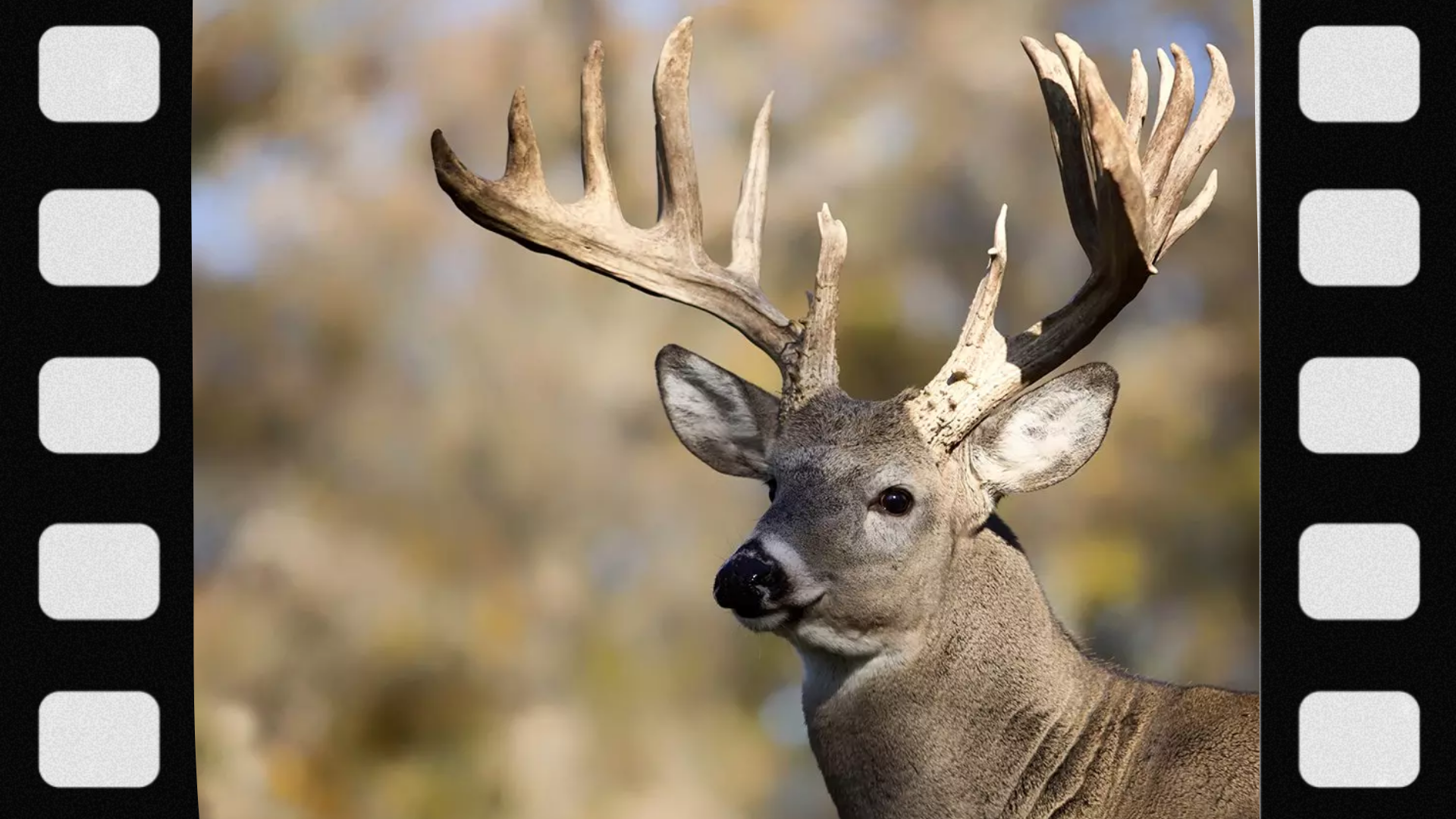
8. What does a 170-inch whitetail score mean?
It means the rack has a measured scoring total of 170 inches under the relevant rules. A final typical-whitetail score of 170 reaches the All-time threshold, but eligibility and official acceptance are still required.
9. What is the difference between a gross and a net B&C score?
Gross is a pre-deduction total; net or final applies the deductions and calculations required for the selected scoring category. The accepted final score determines B&C records rankings.
10. Why does Boone and Crockett deduct for asymmetry?
The scoring framework for typical antlered trophies rewards the standard pattern and correspondence between sides. Non-typical entries handle unusual growth differently.
11. Do extra antler points always reduce a B&C score?
No. Their treatment depends on the category and on whether they qualify as abnormal points under the official rules. Do not apply typical deductions to a non-typical worksheet without checking the instructions.
12. Does B&C score antler width only?
No. Deer and elk measurements generally include main beams, normal points, circumference, and permitted inside spread credit, with category-specific adjustments.
13. Does tip-to-tip spread count toward a B&C score?
No. The Club records it for descriptive and verification purposes, but it is not directly added to the final score.
14. What does “green score” mean?
It is a preliminary measurement made before the mandatory drying period. A green score is not an official B&C score.
15. How long must antlers dry before B&C scoring?
At least 60 days of room-temperature air drying, with special timing provisions for trophies that were frozen or processed first.
16. Can I score my own deer?
You can make a personal estimate using an official chart, but a B&C Official Measurer is needed for a record-book submission.
17. How do I find a Boone and Crockett official measurer?
Use the Club’s Official Measurer Locator and follow its instructions for contacting someone in your area.
18. Does Boone and Crockett charge for official measuring?
Club policy says official measurers provide their scoring service free, although reimbursement for incidental travel or other expenses may be appropriate. Entry processing is a separate issue; check the current fee policy and the announced 2026 waiver.
19. Can a bow-killed deer enter the B&C records?
Yes. B&C accepts qualifying trophies taken through eligible legal methods, including archery. All relevant fair-chase and documentation requirements still apply.
20. What is the difference between Boone and Crockett and Pope and Young?
B&C covers eligible North American big-game trophies across lawful methods of take, as well as certain found specimens. Pope and Young focuses on qualifying archery-taken trophies.
21. Can a found deer skull or antler rack enter Boone and Crockett?
Some found or picked-up trophies may be eligible. The owner must meet documentation, lawful-possession, drying, scoring, and category requirements. The Club has separate rules for such entries.
22. Does a Boone and Crockett score tell the animal’s age?
No. Antler size may relate to maturity, nutrition, genetics, and other conditions, but the scoring measurement alone cannot establish exact age.
23. Is a B&C record the same as a state hunting record?
Not necessarily. State wildlife agencies or private organizations may maintain separate programs, category minimums, and reporting requirements. Their books should not be confused with official B&C acceptance.
24. Can an animal from a high-fence hunting operation enter the record book?
B&C eligibility is grounded in free-ranging wildlife and fair-chase standards. An animal taken under circumstances that fail those standards should not be assumed eligible simply because the hunt complied with some local rules.
25. Does Boone and Crockett recognize world records automatically?
No. A potential new world record must be reviewed and verified by an appropriate B&C judges panel before the Club formally declares it a world record.
26. Does Boone and Crockett accept every species of big game?
No. The program covers specified categories of native North American big game, with official category definitions, score charts, and minimums.
27. Why does the Club keep records if it emphasizes conservation?
Standardized trophy records provide one source of historical information about notable animals. Combined with other wildlife data, they can contribute context to conservation and management, while promoting fair chase and public education.
28. Where can I check official B&C record-book minimums?
Use the Club’s Minimum Entry Scores for North American Big Game page and select the correct species and category.
Official Sources and Further Reading
- Boone and Crockett Club: About the Club — founding, mission, and conservation work.
- Why the Club Is Named after Daniel Boone and Davy Crockett — name origins.
- Minimum Entry Scores — Awards and All-time thresholds.
- Records Program FAQ — score details, timing, and book classifications.
- Entering Your B&C Trophy — current documentation, photos, and submission information.
- Principles of Fair Chase — hunting ethics and responsible conduct.
- Big Game Records Program Policies — detailed eligibility and scoring policies.