
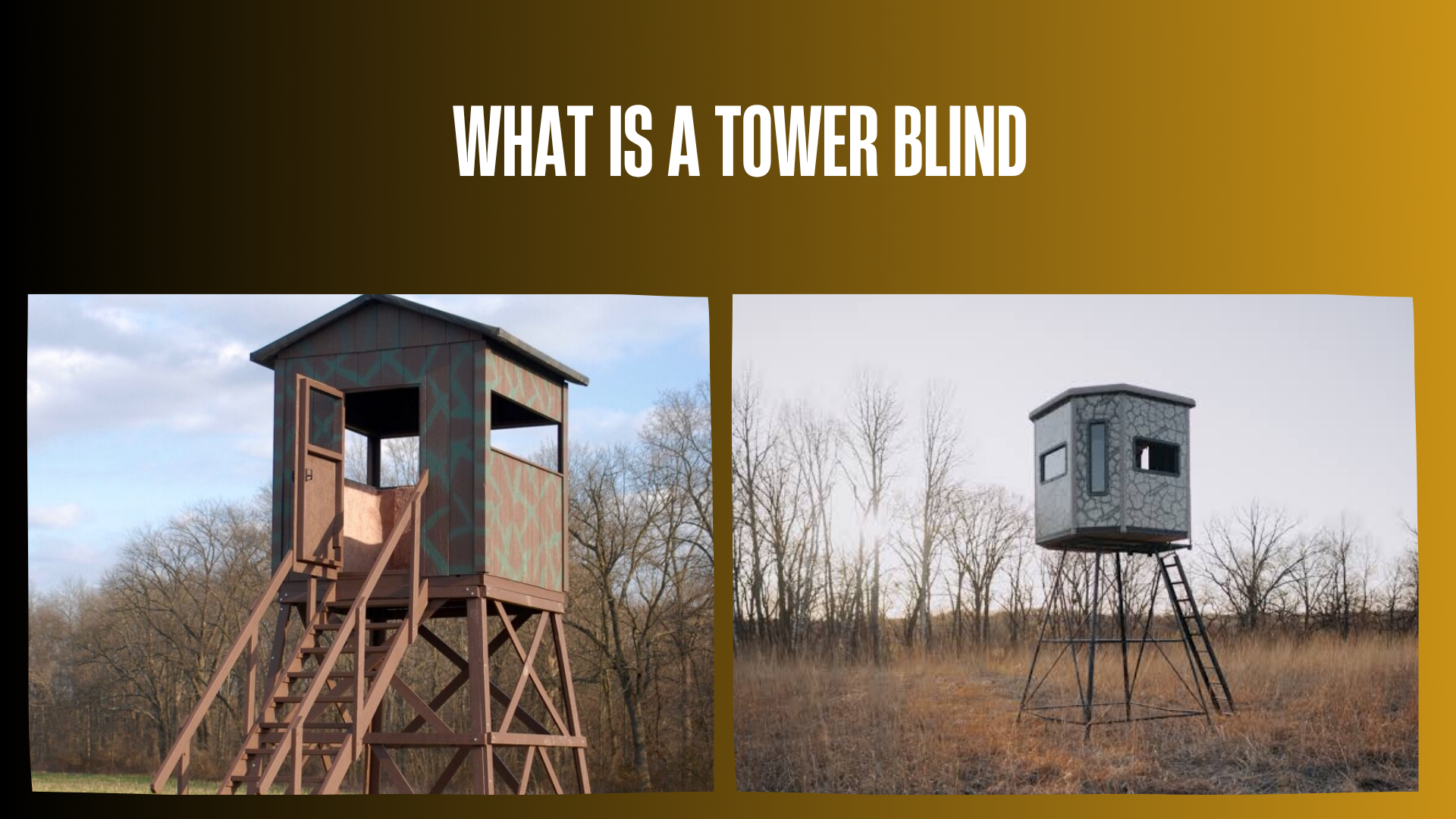

A tower blind is an elevated hunting blind built above ground level to give hunters a higher observation point while waiting for game animals. Unlike ground blinds that sit at natural terrain level, tower blinds use a raised platform, legs, or a supporting structure to lift the blind several feet above the ground.
Tower blinds are commonly used for deer hunting, especially in open fields, agricultural areas, food plots, and locations where additional visibility can help hunters observe animal movement. However, a tower blind is not a guarantee of hunting success. Its effectiveness depends on habitat, animal behavior, wind conditions, hunting pressure, legal requirements, and proper setup.
This guide explains what a tower blind is, how it works, why hunters use them, important safety considerations, common mistakes, and what beginners should know before hunting from one.
Quick Answer: What Is a Tower Blind?
A tower blind is an elevated hunting blind placed on a raised platform to provide hunters with a higher field of view compared with a traditional ground blind. It allows hunters to observe more surrounding terrain, remain concealed, and potentially improve comfort during long waiting periods.
Tower blinds are often used for deer hunting and other game where visibility and concealment are important. However, hunters should always follow local hunting regulations, use proper elevated-blind safety practices, and understand that animal movement is influenced by many factors beyond blind height.
Key Takeaways
- Tower blinds are elevated hunting structures designed to improve visibility and concealment.
- They are commonly used in open habitats where ground-level visibility is limited.
- Height alone does not guarantee better hunting results.
- Safe installation and fall protection are essential when using elevated blinds.
- Hunters should verify local regulations before using any hunting blind.
What Does a Tower Blind Mean in Hunting?
In hunting terminology, a tower blind refers to a blind that is raised above the ground using a supporting frame or platform. The blind itself may be made from various materials, including wood, metal, fabric, composite panels, or manufactured hunting-blind materials.
The purpose of elevating the blind is to create a higher observation position while keeping the hunter hidden from the normal line of sight of wildlife.
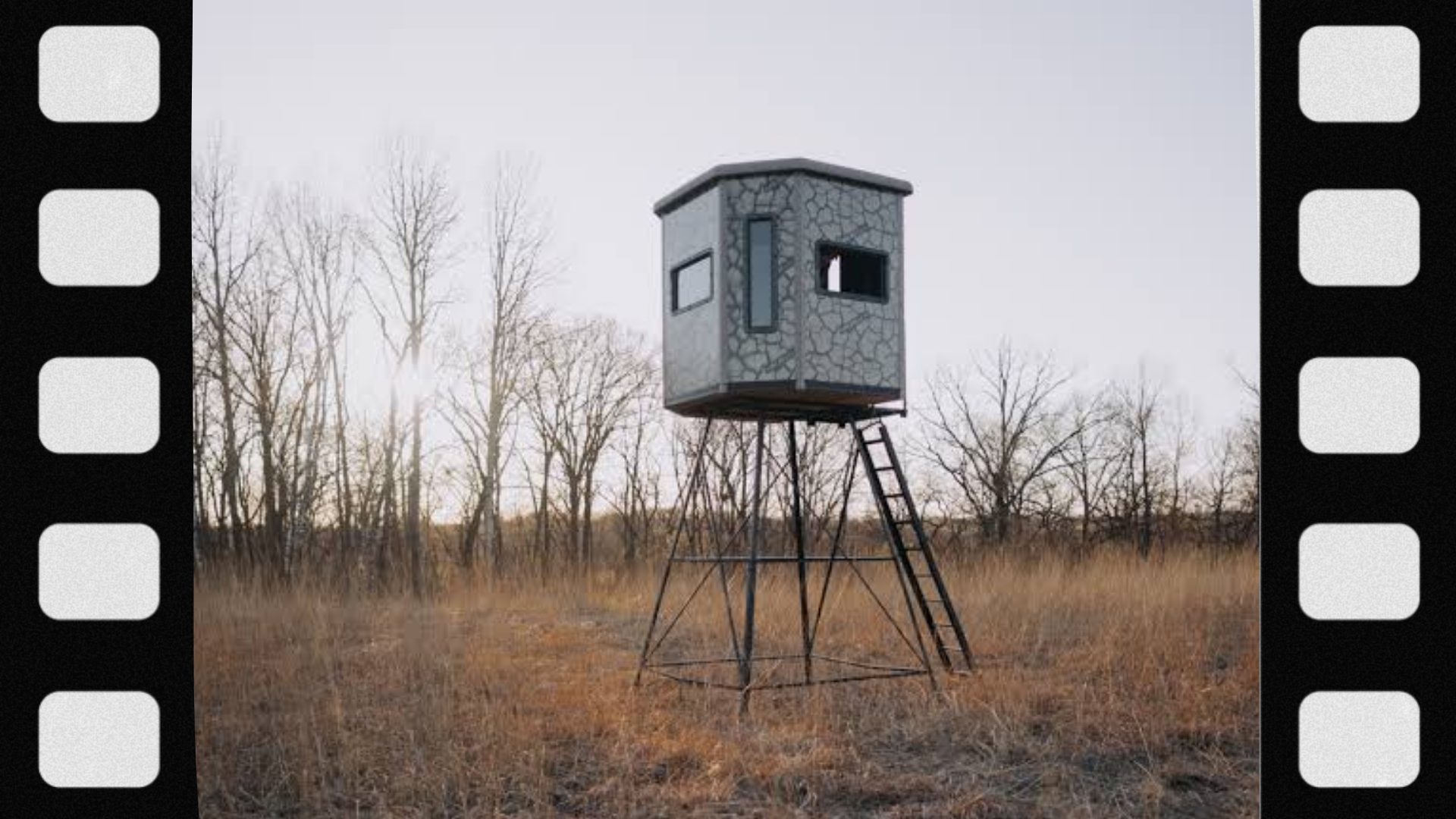
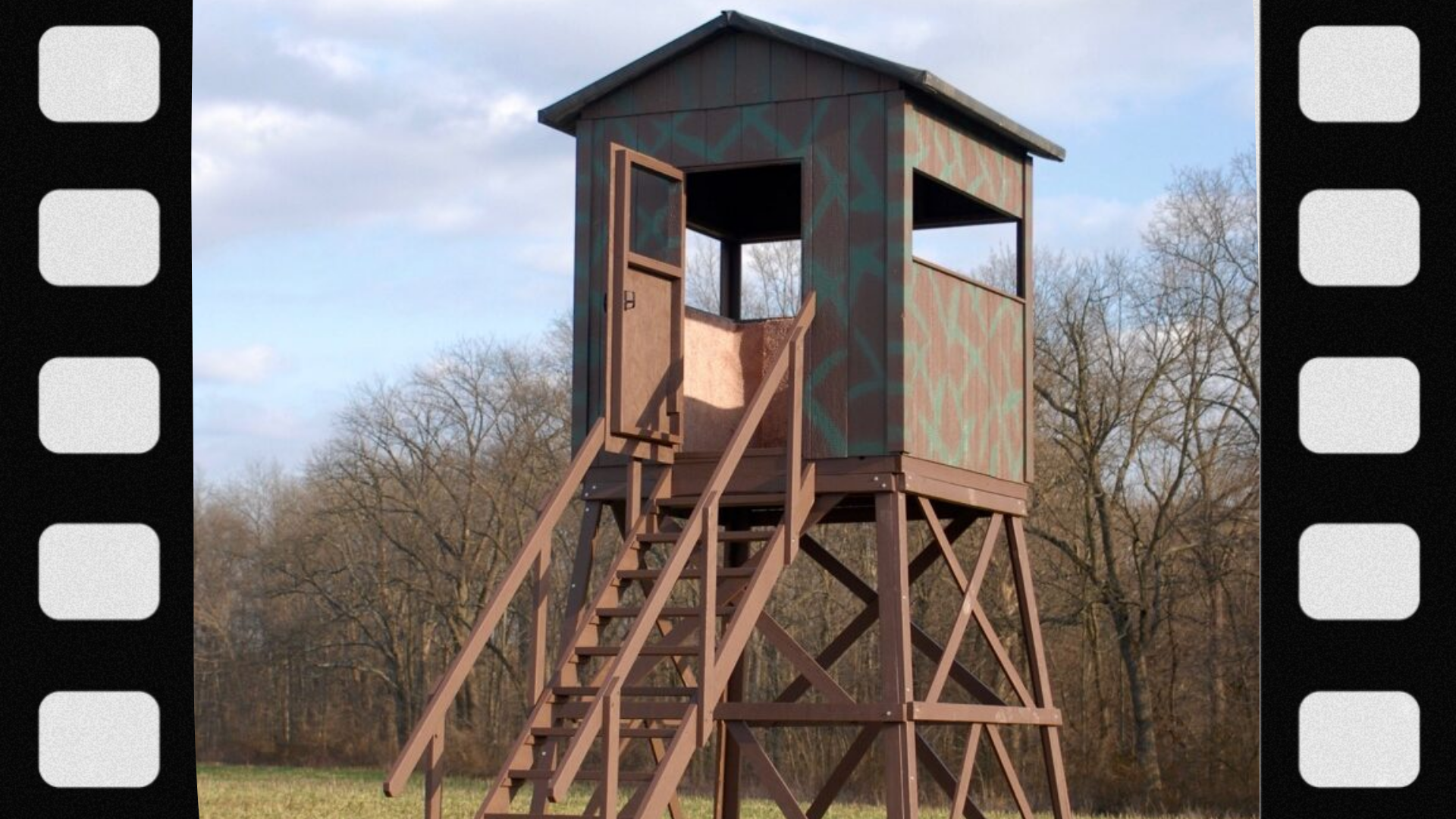
A tower blind typically includes:
- An elevated platform.
- A ladder or access system.
- Enclosed or partially enclosed walls.
- Windows or shooting openings.
- A roof or weather protection.
- A stable support structure.
How Does a Tower Blind Work?
A tower blind works by changing the hunter’s position relative to the surrounding landscape. Being elevated can provide several practical advantages:
1. Improved visibility
One of the main reasons hunters use tower blinds is the wider field of view. A raised position can allow hunters to see over grass, crops, brush, or uneven terrain that might block visibility from ground level.
This can help hunters observe animal movement patterns, identify approaching wildlife, and monitor areas such as:
- Food plots.
- Field edges.
- Travel corridors.
- Open woodland areas.
- Agricultural fields.
2. Increased concealment
Many tower blinds are designed to hide the hunter’s movement and outline. Enclosed walls and elevated positioning can help reduce the chance that wildlife notices human activity.
However, concealment still depends on factors such as:
- Wind direction.
- Scent control.
- Movement inside the blind.
- Sun position.
- Animal behavior.
3. Better comfort during long sits
Many hunters choose tower blinds because they can provide more room than smaller ground blinds or tree stands. A larger elevated blind may allow hunters to sit comfortably for longer periods while staying protected from weather.
Tower Blind vs Ground Blind vs Tree Stand
| Blind Type | Main Feature | Common Uses | Important Considerations |
|---|---|---|---|
| Tower Blind | Elevated enclosed hunting structure | Fields, food plots, open terrain | Requires stable construction and safe access |
| Ground Blind | Located at ground level | Flexible hunting locations | Requires careful concealment |
| Tree Stand | Mounted on or near trees | Wooded hunting areas | Requires fall protection and safe climbing practices |
Why Do Hunters Use Tower Blinds?
Hunters choose tower blinds for different reasons depending on their hunting environment and personal preferences.
Better field observation
In open landscapes, elevation may help hunters see farther distances and monitor more terrain. This can be especially useful when watching fields, agricultural areas, or managed wildlife habitats.
Protection from weather
Many tower blinds provide protection from rain, wind, and cold temperatures compared with exposed hunting positions.
Staying comfortable can help hunters remain patient and focused during long observation periods.
Suitable for multiple hunters
Some tower blinds are built larger than traditional blinds and may provide space for more than one person. This can make them useful for hunting partners, mentors, or introducing new hunters to the outdoors.
Useful for wildlife observation
Although primarily used for hunting, elevated blinds can also be used for observing wildlife behavior, monitoring habitat, and learning how animals use an area.
Where Are Tower Blinds Commonly Used?
Tower blinds are often found in areas where elevation provides a practical advantage, including:
- Open agricultural fields.
- Food plots.
- Large private hunting properties.
- Grasslands.
- Edges between woods and open areas.
- Wildlife management areas where permitted.
The best location for a tower blind depends on habitat, animal movement, access, wind patterns, and local hunting regulations.
Important Safety and Legal Considerations
Because tower blinds are elevated structures, safety should be a priority. Falls from elevated hunting equipment can cause serious injuries.
Use proper fall protection
Hunters using elevated blinds should follow manufacturer instructions and use appropriate fall protection equipment when required.
Important safety practices include:
- Inspecting the structure before use.
- Checking ladders, platforms, and attachment points.
- Using safe access methods.
- Avoiding unstable or damaged structures.
- Following manufacturer weight limits.
Verify hunting regulations
Blind regulations vary by location. Some areas may have rules regarding:
- Placement of hunting blinds.
- Use on public land.
- Leaving structures overnight.
- Distance from roads or property boundaries.
- Required identification markings.
Always check current regulations from the appropriate state wildlife agency or land-management authority before hunting.
How to Choose a Good Tower Blind Location
Choosing a tower blind location is one of the most important decisions a hunter makes. A taller blind does not automatically create a better hunting opportunity. The location should match wildlife behavior, habitat conditions, access needs, and legal requirements.
Consider animal movement patterns
Hunters often place tower blinds near areas where wildlife naturally travels or spends time, such as:
- Food sources.
- Water sources.
- Field edges.
- Travel routes between bedding and feeding areas.
- Natural openings.
However, animal movement can change because of weather, hunting pressure, seasonal changes, and habitat conditions. A location that works during one period may not remain productive forever.
Pay attention to wind direction
Wind is an important factor because many game animals rely heavily on their sense of smell. A tower blind should be positioned with local wind patterns in mind.
Hunters should consider:
- Where their scent may travel.
- Common animal approach routes.
- Changes in wind caused by terrain.
- Thermal movement during changing temperatures.
Even a well-hidden blind may be less effective if animals regularly detect human scent before entering the area.
Think about access routes
A tower blind location should allow safe and practical access. Hunters should consider:
- How they will reach the blind before daylight.
- How they will leave after hunting.
- Whether the route creates unnecessary disturbance.
- Whether access crosses private property or restricted areas.
Tower Blind Safety Checklist
Before using an elevated hunting blind, inspect the structure carefully. Never assume an existing blind is safe simply because another person has used it before.
| Safety Check | What to Inspect |
|---|---|
| Platform | Check for damage, rot, loose boards, or unstable surfaces |
| Ladder or steps | Confirm access points are secure and stable |
| Support structure | Look for movement, rust, cracks, or deterioration |
| Weather protection | Ensure roofing and walls are properly attached |
| Equipment storage | Avoid creating obstacles that increase fall risks |
Never climb with unsafe equipment
Hunters should avoid carrying equipment in a way that interferes with safe climbing. Firearms, bows, and other equipment should be handled according to manufacturer guidance and safe hunting practices.
Safe habits include:
- Keeping climbing areas clear.
- Maintaining stable footing.
- Using appropriate safety equipment.
- Avoiding climbing in poor visibility or dangerous weather conditions.
What Equipment Is Useful for a Tower Blind?
You do not need expensive equipment to hunt from a tower blind responsibly. The most important items are those that improve safety, comfort, and preparedness.
Essential items
- Required hunting license and permits.
- Appropriate clothing for weather conditions.
- Eye and hearing protection when using firearms.
- Communication device when hunting in remote areas.
- Basic first-aid supplies.
- Water and food for longer sits.
Useful comfort items
- Seat cushion.
- Binoculars.
- Weather protection gear.
- Hand warmers during cold conditions.
- Notebook for recording wildlife observations.
Tower Blind vs Tree Stand: Which One Should You Use?
Tower blinds and tree stands both provide elevated hunting positions, but they serve different needs.
| Feature | Tower Blind | Tree Stand |
|---|---|---|
| Elevation | Usually raised from the ground with a supporting structure | Attached to or positioned near trees |
| Weather protection | Often provides walls and roof | Usually more exposed |
| Space | Often allows more room | Usually more compact |
| Mobility | Generally less mobile | Some types are easier to relocate |
| Safety considerations | Requires inspection and safe access | Requires climbing and fall protection |
Common Tower Blind Mistakes
1. Believing more height always means better hunting
Elevation can improve visibility, but wildlife behavior is affected by many factors. A poorly placed tall blind may be less effective than a properly positioned lower blind.
2. Ignoring wind patterns
Some hunters focus heavily on visibility while overlooking scent movement. Wind conditions should always be part of blind placement decisions.
3. Failing to inspect an old blind
A tower blind exposed to weather can deteriorate over time. Before use, check the structure carefully and repair or replace unsafe components.
4. Making too much noise around the blind
Frequent disturbance around a hunting area may affect animal behavior. Hunters should consider access routes and timing to reduce unnecessary disruption.
5. Ignoring local regulations
Rules regarding hunting blinds vary by location. Some public lands and wildlife areas have specific requirements about structures, placement, or removal.
What Should Beginners Know Before Using a Tower Blind?
A tower blind can be a useful hunting tool, but beginners should focus on fundamentals before relying on equipment advantages.
New hunters should learn:
- Basic hunter education principles.
- Wildlife identification.
- Safe firearm or archery handling.
- Local hunting regulations.
- Ethical shot selection.
- Respect for property boundaries.
Ethical Hunting Considerations When Using a Tower Blind
A tower blind should support responsible hunting practices, not replace them.
Ethical hunters should:
- Identify targets clearly before taking action.
- Understand what is beyond the target.
- Follow legal seasons and bag limits.
- Respect land ownership and access rules.
- Make reasonable efforts to recover harvested game.
- Follow fair-chase principles.
What Not to Do When Using a Tower Blind
- Do not use a damaged or unstable elevated blind.
- Do not ignore manufacturer instructions or safety warnings.
- Do not assume height guarantees hunting success.
- Do not hunt without checking current regulations.
- Do not shoot at unidentified movement.
- Do not take shots beyond your proven ability.
- Do not place blinds where they violate land-use rules.
How to Maintain a Tower Blind
Regular maintenance helps extend the usable life of a tower blind and improves safety.
Before hunting season
- Inspect the entire structure.
- Check access points.
- Look for weather damage.
- Confirm stability.
- Remove unnecessary clutter.
During the season
- Monitor changes caused by weather.
- Avoid overloading the structure.
- Keep entry areas clear.
- Report or address safety concerns immediately.
Final Answer: What Is a Tower Blind?
A tower blind is an elevated hunting blind designed to raise hunters above ground level while providing concealment, comfort, and improved visibility. It is commonly used for deer hunting and wildlife observation in open areas such as fields, food plots, and property edges.
The main benefits of a tower blind include a higher viewing angle, additional weather protection, and a more comfortable hunting position. However, a tower blind does not guarantee better hunting results. Successful and ethical hunting still depends on proper scouting, understanding animal behavior, wind awareness, legal compliance, and responsible decision-making.
Before using a tower blind, hunters should inspect the structure, follow safe elevated-hunting practices, and verify current hunting regulations with the appropriate wildlife agency or land-management authority.
FAQs
1. What is a tower blind in hunting?
A tower blind is an elevated hunting blind placed above ground level on a supporting structure. It allows hunters to observe surrounding terrain while remaining concealed.
2. Why do hunters use tower blinds?
Hunters use tower blinds to improve visibility, increase comfort during long hunting sessions, and create a concealed observation point.
3. Are tower blinds only used for deer hunting?
No. Tower blinds are commonly associated with deer hunting, but they may also be used for observing other wildlife where permitted and appropriate.
4. Does a taller tower blind mean better hunting?
Not necessarily. Height may improve visibility, but location, wind, habitat, animal movement, and hunting pressure are also important factors.
5. How high is a typical tower blind?
Tower blind height varies depending on design, terrain, purpose, and manufacturer specifications. There is no universal height requirement.
6. Are tower blinds safer than tree stands?
Safety depends on construction, installation, maintenance, and proper use. Both tower blinds and tree stands require attention to fall prevention and safe access.
7. Do I need a safety harness in a tower blind?
Hunters should follow manufacturer recommendations and applicable safety guidance for elevated hunting structures. Fall protection may be important depending on the design and circumstances.
8. Can a tower blind be used on public land?
It depends on local regulations. Some public lands restrict permanent structures, require permission, or have specific rules for hunting blinds.
9. Can I leave a tower blind on hunting property year-round?
This depends on land ownership, local regulations, and property rules. Hunters should verify whether leaving structures in place is allowed.
10. Where should I place a tower blind?
A tower blind should be placed based on habitat, animal movement, wind conditions, access routes, and legal requirements rather than simply choosing the highest location.
11. Are tower blinds good for beginners?
Tower blinds can be beginner-friendly because they may provide comfort and visibility. However, beginners should still learn hunting safety, regulations, wildlife identification, and ethical hunting practices.
12. What animals are commonly hunted from tower blinds?
Tower blinds are commonly used for deer hunting, but the appropriate use depends on local wildlife, regulations, and hunting practices.
13. Can animals see a tower blind?
Wildlife may detect blinds through sight, sound, or scent depending on conditions. Proper placement and minimizing disturbance can help maintain concealment.
14. Do tower blinds reduce human scent problems?
No. Elevation does not eliminate scent concerns. Wind direction and animal behavior remain important factors.
15. Are tower blinds better than ground blinds?
Neither option is universally better. Tower blinds provide elevation, while ground blinds may offer greater flexibility in some situations.
16. Are tower blinds better than tree stands?
It depends on the hunting environment and personal preference. Tower blinds often provide more space and weather protection, while tree stands may offer advantages in wooded terrain.
17. Can children use tower blinds?
Children should only use hunting blinds under appropriate adult supervision and with attention to safety, regulations, and age-appropriate hunting education.
18. How often should a tower blind be inspected?
A tower blind should be checked regularly, especially after severe weather or long periods of exposure to outdoor conditions.
19. What materials are tower blinds made from?
Tower blinds may be constructed from different materials, including wood, metal, fabric, and manufactured hunting-blind materials.
20. Can weather damage a tower blind?
Yes. Rain, wind, snow, temperature changes, and long-term exposure can affect structural condition over time.
21. Should I build my own tower blind?
Hunters should ensure any structure used is stable, safe, and appropriate for the intended purpose. Following recognized safety practices and manufacturer guidance is important.
22. What equipment should I bring to a tower blind?
Useful equipment depends on the hunt, but hunters should consider required licenses, appropriate clothing, communication tools, safety equipment, and necessary hunting gear.
23. Can tower blinds improve shooting opportunities?
A tower blind may improve visibility and comfort, but ethical shot opportunities still depend on accuracy, distance, target identification, and safe conditions.
24. Do tower blinds work in all hunting environments?
No. Their usefulness depends on terrain, vegetation, animal behavior, and the specific hunting situation.
25. What is the biggest mistake hunters make with tower blinds?
A common mistake is focusing only on the blind itself while ignoring location, wind, access, regulations, and safe hunting practices.
26. Do tower blinds scare deer away?
Wildlife reactions vary. Some animals may become accustomed to structures over time, while others may respond to human activity, scent, or disturbance.
27. How can I make a tower blind more comfortable?
Comfort improvements may include appropriate seating, weather protection, organization, and preparation for long periods outdoors.
28. Do tower blinds require maintenance?
Yes. Regular inspection and maintenance help identify problems caused by weather exposure, wear, or structural damage.
29. Are tower blinds expensive?
Cost varies widely depending on size, materials, design, and whether the blind is purchased or built. Hunters should consider safety and durability rather than price alone.
30. Where can I learn more about tower blind safety?
Hunters can consult hunter education programs, wildlife agencies, and manufacturer safety guidance for additional information.
Read more: