
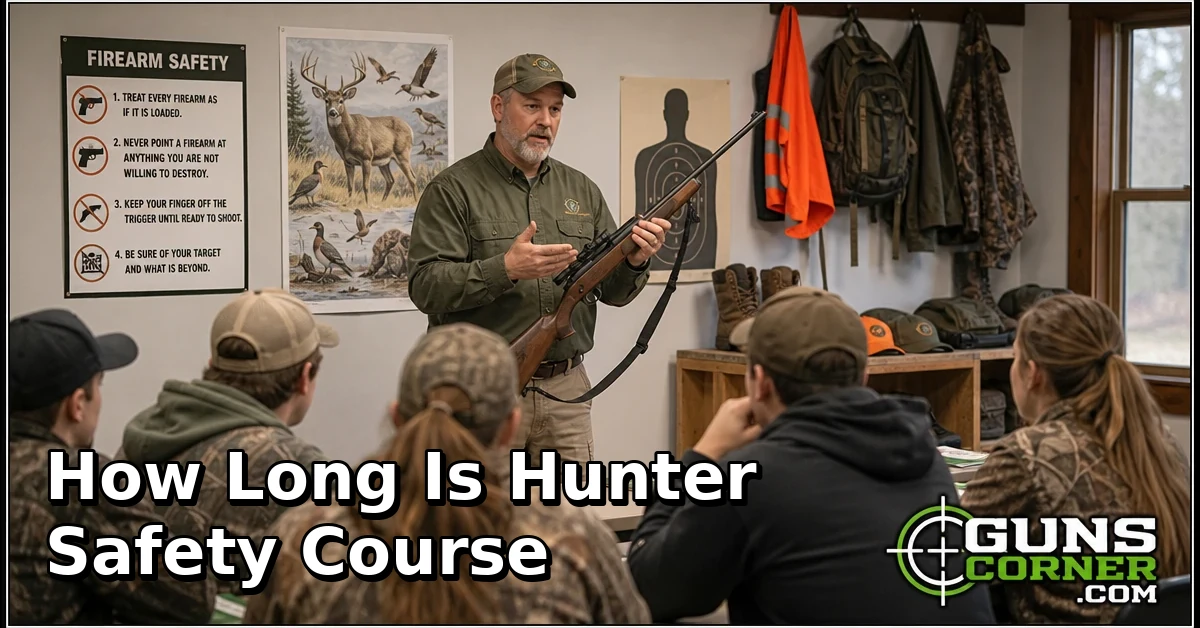

If you are planning to hunt for the first time, you may wonder how long is hunter safety course training and what it includes. The answer depends on your state, province, course format, age, and whether you choose an online, classroom, or hybrid option. This guide explains what to expect, how to prepare, and why completing hunter education is an important part of safe, legal, and ethical hunting.
A hunter safety course commonly takes several hours to about two days, but the exact length varies by location and course format. In-person programs may include classroom instruction, practical firearm or bow safety, and a field exercise, while online courses may require a separate in-person component. Check your official wildlife agency for current requirements before registering, and complete the entire course before purchasing a license or hunting.
Important Legal and Safety Notice Before You Hunt

Hunter education requirements are not universal. They can vary by state, province, territory, age, license type, hunting method, and previous certification. Before hunting, confirm the current rules with your official wildlife agency.
- Whether hunter education is required for your age and hunting situation
- Whether an approved online, in-person, or hybrid course is accepted
- License, permit, and tag requirements
- Season dates, legal hunting hours, bag limits, and reporting rules
- Legal firearms, bows, ammunition, and equipment
- Public land access or private land permission
- Required hunter orange or other visibility clothing
- Firearm, bow, tree stand, navigation, and weather safety requirements
How Long Is Hunter Safety Course Training?

There is no single worldwide course length. Many traditional hunter safety courses take approximately one full day or are divided across several sessions. Some jurisdictions require a minimum number of classroom hours, while others combine online homework with a shorter instructor-led field day.
The total time may include more than the scheduled classroom portion. Students may need to complete reading, videos, quizzes, homework, registration steps, practical exercises, and a final examination before receiving certification.
| Course Format | Typical Time Commitment | What It May Include |
|---|---|---|
| Traditional classroom course | Several hours to one or more days | Safety lessons, wildlife topics, regulations, practical instruction, and testing |
| Online course | Self-paced study over several hours or more | Videos, reading, quizzes, and a final assessment |
| Hybrid course | Online study plus an in-person session | Online lessons followed by hands-on safety or field instruction |
| Field day or practical session | Several additional hours, depending on local rules | Safe handling, target identification, range procedures, and field skills |
What Does a Hunter Safety Course Teach?

A hunter education course is designed to help new hunters make safe, legal, and ethical decisions in the field. The curriculum varies, but most approved programs cover several core subjects.
- Firearm and bow safety
- Safe transportation and storage
- Target identification and what lies beyond the target
- Hunting laws, licenses, tags, seasons, and bag limits
- Wildlife identification and conservation
- Basic field preparation and hunting ethics
- Outdoor survival, navigation, weather, and first aid awareness
- Safe tree stand and elevated-position practices when relevant
- Responsible game recovery, reporting, and meat care
- Respect for landowners, other hunters, and outdoor users
How to Complete a Hunter Safety Course

Step 1: Check Your Official Wildlife Agency

Start with the wildlife agency responsible for the area where you plan to hunt. Confirm whether hunter education is required, which providers are approved, and whether your age or previous certification changes the requirement.
Step 2: Choose the Correct Course Format

Compare classroom, online, and hybrid options. A classroom course may be useful if you want direct help from an instructor. An online course may offer scheduling flexibility, while a hybrid course can combine self-paced study with hands-on training.
Step 3: Register Early

Popular courses can fill before hunting seasons begin. Register through an official agency or approved provider, and carefully note attendance requirements, minimum age rules, homework, equipment needs, and testing procedures.
Step 4: Complete Required Study Materials

Read the assigned manual, watch required lessons, and complete homework before attending any in-person session. Arriving prepared allows you to focus on practical safety and field skills.
Step 5: Attend Every Required Session
Many programs require full attendance. Missing part of a classroom lesson, field day, or practical session may prevent certification, even if you pass other portions of the course.
Step 6: Practice Safe Firearm or Bow Handling
Follow instructor directions carefully. Learn how to keep a firearm pointed in a safe direction, keep the action open when appropriate, control the muzzle, unload safely, and identify the target and background. Bowhunters should learn safe arrow handling, broadhead precautions, and responsible practice habits.
Step 7: Pass the Required Assessment
Most programs include quizzes, a written examination, a practical evaluation, or a combination of these. Review the course material rather than relying on guesswork.
Step 8: Confirm Your Certification
After completion, verify how your certificate or hunter education number is issued. Some systems provide a digital record, while others issue a card or require you to print proof.
Step 9: Check License and Hunting Rules Separately
Hunter education certification is not the same as a hunting license. You may still need a license, species-specific tag, permit, access permission, and harvest reporting approval before hunting.
How to Prepare Before the Course
- Read the registration instructions completely.
- Bring identification and required proof of registration.
- Complete assigned homework before the class date.
- Wear weather-appropriate clothing for any outdoor session.
- Bring water, snacks, a notebook, and a pen.
- Ask the instructor about local regulations you do not understand.
- Do not bring a firearm, bow, or ammunition unless the course specifically requires it and provides clear instructions.
- Tell the instructor if you have no previous experience with firearms or archery.
What Happens After Hunter Education?
Once you complete the course, continue preparing before entering the field. Study current regulations, purchase the correct license and tags, confirm land access, and practice with your legal hunting equipment under safe conditions.
New hunters should consider going with an experienced mentor. A mentor can help with scouting, wind direction, navigation, safe setups, ethical shot decisions, game recovery, and responsible meat care.
Beginner Hunting Preparation After Certification
Learn the Species and Habitat
Study the game species you plan to pursue. Learn to recognize general habitat, food sources, water, bedding areas, travel corridors, tracks, droppings, and other legal signs. Animal behavior changes with weather, season, hunting pressure, and available food.
Scout a Legal Hunting Area
Use current maps to identify property boundaries, access points, parking areas, trails, terrain, and nearby homes or roads. Verify public access rules or obtain clear private land permission before entering.
Plan Your Safety Equipment
Carry navigation tools, water, a first aid kit, communication equipment, weather-appropriate clothing, and any required visibility gear. If using a tree stand, use a properly fitted full-body harness and follow the manufacturer’s instructions.
Practice Before the Season
Practice from realistic distances and positions. Firearm hunters should know their equipment and safe shooting limits. Bowhunters should practice consistently and understand their personal effective range. Never take a shot beyond your skill level.
Plan for the After-Hunt Responsibilities
Know how you will tag, report, transport, cool, and care for legally harvested game before hunting. Requirements vary, so review current agency instructions in advance.
Best Time to Take a Hunter Safety Course
The best time is well before the hunting season you plan to enter. Early completion gives you time to obtain a license, purchase legal equipment, practice, scout, arrange land access, and learn local regulations without rushing.
Taking the course shortly before a season may still be possible, but course availability and certificate processing times can create delays. Check registration schedules early.
Common Mistakes to Avoid
- Assuming every state or province has the same course requirement
- Confusing hunter education certification with a hunting license
- Waiting until the last week before the season
- Choosing an unapproved course
- Skipping homework or missing part of an in-person session
- Failing to verify current season and weapon regulations
- Buying equipment before learning the legal requirements
- Practicing only from a comfortable bench position
- Hunting private land without permission
- Failing to identify the target and what is beyond it
- Taking an unsafe or uncertain shot
- Ignoring navigation, weather, hydration, or communication planning
Troubleshooting Common Problems
| Problem | Possible Cause | What to Do |
|---|---|---|
| You cannot find an approved course | Registration is handled by a state, provincial, or territorial agency | Search the official wildlife agency website or contact its hunter education office. |
| The course takes longer than expected | Homework, exams, field training, or processing time was not included | Review the complete course description and allow extra time beyond classroom hours. |
| You missed part of the course | Attendance may be mandatory | Contact the instructor before assuming you can complete the course remotely. |
| You passed but cannot buy a license | The certificate may not yet be processed or linked to your account | Check the agency record and ask the course provider how certification is reported. |
| You are nervous about firearm handling | You have limited practical experience | Tell the instructor and seek supervised practice from a qualified professional. |
| You are unsure whether your certificate is accepted elsewhere | Recognition rules vary by jurisdiction | Confirm acceptance with the wildlife agency where you intend to hunt. |
Ethical Hunting and Conservation
Hunter education is more than a certification requirement. It teaches habits that protect people, wildlife, and habitat. Ethical hunters follow seasons and bag limits, respect property boundaries, avoid waste, and pass on shots that are unsafe or beyond their ability.
Licenses and regulated hunting programs support wildlife management and conservation. Hunters should also respect other outdoor users, leave access areas clean, avoid disturbing wildlife unnecessarily, and report violations through the proper agency channels.
When to Get More Training or Professional Guidance
Seek additional instruction if you have never handled a firearm or bow, do not understand local regulations, feel uncertain about safe shooting, or plan to hunt unfamiliar terrain. Official hunter education courses, certified instructors, experienced ethical mentors, conservation organizations, and reputable hunting clubs can provide useful guidance.
Additional training is especially valuable for tree stand safety, backcountry navigation, waterfowl hunting, bowhunting, firearm handling, tracking, game recovery, and meat care.
After the Hunt: Keep Learning
Review your preparation after each outing. Record weather, wind direction, animal sign, access routes, equipment performance, and safety lessons. Clean and store equipment safely, maintain navigation and first aid supplies, and keep required harvest records current.
Whether or not you harvest game, each legal and responsible outing can improve your field awareness, patience, and decision-making.
Recommended Hunting Gear and Tools to Consider
You do not need expensive equipment to begin hunting responsibly. Choose gear based on local rules, terrain, weather, hunting method, safety needs, and experience.
- Current regulations, license, permits, and tags
- Legal firearm or bow and appropriate practice equipment
- Weather-appropriate clothing and required visibility gear
- Durable boots suited to the terrain
- Map, compass, GPS, or approved navigation app
- Water, food, first aid supplies, and emergency communication
- Binoculars or other appropriate optics
- Gloves, game bags, cooler, and meat-care supplies when relevant
- Full-body safety harness for elevated hunting positions
Final Thoughts
How long is hunter safety course training depends on your location and the course format, but expect more than just a short online quiz. Plan for lessons, practical safety instruction, testing, and possible homework. Complete an approved course early, verify all current hunting regulations, practice safely, scout legal land, and hunt with patience and respect for wildlife.
Frequently Asked Questions
How long is hunter safety course training usually?
Many courses take several hours to one or more days. The total time may include online study, homework, classroom instruction, practical training, and testing.
Can I complete hunter safety training online?
Some jurisdictions approve online courses, while others require an in-person or hybrid component. Confirm the accepted format with your official wildlife agency.
Is an online hunter safety course faster?
It may be more flexible, but it is not always faster. You may still need homework, quizzes, a field day, practical instruction, or certification processing.
Do all hunters need hunter education?
No universal rule applies. Requirements can depend on location, age, license type, hunting method, and previous certification.
Does hunter education replace a hunting license?
No. Hunter education certification and a hunting license are separate requirements in many jurisdictions.
Can children take a hunter safety course?
Many programs accept youth students, but age requirements and supervision rules vary. Check the official course information before registering.
Can adults take hunter education?
Yes, adults may take hunter education even when it is not mandatory. It can improve firearm safety, field awareness, legal knowledge, and ethical decision-making.
What should I bring to hunter safety class?
Bring identification, registration confirmation, required homework, writing materials, water, and weather-appropriate clothing. Bring weapons only if the instructor specifically requests them.
Is attendance mandatory?
Many courses require full attendance for classroom, field, or practical portions. Ask the provider about absence and makeup policies.
What happens if I miss part of the course?
Contact the instructor or agency immediately. You may need to attend a makeup session or repeat part of the course.
Is there a test at the end?
Many approved programs include a written, online, practical, or combined assessment. Study the official course materials carefully.
What topics are covered in hunter education?
Common subjects include firearm and bow safety, wildlife identification, regulations, conservation, ethics, navigation, weather awareness, and responsible game handling.
Does hunter education include live-fire training?
Some programs include practical firearm instruction, while others may use demonstrations or separate range sessions. Follow the exact instructions for your course.
Do bowhunters need hunter education?
Requirements vary. Some locations apply hunter education rules to all hunters, while others have additional bowhunter education requirements or exemptions.
Do I need hunter education to hunt on private land?
Private land does not automatically remove licensing or education requirements. Verify both state or provincial rules and landowner permission requirements.
Do I need hunter education for public land hunting?
Public land hunters must follow all applicable education, license, access, weapon, season, and reporting rules. Confirm boundaries and access regulations before entering.
Can a mentor accompany me before I finish hunter education?
Some jurisdictions allow supervised hunting under specific conditions, while others do not. Check the current rules and never hunt without required authorization.
Does hunter education certification expire?
Certification validity varies by jurisdiction. Ask the issuing wildlife agency whether the certificate is permanent, renewable, or subject to specific restrictions.
Is hunter education accepted in other states or provinces?
Many jurisdictions recognize approved certificates, but recognition is not automatic everywhere. Confirm acceptance before purchasing a license elsewhere.
How soon can I hunt after completing the course?
You may hunt only after meeting every applicable requirement, including license, tags, permits, season dates, land access, and weapon rules.
Should I take the course before buying hunting gear?
Taking the course first can help you understand legal equipment and safety needs before making purchases.
What should I practice after hunter education?
Practice safe firearm or bow handling, target identification, shooting or archery fundamentals, navigation, gear setup, and emergency planning.
Should beginners hunt with a mentor?
Yes, an experienced and ethical mentor can help you apply course lessons, scout safely, understand wind, and make responsible field decisions.
What safety rule matters most when hunting?
Always identify the target and what lies beyond it before acting. Never shoot at unclear movement or toward people, homes, roads, livestock, vehicles, or unsafe backgrounds.
Do hunter safety courses teach tree stand safety?
Some courses cover elevated hunting safety. Regardless, use a full-body harness, follow manufacturer instructions, and learn safe climbing and equipment procedures.
Does the course teach hunting ethics?
Approved courses commonly discuss fair chase, respect for wildlife, safe shot decisions, legal compliance, recovery, conservation, and avoiding waste.
Does hunter education teach tracking?
Some programs introduce wildlife signs and recovery principles, but additional field practice may be needed to develop tracking skills.
Does hunter education teach meat care?
Programs may discuss responsible handling and recovery at a general level. Seek additional instruction for species-specific processing and local transport requirements.
What if I do not understand a law explained in class?
Ask the instructor for clarification and verify the current regulation with the official wildlife agency before hunting.
What if I am uncomfortable handling a firearm?
Tell the instructor. Do not rush. Seek supervised instruction from a qualified professional and practice only in a lawful, controlled environment.
Can I hunt immediately after passing the exam?
Not necessarily. Confirm that your certification has been recorded and that you also have the required license, tags, permits, legal access, and current season authorization.
How early should I register?
Register as early as possible before the intended season. Classes may fill, and certification processing may take additional time.
Is hunter education difficult?
It is designed for beginners, but it requires attention and preparation. The most important goal is understanding safe and responsible behavior, not simply passing a test.
What if I fail the hunter safety exam?
Ask the provider about retesting or remediation. Review the official materials and seek help with topics you found difficult.
Does a hunting license prove I completed hunter education?
Not always. Keep your certification information available and follow the documentation rules of the jurisdiction where you hunt.
What should I do after completing hunter education?
Review regulations, obtain licenses and tags, confirm land access, practice, scout legally, prepare safety equipment, and plan for reporting and responsible game care.
How does hunter education support conservation?
It teaches responsible participation in regulated hunting, wildlife stewardship, habitat respect, ethical decisions, and compliance with conservation laws.
Where can I find the correct course?
Use the official website of your state, provincial, or territorial wildlife agency. It should identify approved providers and current registration information.
Read more: