
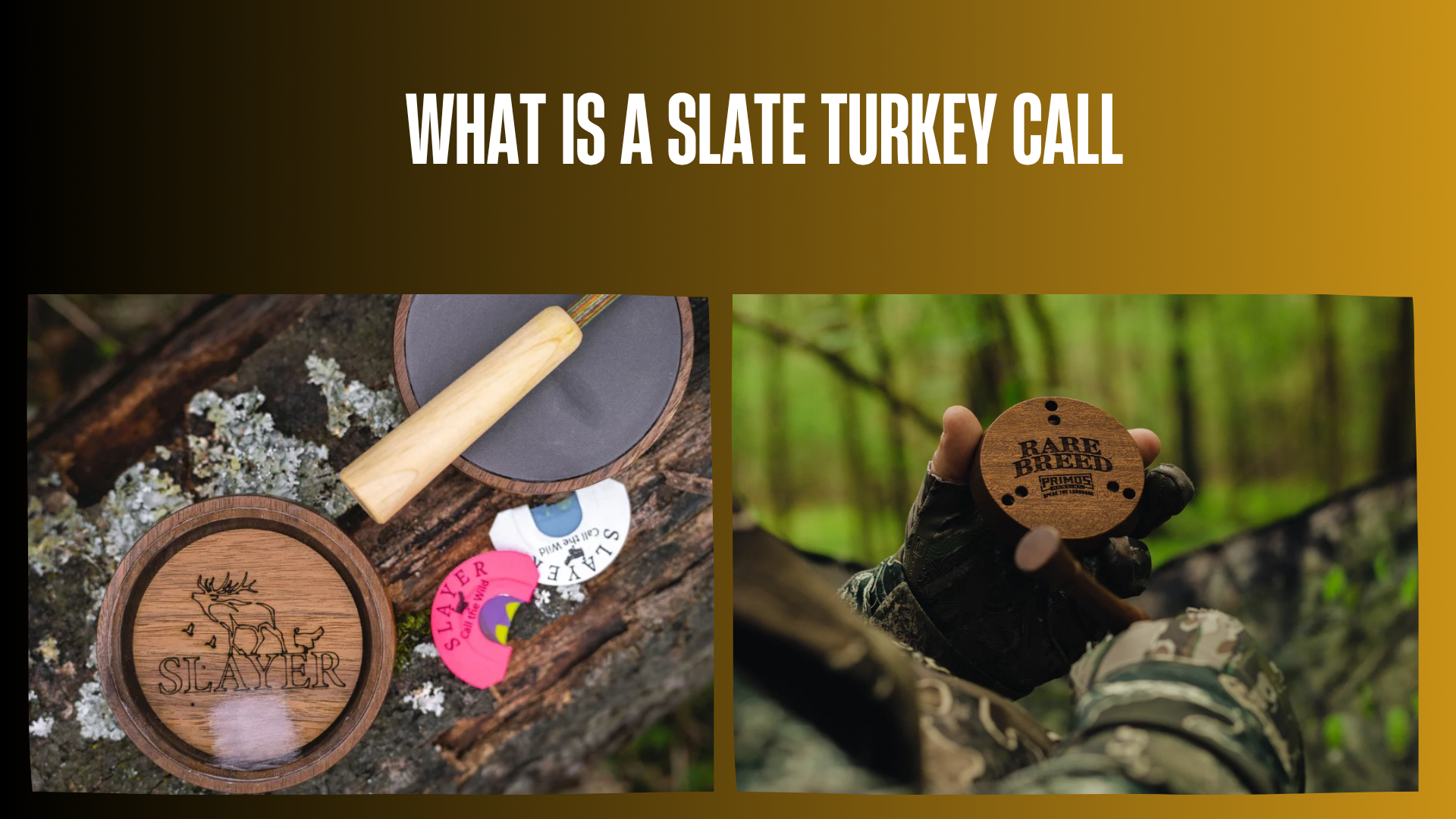

A slate turkey call is a traditional hunting tool that lets you imitate wild turkey vocalizations by moving a striker across a slate surface. It is compact, versatile, and capable of producing everything from soft feeding sounds to louder hen yelps.
For a beginner, the appeal is that the motion is visible and easy to understand: you control the sound with your hand rather than learning to operate a diaphragm call inside your mouth. However, good calling still requires practice. A poorly maintained surface, excessive pressure, or unnatural rhythm can make the call sound very different from a turkey.
This guide explains what a slate turkey call is, how it produces sound, how to make common turkey vocalizations, what to look for when choosing one, and how to use it responsibly in the field.
Quick Answer
A slate turkey call is a handheld friction call with a circular slate calling surface and a separate peg called a striker. The hunter moves the striker across the slate to create vibrations that imitate turkey sounds such as yelps, clucks, purrs, and cutting. The slate sits in a pot-shaped body that helps the sound resonate. A slate call is a type of pot call, although not every pot call has a slate surface; some use glass, crystal, ceramic, or aluminum. It is a manually operated hunting accessory, and hunters should confirm current local rules before using any calling equipment in the field.
What Are the Parts of a Slate Turkey Call?
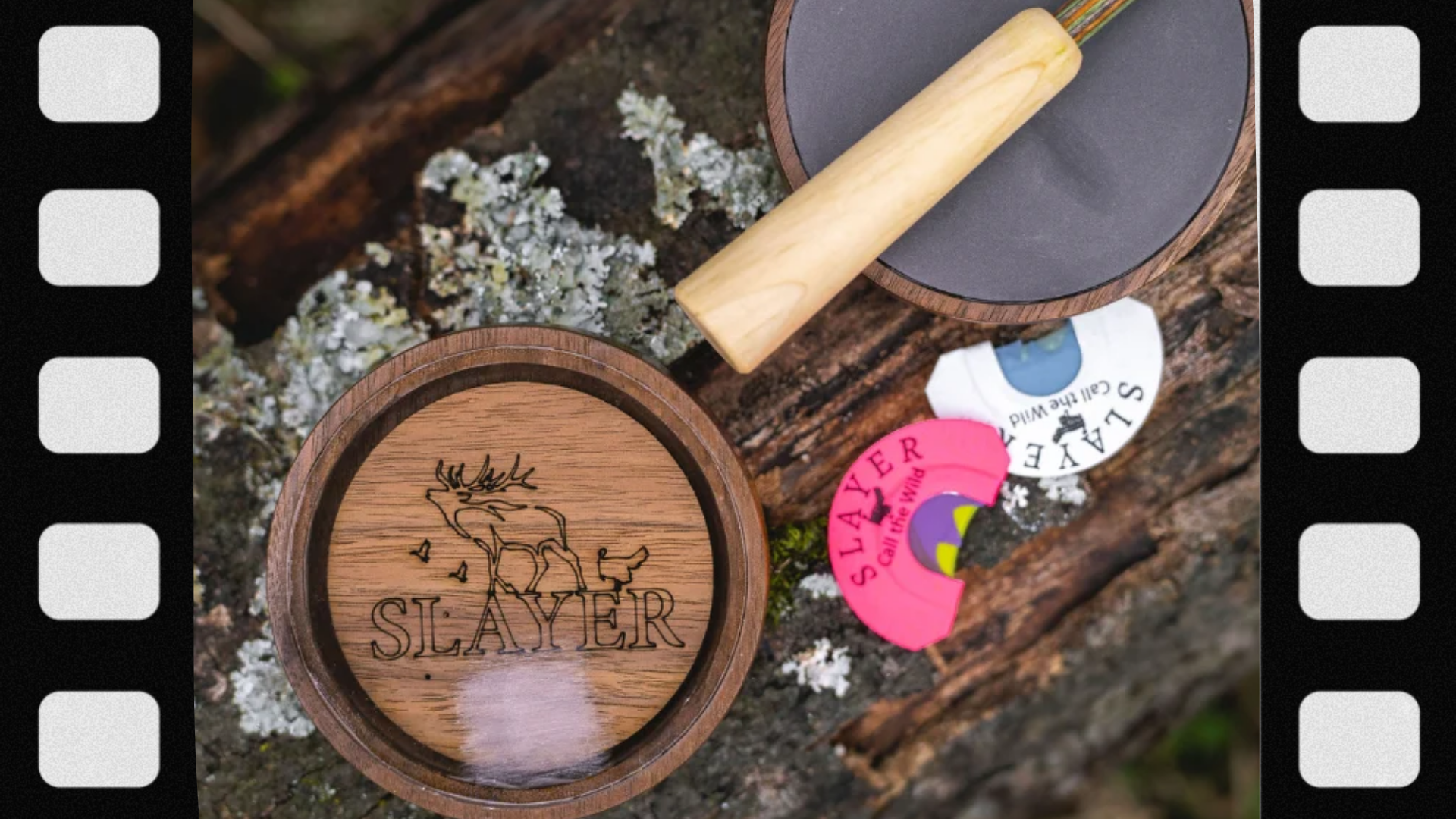
A typical slate call has three main components: the pot, the calling surface, and the striker. Some designs also contain an internal soundboard.
1. The Pot
The pot is the round body that supports the calling surface. It may be made from wood or another suitable material.
The body acts as a sound chamber. Many designs have openings on the underside that allow sound to project from the call.
The Oregon Department of Fish and Wildlife’s turkey-hunting guide explains that the pot holds the calling surface and functions as a resonating chamber.
2. The Slate Surface
The slate is the exposed circular surface against which the striker moves.
Friction between the slate and the striker produces vibrations. Changes in pressure, stroke length, direction, and speed change the sound.
Slate is often associated with softer, mellow-sounding calls, although the finished tone also depends on the pot, striker, soundboard, and caller’s technique.
3. The Striker
The striker is a slender peg, commonly made from wood or another compatible material. It has a handle and a working tip that contacts the calling surface.
Holding it much like a pencil allows the caller to make short, controlled strokes.
Striker material, tip condition, and compatibility with the pot can affect tone and responsiveness. A different striker can change how the same slate call sounds.
4. The Internal Soundboard
Some pot calls contain a soundboard beneath the outer calling surface. Its design contributes to the call’s resonance and tonal character.
The National Wild Turkey Federation’s discussion of pot-call soundboards explains how this component contributes to the transition between the higher and lower portions of a yelp.
How Does a Slate Turkey Call Work?
Unlike an electronic device that plays a recorded sound, a slate call produces its sound mechanically.
When the striker moves across the slate, friction causes the contacting surfaces to vibrate. The calling surface, soundboard where present, and pot influence the resulting tone and resonance.
A caller changes the sound by adjusting several variables:
- Pressure: How firmly the striker contacts the surface.
- Angle: How the striker is tilted relative to the slate.
- Stroke: Whether the tip travels in a short line, curve, or small oval.
- Speed: How quickly the stroke is made and repeated.
- Rhythm: The spacing and grouping of individual notes.
These controls make a pot call versatile, but they also explain why two people can produce different sounds from the same equipment.
For further technique guidance, see the National Wild Turkey Federation’s friction-calling guide, which emphasizes a relaxed grip and light, consistent striker pressure.
How to Use a Slate Turkey Call for the First Time
Begin practicing in a quiet place where you can listen carefully to each note. Your first goal should be one clear, repeatable sound rather than an elaborate calling sequence.
Step 1: Hold the Pot Lightly
Place the pot in your non-dominant hand with the slate facing upward.
Support it primarily with your fingertips instead of pressing the entire underside against your palm. This helps avoid blocking the pot’s sound openings.
Keep your grip comfortable and avoid squeezing the body unnecessarily.
Step 2: Hold the Striker Like a Pencil
Use your dominant hand to hold the striker near its working end, leaving enough length below your fingers to move it freely.
Start with a relaxed grip and a slight tilt rather than forcing the tip straight down with excessive pressure.
The best angle may vary with the call and striker combination, so use the manufacturer’s instructions as your starting point.
Step 3: Find a Consistent Contact Point
Place the striker tip on a clean, properly conditioned area of the slate.
Move it through a short, smooth stroke and listen for a clear note.
If the call squeaks, skips, or produces little sound, adjust your pressure and angle slightly before changing everything at once.
Step 4: Practice a Simple Yelp
Once you can make a clear note, draw a small oval or curved stroke to create the rising and falling quality associated with a yelp.
Repeat the motion at a steady, natural pace.
The goal is not simply to produce a series of identical scratches. Listen for the distinct tonal change within each note.
Step 5: Add Pauses and Softer Notes
After developing a recognizable yelp, practice a short cluck and a gentle purr.
Leave pauses between sequences. Real turkeys do not produce continuous, perfectly timed strings of calls.
Listen to recordings of wild birds to develop a better sense of their rhythm and variation. The Cornell Lab of Ornithology’s Wild Turkey Sounds library provides recordings for this purpose.
What Turkey Sounds Can You Make With a Slate Call?
A slate pot call can imitate several common turkey vocalizations. Beginners should focus on a few useful sounds before attempting more complex sequences.
| Sound | General Character | Basic Striker Motion | What to Practice |
|---|---|---|---|
| Yelp | A series of two-toned notes | Small curved or oval strokes | Clear notes and natural spacing |
| Cluck | A short, distinct note | Short controlled stroke | One clean note without extra scraping |
| Purr | Soft, rolling or vibrating sound | Slow, controlled stroke | Steady contact and gentle volume |
| Cutting | Rapid, irregular clucks | Repeated short strokes | Uneven but believable rhythm |
| Cluck and purr | Short cluck followed by a rolling sound | Combine the two basic motions | Smooth transition between notes |
How to Make a Yelp
The yelp is a foundational turkey call. A typical hen yelp includes a clearer, higher beginning that drops into a lower or raspier finish.
On a slate call, make a small curved or oval stroke while maintaining consistent contact and light pressure.
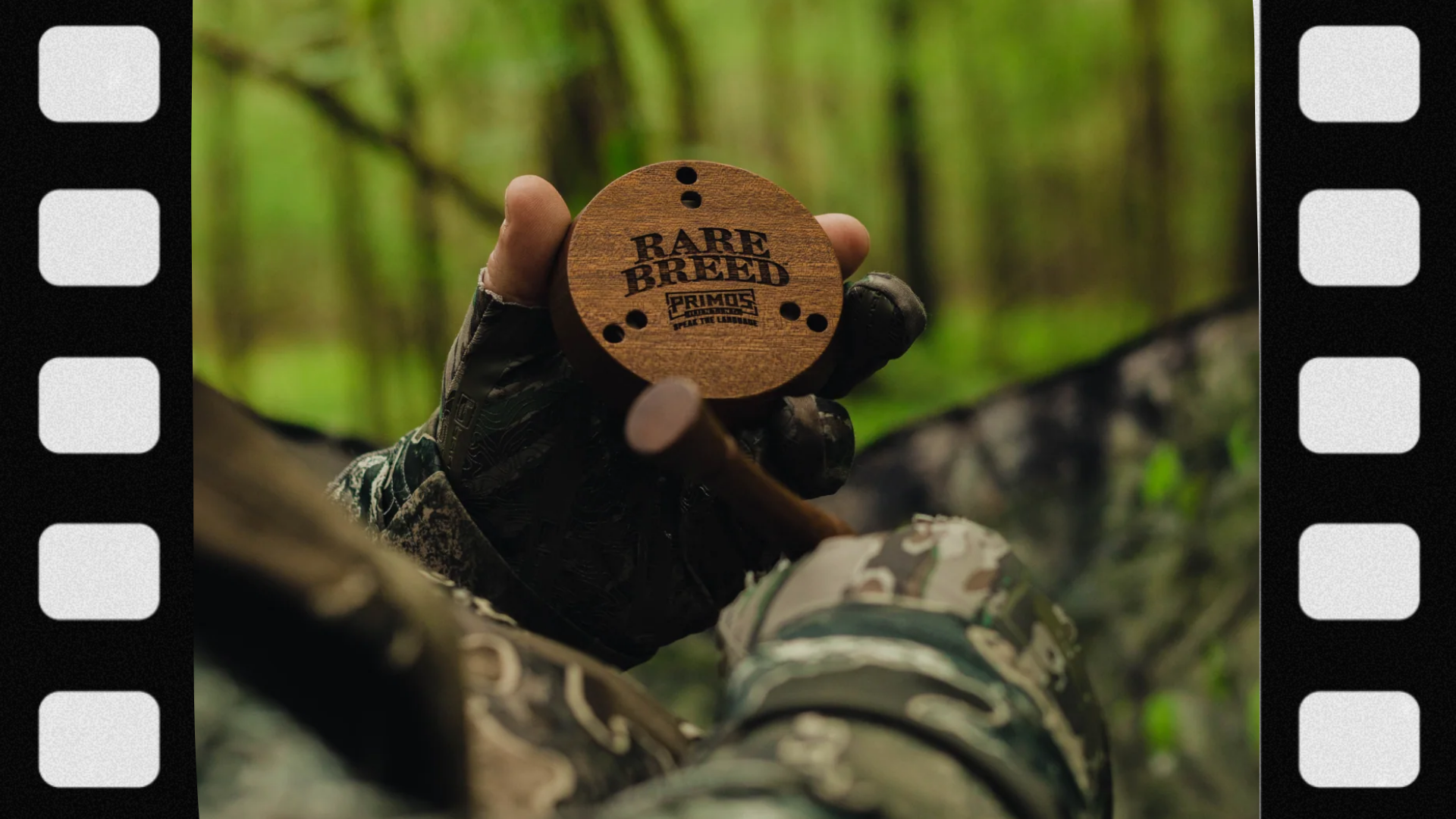
Practice several notes with natural spacing. Do not rush simply because you can produce the sound quickly.
The National Wild Turkey Federation’s yelp instruction emphasizes the importance of developing a clear opening note and controlling striker angle and pressure.
How to Make a Cluck
A cluck is a short, separated sound. Use a compact stroke rather than dragging the striker through a long yelp motion.
Start with one clean note. Once you can repeat it reliably, practice two or three separated clucks.
Keep the sound distinct from an alarm putt, which has a different meaning in turkey communication.
How to Make a Purr
A purr is a softer rolling sound often associated with turkeys maintaining contact while moving or feeding.
Use a slow, controlled movement with continuous contact between the striker and the slate.
Small changes in pressure and speed can alter the texture of the sound. Aim for a gentle, even purr before attempting a louder, agitated version.
How to Make Cutting Sounds
Cutting consists of excited, irregular clucks.
Produce several short strokes in a varied sequence rather than a perfectly mechanical rhythm.
Cutting can sound more energetic than ordinary clucking, but greater volume is not automatically more appropriate in every situation.
The National Wild Turkey Federation’s turkey-vocalization guide describes the meanings and characteristics of different wild turkey sounds.
Slate vs. Glass vs. Aluminum Pot Calls
People often use the term “slate call” to describe pot calls generally. Technically, slate refers to a particular calling-surface material.
Glass, crystal, ceramic, and aluminum calls use a similar pot-and-striker principle, but their tone and surface-maintenance needs can differ.
| Surface | Typical Character | Practical Consideration |
|---|---|---|
| Slate | Often associated with soft, mellow tones | Keep dry and condition the surface as directed |
| Glass | Can produce clear, sharper tones | May require more deliberate surface conditioning |
| Crystal | Can produce crisp, bright sounds | Protect the surface and follow the maker’s conditioning guidance |
| Aluminum | Can produce distinct, clear tones | Striker choice and surface finish affect the result |
| Ceramic | Offers another tonal and surface combination | Use compatible strikers and model-specific maintenance instructions |
These descriptions are general tendencies, not guaranteed performance rankings. Pot construction, striker material, surface finish, and technique all influence the resulting sound.
If you are purchasing your first call, consider how easy it is to hold, whether the included striker works consistently, and whether the maker provides clear care instructions.
Slate Call vs. Box Call vs. Mouth Call
Different turkey calls solve different practical problems. Understanding these distinctions helps explain why hunters may carry more than one type.
Slate Pot Call
A slate call uses a handheld pot and striker. It offers substantial control over volume and tone, and the physical stroke can be easy for beginners to understand.
Its limitations are that it usually requires both hands, involves visible movement, and can be affected by moisture.
Box Call
A box call produces sound through friction between a movable lid and the edges of a box-shaped body.
It is another approachable option for beginners and can produce a range of turkey sounds.
Like many traditional friction calls, it needs appropriate surface care and protection from moisture.
Diaphragm or Mouth Call
A diaphragm call uses a small reed assembly held inside the mouth.
It requires more practice for many beginners, but it allows the hunter to call without moving a handheld pot and striker.
That reduced hand movement can be useful when a turkey is nearby. The Oregon Department of Fish and Wildlife also notes that mouth calls can be easier to keep dry in wet conditions than conventional slate or box calls.
Do You Need More Than One Call?
No. A beginner can learn the fundamentals with a single well-functioning slate call.
As your skills develop, another call type may provide a different sound or solve a specific practical limitation, such as reducing visible movement or managing wet weather.
When Is a Slate Call Useful in Turkey Hunting?
A slate call can produce both relatively quiet and more assertive sounds, giving hunters flexibility when communicating with wild turkeys.
Soft Calling
Quiet yelps, clucks, and purrs can imitate less excited communication.
These are useful sounds to practice because realistic, low-volume calling takes control and does not require constant aggressive sequences.
Varied Hen Sounds
Changing stroke rhythm, volume, and tone lets a hunter imitate different vocalizations without switching devices.
However, an elaborate sequence is not automatically more believable than a few carefully made notes.
Responding to What You Hear
Pay attention to real turkey vocalizations and the surrounding environment rather than following an inflexible calling schedule.
A gobbler may respond vocally, approach without answering, remain in place, or leave. No particular calling sequence guarantees a response.
The National Wild Turkey Federation’s discussion of common calling mistakes emphasizes realism, appropriate volume, and meaningful variation rather than producing every sound in rapid succession.
How to Condition and Maintain a Slate Turkey Call
Good technique cannot compensate for every surface problem. A dirty, wet, or overly polished calling area may make the striker slip or produce inconsistent sounds.
Keep the Surface Clean and Dry
Protect the slate from rain, excessive moisture, skin oils, and accumulated dirt.
Avoid repeatedly touching the working surface with your fingers.
After use, wipe away loose dust or debris with an appropriate clean, dry material.
Condition the Slate When Needed
Slate surfaces may need light conditioning to maintain consistent friction.
The National Wild Turkey Federation’s friction-call maintenance guide describes using a suitable scouring pad on slate surfaces.
Follow the specific manufacturer’s instructions and avoid applying glass-call sanding recommendations indiscriminately to a slate call. Different surface materials require different treatment.
Maintain the Striker Tip
A dirty or polished striker tip may lose its ability to produce consistent friction.
Clean or lightly condition it according to the maker’s instructions. Avoid removing unnecessary material or changing the intended shape of the tip.
Protect the Call During Storage
Use a protective pouch or compartment to limit damage to the slate surface.
Keep the striker secure so its working tip does not become damaged or contaminated.
Store the equipment dry and inspect it before your next practice session or hunt.
Why Does My Slate Turkey Call Sound Bad?
Most beginner problems can be approached systematically. Change one variable at a time so you can identify what improves the sound.
| Problem | Possible Cause | What to Check |
|---|---|---|
| High-pitched squeaking | Striker angle or pressure is inconsistent | Relax your grip and adjust the angle slightly |
| Very little sound | Surface or striker lacks suitable friction | Check cleanliness, dryness, and conditioning |
| Scratchy, uncontrolled notes | Excessive pressure or uneven stroke | Use shorter, lighter, more consistent movements |
| Weak resonance | Sound openings may be blocked | Support the pot on your fingertips |
| Good yelp but poor cluck | Stroke is too long | Practice a short, separated motion |
| Call changes sound outdoors | Moisture, temperature, or surface condition | Keep it protected and inspect both surfaces |
| Inconsistent tone | Changing pressure, angle, or contact point | Find a repeatable working area and practice slowly |
If a call remains difficult to operate after basic maintenance, try the original matched striker and consult the manufacturer’s instructions before modifying any component.
Beginner Practice Routine for a Slate Call
A short, focused practice session is more useful than repeatedly making loud, uncontrolled noises.
- Listen first: Play a reliable recording of a wild turkey yelp, cluck, or purr.
- Find one clear note: Make slow strokes until you identify a consistent striker angle and pressure.
- Practice yelps: Repeat a short series while keeping each note recognizable.
- Practice clucks: Make individual notes with deliberate pauses.
- Practice purrs: Focus on a soft, steady rolling sound.
- Combine sounds: Try a modest sequence of yelps followed by a pause and a cluck or purr.
- Record yourself: Compare your cadence and tone with recordings of actual birds.
Do not judge progress only by volume. A repeatable, natural-sounding quiet call is a valuable skill.
Turkey Hunting Safety and Legal Considerations
A slate call itself is a simple handheld accessory, but using any turkey call in the field requires situational awareness. Calling may draw both birds and other hunters toward the sound.
Never Assume a Sound Identifies a Bird
Another hunter can imitate a turkey. Do not move toward a turkey-like sound as though its source is certainly an animal.
Never shoot at sound, movement, color, or an indistinct shape. Positively identify the legal target and know what is beyond it.
Choose a Safe Calling Location
The Wisconsin Department of Natural Resources’ turkey-hunting safety guidance advises hunters to select a calling position with a broad tree or other substantial object behind them and to avoid stalking turkey sounds.
Stay aware of other people using the area. If another hunter approaches, communicate your presence clearly rather than making turkey noises to signal them.
Follow the Four Basic Firearm Safety Principles
- Treat every firearm as if it is loaded.
- Keep the muzzle pointed in a safe direction.
- Keep your finger outside the trigger guard until ready to shoot.
- Be certain of the target and what is beyond it.
Follow all relevant hunter-education guidance and the firearm manufacturer’s instructions. A mechanical safety does not replace safe handling.
Verify Local Calling Rules
Hand-operated and electronic calling devices may be regulated differently. Turkey seasons, legal equipment, hunting hours, permitted hunting methods, and land-access requirements also vary by jurisdiction.
Before hunting, consult the current regulations published by your state or provincial wildlife agency. In the United States, the U.S. Fish and Wildlife Service can also help readers locate federal wildlife information, but the applicable state rules must still be checked.
Obtain required licenses and permits, respect property boundaries, and follow local rules concerning decoys and other hunting equipment.
Common Slate Turkey Call Mistakes
- Gripping the striker too tightly: Excess tension can make consistent strokes harder.
- Blocking the pot’s openings: Holding the bottom tightly against the palm may interfere with resonance.
- Practicing only loud yelps: Learn softer clucks and purrs as well.
- Calling without listening: Leave space between sequences to hear real birds and other activity.
- Using a dirty or wet surface: Moisture and contamination can reduce friction.
- Using the wrong conditioning material: Slate, glass, and other surfaces do not necessarily require identical treatment.
- Assuming every gobble means a bird will approach: Vocal responses do not guarantee movement or a successful hunt.
- Ignoring nearby hunters: Turkey calling must never replace positive identification and safe hunting practices.
FAQs
1. What is a slate turkey call used for?
It is used to imitate wild turkey vocalizations during hunting, practice, or educational demonstrations. The most common sounds include yelps, clucks, purrs, and cutting.
2. Is a slate call the same as a pot call?
A slate call is a type of pot call. The broader pot-call category also includes models with glass, crystal, aluminum, ceramic, and other calling surfaces.
3. Why is it called a slate call?
Traditional versions use slate as the striking surface. The name is also sometimes applied informally to other pot-style friction calls.
4. What is the stick called?
It is called the striker, sometimes also referred to as a peg.
5. How does a slate call make sound?
Friction between the striker tip and slate creates vibrations. The pot and any internal soundboard contribute to the final tone.
6. Is a slate turkey call good for beginners?
It can be. The physical motion is easy to observe, and beginners can start with basic yelps and clucks. Producing consistently natural sounds still requires practice.
7. Do you need both hands to use a slate call?
Usually, one hand supports the pot while the other moves the striker. This creates more visible hand movement than a mouth call.
8. Can a slate call make a yelp?
Yes. Small, controlled curved or oval strokes can create the two-toned notes associated with yelping.
9. Can it make a cluck?
Yes. A short striker motion produces a separated note that can imitate a turkey cluck.
10. Can it make a purr?
Yes. A slow, steady stroke can produce a soft rolling sound.
11. Can a slate call make cutting sounds?
Yes. Repeated short strokes can imitate an excited, irregular series of clucks.
12. Can you gobble with a slate call?
Conventional slate calls are primarily used for hen-style vocalizations. Other call types are more commonly associated with deliberate gobble imitation.
13. Is slate better than glass?
Neither is universally better. They have different tonal characteristics and maintenance needs, and the resulting sound depends on the full call-and-striker combination.
14. Does striker material affect the sound?
Yes. Material, tip shape, condition, and compatibility can change how the striker interacts with the surface.
15. Can I use any striker with any pot call?
Not necessarily. Some combinations work better than others. Start with the striker supplied or recommended by the manufacturer.
16. Why does my slate call squeak?
Possible causes include excessive pressure, an inconsistent striker angle, a dirty surface, or a poorly conditioned striker tip. Adjust one factor at a time.
17. Why is my slate call not making sound?
Check whether the surface and striker are dry, clean, and appropriately conditioned. Also make sure you are not blocking the pot’s sound openings.
18. Do slate calls work when wet?
Moisture can interfere with conventional friction calls. Some specially designed call-and-striker combinations are marketed for wet conditions, but follow the manufacturer’s specific instructions.
19. How do I clean a slate turkey call?
Use the care method recommended for the actual model. Keep the surface free of dust, skin oils, and moisture, and avoid harsh cleaning chemicals unless specifically approved.
20. Do I need to sand the slate?
Slate may require conditioning, but the appropriate material and method differ from those used for glass or crystal. Follow the call maker’s directions.
21. Should I touch the slate surface with my fingers?
Minimize contact with the working area because skin oils can affect friction and consistency.
22. Can I use a slate call in the spring turkey season?
It is a common spring turkey-hunting accessory where permitted. Check the current regulations for your hunting location and season before use.
23. Can a slate call be used in fall turkey hunting?
It can imitate vocalizations heard in different seasons, but the appropriate calling approach depends on local turkey behavior and applicable hunting rules.
24. How often should I call?
There is no universal interval. Listen to the birds, use realistic sequences, and avoid treating a fixed calling schedule as a guarantee.
25. Does louder calling attract more turkeys?
Not necessarily. Volume should suit the situation. Loud calling can be useful in some conditions, while quiet, natural notes may be more appropriate in others.
26. Why does a gobbler answer without approaching?
Several factors may be involved, including the bird’s location, other turkeys, terrain, disturbance, or individual behavior. A vocal response alone does not guarantee an approach.
27. Is a slate call considered an electronic turkey call?
No. A traditional slate pot and striker produce sound manually through friction. Confirm local regulations for all calling devices, particularly if you also use electronic equipment.
28. What should I practice first?
Start with one clear yelp, then learn a short cluck and a soft purr. Consistency and natural rhythm matter more than learning many sounds immediately.
Final Answer
A slate turkey call is a manually operated friction call that uses a striker and a slate-faced pot to imitate wild turkey sounds. Its greatest practical advantage is the control it gives the caller over yelps, clucks, purrs, and other vocalizations.
For beginners, start with a clean, dry call, a light grip, and a few basic sounds. Use recordings of real turkeys to improve your timing and tone, and follow the manufacturer’s conditioning instructions. In the field, combine responsible calling with hunter education, positive target identification, awareness of other hunters, and verification of current local regulations. No turkey call guarantees a response or a successful hunt.
Read more: